What Actually Determines the Cost of Shipping Your Car?
Carriers price shipments by weighing several real-world factors, not guesses. Total mileage usually has the biggest influence, but the route matters too. Busy lanes with steady demand run cheaper per mile than remote paths that require detours. A car going from Houston to Phoenix moves differently than one picked up deep in rural Colorado.
Size and weight play a role. Larger vehicles take more space on a trailer, burn more fuel, and often cost more. Modifications like lifts or oversized tires can push the rate up as well.
Your transport method changes the number, too. Open carriers are the budget-friendly standard. Enclosed shipping offers added protection, so it naturally comes at a higher rate.
Seasonal traffic and timing also shift prices. Snowbird moves, winter weather, and holiday rushes all affect carrier bidding.
Even pickup conditions matter. Tight streets, remote areas, or gated access require extra time and planning, and quotes adjust to match. If the vehicle can’t roll or steer, loading becomes a job of its own, and the rate reflects that.
Same car, different lane: the swing can be noticeable.

How to Calculate Cost of Shipping Your Car Using Real Market Logic
To calculate car shipping cost with real confidence, it helps to think the same way carriers do. The core formula starts with distance multiplied by the current bidding conditions on that route. Longer trips cost more overall, but the price per mile often drops because carriers prefer one clean haul over several small ones.
Most quotes land inside a familiar per-mile range. Standard sedans on busy lanes sit lower, while oversized trucks, lifted suspensions, or low-demand routes slide toward the higher end. The logic is simple: more space on the trailer and fewer carrier options always influence the number.
A few triggers jump the price instantly. Inoperable vehicles require different loading, strict pickup dates remove flexibility, and anything oversized eats capacity. Carriers adjust their bids the moment they spot those details.
Once you view the estimate through that lens, the math no longer feels mysterious. Every rate reflects the same balance of distance, timing, vehicle specs, and competitive demand on the lane.
Can Online Calculators Give You an Accurate Cost?
Online calculators can actually be pretty useful when you want a fast read on the market. They pull lane data, match your vehicle category, and look at current demand patterns to estimate what carriers are charging for similar trips.
When the inputs are accurate, a good tool gives you a fair ballpark instead of wild guesses. Rivalane’s calculator uses live bidding data, which means the numbers reflect current carrier activity instead of outdated averages from months ago.
That said, no calculator can predict everything. A storm rolling in, sudden fuel spikes, or a short supply of trucks on a route can push real dispatch quotes slightly up or down. Those shifts come from carrier boards, not the calculator itself.
Even with those variables, most quotes stay surprisingly close to the original estimate. If you enter exact details and compare results from reputable companies, a calculator is one of the quickest ways to see the true cost range before you book.

Average Price Ranges to Expect Before You Book
Most people want a rough idea before they commit, and the national ranges are actually pretty consistent. Shipments in the 400 to 700 mile range usually sit near the lower end. Trips between 800 and 1,300 miles tend to fall into a middle bracket.
For example, routes from New York to Florida often land in a stable mid-range bracket because it’s a high-volume corridor with strong carrier availability. On the other hand, routes like New York to California usually fall into the upper range due to the longer distance and cross-country mileage involved. High-demand lanes with consistent truck flow tend to price more competitively than less common, low-volume routes.
Seasonal demand can nudge the numbers. Snowbird travel, winter slowdowns, or holiday congestion all affect how many trucks are on the road and how carriers bid. Your flexibility matters too. If you are open on pickup windows or willing to meet a driver closer to a main route, pricing often settles near the competitive side.
When Paying More Makes Sense
Sometimes the lowest price is not the smartest choice. Certain situations genuinely call for spending more because the added protection or priority makes a real difference.
Enclosed Transport
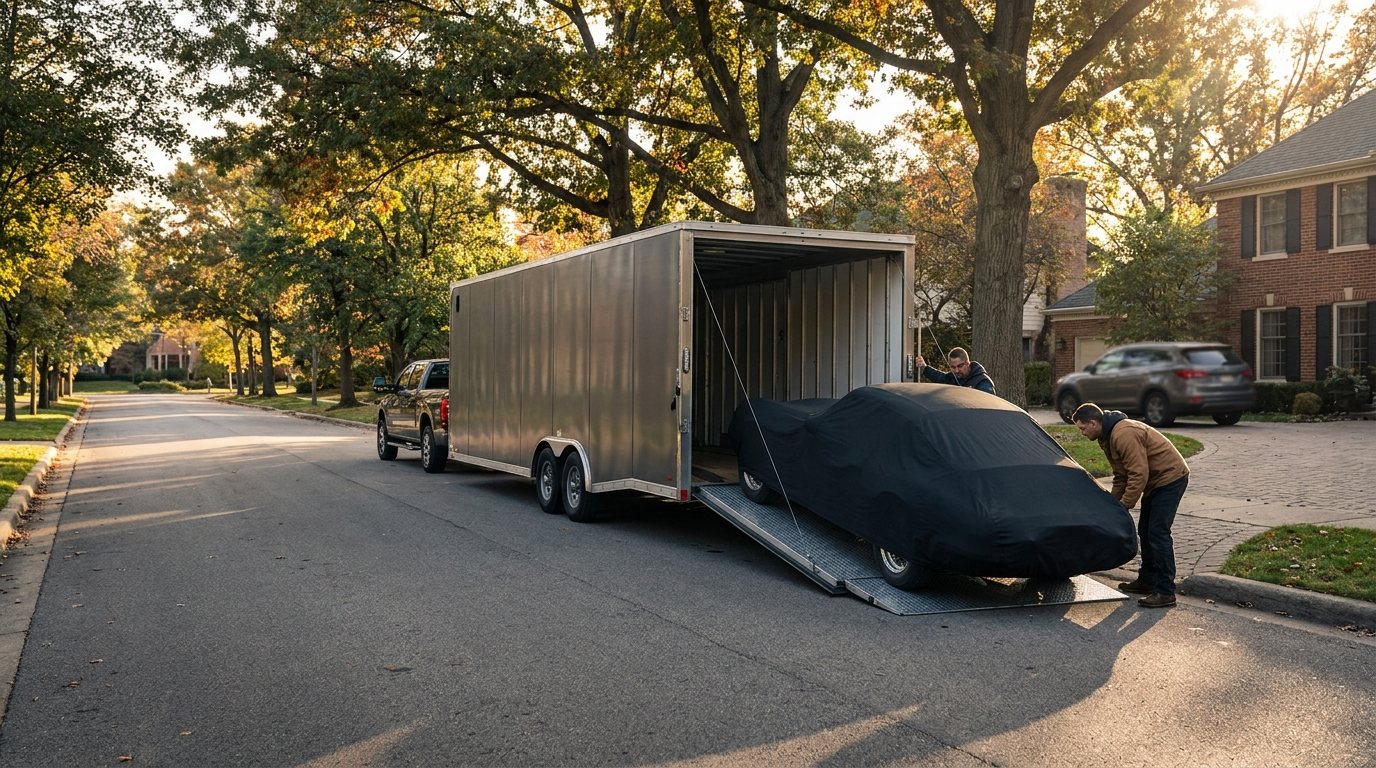
If you are moving a luxury model, collector vehicle, or anything with sensitive paint and trim, enclosed shipping can be worth every dollar. The car travels inside a sealed trailer, protected from weather, road debris, and curious eyes. It is a premium service for a reason, and this is exactly why we offer enclosed options at Rivalane for customers who want that extra layer of protection.
Specialized or Oversized Vehicles
Lifted trucks, long wheelbase vans, low clearance exotics, and other custom builds take more space and require extra loading care. Those details affect the quote because carriers need the right equipment and configuration.
Expedited Pickup Windows
If you want guaranteed pickup dates or a faster delivery option, carriers move the job to the front of their schedule. That priority shows up in the price, and it makes sense when timing matters more than saving a bit.
How to Calculate Cost of Shipping Your Car Manually
If you prefer to do the math yourself, there is a simple way to build a realistic estimate. Start with the mileage and multiply it by a typical per mile range for your vehicle type. That base number will point you in the right direction.
Next, decide whether the car will travel on an open carrier or an enclosed trailer. Open is usually more affordable. Enclosed has a higher rate because of the extra protection. Consider operability as well. Cars that roll and steer are easy to load while inoperable vehicles need special handling.
Add seasonal conditions if you are shipping during peak traffic months, harsh winter weeks, or a snowbird surge. Finally, think about the pickup point. Remote roads, islands, or hard access locations add distance for the truck and influence the quote.
Example: a standard sedan traveling about 1,000 miles on an open carrier often lands within a familiar cost range once these factors are applied.

How to Lower Your Shipping Cost Without Risk
If you want to bring your price down without cutting safety, think about what makes a carrier say yes first. When your pickup window has a little breathing room, dispatchers can slide your vehicle into a route that is already moving, and routes like that almost always come with stronger rates. If the car does not need enclosed transport, pick open. It is the simplest way to avoid paying for protection you do not actually need.
Location plays a role too. Meeting a driver near a major interstate removes hours of detours, and carriers reward that. The same goes for vehicle condition. If it starts, rolls, and steers, you just made someone’s job easier, and easier jobs get friendlier bids.
Try not to request urgent dates unless timing truly matters. When you shrink the schedule, you shrink the carrier pool with it, and pricing reacts fast. Stack two or three of these choices together and you will feel the difference, without risking the quality of the shipment.
Why Getting a Transparent Quote Matters
Nothing in shipping creates confidence faster than a price that makes sense. When you see a quote built from real carrier bidding, you immediately understand why the number is there, and the entire process feels steadier. Dispatchers plan quicker. Delivery times stay realistic. And you are not bracing for sudden add ons.
Real transparency starts with current data, not rough averages. Verified carriers, active insurance, and actual lane demand paint the truest picture. The car shipping price calculator on our homepage pulls live market conditions, including the route, season, and vehicle details, so the estimate sits close to what carriers are actually accepting.
When you have that kind of clarity in front of you, comparing companies becomes simple. You spot fair pricing. You ignore bait numbers that are designed to lure you in. And suddenly you are choosing based on trust, not guesswork. That is the moment when car shipping starts to feel easy instead of overwhelming.