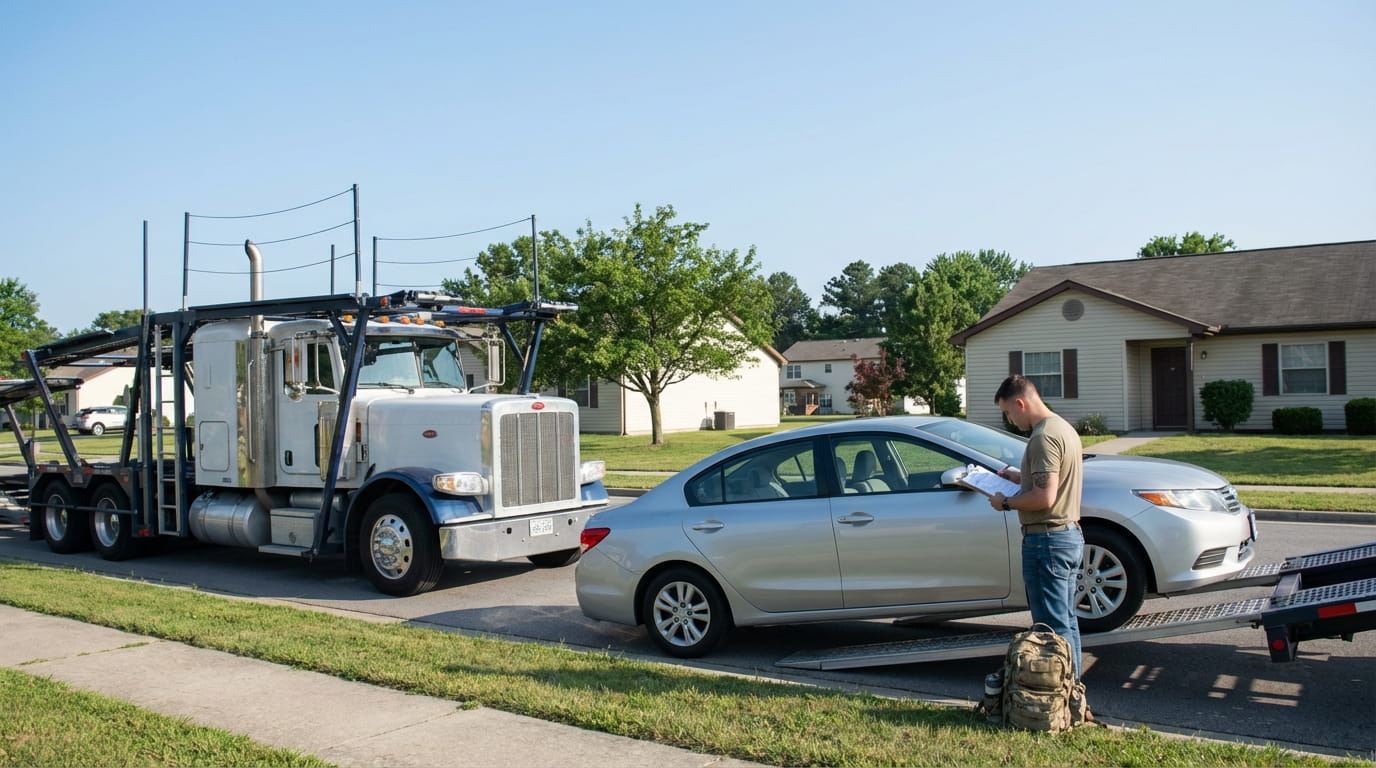
Most people cutting orders assume the system that boxes up the household goods also takes the car. For a stateside move it does not. That one misunderstanding is why so many families spend June hunting for a carrier, which is the worst month of the year to be looking.
The short version is this. On a move inside the lower forty eight the government does not ship your vehicle. You drive it and claim a mileage allowance, or you arrange transport yourself and pay for it. An overseas assignment is different: the government ships one privately owned vehicle. One. Every additional car, and every mile of a domestic move, is yours to organise and yours to fund. Working out which of those two situations you are in, early, is most of the battle.
Does the Military Ship Your Car When You PCS?
Where your orders send you decides the answer, and the split is sharper than most people expect. A CONUS move puts both duty stations inside the continental United States. Under current transportation rules those moves do not include shipping your privately owned vehicle. You are paid to move yourself, on an allowance calculated from the distance between stations, with travel days added for the longer drives. The assumption baked into that allowance is that you are driving the car, not that someone is hauling it for you.
An OCONUS assignment flips it. The government ships one vehicle at its expense through a single national contractor, and you book that through the contractor's own system rather than through whoever moves your furniture. The official channel for this is PCS My POV, and Military OneSource publishes the current entitlement rules. Check both against your orders before you book anything commercially.
PCS Vehicle Shipping CONUS: What Lands on You
Here is where the surprise usually lives. A single service member moving five hundred miles normally just drives, claims the mileage, and gets on with it. A family with two cars and one available driver cannot do that. The second vehicle has to travel somehow, and commercial transport quietly becomes the ordinary answer rather than an extravagance.
There is a narrow allowance that can offset a second vehicle in some family circumstances, but it is partial and it carries conditions. Plan on paying, and treat anything that comes back as a rebate you might receive later. Planning it the other way round is how people get caught short mid move. Rivalane arranges that second-vehicle transport as a standard booking, and you can size it with the shipping cost calculator before you commit to anything.
Shipping a POV to Hawaii, Alaska, or an Overseas Station
Orders across an ocean change the shape of the job. Rivalane arranges the road transport that gets your vehicle to the departure port. The ocean leg is arranged separately and is not handled by Rivalane. That matters when you are planning the week before you fly, because it tells you exactly which part of the chain we own and which part you are booking elsewhere.
For Hawaii, the road portion runs from your current location to the port, and our Hawaii car shipping page covers the domestic side. Overseas destinations work the same way, with the international shipping page setting out what sits outside a normal domestic booking. Alaska is its own case and depends heavily on whether the vehicle travels by sea or overland through Canada, so ask before assuming either.
Why Summer Is the Hardest Time to Move a Vehicle
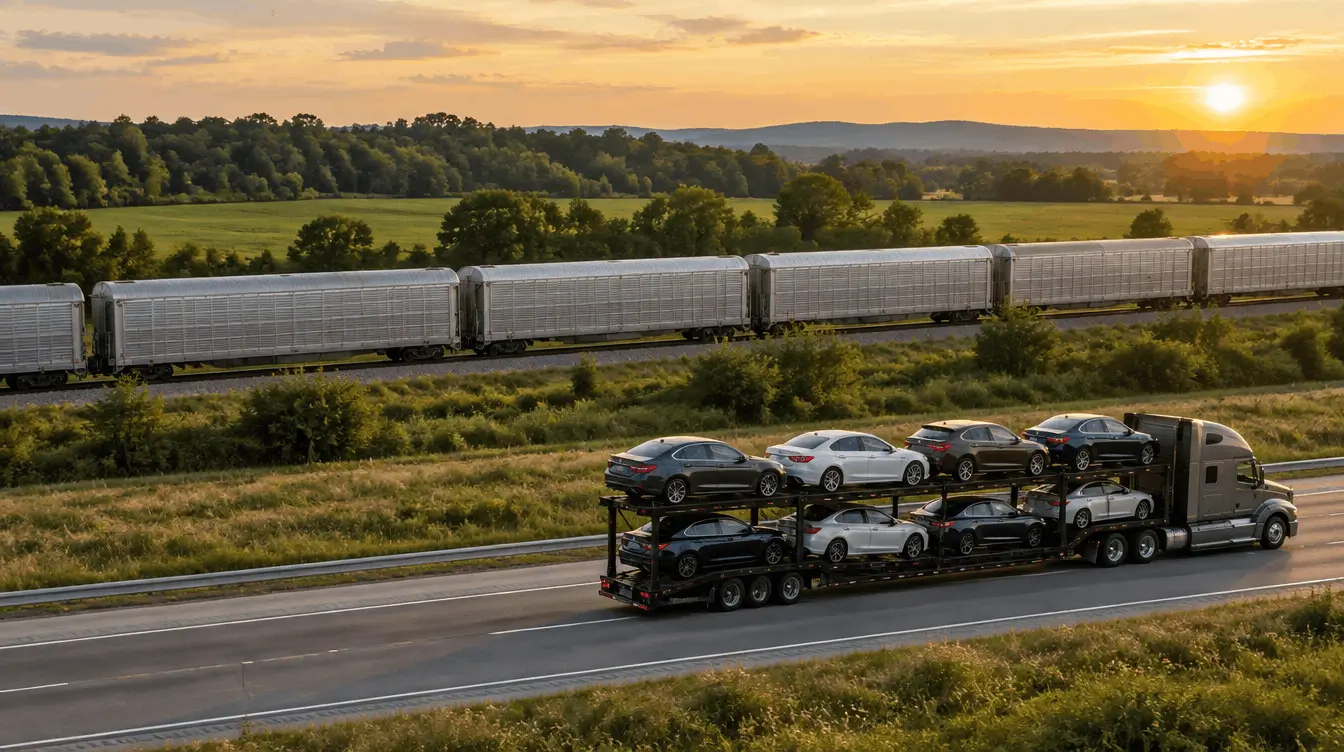
Military moves are not spread evenly across the calendar. They bunch into late spring and summer, because that is when school is out and reporting dates line up. Civilian families move on the same school calendar, for the same reason. So carrier capacity across the whole country is stretched thin at precisely the moment every PCS family needs it.
Fewer open trucks, more vehicles chasing them, the same narrow set of weeks. Drivers get selective about which loads they take, and the lanes that fill first are the ones already running. The fix is dull and it works. A vehicle posted to carriers weeks ahead slots into a route a driver is already covering. The same vehicle posted the week your lease ends is a scramble.

Can a Carrier Pick Up on Base?
Do not assume either way. Access varies by installation and by carrier, and gate security, escort requirements and vehicle size limits all bear on it. Plenty of pickups near a base happen at an agreed point off the installation, somewhere a full size transporter can turn and drop its ramps without threading a residential street it cannot reverse out of.
That is not a downgrade. Door to door has always meant the driver gets as close as he can legally and safely get, which is the same principle that applies on any tight residential street. Tell the carrier up front that pickup is near an installation and say where the vehicle will physically be sitting. Sorting that at booking costs a phone call. Sorting it at the gate costs a morning.
Open or Enclosed for a PCS Move?
Most people frame this as protection, and for something rare or freshly painted enclosed transport is the obvious call. For a normal daily driver heading to the next station, the honest answer is different. An ordinary family car travels perfectly well on open transport, which is how the overwhelming majority of vehicles move in this country.
Open carriers are also far more numerous, which matters more than usual in a jammed summer, because you are fishing in a much bigger pond and your vehicle gets assigned faster. Enclosed is a smaller fleet, and in peak season that gap widens. The mistake is not picking one over the other. It is choosing enclosed out of sentiment for a five year old crossover that would have been fine in the weather.
What to Have Ready Before You Book
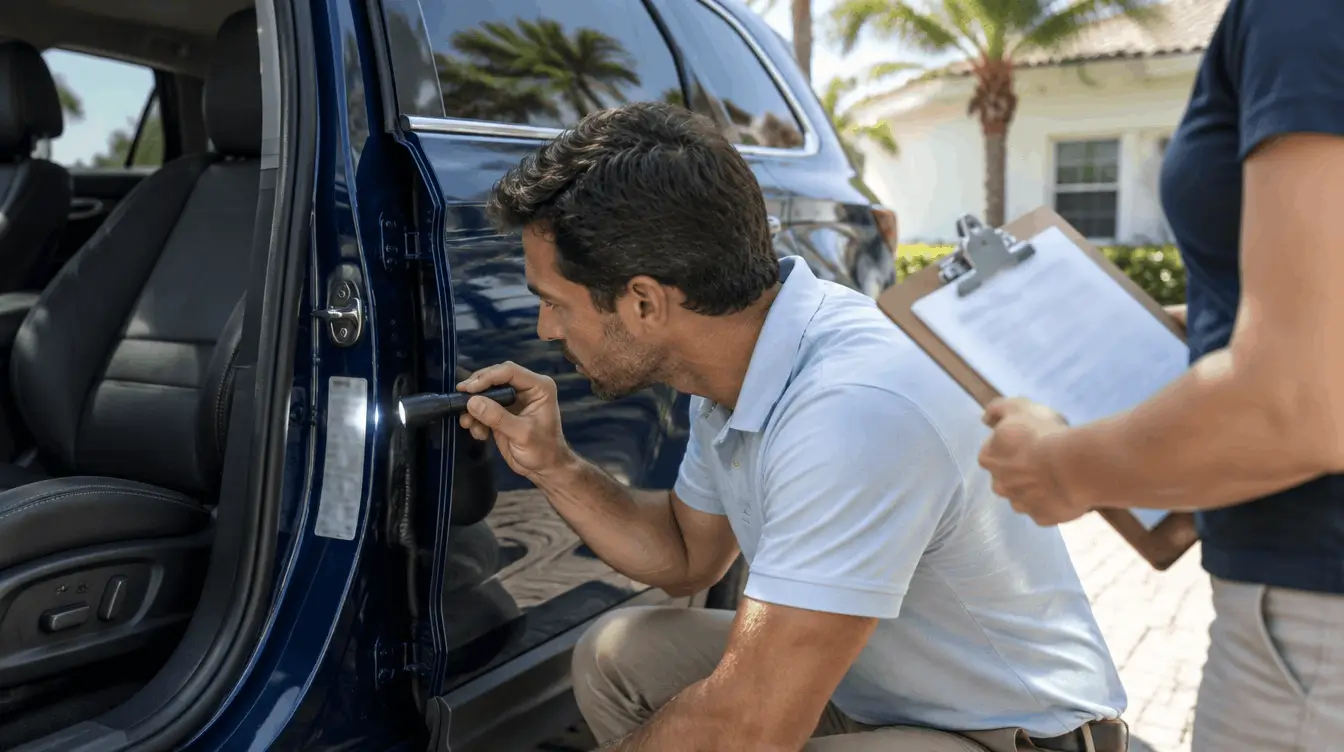
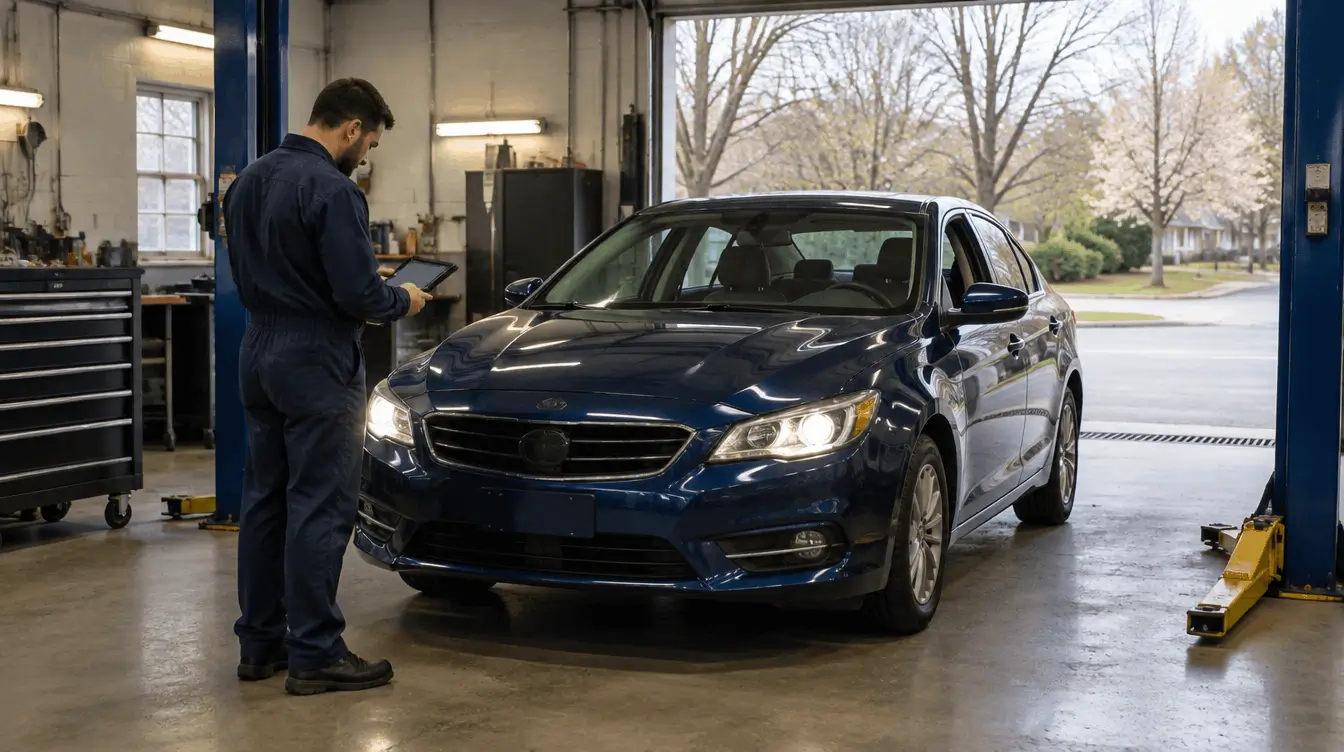
Four things get you an accurate quote: the pickup city and whether it sits near an installation, the delivery address, the last date you can be out, and whether one vehicle is moving or two. Vehicle condition matters as well, so mention modifications, low clearance or a non running vehicle at the quote stage rather than on pickup day.
If you are claiming the military discount, have a valid military ID or other official documentation confirming your military status. We verify that before the discount is applied to your quote. If someone else will hand over or receive the vehicle, arrange a power of attorney in advance, because that is the detail that most often stalls a pickup when orders move people around at short notice.
How to Spot a PCS Season Scam
Summer is when the fake operators surface, and military families are targeted precisely because PCS timing is rigid. The tell is almost always the same pairing: a quote well below everything else, and pressure for a large deposit to hold a truck.
Before money changes hands, confirm who you are dealing with. Any company moving vehicles between states for money must be registered with a federal operating number you can look up. Rivalane is a licensed property broker, which means we arrange your shipment and match it to a vetted carrier rather than driving it ourselves, and we will hand you our operating numbers without being asked. Ask any company for theirs. Ask which carrier is assigned and who insures the load. A booking site that goes vague on those questions has told you what you need to know.
When Shipping Is the Wrong Call
Two cases, and we would rather say so now than after you have paid for something you did not need. If you are heading overseas and the government entitlement already covers the vehicle, use the official contractor. Booking that car commercially means paying for transport you were entitled to for free, and it is the single most expensive mistake in this whole process.
The second case is simpler. If you are driving to the new station anyway, the distance is moderate, and the household has only one vehicle, drive it. Claim the mileage. There is no version of this where paying a carrier beats an allowance you were going to collect for a drive you were going to make.
Frequently Asked Questions
If you already know which vehicle is moving and roughly when, the fastest next step is a quote. Price your route on the calculator, or read how the wider service works on our military car shipping page. The families whose moves hold together are not the ones with the shortest distance. They are the ones who worked out in April that the second car was theirs to move.