Can You Ship a Non-Running Car?
Yes, and it happens every day. The rules are different, though. A vehicle that cannot move under its own power needs the right loading equipment, more coordination between you and the carrier, and more planning than a running car.
Winches, dollies, or lift systems come into play depending on what the vehicle can still do. Rivalane arranges transport for non-running and inoperable vehicles, matching each one with a carrier equipped to load it, and both the timeline and the price follow the car’s actual condition.
The part people miss is how much rides on disclosure. When the carrier knows exactly what it is collecting, the right truck turns up, loading stays controlled, and nobody loses a day rescheduling. Leave something out and the opposite happens, usually in the driveway with a driver who cannot load your car.
What Counts as a Non-Running Car?
A non-running car is any vehicle that cannot drive onto or off a carrier under its own power. Why it cannot matters more than the label.
Sometimes the engine will not start. Sometimes it is only a dead battery on a car that is otherwise perfect.
Missing or damaged parts count too, particularly when they affect steering or braking. Project cars and long-stored classics usually land in this category even when the problem is temporary and easily fixed.
Why does this matter so much? Because the equipment follows the condition. A car that rolls and steers loads in a completely different way from one that will not move at all.
That one detail drives the labor, the timing, and the price, because the carrier has to match the setup to the problem before the truck ever leaves.
How a Non-Running Car Is Loaded and Transported
This is where most of the confusion starts. Not all non-running cars load the same way, and the vehicle’s exact condition decides the equipment, the time involved, and which carriers can accept the job at all.
Cars That Roll, Steer, and Brake
These are the easiest to handle. The engine may be dead, but the wheels turn and the steering responds, so the carrier can winch the car onto the trailer in a few controlled minutes. Most standard carriers are set up for exactly this, which is why it stays the cheapest and the simplest case.
Cars That Don’t Roll or Steer
When the wheels lock or the steering has failed, a winch on its own is not enough. Dollies slide under the tires so the car can be moved without dragging it, which takes longer and rules out any truck that does not carry them.
Completely Inoperable Vehicles
When a car cannot roll, steer, or brake at all, loading turns into a precision job. A carrier set up for this work arrives with lift gates or a forklift and raises the vehicle onto the trailer rather than pulling it. Far fewer trucks are equipped for that, and the goal throughout is to move the car without forcing it, scraping it, or adding damage on the way up the ramp.
What Rivalane Can Arrange for a Non-Running Car
Most companies stay vague on this point, so here is the direct answer. The line that matters is whether the vehicle rolls, steers, and brakes.
If it does all three, you are in standard territory. A winch-equipped carrier can load it, and Rivalane arranges that transport nationwide, on the same routes that move running cars. This covers the large majority of non-running shipments, including dead batteries, failed engines, and cars that have sat for years but still move when pushed.
If the vehicle cannot roll, steer, or brake, transport is still possible, but it becomes a different job. It needs a carrier that arrives with loading equipment matched to its condition, and far fewer trucks carry that equipment. Those moves take more planning and more lead time, and availability is narrower. They are the exception rather than the everyday case.
Either way, the answer starts the same. Tell us the vehicle’s condition when you request a quote so we can match the right carrier and equipment. If you are not certain what the car can still do, describe what you know and what you do not. That is more useful than a guess.
Step-by-Step: How to Ship a Car That Doesn’t Run
First, disclose the vehicle’s condition upfront. Every detail counts. Does it roll? Can it steer? Are parts missing? This information decides the equipment and avoids last-minute surprises.
Next comes the quote. It is only accurate if the condition is clear, and anything left out tends to resurface later as a delay or an added fee.
Then, schedule pickup with access in mind. Tight streets, steep driveways, or blocked areas slow things down. Space matters more than people expect.
Finally, the carrier loads, secures, and transports the vehicle, and delivery follows the same care without anything rushed or forced. Once you have seen the sequence once, the whole thing stops feeling complicated.
Open vs. Enclosed Transport for Non-Running Cars
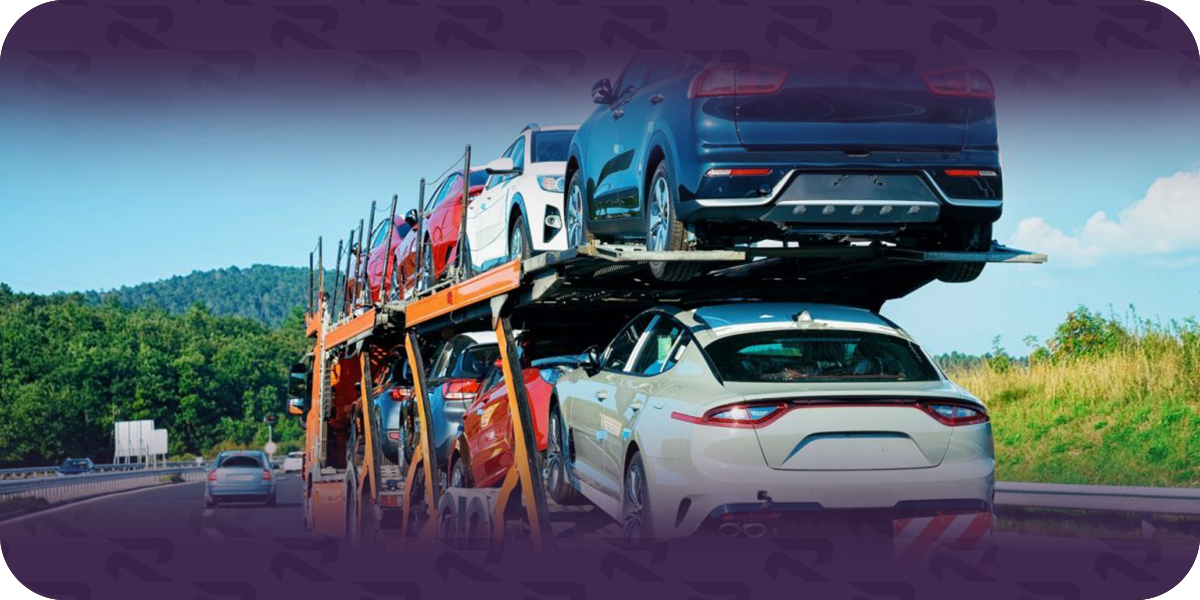
The choice here comes down to what you are protecting. Open transport is the practical option. It suits standard vehicles and budget-focused shipments, and while the car rides exposed to weather and road grime, the risk stays low for most cars. Plenty of non-running vehicles ship this way without any trouble.
Enclosed transport puts protection first. Covered loading and a closed trailer appeal to owners of classics, luxury cars, and long-term projects, and the price reflects the smaller capacity and the higher handling standard.
Neither option wins by default. One protects your budget and the other protects the vehicle, and which matters more depends on what the car is worth to you.
What Affects the Cost of Shipping a Non-Running Car?
Pricing is where most people pause, and reasonably so, because a non-running car is not quoted off a standard rate card.
At Rivalane, we price these shipments based on what the move actually requires, not a flat adjustment. Several factors stack together:
- Extra labor and loading time: the carrier works slowly and deliberately, with no rolling momentum to help.
- Specialized equipment availability: winches, dollies, and lift systems limit which trucks can take the job, and fewer trucks means tighter scheduling.
- Carrier and route restrictions: some carriers avoid inoperable loads entirely. Others accept them only on specific routes.
- Pickup and delivery access: tight streets, steep inclines, or uneven ground force on-site adjustments that affect timing.
Planning replaces speed on a move like this. Run your route through the cost calculator to see where your shipment lands.
How to Prepare a Non-Running Car for Transport
Preparation sets up everything that follows. Do it properly and the pickup stays on schedule.
First, document the condition. Walk the car and photograph it from every angle, capturing existing damage, missing parts, and anything that looks off, then write the same notes down. Dated photographs settle arguments that memory cannot.
Next, secure anything loose. Mirrors, trim, antennas and spoilers all look harmless sitting still and all become a problem on a moving trailer, so lock them down or take them off before loading starts.
Then look at access, and look at it the way the driver will. Clear the driveway, move the cars parked nearby, and check how level the ground is where the truck will have to work. Space and firm footing matter more than convenience.
Finally, say what the car cannot do, plainly. If it will not roll, steer, or brake, say so in those words. The carrier turns up prepared and loading stays controlled instead of improvised.
When Shipping a Non-Running Car Makes Sense
It makes sense whenever the car has to be somewhere else and driving it there was never on the table. That situation comes up more often than people expect.
You bought at auction or online and the listing said the car runs poorly, or not at all. You inherited one that has been sitting in a relative’s garage three states away. You are moving house and the project car, classic, or collector vehicle in the garage is moving with you. The restoration shop or marque specialist worth using is nowhere near where you live. Or the car died on a trip and you would rather it went to your own mechanic than to one you found on a map at the roadside.
It makes less sense for a short local hop. If the car only needs to cross town, a local tow operator is usually the simpler call. Arranged transport earns its place over distance, where a carrier is already running the lane you need and your car joins a load that was going anyway.
The deciding factor is the same one from earlier. If the car rolls, steers, and brakes, the full carrier network is open to you and the move is routine. If it does not, it is still possible, it just needs more notice and a narrower set of trucks. Describe the condition honestly, get a price for your route, and the rest is scheduling.
Frequently Asked Questions
Can a non-running car ship without keys?
Does a non-running car need inflated tires to ship?
Can you ship a car with mechanical damage or missing parts?
Is a non-running vehicle insured during transport?
Does shipping take longer for non-running cars?
What is the best way to ship a non-running car?
Can non-running cars ship door to door?