Weather is a frequent cause of car shipping delays, and on an open trailer it is also the main thing your car is exposed to between pickup and delivery. Most of the time it changes very little. Carriers drive through ordinary rain and cold every day of the year. What moves a schedule is severe weather: snowstorms, ice, hurricanes, flooding, and the closures that come with them.
This guide covers how each kind of weather affects car shipping, what it means for your car and your dates, who covers weather damage, and what to do before pickup and at delivery.
Does Weather Actually Delay Car Shipping?
Light rain, wind and cold rarely delay a shipment. Delays come from conditions that make the road unsafe for a loaded car carrier: heavy snow, ice, dense fog, flooding, hurricanes, and the road closures and detours that follow them. A loaded carrier is long, tall and heavy, so a driver will often stop and wait out conditions that a passenger car might push through.
Drivers also have little room to make up lost time. Under federal hours of service rules (49 CFR 395.1), a driver who runs into adverse driving conditions can drive for no more than two additional hours to finish the run or reach a safe place. Anything beyond that comes out of the schedule, and a day lost on one leg can push back every pickup and delivery after it on the same truck.
That is why Rivalane gives you an estimated pickup date and an estimated delivery date rather than a guaranteed one, and our terms name weather and road conditions as causes of delay that sit outside anyone's control. Carrier assignment typically takes one to three working days after booking. Once a carrier is assigned, you can follow your car with real-time tracking, and our dispatch team lets you know when a carrier is running late. Our guide to why delivery dates are estimates, not guarantees explains how those estimates work.
How Do Snow, Ice and Road Salt Affect Car Transport?
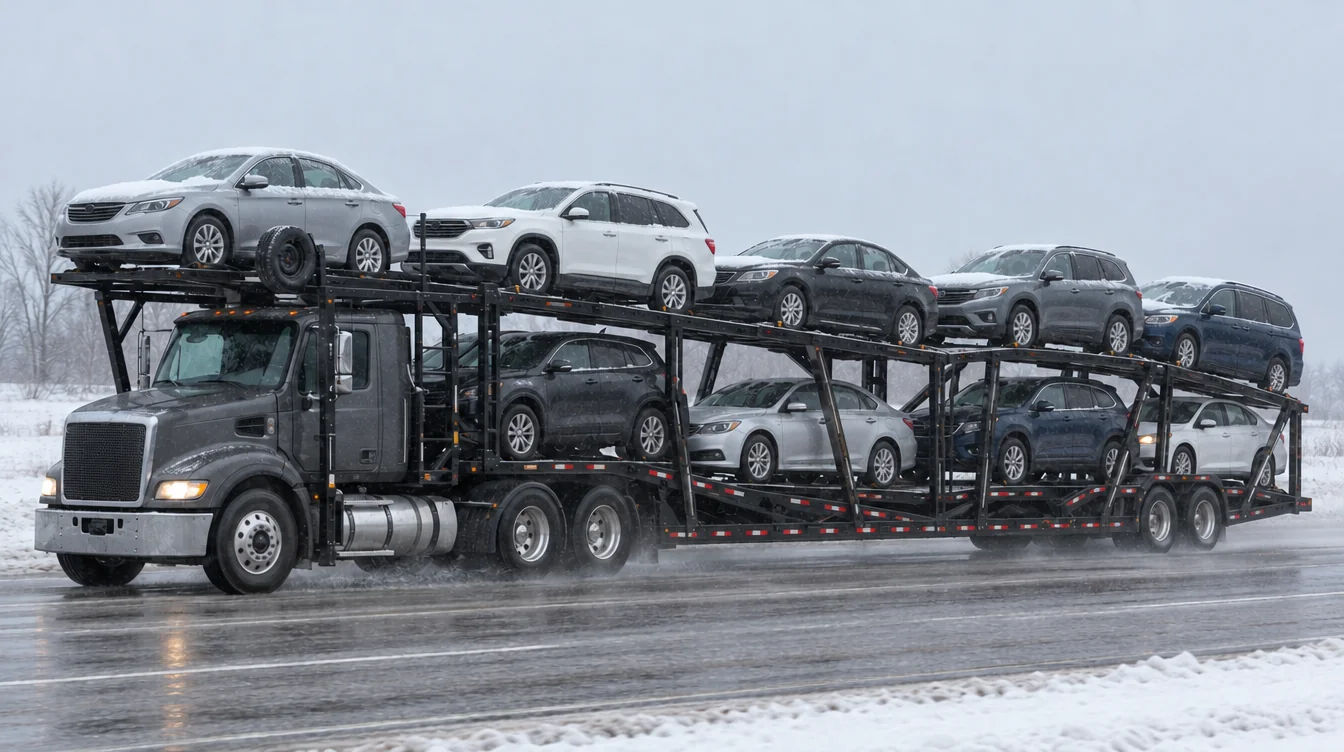
Winter is when weather delays are most likely, especially on northern routes and mountain crossings. Snow and ice slow trucks down, close passes and can shut an interstate for hours. Some states also set chain rules for commercial vehicles. Colorado requires commercial vehicles on I-70 west of Morrison to carry chains or approved traction devices from September 1 to May 31, according to the Colorado State Patrol, and Washington requires vehicles over 10,000 pounds to carry chains on its mountain pass routes, including I-90, from November 1 to April 1, according to WSDOT. When a pass closes or chains go on, a car carrier moves slowly or waits. If your route crosses Colorado or Washington in winter, plan for wider pickup and delivery windows.
The road also leaves its mark on the car. On an open carrier your car rides outside, so it collects slush, road salt and grime along the way. A dirty car at a winter delivery is normal, but salt left on the paint and underbody can encourage rust, so wash the car, including underneath, soon after it arrives.
Cold affects the car itself too. A weak battery that starts fine in a warm garage can fail at a snowy pickup or after several days on a trailer, and a car that will not start is harder and slower to load and unload. Test or charge the battery before pickup and make sure the coolant is rated for freezing temperatures.
What Does Extreme Heat Do to a Car on a Carrier?
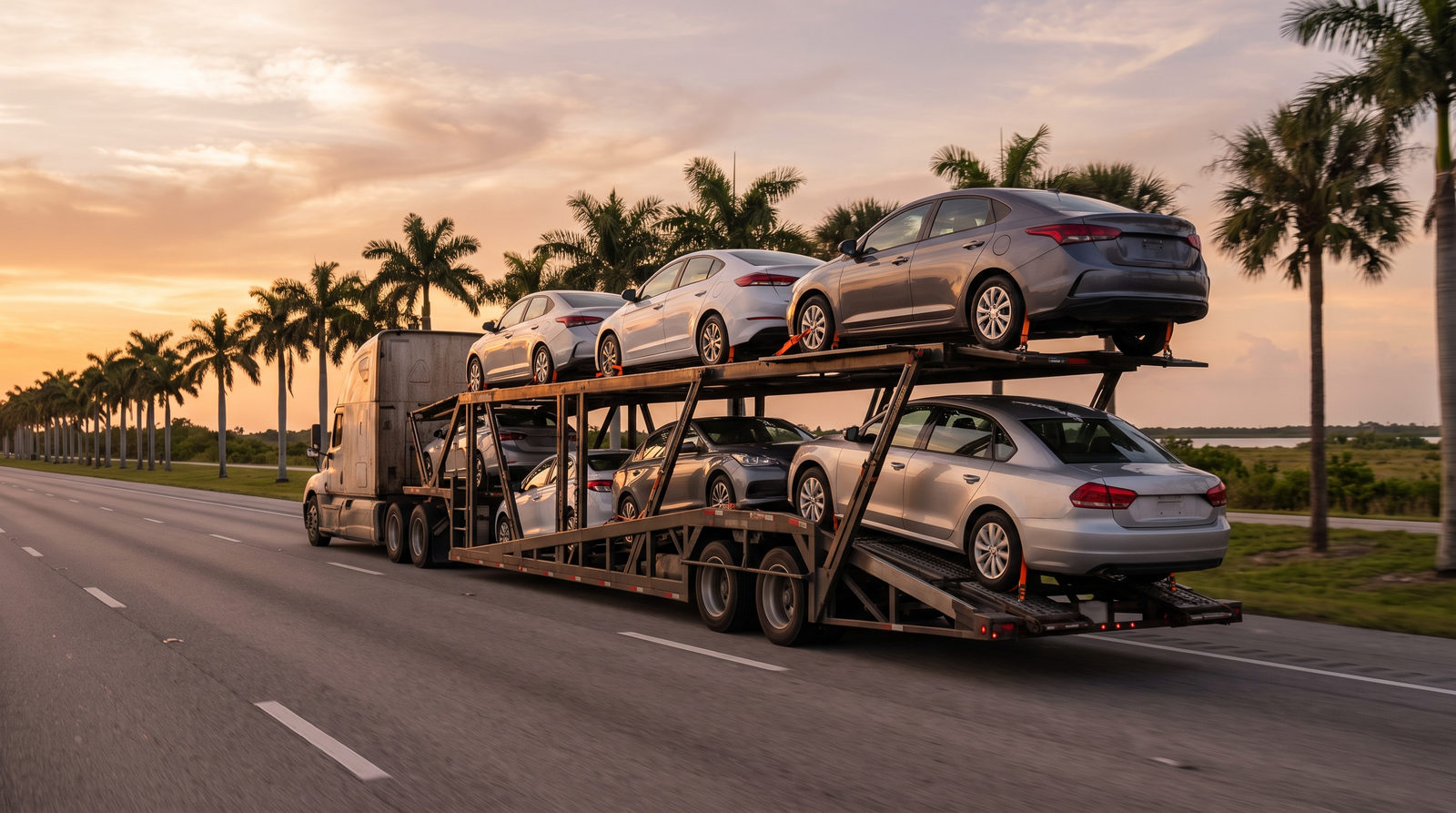
Heat causes fewer delays than snow, but it is harder on the car. On long summer runs through the desert Southwest, including Arizona, a car on an open trailer sits in direct sun for hours each day. Tire pressure climbs as tires heat up, heat shortens battery life, and dark paint, rubber seals and soft tops take the most punishment. The heat also works the truck harder, and a mechanical stop on a long desert run can add time to the trip.
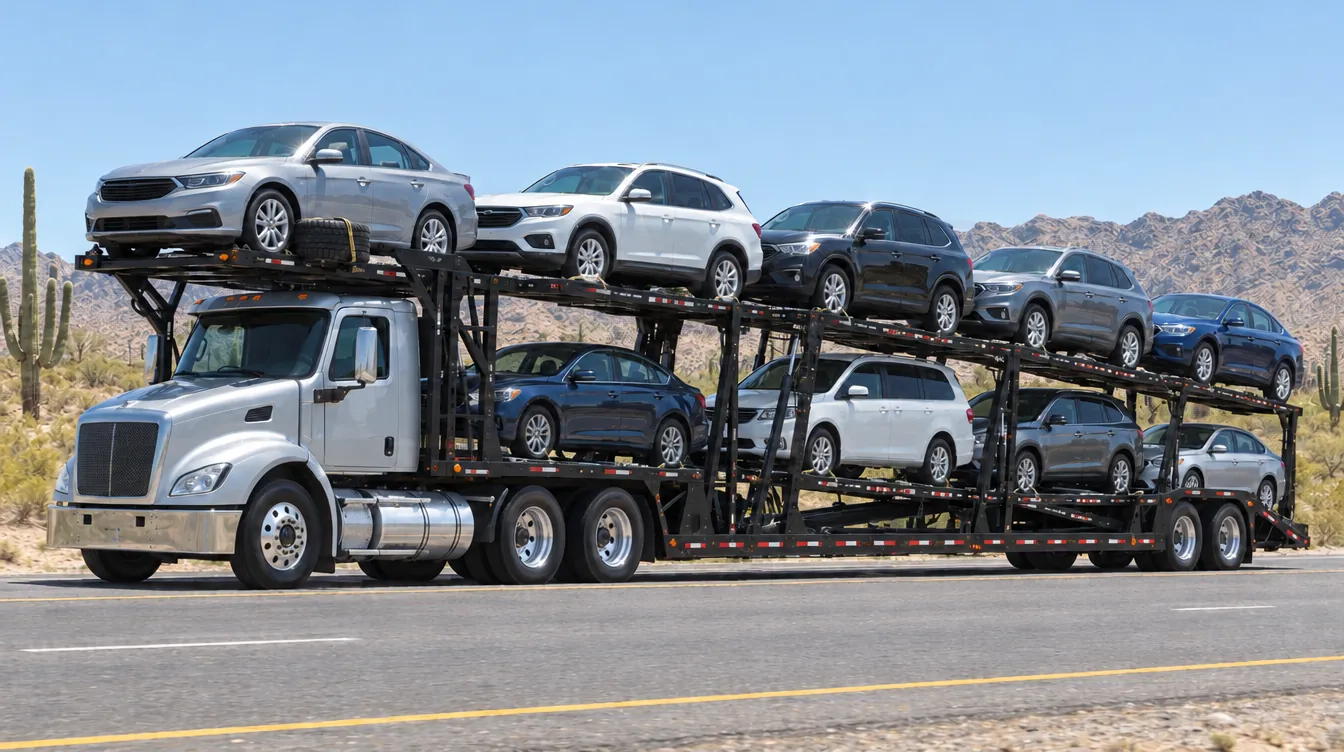
For most cars a summer trip on an open trailer is fine. If yours has fresh paint, a vinyl wrap, a fabric top or a delicate interior, enclosed transport keeps it out of the sun completely. Before pickup, set tire pressure to the figure on the driver's door jamb rather than adding extra, check the coolant, and take out anything that should not sit in a hot car, such as aerosol cans, electronics and medications. Our terms do not cover personal items left in the vehicle, so keep anything heat-sensitive or valuable out of the car.
How Do Hurricanes, Heavy Rain and Flooding Change Pickup and Delivery?
The Atlantic hurricane season runs from June 1 to November 30, with most activity between mid-August and mid-October, according to the National Hurricane Center. When a storm heads for the Gulf Coast or Florida, carriers route around the affected area, roads close for evacuations and cleanup, and pickups and deliveries in the storm's path wait until it is safe to move. The end of the season overlaps the start of the snowbird migration south, so if you are shipping a car to Florida in October or November, watch the forecast and keep some flexibility in your dates.
Heavy rain causes more trouble at the curb than on the highway. Flooded streets, soft shoulders and muddy rural driveways can keep a full-size car carrier from reaching your door. If the truck cannot get to your address safely, the driver may ask to meet at a nearby spot with firm, open ground, such as a large parking lot. Mention a steep, narrow or unpaved driveway when you book so the carrier can plan for it.
Can Weather Damage Your Car During Shipping, and Who Covers It?
Most cars come through a weather delay with nothing worse than dirt, but open transport does leave them exposed. The real risks are hail and debris thrown up or blown around in a storm. An enclosed trailer shields the car from both.
It matters who pays if that happens. Rivalane is a broker: we arrange your shipment with a licensed and insured carrier, and a claim for loss or damage is filed directly with the carrier that transported the car, under federal law. Our terms also state that neither Rivalane nor the carrier is liable for damage caused by weather conditions, including hail and storms, or by other acts of God. So do not count on the carrier's cargo coverage for hail or storm damage.
Two steps close most of the gap. Ask your own insurer whether your policy's comprehensive coverage applies while the car is in transit, since comprehensive is the coverage that usually handles hail on a parked car. And if your car is valuable or hard to repair, choose enclosed transport for routes and seasons where hail or winter storms are likely. Our guide to car shipping insurance explains the coverage in more detail.
Is Enclosed Transport Worth It in Bad Weather?
For most everyday cars, no. Open car transport is how most cars move, open trailers are far easier to book, and a wash after delivery removes the road grime. Enclosed transport earns its higher price when the car would be expensive or difficult to repair if hail, salt or debris reached it: classic and collector cars, exotics, low-clearance cars, freshly painted or wrapped cars, and convertibles with fabric tops.
If you want enclosed car transport in winter, book early. Enclosed trailers are less common than open ones, and demand for them rises when the weather turns. Our comparison of open vs enclosed car shipping covers the trade-offs, and the classic car shipping guide covers what collectors should ask before booking.
How Should You Prepare Your Car for Winter or Summer Shipping?
Weather prep takes less than an hour and heads off most problems at pickup. In winter, clear snow and ice from the whole car, roof included, so nothing slides off on the trailer, test or charge the battery, and top up washer fluid rated for freezing temperatures. In summer, check the coolant and battery and set tire pressure to the figure on the driver's door jamb.
In any season, wash the car a day or two before pickup so you and the driver can see the paint clearly at inspection, photograph every panel with the date showing, leave about a quarter tank of fuel, and take out personal items, since they are not covered in transit. Those photos are your reference if a question about damage comes up at delivery.
What Should You Check at Delivery When the Weather Is Bad?
Delivery in rain, snow or after dark is when damage gets missed. Water beads hide scratches, grime covers chips, and a streetlight shows very little. It matters because of how the bill of lading works: under our terms, signing the carrier's form or bill of lading at delivery without noting damage, whatever the lighting or weather at the time, confirms that the car arrived in satisfactory condition.
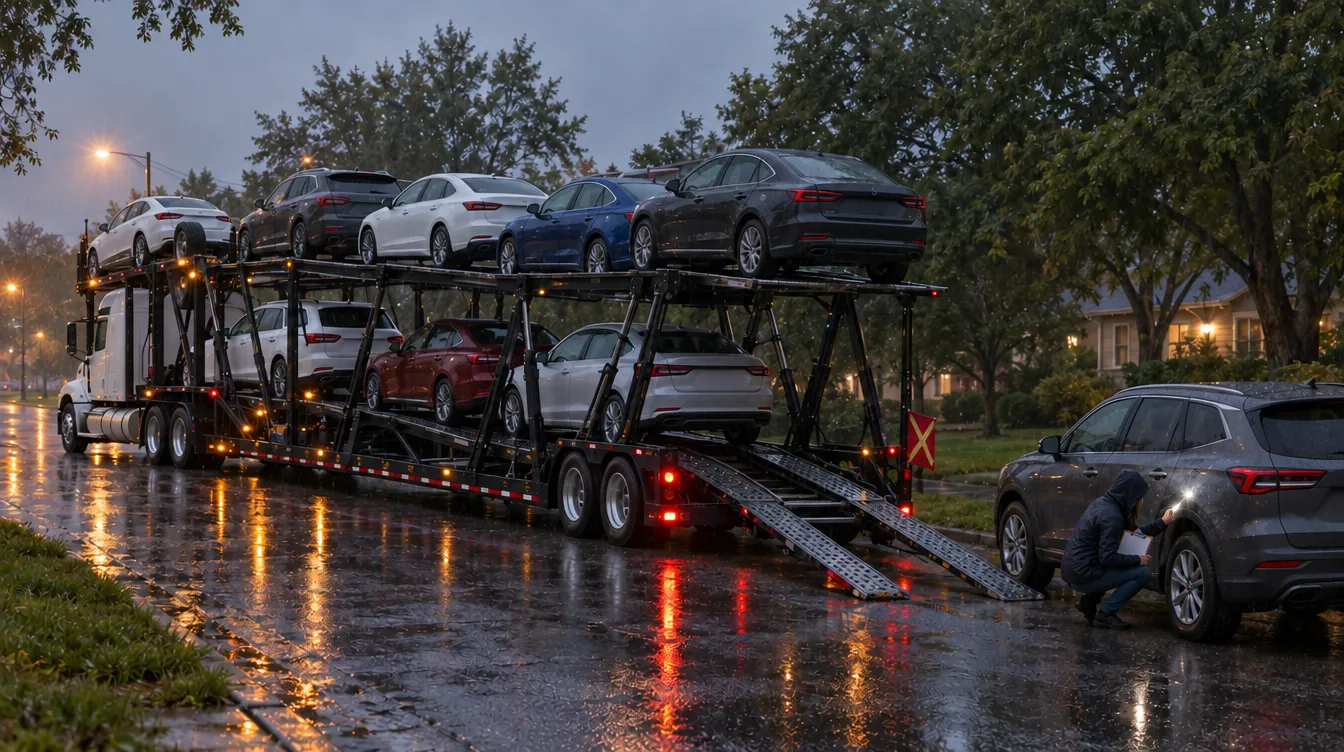
So take your time. Use a flashlight, even in daylight under heavy cloud, and work around the car one panel at a time. Wipe any dirty section you cannot see clearly, and compare what you find with your pickup photos and the condition notes on the bill of lading. If something is new, write it on the bill of lading before you sign and photograph it on the spot. A driver may want to get back on the road ahead of the weather, but the inspection is yours to finish.
If you do find new damage, report it to Rivalane within 48 hours of delivery, as our terms require, so we can send you the carrier's documents for your claim.
When Is the Best Time to Ship Around the Weather?
If your dates are flexible, spring and fall usually bring the fewest weather problems. Winter adds snow and ice on northern routes, and summer adds heat along with the busiest shipping season of the year, which we cover in the best time to ship your car. Shipping around Thanksgiving or Christmas stacks holiday schedules on top of winter weather, so read our guide to car shipping during the holidays as well. When you are ready, the car shipping calculator gives you an estimate for your route and dates.
Frequently Asked Questions