



The Connecticut to New York run covers about 40 to 160 miles into the city, onto Long Island or up to Albany, and most loads finish within 1 to 3 days. An open sedan costs about $400 to $650. Book one or two weeks early, then file for New York plates inside the 30 day limit.
How Car Shipping From Connecticut to New York Works
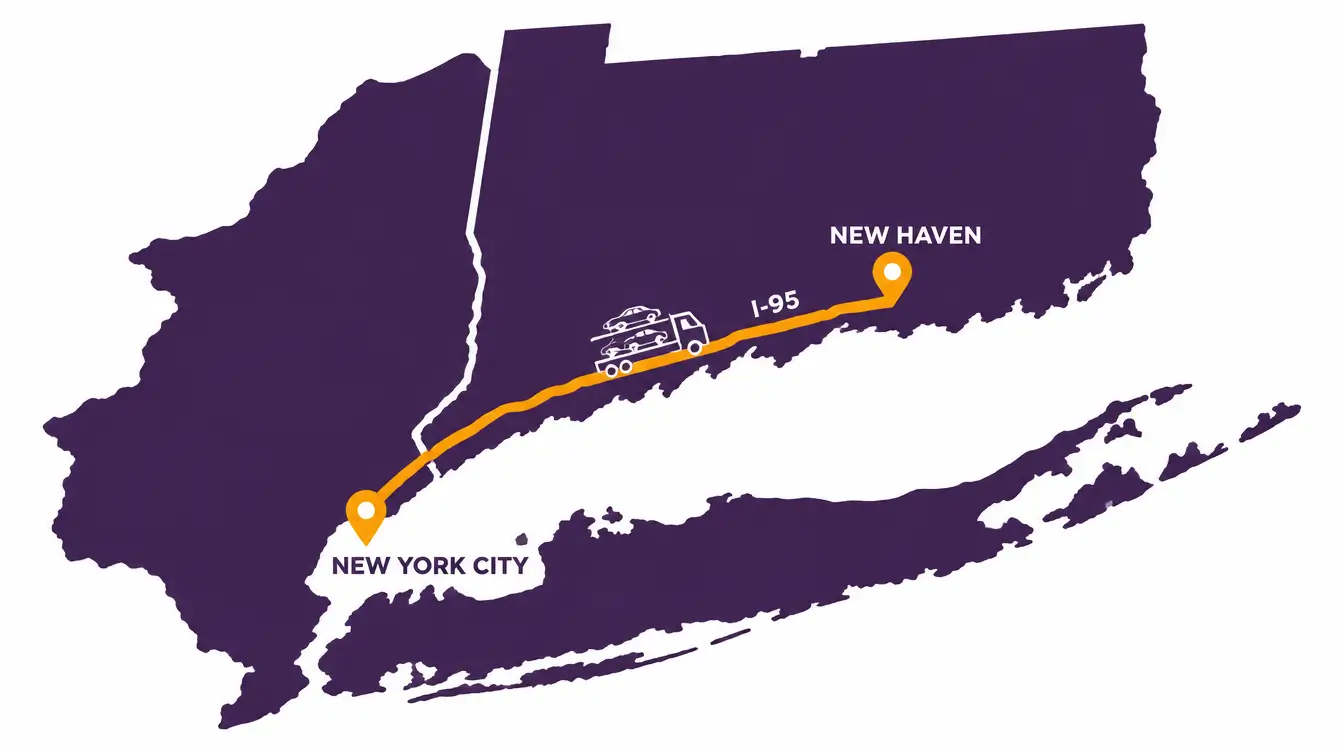
A Connecticut to New York shipment is usually a single leg of a longer carrier run. Carriers running between Boston and New York cross Connecticut on I-95 every day, so a car picked up in Greenwich, Norwalk, Bridgeport or New Haven tends to join a truck that was coming through anyway. Hartford, Waterbury and Danbury sit inland, which means the truck leaves I-95 for I-84 or I-91 to collect, then rejoins the flow toward New York. One detail catches people out: the Merritt Parkway, the route many drivers would take themselves, is closed to trucks and most commercial vehicles, so the carrier stays on the interstate. Once the car is loaded, the run into New York City or Long Island takes hours, not days, and most of the planning goes into the pickup and delivery points.
How Much Does Car Shipping Connecticut to New York Cost?
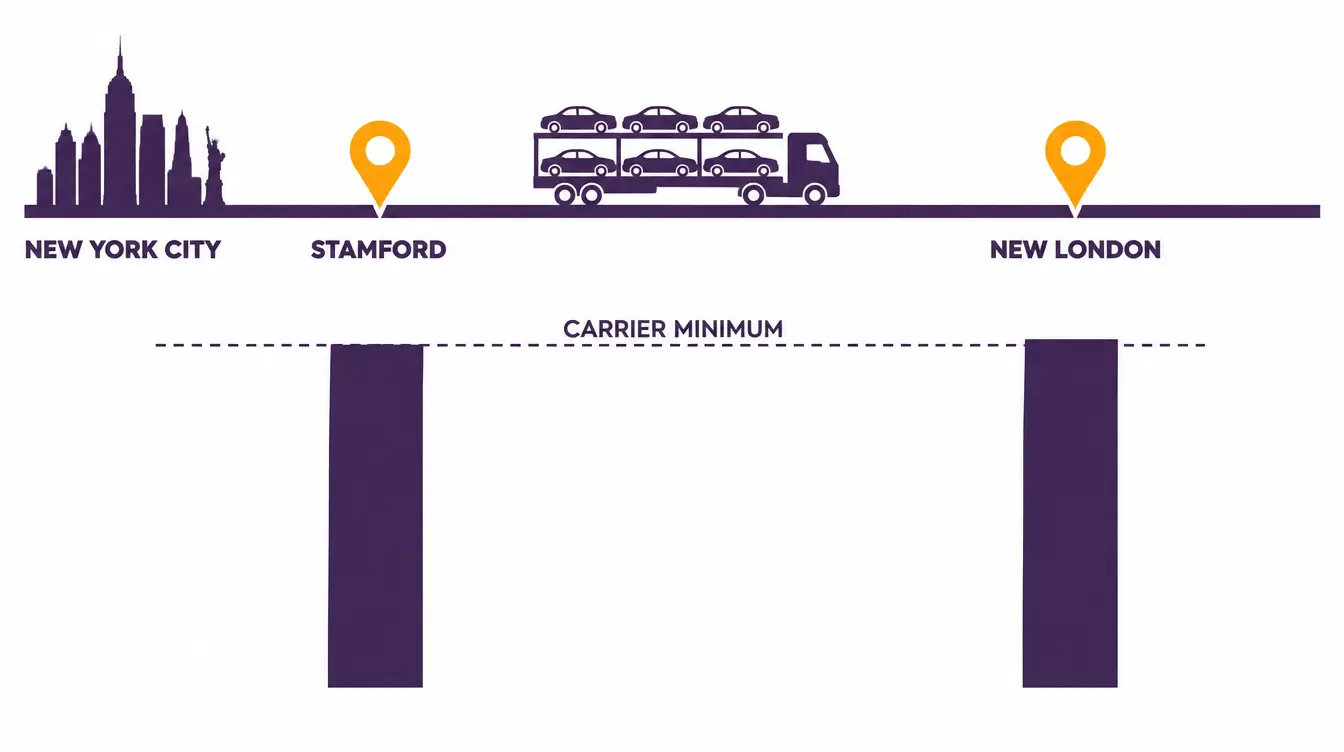
On this lane the miles barely move the price. Every stop carries a floor the carrier will not go under, which is why a 40 mile job out of Stamford and a 126 mile job out of New London quote closer together than the gap suggests.
The Connecticut starting point counts for more. Shoreline towns on I-95 slot easily onto trucks already bound for the city, while an address in the northwest hills or the quiet northeast corner asks the driver to leave the interstate.
Bigger vehicles eat into the deck, so an SUV or pickup quotes higher than a compact and leaves fewer trucks able to take it.
When a quote comes in well under everyone else, it probably assumes a truck that has not agreed to anything yet. Read it as a guess until a carrier accepts the load.
Plan on $400 to $650 for a regular sedan traveling open into the city, onto Long Island or up to Albany. A shoreline collection, a suburban drop and a loose schedule tend to land at the cheaper figure. A Manhattan handover, a demand for one exact day or starting far from the interstate drags it upward, and destinations such as Syracuse, Rochester or Buffalo, as much as about 445 miles out, can go past the top.
Covered transport tends to cost 40 to 60 percent above what open would. On a trip this brief that jump is a big part of the bill, so it is mainly worth it for collector cars, new paint and lowered builds.
Three things shift this quote more than the miles do:
- The Connecticut address. The shoreline cities from Greenwich up to New Haven line up along I-95. Litchfield County, Tolland County and the Windham area pull the truck off its line.
- The New York address. Queens, Westchester and suburban Long Island are simple stops. Manhattan normally means an agreed meeting spot, and western New York is its own run.
- The vehicle. An SUV or pickup tends to add $100 to $150, and if the car does not start, say so, since it will need a winch and a suitably equipped truck.
A number that seems too good rarely survives the moment no driver will haul the car at that rate.

What Factors Actually
Influence Pricing on This Route?
Booking early protects your timeline, keeps pricing steady, and reduces the risk of last-minute carrier changes.
Many customers on this route relocate permanently or move seasonally, which makes predictability more important than speed.
This article explains how auto transport Alabama to New York works, what it costs, and how long it takes, so you can make a clear, informed decision before you schedule your shipment.


Type
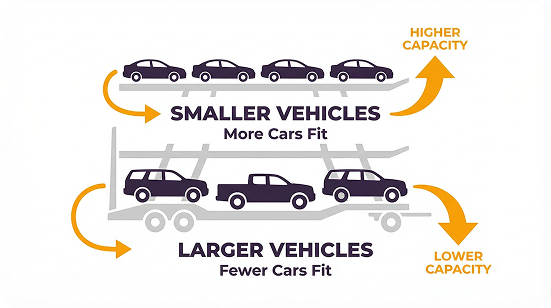
Size decides how much deck space your vehicle takes and how many other cars fit alongside it. A standard sedan is the cheapest thing to move because it slots almost anywhere on the trailer. SUVs, pickups and vans take more room and typically add a few hundred dollars on the same lane.


Is It Cheaper to Drive or Ship a Car From Connecticut to New York?
Shipping Instead of Driving
Shipping earns its keep here when the car and its owner are not making the trip together. A second family car during a move, a car picked up from a private Connecticut sale, or a gift headed to a relative in the city all fit that pattern.
It spares you a train ride back or a borrowed second driver, and nobody has to hunt for city parking before the new owner is ready.
Driving the Route Yourself
Plenty of people should simply drive this one. Hartford to Manhattan is roughly 117 miles and Stamford is about 40, so for anyone relocating with the car in tow, the drive almost always beats any shipping quote.
The sums flip when someone has to come back. A one way car with no spare driver turns a short trip into a round trip, and that is where a shipment pays for itself.
How Long Does Shipping a Car From Connecticut to New York Take?
Most cars are unloaded in the city or on Long Island inside 1 to 3 days of pickup, and a shoreline pickup frequently arrives the next morning. Albany behaves much the same, while the far upstate cities usually need the whole window.
The part that varies is how long you wait for a truck. Your car gets fitted into a run the carrier already has planned, so the delay comes from finding one with an open slot heading past your street.
Covering 400 to 500 miles is an ordinary working day for a hauler, so the driving is almost never what holds things up on this lane. Offering the dispatcher a few flexible pickup days does more to speed up the whole job than anything else.
When is the Best Time to Book Auto Transport From Connecticut to New York?
Trucks head from Connecticut toward New York in every month, so timing here is less about the season and more about fitting onto a run already on the board.
Seven to fourteen days of notice is normally plenty. Offering a spread of pickup days lets the dispatcher use the next truck passing through instead of holding out for one that matches a single date.
Snow on the inland interstates can nudge a Hartford, Waterbury or Danbury collection back, so build in some slack for a winter pickup away from the coast.
Open vs Enclosed Auto Transport on a Connecticut to New York Route
Open transport handles the bulk of this lane. The car sits on the familiar two level carrier and gets about the same weather and spray it would on its own trip down the shoreline, just for a few hours.
Enclosed means the car travels inside a walled, roofed trailer. Those trucks carry fewer vehicles, fill their calendars sooner and charge more, and over a short distance the extra is a bigger share of the total.
Go enclosed for a vintage car, an exotic, a just finished restoration or anything low enough to catch on ordinary ramps. A commuter car, a spare family car or a car sold privately travels perfectly well open.
Enclosed Car Transport
Enclosed demand rises for high-value, specialty and seasonal vehicles, and enclosed trailers protect against road debris and weather, which matters most on longer hauls. Enclosed rigs are a small fraction of the trailers working any given lane, and that scarcity is what drives both the higher price and the longer booking lead time.
Open Car Transport
Most vehicles move on open trailers, and for most routes that is the more cost-effective way to ship a car.
Open transport works well for standard vehicles and keeps costs predictable. It also offers the widest carrier availability.
What New York Requires When Your Car Arrives
Anyone settling in New York gets 30 days to put the car on state plates, and nothing moves at the DMV until a New York insurance policy is on file. On a trip this short, sort the policy out before the truck arrives in Connecticut.
- Insure in New York first. Coverage must come from an insurer that holds a license from the New York financial regulator, and out-of-state coverage of any kind is refused. The legal minimum covers one injured person to $25,000, one death to $50,000, and when several people are hurt in one crash the floor climbs to $50,000 of injury cover and $100,000 where lives are lost, with property damage covered to at least $10,000. Your insurer hands you an ID card and also reports the policy to the DMV electronically, the DMV wants both, and you have 180 days from the effective date on that card to register.
- Register inside 30 days. Send Form MV-82 together with the original Connecticut title (copies are rejected), proof of who you are and the tax forms. Where a bank holds the title, it supplies a copy certified on that same sheet and a letter on its own letterhead saying the original stays with the bank. Applicants still living outside New York can file by mail.
- Sort out the tax. The DMV will either collect the state sales tax, accept proof you already paid it, or accept proof you owe none, and it hands over a receipt whichever way it goes. Someone who bought the car before moving here claims the non-resident exemption on Form DTF-803, and a county use tax is likely on top.
- Get it inspected. Cars registered in New York pass a yearly safety check, and for most models the same visit includes an emissions test. An unexpired inspection from your old state keeps working until its expiry date or twelve months after New York registration, whichever comes sooner, though a car arriving from a place that gives out no sticker needs a New York inspection right away.
- Swap your license within 30 days. You must go to a DMV office in person, pass their eye check or bring an eye report, and give up the Connecticut card there. Someone studying at a college in the state is usually not treated as a resident.
- Close out Connecticut. The Connecticut DMV expects you to cancel the registration after moving away. Until you do, the car stays on the property tax list of your old town. Canceling costs nothing and works online.
Sources: the New York DMV guide for cars coming from another state, along with its insurance, inspection, sales tax and license exchange pages, and the Connecticut DMV page on canceling a registration. Rules change, so recheck the current versions before the car ships.
What to Expect at Pickup and Delivery
Each end of this lane deserves a little planning, since a long car hauler needs space to load and swing around.
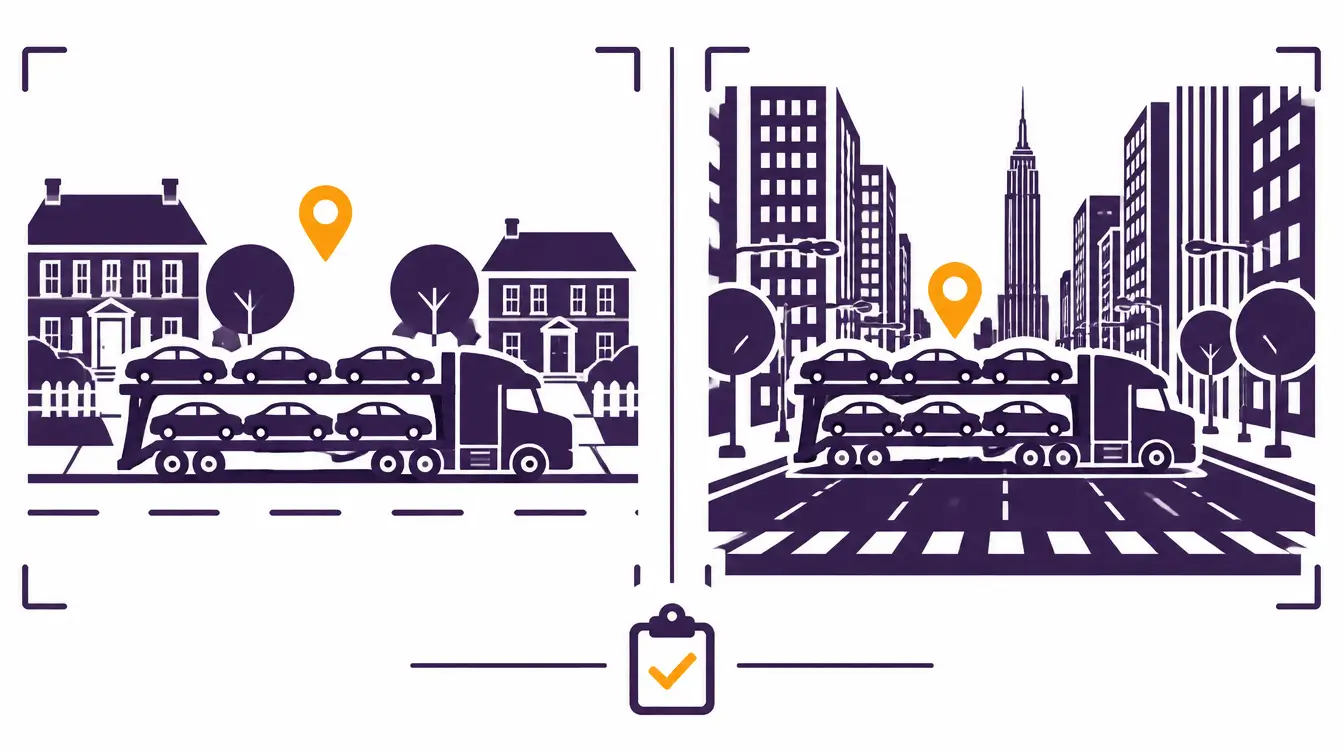
Most Connecticut driveways and suburban streets work, though tight lanes in old town centers and private roads inside gated communities can mean loading from a nearby lot instead. Mention steep drives or sharp turns when you book.
In New York City plan on a meeting spot rather than your door, above all in Manhattan, where a trailer that size cannot work most blocks. Queens, the Bronx, Westchester and Long Island are easier, and Albany drop offs are rarely complicated.
When the car is collected, the driver circles it and logs each scratch or chip as the bill of lading is filled in, and that record is compared again before you sign at delivery. Keep your own photos, dated, from both handoffs.
Key Things to Know Before Shipping a Car From Connecticut to New York
Rivalane coordinates Connecticut to New York car shipping from Long Island, where it is based, and puts each car on a truck that already works the I-95 shoreline. Agree the pickup and delivery points before a truck is assigned, because over such a short distance the handoffs decide both the price and the timing.
Frequently Asked Questions



