





Florida to Kansas covers about 890 to 1,800 road miles, and most cars arrive 3 to 6 days after loading. Moving a sedan uncovered between Miami and Kansas City, Kansas usually runs $1,000 to $1,500. Book about two weeks ahead, and plan a Kansas Highway Patrol VIN inspection before the county treasurer will title the car.
How Car Shipping From Florida to Kansas Works
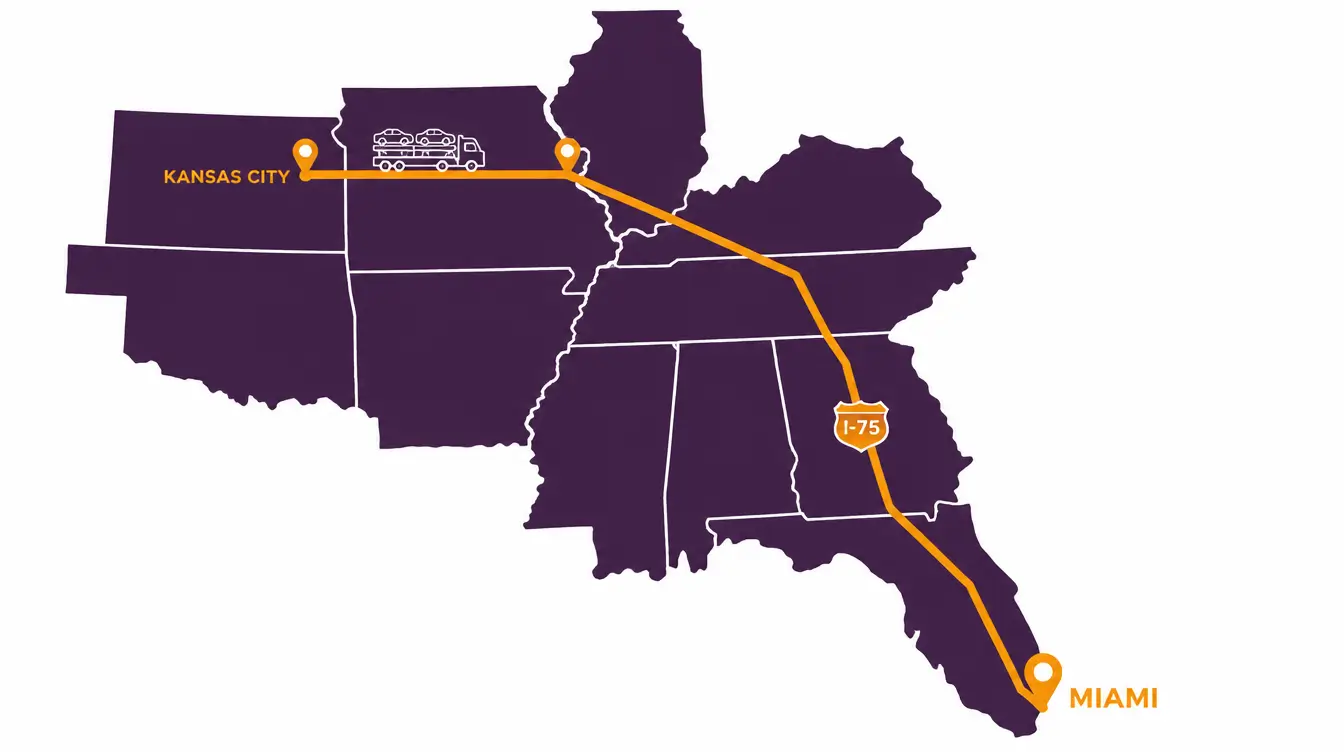
Both route calculators we used put Miami about 1,465 road miles from Kansas City, Kansas, with the load heading up the peninsula, north on I-75 into Tennessee, through Nashville and St. Louis, and west on I-70 into Kansas. Wichita sits roughly 95 to 155 miles farther from Miami, and its route lines leave that corridor early, cutting across Alabama to Memphis, Little Rock and Tulsa before turning north. Topeka, Lawrence, Manhattan and Salina follow the same approach past Kansas City, while Dodge City and Garden City are usually reached through Wichita and sit about 245 to 355 miles past Kansas City from any Florida start. Tampa and Orlando pickups begin about 205 to 225 miles closer than Miami, Jacksonville about 315, Tallahassee roughly 420 to 480 and Pensacola about 560 to 575. On a run this long the trailer usually carries several other cars, each with its own stop between Florida and the plains. What most often decides the pickup date is not the distance but how soon a truck bound for Kansas has an empty spot on its deck.
How Much Does Car Shipping Florida to Kansas Cost?
The Florida address moves the price first. A Pensacola or Tallahassee pickup starts several hundred miles nearer to Kansas than one in Miami, and the southern peninsula is usually the costliest place on this lane to begin.
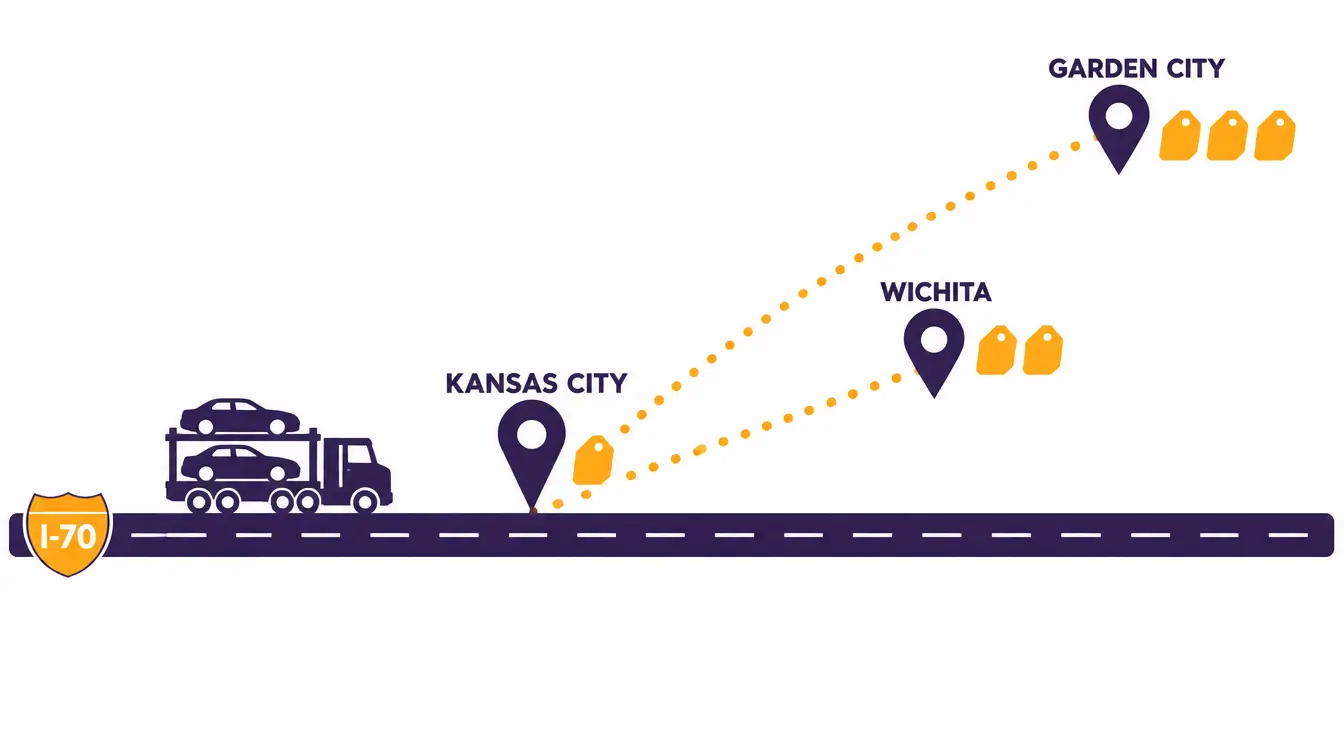
Which Kansas city the car goes to matters almost as much. The Kansas City side of the state is the easiest drop-off, Wichita adds roughly a hundred miles or more, and Dodge City or Garden City add another stretch where few trucks head back east with a load.
Size counts as well. A full-size pickup, a large SUV or a passenger van takes up deck room a compact would otherwise fill, so it is billed higher for an identical run.
One quote sitting well under every other deserves suspicion. Numbers promised before a hauler has signed on usually rise once the search for an actual truck begins.
Budget roughly $1,000 to $1,500 to move an ordinary sedan uncovered from Miami to Kansas City, Kansas. A Panhandle or Jacksonville origin, a Kansas City area destination and staying loose on dates all point toward $1,000. Starting at the southern tip of the peninsula, ending in Wichita or western Kansas, or pinning one pickup day all point toward $1,500, and the farthest pairings may exceed it.
Covered transport generally carries a premium of 40 to 60 percent over an open deck, a sensible spend for collector cars, exotics, recent bodywork or lowered builds.
Three things move the quote beyond the headline mileage:
- Where in Florida it starts. On both route calculators, Kansas City, Kansas is about 895 to 905 miles from Pensacola, 1,150 from Jacksonville, 1,240 to 1,260 from Orlando and Tampa, and 1,465 from Miami.
- Where in Kansas it ends. From Miami, Lawrence and Topeka add about 35 to 65 miles past Kansas City, Wichita about 95 to 155, and Dodge City or Garden City about 245 to 335.
- The vehicle. A pickup truck or SUV usually costs $150 to $250 more than a sedan. An inoperable car must be pulled up with a winch, fewer haulers are equipped for it, and the quote climbs to match.
A price is only a price once a hauler has said yes to it.

What Factors Actually
Influence Pricing on This Route?
Booking early protects your timeline, keeps pricing steady, and reduces the risk of last-minute carrier changes.
Many customers on this route relocate permanently or move seasonally, which makes predictability more important than speed.
This article explains how auto transport Alabama to New York works, what it costs, and how long it takes, so you can make a clear, informed decision before you schedule your shipment.


Type
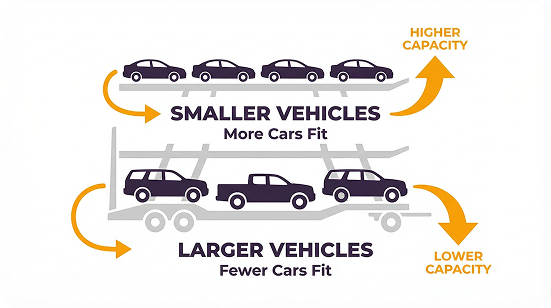
Size decides how much deck space your vehicle takes and how many other cars fit alongside it. A standard sedan is the cheapest thing to move because it slots almost anywhere on the trailer. SUVs, pickups and vans take more room and typically add a few hundred dollars on the same lane.


Is It Cheaper to Drive or Ship a Car From Florida to Kansas?
Shipping Instead of Driving
Transport pays off if a new job in Overland Park, Wichita or Topeka begins before a road trip could get you there, if a Kansas buyer bought the car from a Florida seller, or if a household has two cars heading north and only one driver.
It also spares the car somewhere between 900 and 1,800 highway miles, and nobody needs a return flight to Florida afterward.
Driving the Route Yourself
The route calculators estimate roughly 22 and a half hours behind the wheel from Miami to Kansas City, Kansas, about 18 from Jacksonville and under 15 from Pensacola to Overland Park. Most people split that into two or three days, which adds hotel nights, meals and fuel.
For someone relocating alongside the car with a few spare days, the drive is usually the cheaper option. Shipping makes more sense with a plane ticket already booked, a second vehicle to relocate, or a Kansas buyer who cannot travel to Florida to pick the car up.
How Long Does Shipping a Car From Florida to Kansas Take?
From loading to delivery, most moves on this lane run 3 to 6 days. Panhandle cars headed for the Kansas City area tend to be first to arrive, while cars leaving Miami or the Keys for Dodge City or Garden City tend to be last.
The days before loading vary more than the drive itself. Dispatch typically lines up a hauler within a few business days, and giving several usable pickup dates puts more Kansas-bound trucks in reach.
Hauling a full deck with several drop-offs, a truck typically covers 400 to 500 miles on each full day of driving, which makes the Miami to Kansas City, Kansas leg alone about three to four days on the road.
When is the Best Time to Book Auto Transport From Florida to Kansas?
About two weeks of notice covers most bookings on this lane. Allow more if the pickup has to happen on one specific day, the car is going to western Kansas, or it starts from the Keys or a remote Florida address.
Our own search data shows most interest in this lane from late spring into early summer, so a move in that window is worth booking early with a flexible pickup range.
Weather can move dates at either end. A tropical storm nearing the Florida coast during hurricane season can delay a pickup, and blowing snow across the open plains of western Kansas can slow the final miles in the colder months.
Open vs Enclosed Auto Transport on a Florida to Kansas Route
The usual choice here is an open two-level carrier, with the car riding among several others and picking up the same rain, road grit and bugs a drive to Kansas would leave on it.
A covered trailer shelters the car for the whole trip, beach humidity to plains dust. Enclosed rigs carry fewer vehicles, so each spot is pricier and may need extra lead time to book.
That premium makes sense for a restored classic, a high-end sports car, a fresh respray or a slammed car with almost no ground clearance. An everyday commuter car rides open without trouble.
Enclosed Car Transport
Enclosed demand rises for high-value, specialty and seasonal vehicles, and enclosed trailers protect against road debris and weather, which matters most on longer hauls. Enclosed rigs are a small fraction of the trailers working any given lane, and that scarcity is what drives both the higher price and the longer booking lead time.
Open Car Transport
Most vehicles move on open trailers, and for most routes that is the more cost-effective way to ship a car.
Open transport works well for standard vehicles and keeps costs predictable. It also offers the widest carrier availability.
What Kansas Requires When Your Car Arrives
Two agencies handle a car coming into Kansas, in a set order. A Kansas Highway Patrol inspector examines it first, and afterward the treasurer of the county where it will be garaged completes the Kansas title and plates.
- The 90-day clock. The Kansas Department of Revenue Division of Vehicles requires a Kansas title and registration once a vehicle has been located in Kansas for up to 90 days or more, and it counts frequent absences, such as weekends away with the intent of returning, as time in the state.
- VIN inspection before the title. Any vehicle on an out-of-state title, whatever its age, needs a motor vehicle examination by the Kansas Highway Patrol, recorded on form MVE-1. The inspection yields a pink MVE-1 copy, which goes to the treasurer together with the title and proof of insurance. When a Florida lender still has the title, it faxes both sides to the treasurer or the inspection station, and you bring a current, unexpired Florida registration.
- When form TR-65 can replace the MVE-1. Kansas residents on active military duty in another state, full-time students at out-of-state schools and owners whose vehicle is temporarily out of state for reasonable cause, such as a seasonal resident, may use the out-of-state VIN verification instead. A vehicle that is only temporarily away still needs an MVE-1 after it returns before the Kansas title is printed.
- No safety or emissions test. Kansas does not run a safety or emissions inspection program.
- Use tax and the Florida credit. A vehicle bought outside Kansas owes Kansas compensating use tax at the rate for your registration address, unless tax paid in the state of purchase equals or exceeds that rate, or the vehicle had its first substantial use outside Kansas, which the Department of Revenue treats as at least six months. The Department of Revenue lists Florida among states that collect sales tax even on vehicles leaving them, and Kansas credits tax legally paid there up to the Kansas amount, so bring proof of payment to the county treasurer. Vehicle property tax, set by county, is also due at registration.
- Insurance. The Kansas Insurance Department lists the minimum policy as $25,000 per person and $50,000 per accident for injury liability, $25,000 for property damage, personal injury protection that includes $4,500 per person for medical expenses and $900 a month for up to a year of lost income, and uninsured and underinsured motorist limits of $25,000 and $50,000. Proof of coverage is needed to register.
- Your license. The Division of Vehicles gives new residents 90 days after establishing residency to replace a Florida license with a Kansas one.
- Closing out Florida. FLHSMV says a vehicle that keeps a Florida registration must stay insured in Florida, that owners who move must register in their new state, and that the Florida plate must be surrendered when the Florida insurance is cancelled. County tax collectors advise turning the plate in before the policy ends, to avoid a suspension on your Florida license.
Source: the Kansas Department of Revenue Division of Vehicles titling FAQ, with tax rules from Department of Revenue publication KS-1526, the license deadline from the Division of Vehicles driver license FAQ, insurance minimums from the Kansas Insurance Department auto shopper guide, and the departure points from FLHSMV and Florida county tax collector guidance. Rules and fees change, so check them with the county treasurer before the delivery date.
What to Expect at Pickup and Delivery
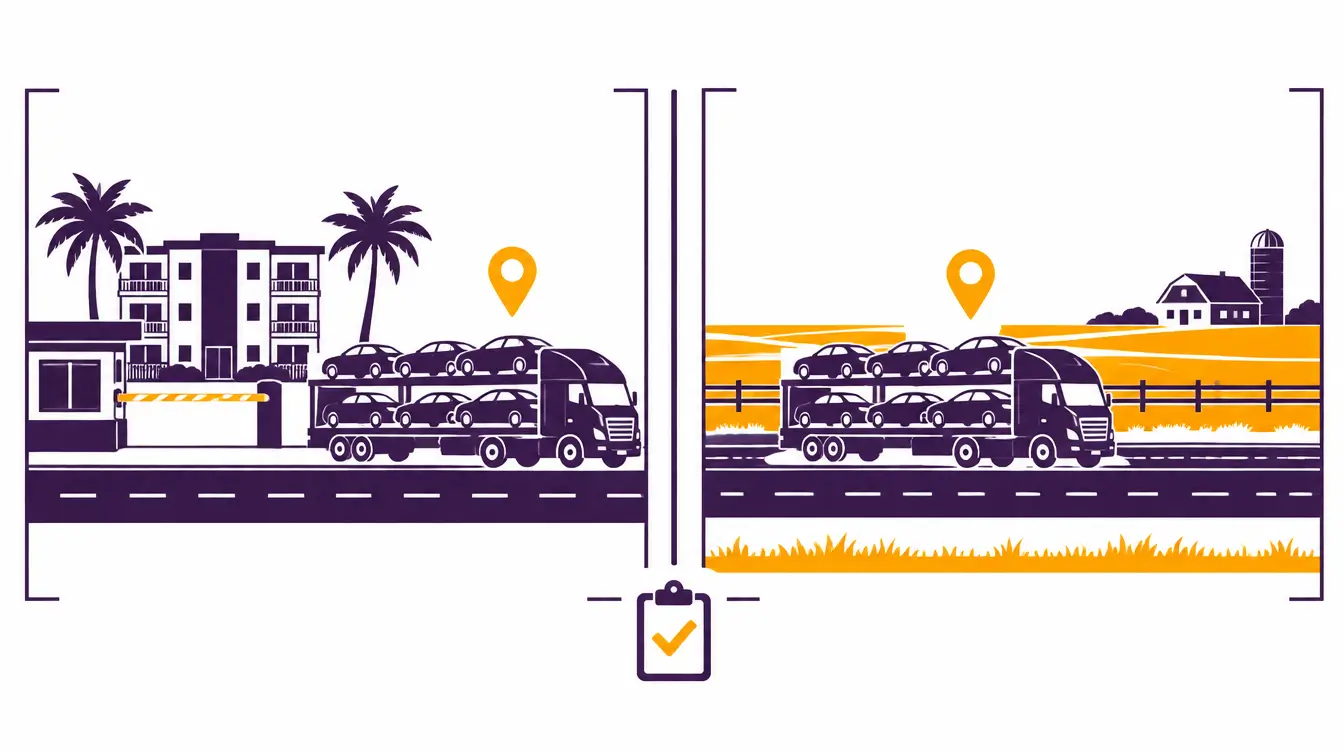
A lot of Florida pickups sit behind a guard gate, inside a condo parking structure or on a tight island street where a full-length hauler cannot turn. The driver then usually phones with a nearby wide road or big retail lot where the car can change hands.
In Kansas, the suburban streets of Overland Park, Olathe and Lenexa normally give the truck room to unload close to the house. Farther west, rural section roads, long gravel drives and farm entrances can move the handover into the nearest town, and a snowfall can force a different meeting spot with little warning.
Plan to attend both handovers. At loading the driver marks every existing scratch, chip and dent on a vehicle diagram inside the bill of lading. At delivery in Kansas, the car is measured against that diagram. Read the diagram closely before you sign, and keep time-stamped photos of your own.
Key Things to Know Before Shipping a Car From Florida to Kansas
Rivalane coordinates Florida to Kansas moves from Long Island, pairing each car with a truck bound for Kansas that still has an empty position. Tell us the Kansas city as well as the state when you book, because Kansas City, Kansas and Wichita are reached by different highways and priced on their own mileage.
Frequently Asked Questions



