What “cheapest cross country” actually means in 2026
People searching for cheap car shipping usually want two things at once: a low number and a company they will not regret. Those goals pull in opposite directions if you treat “cheapest” as a ranked list. The lowest advertised price is often a bait quote. The useful question is what cheapest cross country car shipping actually costs on your route, and which companies can deliver that price without cutting insurance, paperwork, or pickup.
On Rivalane’s site, typical U.S. car shipping often lands between $500 and $1,500. That range is not a promise for every ZIP code. Distance, vehicle size, whether the car runs, open versus enclosed transport, and how busy the corridor is all move the number. Longer routes often look better on a per-mile basis because loading, dispatch, and empty miles get spread out. A 200-mile hop can still feel expensive because those fixed costs do not shrink.
Rivalane is a broker, not a carrier with its own fleet. The company started in 2024 and works through a vetted carrier network. That matters for how you should read any “cheapest companies” page in 2026: you are comparing how a broker or carrier prices, insures, and dispatches a real truck, not collecting trophies. Get a route-specific number from the car shipping calculator before you treat any blog range as your budget.
This guide covers what actually makes a shipment cheaper, how to compare cheapest car shipping companies cross country without a fake ranking, and the checks that keep a low quote from turning into a cancelled pickup.
What cheap car shipping typically costs
There is no honest 2026 rate table that fits every sedan, pickup, and classic. Quotes are route-specific. The $500–$1,500 band you see on Rivalane is a planning range for many domestic moves, not a menu. A short regional run on an open trailer can sit near the low end. A long coastal move, a large SUV, an inoperable vehicle, or enclosed transport can sit higher. Remote pickups and tight date windows push the same way.
Cross country is where people get surprised in both directions. A Florida-to-California sedan on a busy lane can price more reasonably than a short rural hop because trucks already run that corridor. See a live example on Florida to California car shipping. The opposite is also true: a “short” move off the interstate network can cost more per mile than a 2,000-mile haul between two metros.
Use ranges to sanity-check a quote, not to shop. If someone is hundreds below every other written number for the same dates and the same vehicle, ask what is missing: insurance, a real carrier, or a pickup that will get re-traded until the price rises.
Why longer routes can cost less per mile
Carriers price a job, not a tourist mile. Loading, inspection, fuel to the first ramp, and the empty miles after delivery are real costs whether you ship 300 miles or 2,300. On a long haul those costs get diluted. That is why cheap cross country car shipping is often a better per-mile deal than a weekend hop between two small towns.
Corridor density matters as much as mileage. Trucks want freight on the way back. City pairs with regular auto-hauler traffic fill faster and bid more competitively. Isolated origins force a driver to deadhead in, which shows up in the quote even when the map looks short.
What actually makes shipping cheaper
The cheapest way to ship a car is rarely a coupon. It is a set of choices that make your load easier to dispatch. Brokers and carriers will say this in different words. The mechanics are the same.
Open vs enclosed cost
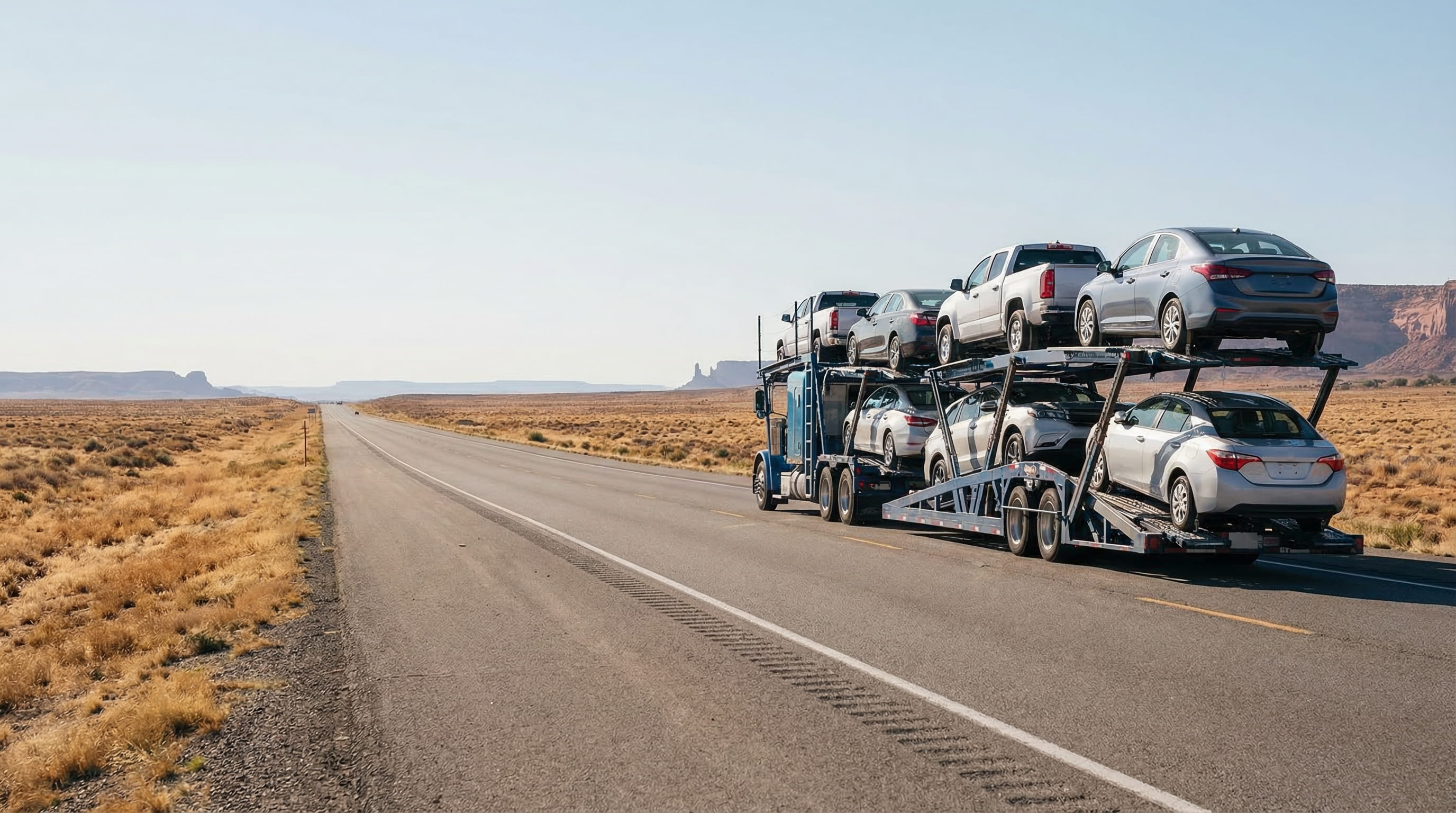
Open car transport is the default for most daily drivers. Several vehicles ride on an open trailer. That density is why open is usually the cheaper option and why it is easier to find a truck. Weather and road debris are part of the trade. For a commuter sedan or a used SUV, that trade is how most cheap car shipping gets done.
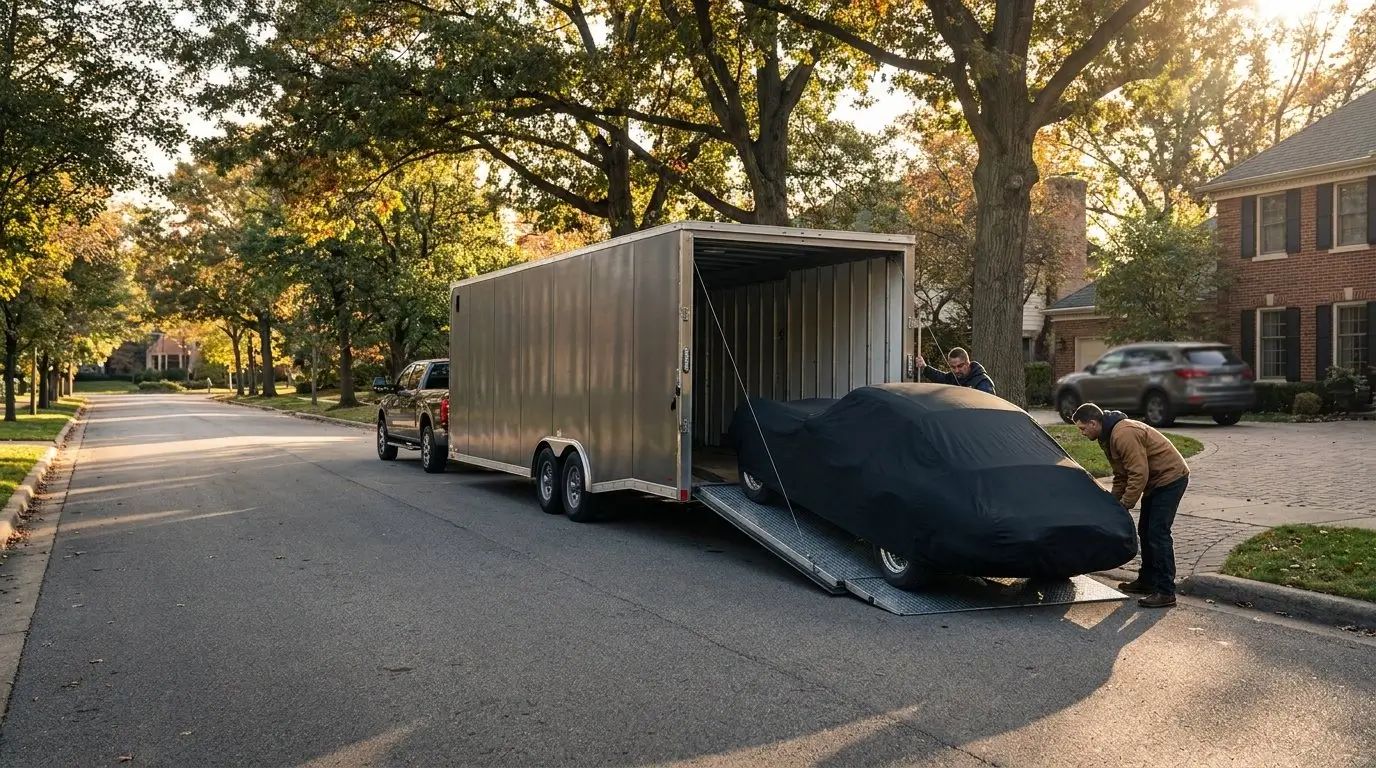
Enclosed car transport costs more because the trailer holds fewer cars and those trailers are scarcer. Enclosed is the right call for a high-value, classic, or freshly painted vehicle. It is the wrong lever if your only goal is the lowest number. If someone quotes enclosed prices that look like open, read the fine print. You may be looking at an open load with marketing language, or a number that will not hold.
Open versus enclosed is the largest single cost switch most shippers control. Choose enclosed when the car’s value justifies it. Choose open when you want cheap cross country car shipping and the vehicle can take a highway trip the way it already does in daily use.
Flexible dates beat a locked Tuesday
A one-day pickup window is a premium product. Carriers build routes from several booked cars. If your Tuesday is the only Tuesday that works, the dispatcher has fewer trucks that already pass your street. A three-to-five-day window is the usual way to get a better price without changing the vehicle or the cities.
Holiday weeks, the late-summer move rush, and snow-belt winters all tighten capacity. Booking early does not freeze a fantasy rate, but it gives the broker time to place the load on a truck that is already heading your way. Last-minute “I need it tomorrow” orders pay for empty miles and overtime, not for a secret discount.
An operable vehicle is cheaper to move
If the car rolls, steers, and brakes, a standard open trailer can load it under its own power. Inoperable vehicles need a winch, more time, and sometimes a different trailer. That is a surcharge, not a suggestion. Tell the broker the truth before the quote. A “it starts sometimes” car that dies on the ramp is how a cheap number becomes a problem on the driveway.
Modifications matter too. A lifted truck, a low kit, oversized tires, or a roof rack can change whether the car fits a standard spot. Accurate year, make, model, and running status are how you keep a written quote honest.
Busy corridors price better than lonely ones
Metro-to-metro lanes have more trucks looking for the next car. That competition is what “cheap” actually is in this industry: more carriers willing to take the load at a market rate. Rural ZIPs, islands of demand, and one-way mountain routes do the opposite. You can still ship them. You should not expect the same number you saw on a coastal pair.
If you can meet a truck closer to a highway-friendly pickup, say so. Door-to-door still means a safe, legal place the trailer can reach, not always the exact curb in a gated alley. A short drive to a wide street can keep the quote in the cheap-car-shipping range when the alternative is a refused pickup.
Book early, pay the right amount at the right time
Early booking is about dispatch, not about wiring the full balance. A reasonable deposit to reserve the order is common. Full payment before a truck is assigned is a classic auto-transport red flag. The cheapest companies in any honest 2026 comparison are the ones that put the price in writing, name what is included, and do not demand the entire invoice before pickup.
If a quote is only verbal, it is not a quote. If the company will not put USDOT or MC numbers on the order, you are not comparing a company. You are comparing a phone voice.
How to compare cheapest car shipping companies in 2026
Skip the fake top-ten list. Rankings that do not show methodology, dates, or who paid for placement are ads. Compare brokers and carriers the same way a careful shipper already should: authority, insurance, payment terms, and a written quote that matches the car you actually have.
Check USDOT and MC before you send a deposit
Interstate auto transport requires federal operating authority. Look up the USDOT and MC numbers on the FMCSA site. You want active authority, not a screenshot from a homepage. Confirm whether you are talking to a broker, a carrier, or both. Brokers arrange the truck. Carriers own or operate the truck. Both can be legitimate. Mixing them up is how people expect a dispatcher to be the driver.
Rivalane operates as a broker with a vetted carrier network. That is a feature when you want coverage across many lanes. It is also a reason to ask who the assigned carrier is once a truck is dispatched, and to keep the order paperwork.
Ask what insurance actually covers
Cargo coverage sits with the carrier, not in a slogan. Ask for the certificate or the stated cargo limits in writing. Understand that a trailer policy is often shared across the vehicles on that load. Personal items in the cabin are usually excluded. Pre-existing damage that is not on the bill of lading is a weak claim. The cheapest quote in the world is expensive if a door ding has no paper trail.
Walk the car with the driver at pickup. Photos on your phone plus the condition report are the record. Do the same at delivery before you sign.
No full prepay, no mystery fees
A written quote should say the transport type, the pickup window, whether the car must run, and what happens if dates slip. Deposit versus balance due on delivery should be explicit. Cash-only, gift-card, or “wire the full amount today to hold this rate” is not a cheap deal. It is the scam pattern the industry has used for years.
Compare the same job. Same origin, same destination, same vehicle, same dates, same open or enclosed choice. A $200 gap on mismatched assumptions is not a comparison.
Read the quote like a contract preview
Look for the pickup window, not a fantasy hour. Look for access notes: low trees, tight condos, commercial-truck restrictions. Look for inoperable or oversize language. If the company cannot explain a line, do not fill the gap with hope. Call +1-855-748-2526 or email hello@rivalane.com and ask for the line in writing.
Reviews help as a pattern check, not as a scoreboard. One five-star essay and one one-star rant do not tell you much. Repeated complaints about bait quotes, silent dispatch, or “the price went up when the driver called” tell you the company’s cheap number was never the real number.
Open vs enclosed, door-to-door, and when to spend more
Cheap is the wrong goal for some cars. A low-mileage sports car, a restored classic, or a vehicle you just detailed for sale may belong in enclosed transport even if open would save money. The extra cost buys a sealed trailer and a smaller load, not a magic guarantee. You still inspect at both ends.
Door-to-door is how most private-party shipments run. Terminal-to-terminal can look cheaper on paper and then add storage, after-hours fees, and a rental car to retrieve the vehicle. For a household move, door-to-door is usually the cleaner total. Meet the truck where a 75-foot rig can turn. That small flexibility is often worth more than hunting a $40 difference between two brokers.
If you are deciding between “save now” and “protect the paint,” price both. Use the calculator, then ask for open and enclosed on the same route. The gap is the real open vs enclosed cost for your car, not a national average someone invented for a blog table.
A live route check: Florida to California
Long coastal pairs are a good test of the “cheapest companies” story. Florida to California is a real, published Rivalane route, not a stand-in. Distance is large, so the total is not a $500 errand. Per-mile, it often behaves like other busy long hauls: more trucks, more backhaul logic, more reason to book a window instead of a single morning.
That is the pattern to copy on other cross-country pairs. Ask what the open-trailer number is with a flexible window and an operable car. Ask what changes if the car does not run, if you need enclosed, or if pickup is far off the interstate. Those three questions will tell you more than a branded “2026 cheapest list.”
How to get a number you can use
Start with the car shipping calculator. Enter the real cities, the real vehicle, and whether it runs. Treat the result as the start of a written quote, not a coupon. If the dates are flexible, say so. If you can meet the truck a few miles from a tight driveway, say so. Those details are how cheap car shipping stays cheap after dispatch.
Rivalane’s job as a broker is to place that order with a vetted carrier, not to invent a national price list. You should still do the same checks you would with anyone else: authority, insurance, written terms, no full prepay. If you want a person on the line, call +1-855-748-2526 or write hello@rivalane.com.
Do not wire a balance to “hold a driver” you have not been assigned. Do not leave bags, electronics, or a title packet in the cabin and assume cargo insurance cares. Do not sign a delivery report in a parking lot without walking the car. The cheapest shipment is the one that arrives as described, on a quote you can still recognize.
A short checklist before you book
- Written quote for this vehicle, these ZIPs, and this transport type
- Active USDOT and MC on the company you are paying
- Clear deposit versus balance; no full payment before a truck is assigned
- Pickup window of several days if you want the cheaper dispatch
- Operable status and any modifications stated up front
- Open versus enclosed chosen on purpose, not by accident
- Photos plus a condition report at pickup and delivery
If a company fails two or more of those, the low number is not a bargain. It is unfinished work. Another broker with a slightly higher written quote and a truck that shows up is the cheaper outcome.
Where Rivalane fits
Rivalane is not going to claim a private fleet, a decade of awards, or a fabricated review count. The company is a broker that started in 2024, listed with the BBB for about two years, and books through a vetted carrier network. The commercial point of this page is narrower than a trophy wall: if you want cheap cross country car shipping that is still a real order, get a route-specific quote and compare it with the checks above.
Use the calculator, or call +1-855-748-2526. If the car is high-value, price enclosed. If it is a daily driver and the dates can move a few days, price open. That is the cheapest way to ship a car that still looks like a professional shipment when the driver pulls up.
Frequently Asked Questions
How much does cheap car shipping cost in 2026?
What is the cheapest way to ship a car cross country?
Why is enclosed car transport more expensive?
How do I compare cheapest car shipping companies without a ranked list?
Is a very low quote a good sign?
Does door-to-door cost more than a terminal?
Is Rivalane a carrier or a broker?
How do I get a route-specific quote?