Winning the auction is the easy part. What comes next is where Bring a Trailer buyers get caught out, and the biggest reason is that most of the advice online is now out of date.
Here is the short version. You have two real options for getting the car home. Bring a Trailer sells its own transport service, and you can quote it inside the listing before the auction even ends. Or you arrange transport yourself through a broker or carrier. Both are legitimate. Which one fits depends on the car, the route, and how much say you want over who touches it. Either way, sort the payment, confirm the title, and start on the truck the day you win rather than the week after.
So you won. What actually happens now?
People assume a site like BaT works the way a dealership does, where somebody in the back handles everything and you wait for a call. That is closer to true than it used to be, and it is still not the whole picture.
Bring a Trailer connects you with the seller, charges its buyer fee, and offers you shipping. What it does not do is make the rest disappear. The car is sitting wherever that seller keeps it, which is usually a home garage, a driveway, or a small specialty shop. You still confirm how you are paying. You still check the title. And you still decide who moves the car.
Timing matters more than most first time buyers expect. Auto transport runs on trucks that are already half booked, so a car posted for pickup today competes with every other car on that lane. Wait a week and you are choosing from what is left rather than from the best available. Whichever route you take, start the day you win. Running your route through a car shipping calculator takes a minute and gives you a number to judge everything else against.
Should you use BaT Shipping or arrange your own transport?
This is the question the older guides skip, because most of them were written before Bring a Trailer began selling transport directly.
On its own shipping page, Bring a Trailer describes BaT Shipping as its integrated vehicle transport service, available on auction listings and, more recently, for privately owned vehicles as well, anywhere in the contiguous 48 states. You enter a pickup and delivery ZIP, the year, make and model, the vehicle type, and whether the car runs, and it returns an instant quote for open or enclosed transport. BaT states that the price shown is the price you pay, that each order includes coverage under the transporter's insurance, and that you receive an order link to follow the shipment. If you did not quote it before you won, BaT says you can generate one afterwards from your bids and wins page.
So when does arranging it yourself make more sense? BaT's own page answers part of that. It notes that the calculator may not be accurate for oversized or specialized vehicles and directs those buyers to request a personalized quote instead, and it refers to listings where BaT Shipping was not offered at all. Between them, those two exceptions cover a lot of what actually sells on the platform: the low, the wide, the non running, the freshly restored, and anything you want on a particular type of trailer with a driver somebody has vetted.
The honest read is that BaT Shipping is a convenient default for a running, standard sized car on a common route. Arranging your own transport gives you a choice of carrier, a person to call, and someone who will tell you before pickup whether the equipment actually suits the car. Get both numbers before you commit. Quoting inside the listing costs nothing, and neither does a second quote.
Why is a private driveway the hardest pickup in shipping?
A dealership is built for car haulers. Wide gate, room to swing a full-size car hauler around, staff who move cars all day. A Bring a Trailer pickup is the opposite of that. It is a house on a residential street with parked cars along the curb, low tree branches, a tight turn at the corner, and sometimes a homeowners association that flatly bans big trucks from the road.
This is where the phrase door to door trips people up. Door to door is real and it is the standard, but it means the truck gets as close to the door as it can safely and legally manage. On a lot of streets that is the actual driveway. On plenty of others it is a supermarket parking lot two blocks away where the driver can load without wedging a trailer between parked cars and a mailbox. That is not a company cutting corners, that is physics, and it applies whoever you booked with. The buyers who feel let down are almost always the ones who pictured the hauler backing up to the garage no matter what the street looked like.
Money, title, and truck: why you can't treat them as one step

The cleanest shipments have one thing in common. The buyer treats paying, transferring the title, and booking the truck as three separate jobs, done in that order. The messy ones compress all three into a single frantic afternoon.
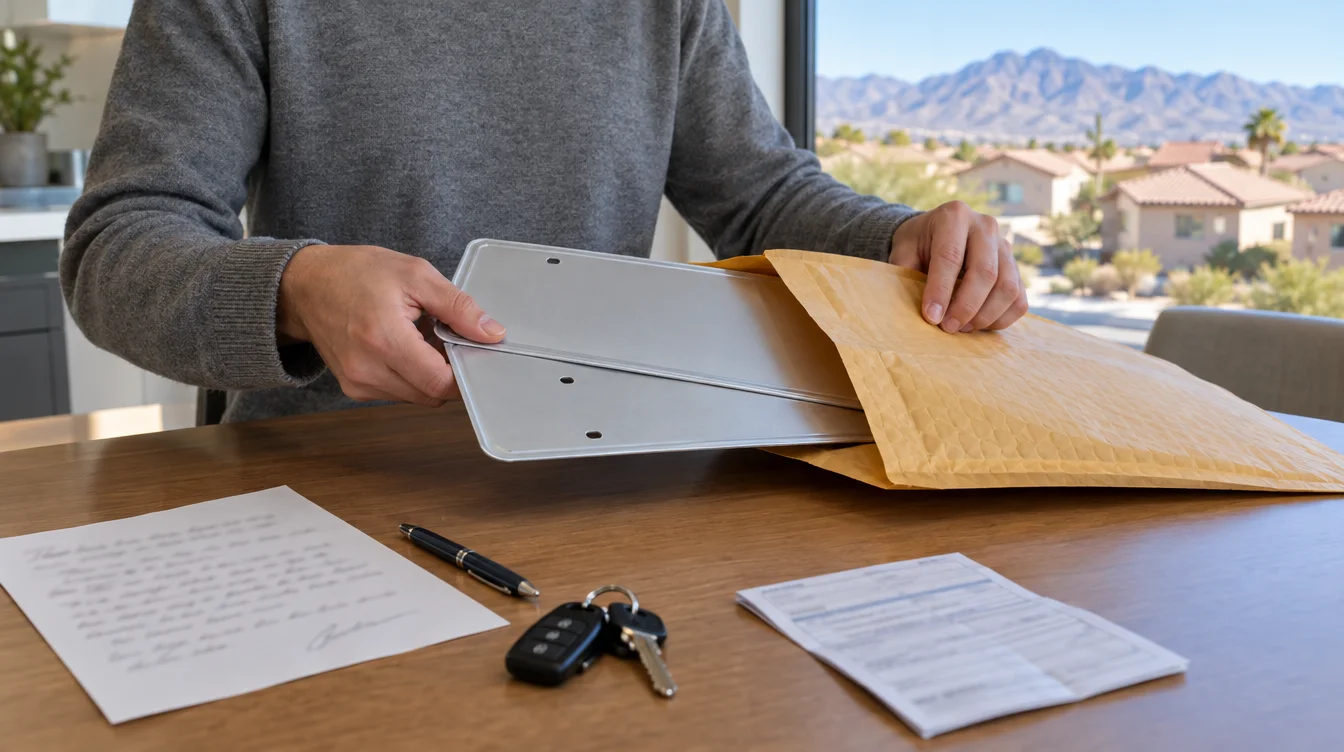
A transport company moves the car. That is the whole job. It does not handle your payment and it does not manage the title. Bring a Trailer does offer a service called Verified Checkout that covers payment, identity verification and title paperwork, though BaT states it is available only for private party purchases where the buyer and the seller are both in the United States. Outside that, the paperwork is yours to run.
The detail that catches people either way is a lien. If the seller still owes money on the car, the title is sitting with a lender, and there is a payoff and a lien release before it is free and clear. That can add days nobody planned for. Book a truck for Thursday, then find the title is still with a bank in another state, and you are paying to reschedule a pickup that was never going to happen. Confirm the title is in the seller's hand before you lock a pickup date. It sounds obvious and it is the single most common thing people skip.
Why does the same distance cost different amounts?

Most people think shipping price is mileage times a rate. It is not. The real driver is how busy the route is. A car moving between two major metros rides a lane that dozens of trucks run every week, so it gets picked up quickly and costs less. A car the same distance away, sitting in a rural county that no hauler routinely passes through, costs more and waits longer, because a driver has to go out of his way for it.
Since a Bring a Trailer car can be anywhere somebody happened to own it, this matters more here than on an ordinary move. Two shipments that both read "about 800 miles" can come back at very different numbers, and it has nothing to do with the odometer. It is about whether trucks already want to be on that road.
Open or enclosed for a Bring a Trailer car?

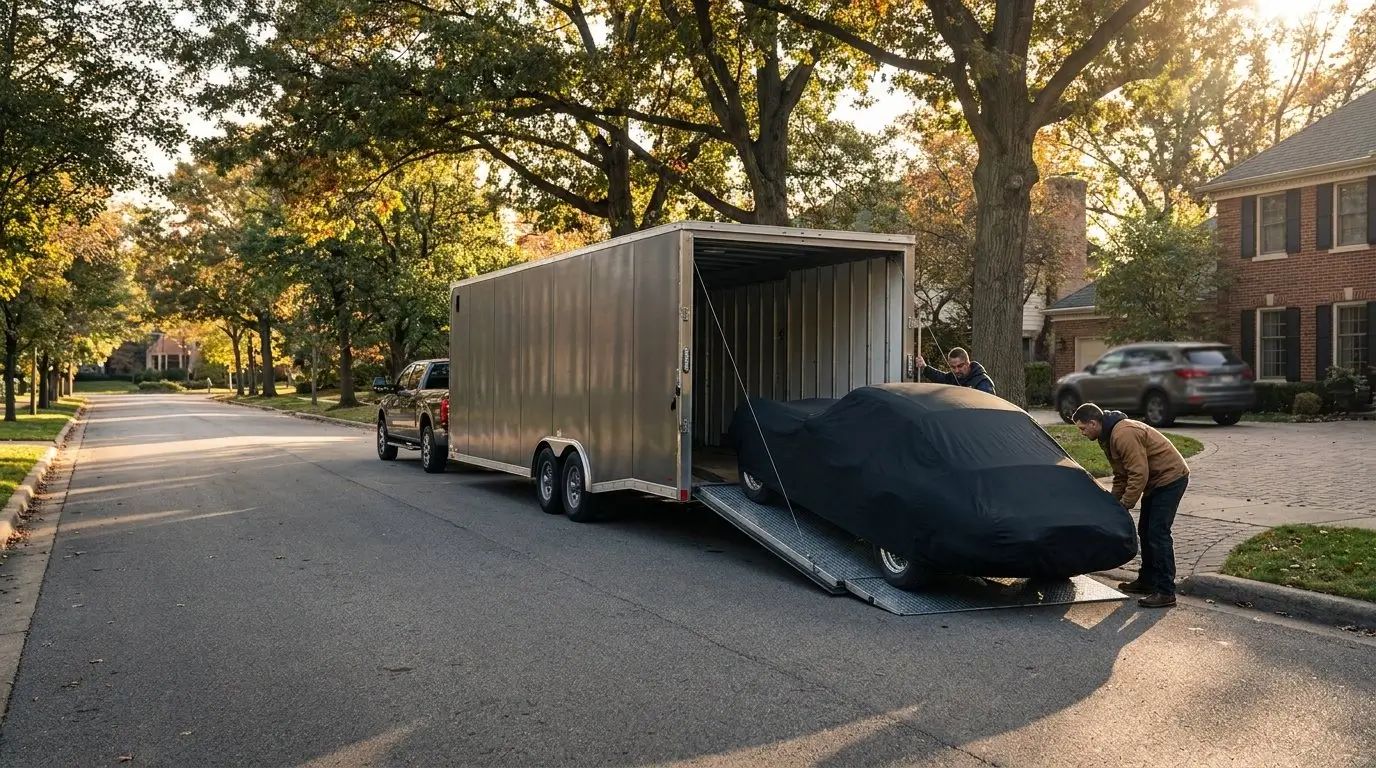
Open transport is the workhorse of this industry and for most cars it is completely fine. But BaT cars are not most cars. They skew rare, valuable, freshly restored, lowered, or modified, which is exactly the profile where enclosed car transport earns its keep.
Enclosed costs more than open. What the difference buys is a trailer that shields the car from weather and road debris, fewer cars per load, higher insurance limits, and a driver who handles valuable cars for a living. For a running weekend driver, open is the sensible choice. For a numbers matching classic, or a low and delicate build that took someone two years to finish, enclosed is usually the right call. Match the trailer to the car rather than to the lowest number on the screen. Both BaT Shipping and any broker worth using will quote you either one, and we have gone through the full comparison in our guide to open vs enclosed car shipping.
What if the car doesn't run?
A surprising number of enthusiast auction cars are projects. They do not start, or they do not roll, or the brakes are seized and the car will not steer. This is not a small detail to mention later. It decides whether a truck can take the car at all.
A non running car needs a winch to get it aboard. A slammed car needs low clearance ramps or a liftgate so the front lip does not grind off during loading. If nobody tells the carrier up front, the truck can show up, take one look, and physically not be able to load it, and then the whole thing reschedules. Be honest about condition when you book, and if the car is a project, our guide to shipping a car that doesn't run covers what the carrier needs to know.
How do you know the carrier is actually legit?
Here is the one check worth doing before you hand a rare car to anyone. Moving a vehicle across state lines for money is a regulated activity, and the companies that do it have to be federally registered and hold active operating authority. A polished website proves nothing on its own.
You can verify any company yourself in about a minute. The FMCSA publishes a free lookup, the SAFER Company Snapshot, which returns a company's USDOT number, its operating status, and whether it is registered as a carrier or a broker. Ask for the number, then look it up. The good ones expect the question and answer it without flinching. Rivalane operates as a broker under USDOT 4178374 and MC-1608310, and you can check us the same way you would check anyone else. Our walkthrough on how to verify an auto transport company covers what else to ask before you book.
Get the payment sorted, confirm the title is in hand, and line up the truck early. Do those three in order and shipping a Bring a Trailer win stops being the hard part. Quote it both ways, pick the option that suits the car rather than the spreadsheet, and let the rest of it be what it should be, which is waiting for the thing to show up.
Frequently Asked Questions