The biggest misconception people have about buying a car far from home is that the hard part is the buying. You found the car, you negotiated, you wired the money, you won the auction. Feels like the finish line. It isnt. It's the part where your car becomes a piece of freight sitting in somebody else's yard, on somebody else's clock, waiting for a truck that hasn't been hired yet.
And nobody warns you about this because everyone in the chain thinks the last leg is somebody else's problem. The overseas seller thinks his job ends when the car rolls onto the ship. The shipping line thinks its job ends when the car is discharged at the terminal. The auction thinks its job ended when the hammer fell. Meanwhile you're at home refreshing a tracking page thinking the car is on its way to you. It isn't. It's parked, and in most cases its accruing fees.
So here's the actual map of what happens between “I bought it” and “it's in my driveway,” whether the car is coming from Osaka or from three states over.
The seller's quote almost never ends at your house
Most buyers read “shipping included” and picture a truck at the curb.
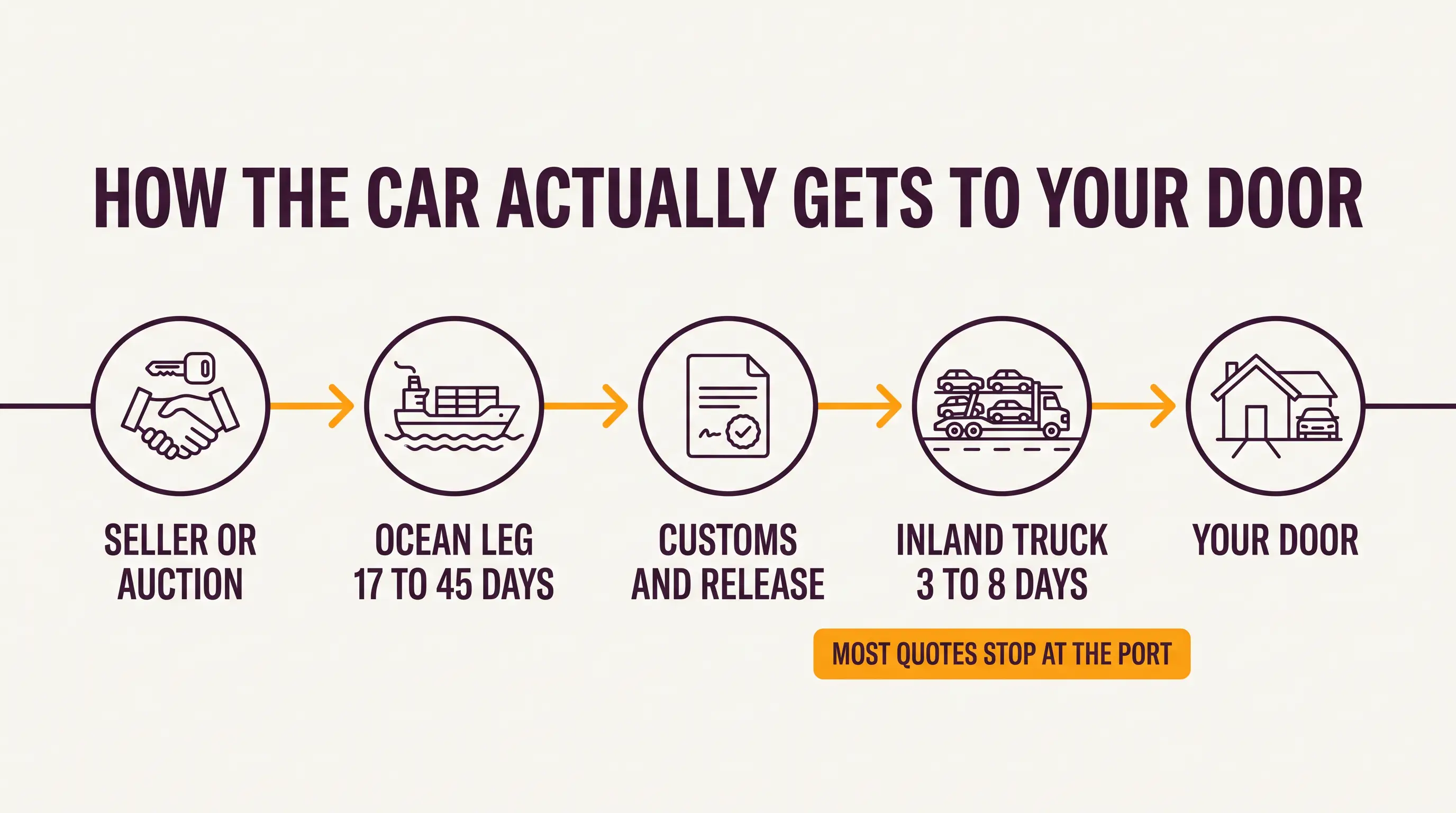
But in reality almost every quote you get from a foreign seller or exporter is port to port. It covers ocean freight and nothing else. The number that looks like it covers everything covers a boat. What it does not cover is customs entry, terminal handling on the US side, storage if you're slow, and the several hundred to two thousand dollars of trucking it takes to move the car from a terminal in Newark or Long Beach to wherever you actually live.
Same story domestically, just cheaper. A private seller on an online auction site is not going to load your car on anything, and dealers out of state will sometimes “arrange” transport, which usually means they hand your phone number to a broker and add a markup. The gap between the seller's finish line and your driveway is real, it costs money, and it's yours to plan. Plan it before you buy, not after.
Enthusiast auction sites are the exception worth knowing about, because Bring a Trailer now sells its own transport alongside the listing. We compared that against booking your own carrier in our guide to shipping a car you won on Bring a Trailer.
A car coming from overseas lands at a port, not at a person
People assume international shipping is one continuous service, like a parcel.
But in reality it's two totally separate industries bolted together, and the seam is the port. Ocean side, you're picking between roll on roll off and a container. Roll on roll off is cheaper and the car is driven onto a vessel deck like a ferry, which means it has to run and drive, and it means the car sits exposed alongside a few thousand others. Container is more expensive, usually shared with two or three other cars or booked as a sole container if the car is valuable enough to justify it, and the car is strapped down and sealed. Anything low, rare, non running, or expensive goes in a container. That's not snobbery, its just that a deck hand who parks nine hundred cars a shift is not going to baby your Skyline.
Transit is longer than people expect. Japan to a California port runs around seventeen days of actual sailing. Germany to New York is roughly eighteen. Japan to New York can be forty five because the routing goes the long way. Add loading, consolidation and clearance and the realistic end to end window on an international move is closer to thirty five to forty five days. Rivalane's international car shipping side handles both the container and roll on roll off booking plus the customs coordination, which matters mostly because it keeps the ocean leg and the trucking leg talking to each other instead of pointing at each other.
Then there's the money on top of the freight. Passenger cars carry a two and a half percent duty on the transaction value. Light trucks and cargo vans carry twenty five percent, a leftover from a trade fight in the sixties that nobody ever bothered to repeal. There are added tariff layers depending on the vehicle's code and country of origin, and those have moved more than once in the last two years, so check the current schedule rather than a blog post from 2023. Add a harbor maintenance fee, a processing fee, and three fifty to five hundred for a customs broker to file the entry. If the vehicle is under twenty five years old and was never sold here, you're in registered importer territory and the compliance bill can run nine thousand to twenty eight thousand.. which is why the twenty five year mark matters so much. That clock runs from the month of manufacture, not the model year, and people get burned by that difference every single month. The official federal guidance on importing a vehicle is worth reading once before you commit money, because it's short and it's the actual rulebook.
The clock starts the second the car lands
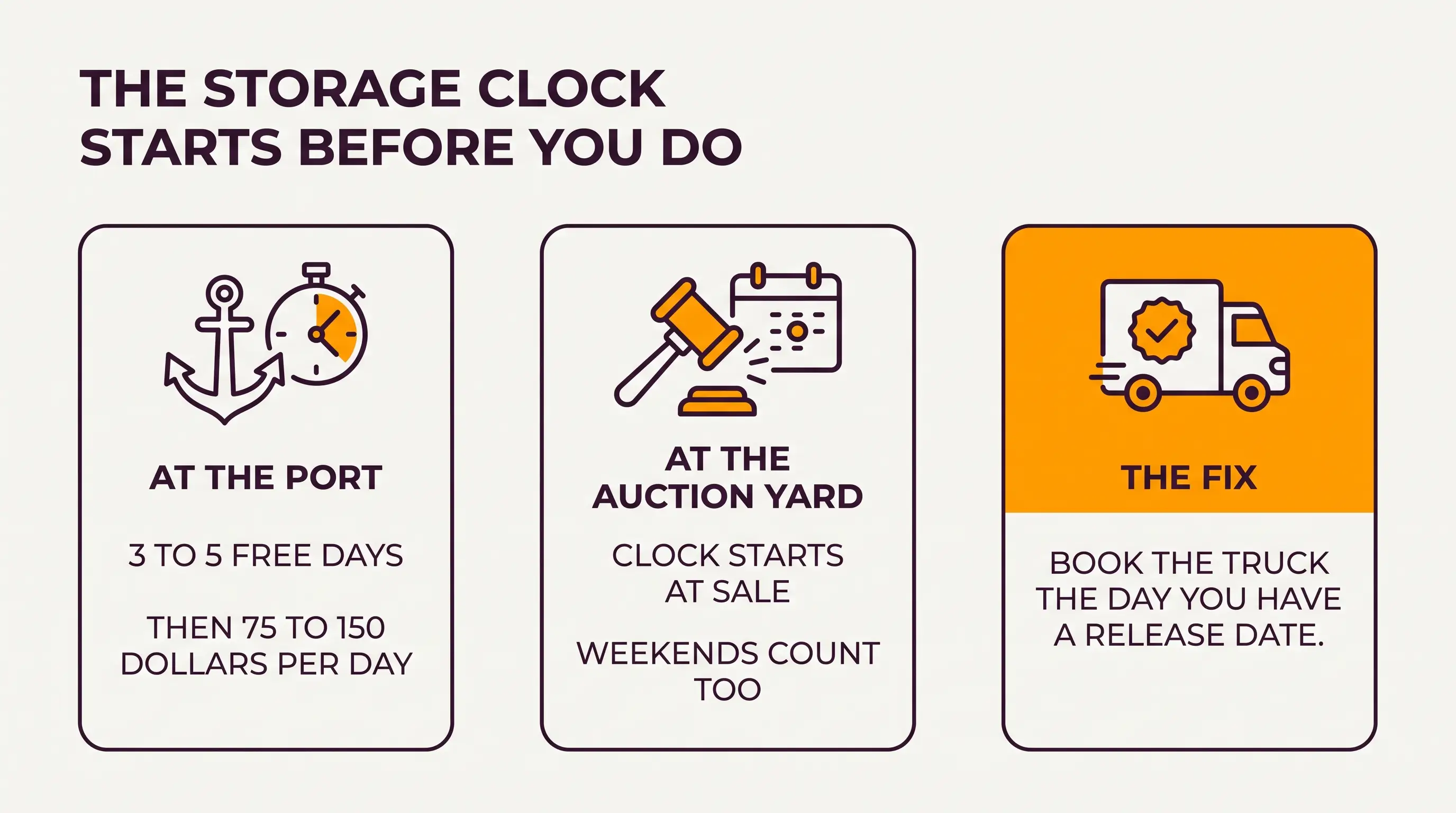
Everybody assumes there's a grace period.
But in reality the free time at a vehicle terminal is usually three to five days, and after that storage runs somewhere between seventy five and a hundred fifty dollars a day. Auction yards are worse. At the big salvage and dealer auctions the storage clock starts the moment the sale closes, before your payment even clears, and it counts weekends. A car that sits ten extra days because you were “getting quotes” can quietly eat a thousand dollars, which is often more than the entire trucking bill you were shopping around to save two hundred on.
This is the single most expensive mistake I see, and it's completely avoidable. Book the truck the same day you know the vehicle's release date. Not the same week. If the ship has a firm estimated arrival, book the inland leg against that date and adjust. A truck booked early and rescheduled costs you nothing. A truck booked late costs you storage plus a premium rate, because now you need a driver on a specific day instead of whenever one is already coming through.
Your car isn't waiting for a truck, it's waiting for a route
The assumption is that you hire a company and that company's truck comes and gets your car.
But in reality what happens is your vehicle gets posted to a national dispatch board with a price attached, and thousands of owner operators scroll that board looking for freight that fits a lane they're already running. Rivalane works as a broker, matching your car with vetted carriers rather than running trucks of its own, which is the normal setup for this kind of move. Either way the physics is the same: a truck that's already running I-95 can add your car for almost nothing, and a truck that has to detour ninety miles into farm country needs to be paid for that detour.
That's why distance is a weaker predictor of price than route density. Port of Baltimore to Philadelphia is trivial. The same mileage from a rural terminal to a mountain town is not. Nationally the door to door rate lands somewhere between thirty three cents and eighty cents a mile depending on the lane, the season, and the equipment. And when you take the cheapest quote you saw, what usually happens isn't fraud.. it's silence. The car just sits on the board while better paying loads move ahead of it, and the storage meter keeps running. A cheap quote isn't a price. It's a bid, and the market gets to decline it.
Door to door does not mean your driveway
Everyone books door to door and pictures the truck at the curb.
But in reality a loaded car hauler is seventy five to eighty feet long and needs turning room, ramp room, and overhead clearance. Low branches, gated communities with height bars, tight cul de sacs, narrow streets with cars parked both sides, HOA rules about commercial vehicles — any one of those and the truck physically cant get in. What actually happens is the driver calls you an hour out and asks you to meet at a wide commercial lot a few miles away. A shopping center. A big gas station. Somewhere with room.
This is completely normal and every experienced shipper expects it. The people who get frustrated are the ones who took the phrase literally. Door to door auto transport means as close to your address as the truck can safely and legally get, which most of the time genuinely is your street. Plan for a ten minute drive on the delivery end and it stops being an issue.
Imported cars break the loading assumptions more than domestic ones

People think a car is a car and any trailer will take it.
But in reality the cars people import are exactly the cars that give loading crews trouble. A vehicle that crossed an ocean on a deck has often been sitting for weeks with a dead battery and very little fuel left in it by design. Older imports have soft suspension and rusty brakes. And a huge share of imported cars are low — Japanese sports cars, European coupes, anything modified — which means a standard open hauler's ramp angle will drag the nose or the exhaust on the way up.
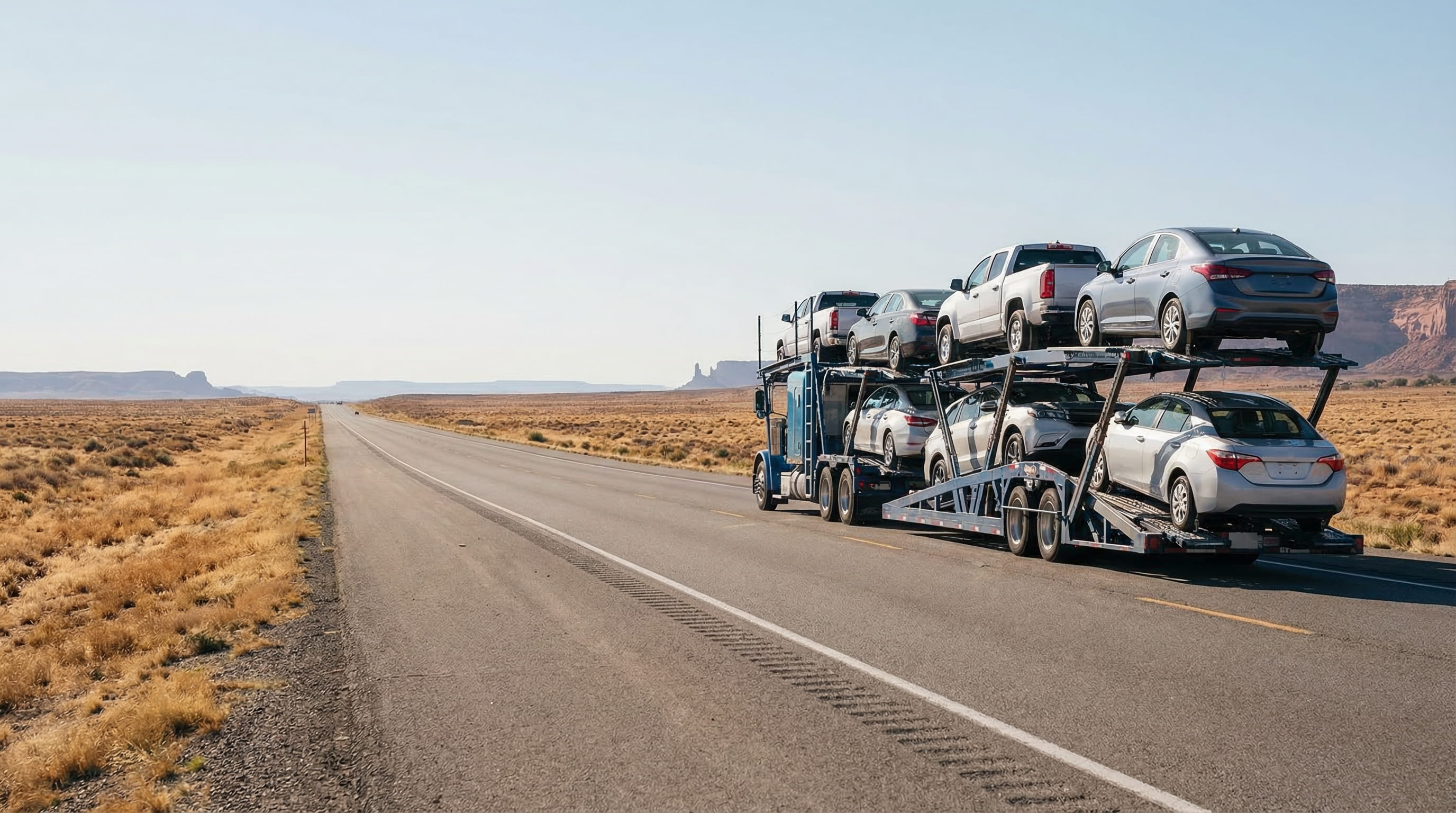
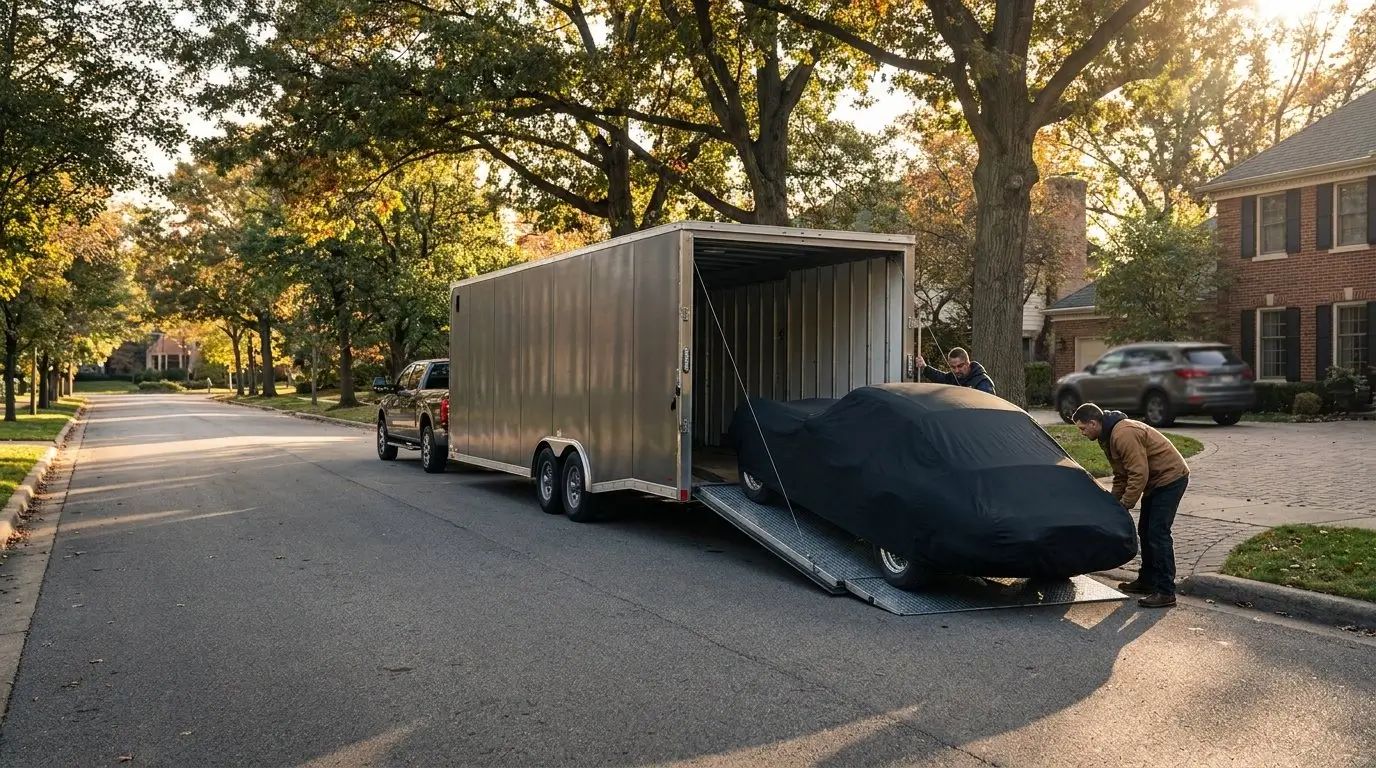
That's the real reason enclosed auto transport gets recommended for imports, and it's not about weather. It's about equipment. Enclosed rigs carry a hydraulic lift gate that raises the car flat instead of dragging it up an incline, soft nylon straps that go around the tires instead of hooking the frame, and drivers who've loaded a few hundred cars that dont start. Weather and road debris protection are real too, especially on a two thousand mile run. But the loading geometry is the thing. For a standard running import with normal ground clearance, an open hauler is fine and costs thirty to sixty percent less. Match the trailer to the car's actual problem, not to the car's price.
Tell whoever books the truck the honest condition. Does it roll, does it steer, do the brakes hold. A car described as running that turns out to be dead sends the driver away empty and puts you back on the board a week later, with more storage.
You probably cant legally drive it the day it arrives
The last assumption, and it catches almost everybody: that once the car is delivered you can put a plate on it and go.
But in reality the title and the paperwork move on a completely different schedule from the car. Auction titles routinely arrive weeks after the vehicle does. Imported cars need the customs entry summary and the export documents from the origin country before a state will title them, and some states want an inspection on top of that. So the car shows up in your driveway and legally sits there for a while. That's normal. It just means you should never plan to drive the car off a terminal lot yourself to save on transport, because if a plate or an insurance binder is missing you now have a car you legally cannot move and a storage bill that doesnt care.
The two minutes at the curb that actually protect you
Most people treat the delivery paperwork as a formality to sign so the driver can leave.
But in reality that inspection report is the entire claim. At pickup the driver walks the car and marks existing damage. At delivery you do the same thing before you sign anything. If a scratch shows up that wasn't on the pickup sheet and you noted it at delivery, you have a case. If you signed a clean form and called two days later, you generally dont. Take your own photos at both ends, in daylight, wheels and lower valances included. It takes two minutes.
The other piece is who you're actually handing the keys to. Every legitimate interstate carrier holds federal operating authority and cargo insurance, and you can run any carrier's USDOT or MC number through a free federal carrier lookup to confirm the authority is active and see the safety record before the truck shows up. It's free and it takes a minute. Ask what the cargo limit is per load too, because there are six to ten cars on that trailer sharing it.
Questions buyers ask before the car ships
How much does it cost to get an imported car from the port to my house?
Usually three hundred to six hundred for under two hundred fifty miles, six hundred to twelve hundred for two fifty to seven fifty miles, and twelve hundred to two thousand plus for cross country. Enclosed adds roughly thirty to sixty percent on top.
How long does the whole thing take from overseas?
Plan on thirty five to forty five days from booking to delivery for most origins, with the ocean crossing itself being seventeen to forty five days depending on the route. Domestic transport after that adds three to eight days.
Should I ship roll on roll off or in a container?
Roll on roll off if the car runs, drives, and isn't rare or low. Container if it's valuable, modified, non running, or you want it sealed and untouched. The price gap is real but so is the difference in handling.
When exactly should I book the truck?
The day you have a release date or a confirmed vessel arrival. Booking early and adjusting costs nothing. Booking late costs storage plus a rush premium.
Can the truck pick up directly from the port terminal?
Yes, that's routine. The terminal needs the release paperwork and a named party on the gate pass, so make sure the transport company's driver information matches what's on file before dispatch day.
What if the car doesnt start?
Say so upfront. Non running cars need a winch or a forklift and a different type of trailer, which is a smaller pool of trucks and a different rate. It's not a problem if it's disclosed. It's an expensive problem if it's discovered at the yard.
The one thing worth doing today, before anything else: find out the exact date the car becomes available for pickup, and book the truck against that date. Everything expensive that goes wrong in this process goes wrong because that number was a guess.