How Your RV’s 'Size Signature' Triggers Extra Fees
Most people assume length is the primary factor in a quote, but experienced haulers are actually looking up. There is a "magic number" in logistics: 13 feet, 6 inches. Once your rig exceeds this height, or pushes past 8.5 feet in width, it can no longer travel on every highway. The travel trailer shipping cost spikes here because the driver must map a custom route to avoid low bridges and narrow overpasses, often adding significant mileage and time to the journey.
Size triggers more than just detour costs; it activates a web of legal requirements. If your unit exceeds standard dimensions, carriers must secure oversized load permits for large campers, which adds administrative fees and operational restrictions to your quote:
- Standard Load: No permits required, travel allowed 24/7, direct routing.
- Oversized Load: State-specific permits fees, travel restricted to daylight hours only, and potential requirements for pilot car escorts.
Even the connection point on your RV influences the final price tag. While a standard ball hitch is nearly universal, fifth wheel vs travel trailer towing costs differ because hauling a fifth wheel requires a truck with a specialized bed plate and often a higher weight class rating. Since fewer drivers have this specific heavy-duty setup compared to standard hitches, availability can drive up the rate. Since your vehicle's physical footprint dictates the equipment needed, the next choice is determining who (or what) actually does the driving.

Driver vs. Trailer: Choosing Between Drive-Away and Haul-Away Services
The most significant variable in your final quote is determining whether your vehicle is being driven or carried. For motorized units like Class A or C motorhomes, "drive-away" service offers the lowest RV delivery cost because a professional contractor simply drives the vehicle to its destination. This approach eliminates the need for heavy-duty flatbed trucks, drastically lowering overhead, but it comes with a distinct trade-off: every mile of the journey is added directly to your engine’s odometer and tire wear.
Owners concerned about preservation often opt for "haul-away" services instead. This method loads your RV onto a trailer. keeping cross-country mileage off your powertrain, but utilizes expensive equipment that pushes RV transport rates per mile higher. While considering open vs enclosed RV transport methods allows you to choose how much you shield the vehicle from road debris, the core financial decision remains whether you pay a cash premium for a flatbed or pay in depreciation by driving the unit.
Selecting the right service depends on balancing your immediate budget against the vehicle’s long-term value. A used model might be perfectly fine with a drive-away service to save money, whereas a pristine luxury coach usually warrants the protection of a flatbed haul. After settling on the method that fits your risk tolerance, the final pricing factor is knowing exactly when to book to avoid peak demand surges.
Timing the Market: How 'Snowbird' Seasons Shift Shipping Rates
Just like booking a vacation rental during the holidays, RV shipping rates fluctuate wildly based on which way the traffic is flowing. In the logistics world, this is often driven by "snowbird" migrations. When owners flock south to Florida or Arizona in late autumn, demand for carriers heading that direction skyrockets, driving prices up. Conversely, trucks returning north often struggle to find cargo (a situation called "deadheading") and drivers will frequently slash prices just to cover their fuel on the return trip.
Your timeline is the strongest lever you have to control these costs. If you require expedited RV shipping options to meet a strict deadline, carriers must often reroute drivers specifically for you, resulting in premium "rush" fees. However, offering a flexible two-week pickup window allows dispatchers to fit your RV into a driver's existing schedule, potentially saving you hundreds of dollars.
Monitoring the calendar helps you predict the seasonal demand impact on shipping rates:
- Winter (Jan–Mar): Rates heading North are often lower (backhaul); rates heading South are premium.
- Summer (Jun–Aug): Peak travel season generally raises costs nationwide due to high volume.
Once you have locked in the right date, the final piece of the puzzle is determining if the truck can actually fit on your street or if you need to meet at a terminal.
The Accessibility Tax: Door-to-Door vs. Terminal Shipping Costs
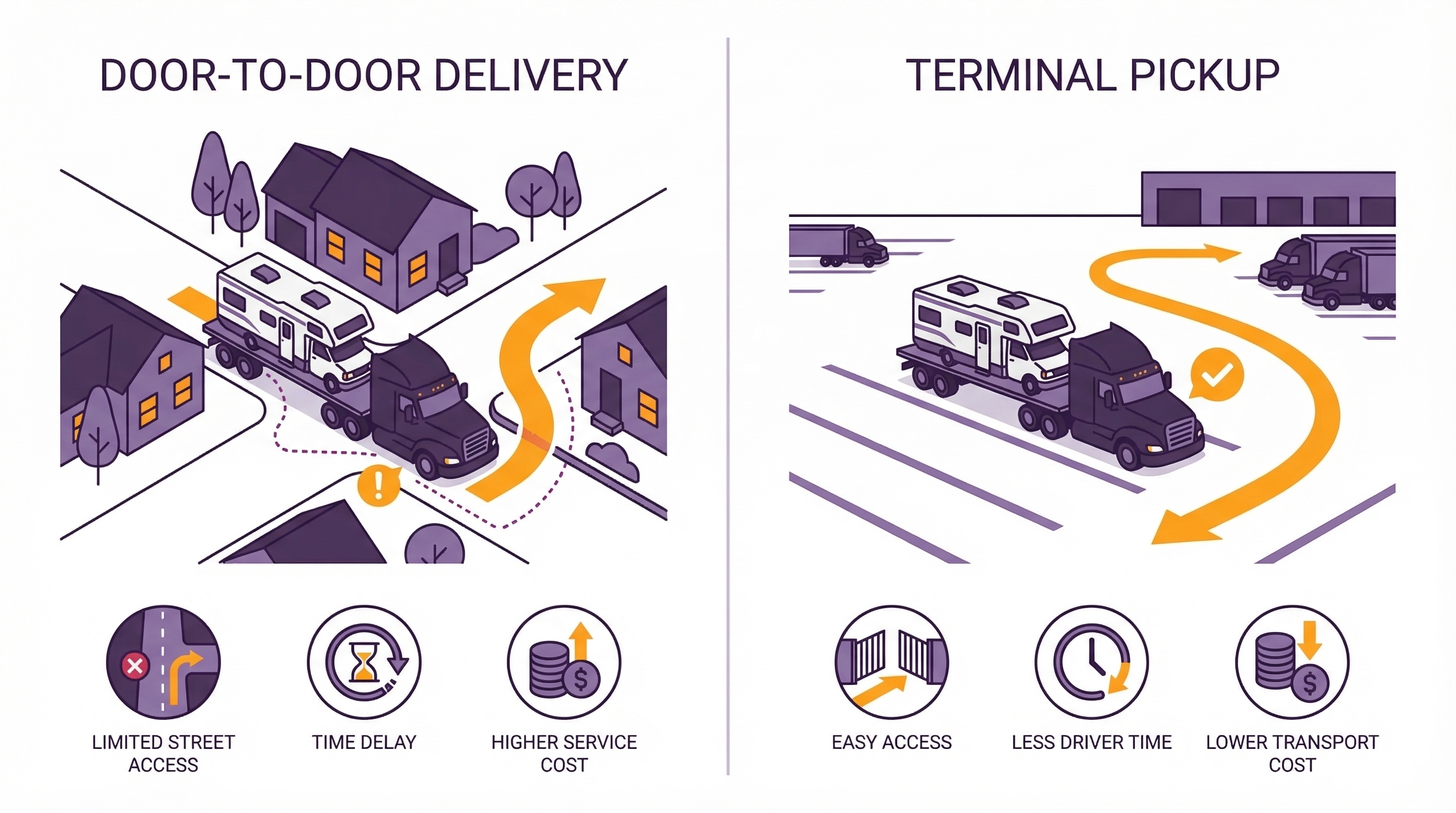
Imagine a semi-truck trying to navigate a cul-de-sac lined with low-hanging branches; it’s a logistical nightmare that often triggers door-to-door RV delivery service fees. Carriers charge premiums for this convenience because maneuvering a 53-foot trailer through residential neighborhoods increases risk and driver time. If your street has weight restrictions or tight corners, the driver might physically be unable to reach your driveway, forcing a stressful last-minute change of plans.
Opting for terminal-to-terminal shipping savings is often the smartest move for budget-conscious owners. By agreeing to pick up your RV at a nearby commercial shipping hub or a large, accessible parking lot like a big-box store, you eliminate the "last mile" complexity for the driver. This small compromise in convenience significantly reduces the carrier's effort, which frequently translates into a lower overall quote for you.
Ultimately, route accessibility and transport pricing are inextricably linked: the harder it is to reach you, the more you will pay. Being honest about your location's limitations upfront prevents surprise surcharges and helps the carrier plan the right equipment for the job. You are now ready to combine distance, timing, and access into a concrete budget using a simple estimation strategy.
Your 3-Step Plan for Accurate RV Transport Estimates
You can now look past the sticker shock and see exactly what drives your transport quote. By balancing vehicle size, method, and seasonal timing, you transform from a passive buyer into an informed negotiator ready to secure a fair price.
Follow this checklist to finalize your plan:
- Input accurate dimensions into an RV shipping calculator.
- Verify carrier insurance covers your RV's full value.
- Check for condition-based handling fees for non-running rvs if your unit isn't operational.
With these details, you know how to calculate RV transport estimates with confidence. Run the numbers today to find the route that fits your budget.
Frequently Asked Questions