.png)
The biggest misconception people have about buying a car at Mecum Dallas is that the hard part ends when the gavel drops. You raise your hand, you win the lot, and in your head the car is basically home already. Then reality shows up. The hard part was never the bidding. It's getting a just-bought car off a packed convention center floor in downtown Dallas and onto the right trailer, in a narrow window, while a few hundred other winning bidders are trying to do the exact same thing.
Quick answer: shipping a car to or from Mecum Dallas comes down to three things most buyers underestimate — the load-out window right after the sale, whether the car needs open or enclosed transport, and the payment and title release that has to clear before the car can legally leave. Book your carrier before the final day, match the equipment to the car, and the Dallas end goes smooth. Leave it to the last minute and you're fighting a thin local truck pool at the worst possible time.
Mecum's fall Dallas sale runs hundreds and hundreds of cars over four days at the Kay Bailey Hutchison Convention Center — muscle cars, classics, Corvettes, trucks, restomods, the occasional exotic. That much metal moving through one address in one week is the whole story when it comes to transport. So let me walk through how it actually works behind the scenes.
So what's the real bottleneck — the drive or the load-out?
It's the load-out, almost every time. People obsess over how many miles the car has to travel. But the squeeze at an event like this happens in the 48 to 72 hours after the sale, when a huge number of cars all need to leave one downtown convention center at once.
A car carrier is a big rig. It cant just pull up to the auction floor and start loading. Downtown streets have restrictions, the dock is shared, and only so many trailers can stage near the building at a time. So the move becomes a coordination problem — the car goes from the floor to a staging area to the trailer, and the driver works that out with the venue. The actual highway part is the easy stretch. This is also why the smart play is door to door service that's arranged ahead of time, where the carrier already knows the venue access situation and where they can legally stage. If you want to understand how that pickup coordination works in practice, our door to door car shipping page breaks it down.
Why does shipping during auction week cost more than a normal Tuesday?
.png)
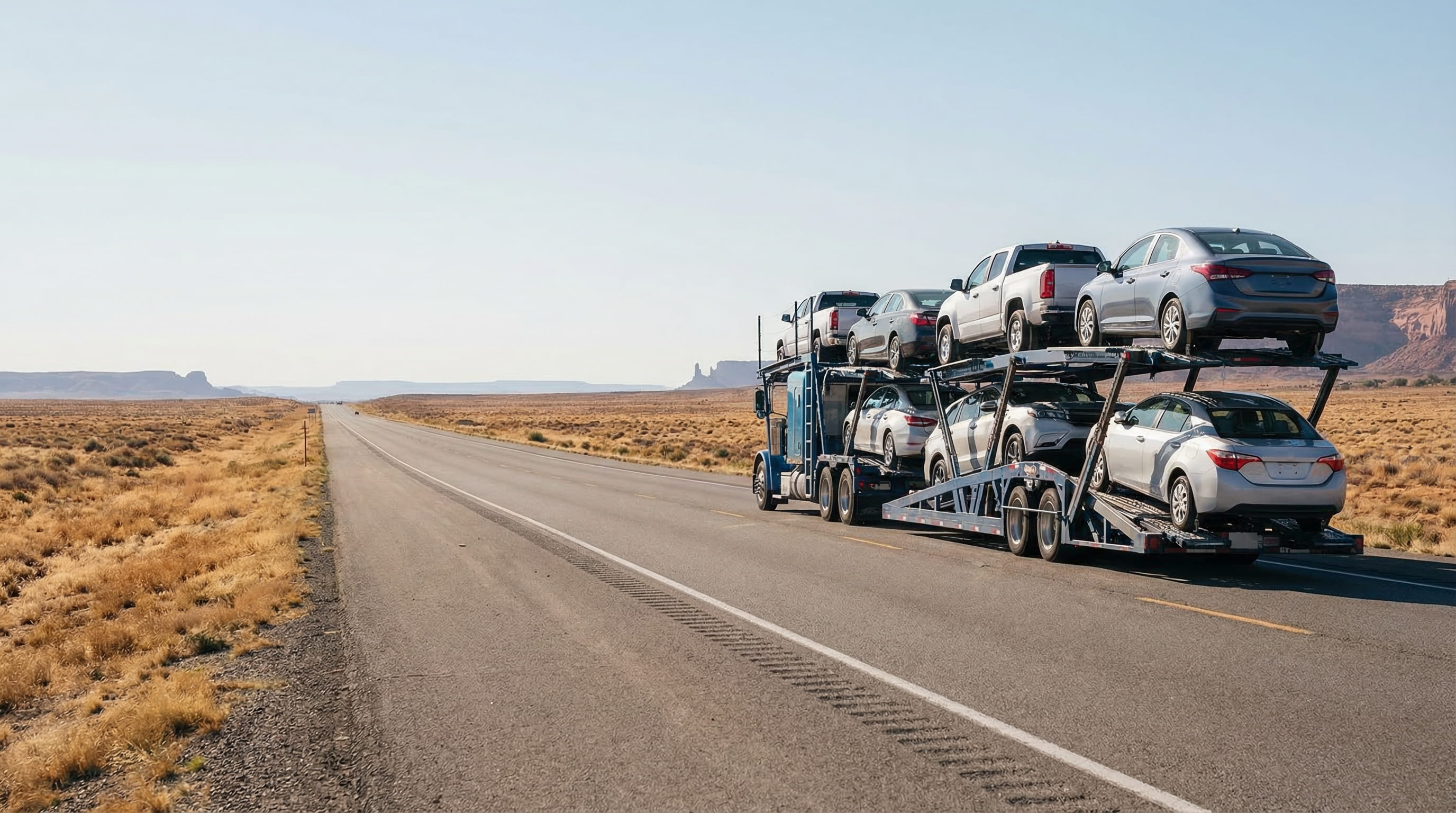
Because you're buying into a demand spike, and dispatchers price for it. When a thousand-plus cars sell in one place over four days, every carrier within range of Dallas knows it. The local truck pool that week gets bid up by all the buyers and sellers chasing the same trailers. Same lane, same destination, totally different number than you'd pay in a quiet week.
This is the part you can actually control. The single biggest lever on your price isnt distance, it's timing. Book the move before you've even won — or at the very least before the final day rush — and you lock a slot while capacity still exists. Wait until Saturday afternoon when you and three hundred other people just won cars, and you're at the back of the line paying peak. Booking early is honestly the cheapest decision you'll make all week.
Can I ship the car the second I win it?
No, and this trips up first time buyers constantly. The car is not free to move just because you won it. It has to be released by the auction, and release follows cleared payment and the title paperwork getting sorted. People schedule a truck for the next morning and then find out the car isnt actually theirs to hand off yet.
So the real pickup window is set by the paperwork timeline, not the trailer. A good dispatcher plans around that — they'll key the pickup to when the car will actually be released, not just when a driver happens to be free. If you book with someone who doesnt account for that, you get a truck sitting on the clock waiting for a car that's still tied up at the cashier. That's wasted time and sometimes wasted money.
Open or enclosed for an auction car — does it really matter?
.png)
For a lot of Dallas lots, yeah, it matters more than people think, and not just because of weather. Enclosed transport gets framed as "protection from rain and rocks," which is true, but that's not the main reason it exists for collector cars.
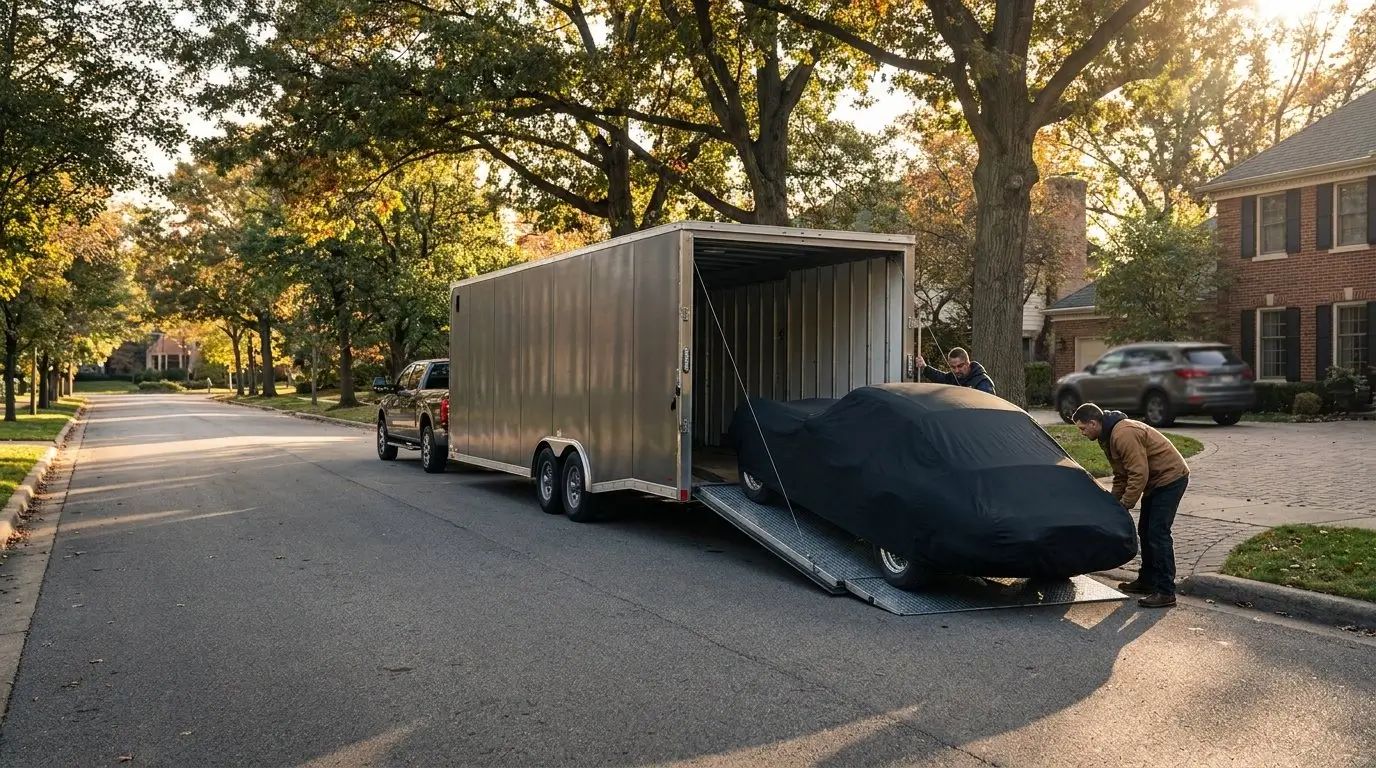
Enclosed is a different, lower capacity service. An enclosed trailer carries maybe two to six cars where an open hauler carries seven to ten, the cars get soft strap or wheel net securement instead of chains over the tires, and a lot of enclosed rigs run a liftgate or a low angle ramp for cars that sit close to the ground. That's why enclosed runs roughly 30 to 60 percent more than open — you're paying for a trailer that hauls fewer cars and handles them differently. For a numbers matching muscle car or a six figure restomod, that premium is cheap insurance. The trucks that haul cars carry serious liability coverage either way, but concentrating value into a careful, low capacity load is the point. If your win is the kind of car you'd lie awake worrying about, enclosed car transport is the move.
What about a slammed restomod or a car that doesn't run?
This is where moves fall apart, so it's worth saying plainly. A big share of auction cars are lowered restomods, drag cars, or non runners. A standard open ramp can high center a car that sits low, and a car that wont start needs a winch and a driver who planned for it.
If that detail isn't on the booking, the driver shows up with the wrong equipment and the pickup just fails — right there on the convention center floor, on the busiest day of the week. Then you're rebooking into an even thinner pool. The fix is simple.. tell the dispatcher the truth about ride height and whether the car runs, before anyone schedules anything. A car that needs a liftgate and a winch is a completely normal request. A surprise liftgate and winch at load-out is a problem.
Why is the Dallas end rarely the part that delays you?
.png)
Here's the good news that balances all the auction week stress. Once you're past the event crush, Dallas Fort Worth is one of the best places in the country to ship a car out of. It sits on dense national freight lanes, so outbound carrier availability to most major metros is strong. The truck that takes your car home has plenty of company heading the same directions.
The delay, when there is one, usually lives at the other end. A rural delivery address, a gated community, a tight mountain road — that's where the timeline stretches, because the carrier has to figure out final access the same way they did downtown. So when you're setting expectations, the Dallas pickup is the predictable part and your own driveway might be the wildcard. Worth thinking about before you book.
One more thing if you're on the selling side. Consignors shipping a car into Dallas to sell are pulling from the same regional truck pool as the buyers shipping cars out, sometimes in overlapping days. That two way tug on the same carriers is exactly why early booking wins. Whoever locked their slot first gets the firmer pickup, every time.
Win the car, sort the paperwork, match the truck to the vehicle, and book it before the rush — do those four things and the logistics stop being the scary part. Ready to get your Mecum Dallas car home? Get a shipping quote from Rivalane and we'll handle the auction week timing for you.