The biggest misconception about military car shipping is that the military ships your car. For most people cutting orders this year, it doesnt. Not for a stateside move. The word “PCS” makes people picture the same machine that boxes up their household goods rolling their car onto a truck for free, and then they find out in June — the busiest possible month — that the car was always their problem to move.
Quick answer, if you only read this far: on a stateside (CONUS) move the government does not ship your vehicle. You either drive it and collect a small per mile allowance, or you pay a carrier yourself to haul it. Shipping one car overseas is covered, but only one, and only for an overseas (OCONUS) assignment. Everything past that first car, and every mile of a domestic move, comes out of your pocket. Knowing which bucket you're in before peak season hits is the whole game.
For a stateside move, nobody is shipping your car for you
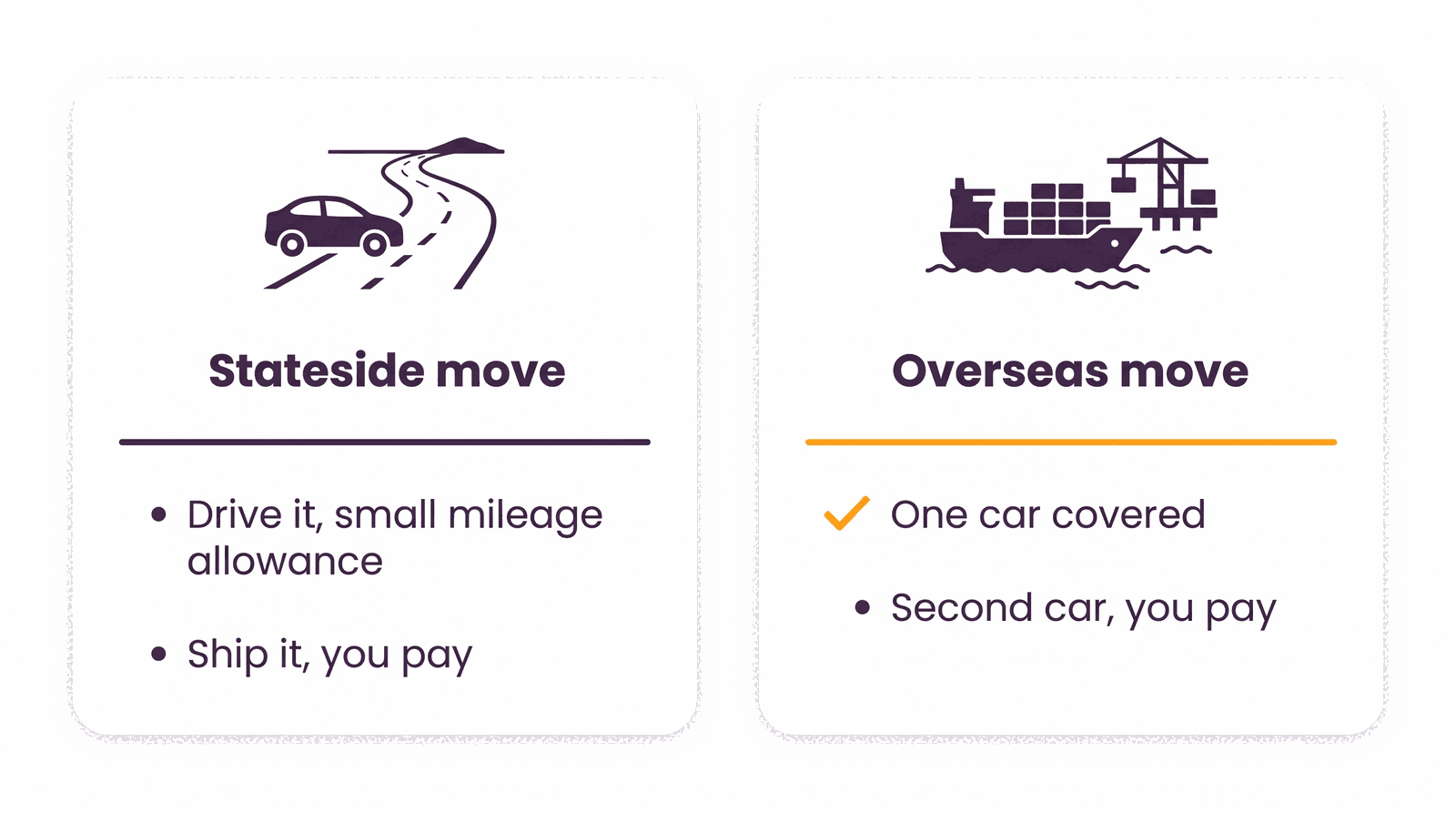
Here's where the surprise lives. A domestic PCS pays you to move yourself, not to move your vehicle. If you drive, you get a monetary allowance figured on the miles between your old base and the new one — a per mile rate that lands in the low twenty cent range, plus a travel day for roughly the first four hundred miles and then another day for each few hundred after that. That's it. That's what “covered” means for your car when both bases are in the lower forty eight.
So the real decision isnt “will they ship it,” it's “do I drive it or hire it out.” A young single soldier moving five hundred miles usually just drives. But a family with two cars and one driver cant teleport the second vehicle, and thats where paid shipping quietly becomes the normal answer, not the exotic one. There's a narrow allowance that helps offset a second POV in some family situations, but it's partial and it comes with conditions, and you should never plan a budget assuming it covers the whole ticket. Plan on paying, and treat any reimbursement as a rebate you might get later.
Overseas is a different animal, and it's still only one car
Get orders across an ocean and the picture changes, but not as much as people hope. The government will ship one privately owned vehicle at its expense through a single national contractor, and you book that through the contractor's own system, not through whoever hauls your couch. One car. If your household has two, the second one is on you completely — either sold before you leave, stored stateside, or shipped commercially at full cost.
And “we'll ship it” has fine print. There's a size limit measured in a shipping volume unit, and a big lifted truck or a long SUV can blow past it, which means you eat the overage. The vehicle has to meet the destination country's standards going over and has to carry the right compliance labels to come back. None of this is meant to trip you up, but every summer somebody assumes their whole garage travels for free and finds out at the port that only one car had a ticket.
Why summer is the worst time to wing it
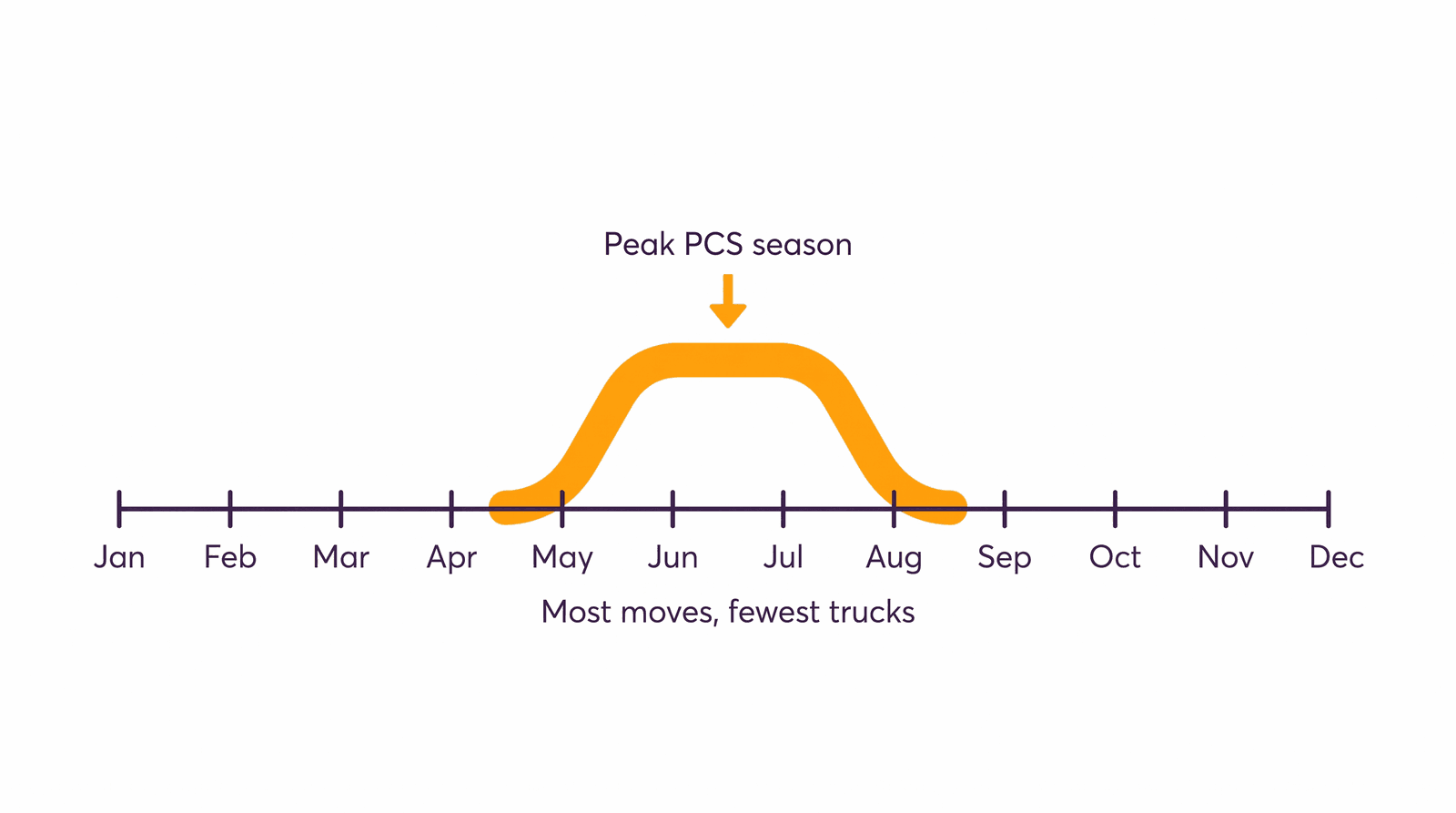
This is the part that turns a manageable move into a bad one. Military moves are not spread evenly across the year. Peak season runs roughly from the middle of May through the end of August, and more than sixty five percent of all military household moves happen inside that window, because that's when school is out and orders line up. The services and the Coast Guard alone book somewhere around two hundred thousand household goods shipments across a single summer, and every one of those families is also trying to move at least one car in the same twelve weeks.
Now stack the civilian world on top. Regular families move in summer too, for the same school calendar reason, so carrier capacity across the whole country is stretched thin exactly when you need it. Fewer open trucks, more cars chasing them, same narrow set of weeks. Price goes where you'd expect, and the trucks that are left get picky about which loads they take. The fix is unglamorous and it works: line the transport up weeks ahead, not days. A car posted to carriers in early spring gets slotted into a lane a driver is already running. The same car posted the week your lease ends is a scramble.
The truck is not coming onto the installation
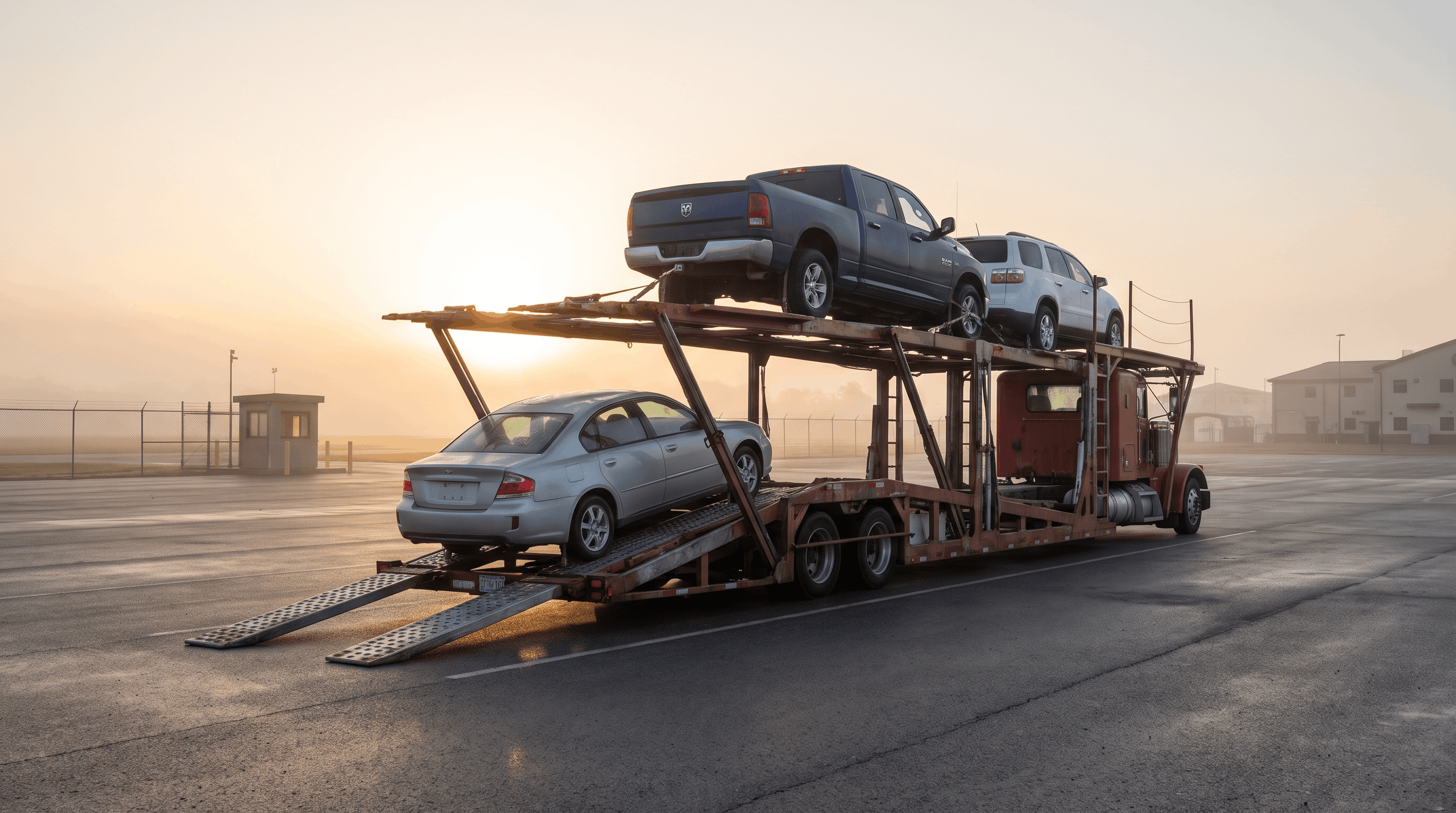
People assume the driver pulls up to base housing, loads the car in the driveway, and leaves. On most installations that doesn't happen. A commercial car hauler and its driver don't have base access, and gate security is not going to wave an eighty foot rig through for a pickup. So the handoff happens off the installation — a store lot, a wide shoulder near the gate, sometimes a spot a few minutes out where a full size trailer can actually turn and drop its ramps.
That isn't a downgrade, it's just how door to door car shipping works anywhere access is tight. Door to door has always meant the driver gets as close as he legally and safely can, not that he ignores a security gate or threads a residential street he cant back out of. If you tell the carrier up front that pickup is near a base and where the car will physically be sitting, the whole thing goes smooth. Spring it on the driver at the gate and you've wasted his morning and your afternoon.
Open or enclosed isn't about how much you love the car
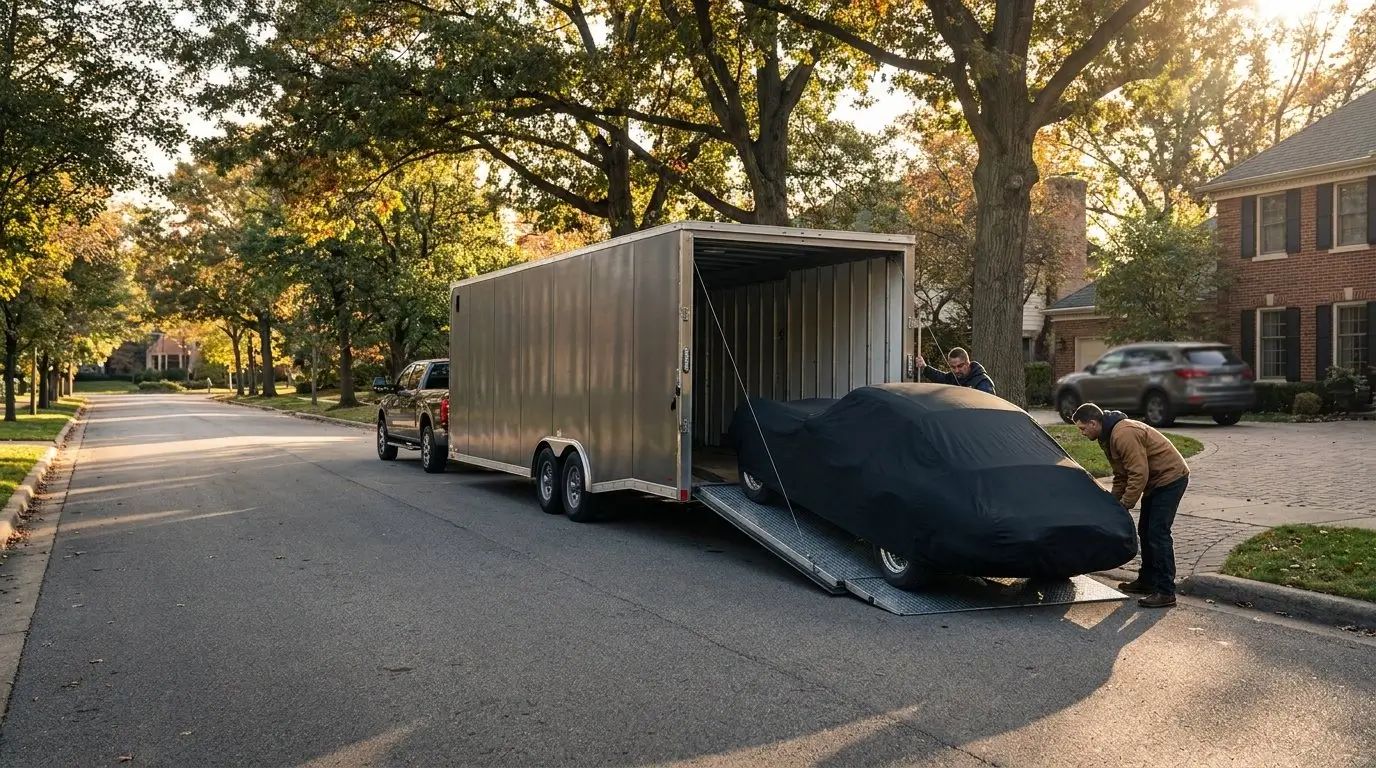
Most people frame this as protection — weather, road grime, a stray stone on the interstate. Fair enough, and if you're moving something rare or freshly painted, enclosed car transport is the obvious call and you already knew that. But for a normal PCS with a normal daily driver, the honest answer is different.
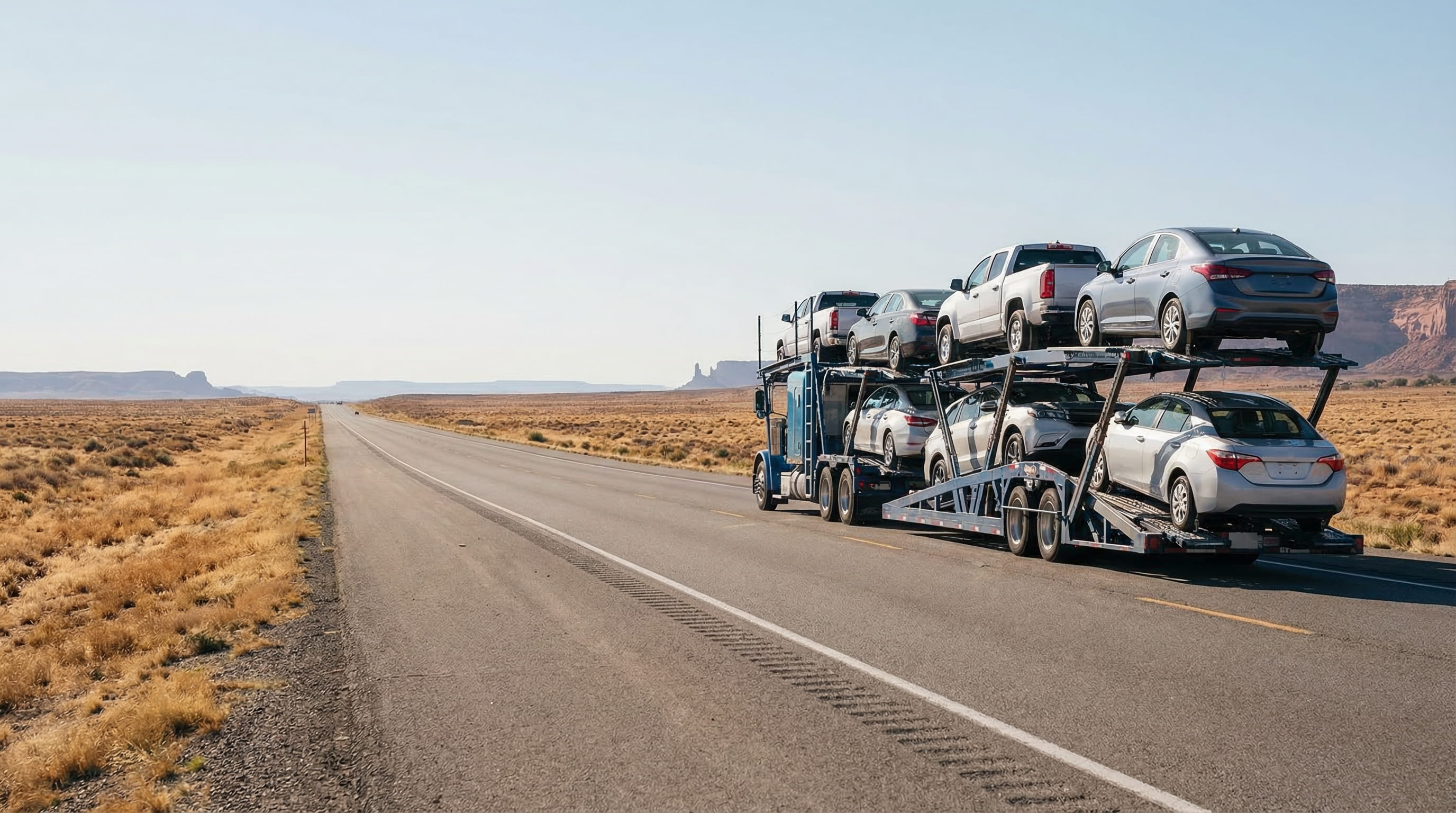
An ordinary family car ships perfectly well on open car transport, the same way roughly ninety percent of all cars in this country move. It's cheaper, there are far more trucks running it, and in a jammed summer it books faster because you're fishing in a much bigger pond. Enclosed is a smaller fleet and a higher number, and in peak season that gap widens. The mistake isn't picking one over the other. The mistake is paying enclosed money out of sentiment when the car riding to the next base is a five year old crossover that'll be fine in the weather.
The scam season nobody warns you about
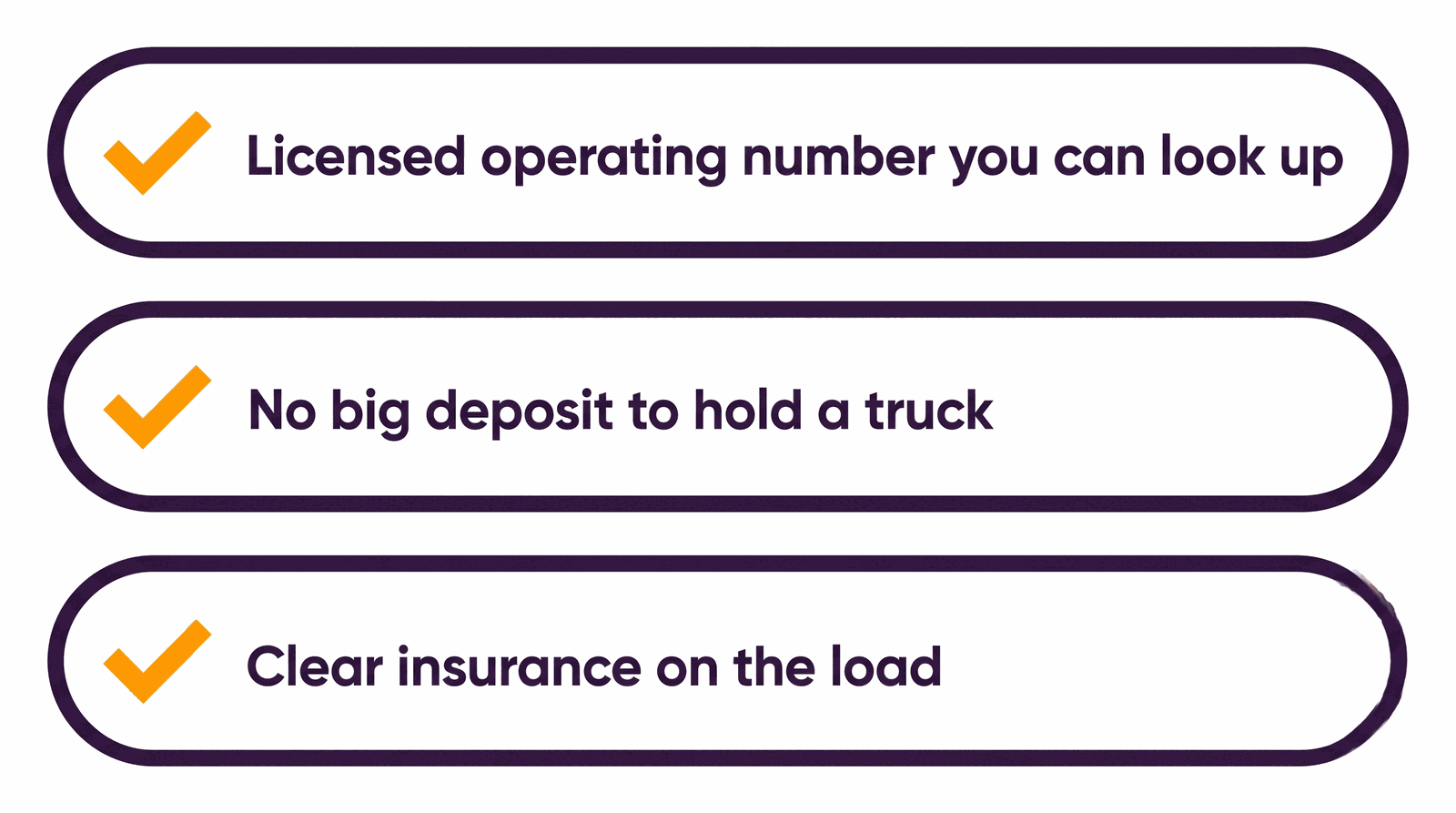
Summer is also when the fake operators come out, and military families are a target because everyone knows PCS timing is rigid and stressful. The tell is almost always a quote that's too good and a demand for a big deposit to “lock the truck.” Real carriers dont work that way.
Before you hand anyone money, confirm they're an actual licensed operation. Any company hauling cars between states for money has to be registered and carry a federal operating number you can look up, and a legitimate broker or carrier will hand you that number without flinching. A booking site that gets cagey when you ask who's actually insured on the load, or that only exists as a slick page with no verifiable operating authority behind it, is telling you something. Ten minutes of checking beats a lost deposit and a car that never gets picked up during the one week you had to be gone.
What to have ready when you call
If you want military car shipping to be the easy part of the move, have four things straight before you reach out: the pickup city and whether it's near an installation, the delivery address, your latest date to be out, and whether both cars are actually shipping or just one. That's enough for a dispatcher to tell you what it costs, how fast it'll cover in the season you're moving in, and where the truck can realistically meet you.
One last thing, and then I'll leave it alone. The families who have a smooth move aren't the ones with the best orders or the shortest distance. They're the ones who figured out in April that the second car was theirs to move, and locked it in before the summer board filled up. If that's you, get a quote and set your window now — waiting until the orders feel real is exactly how the good trucks get gone.