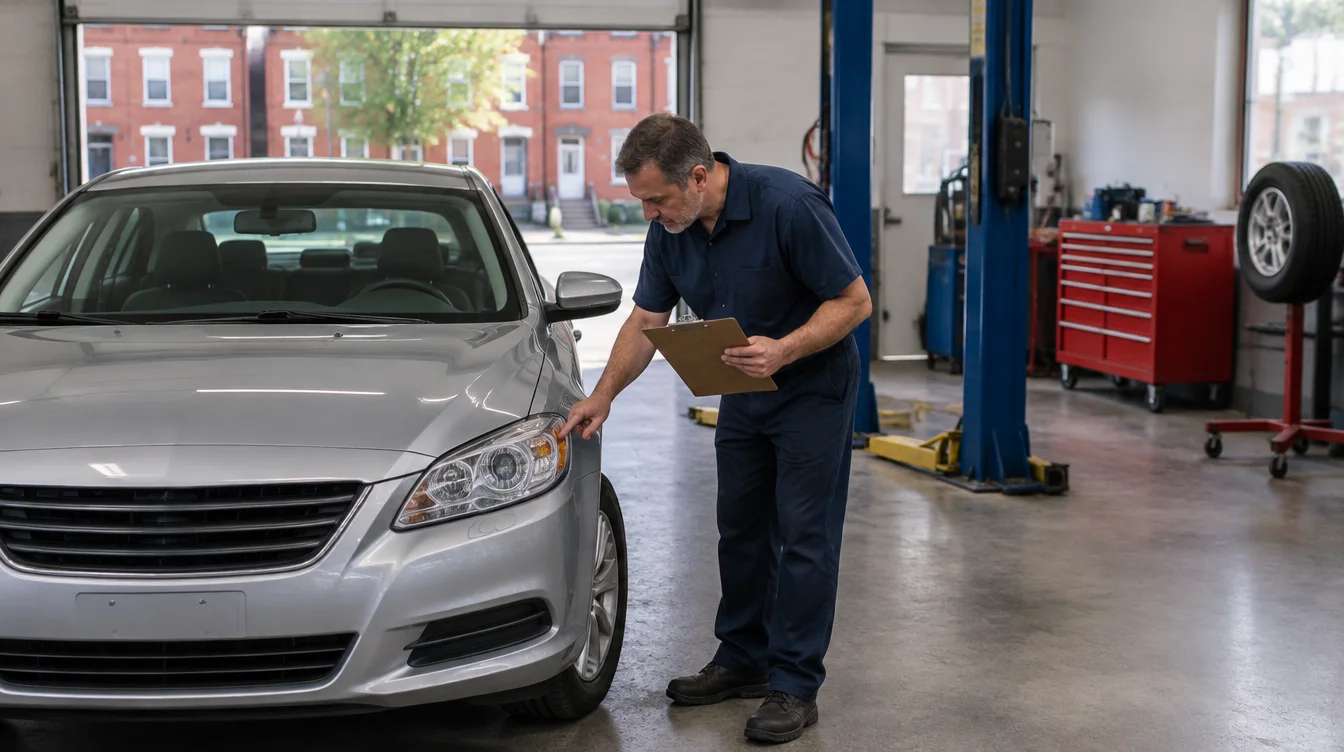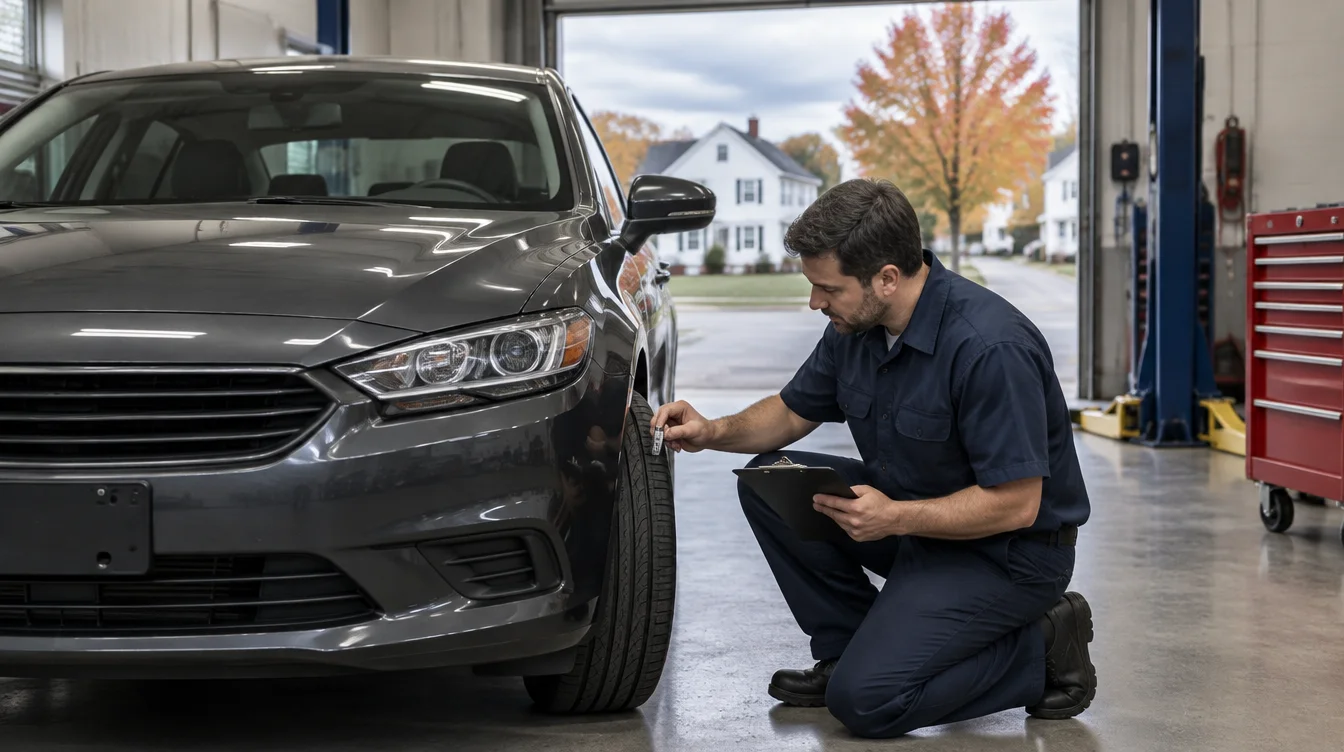
A New York State inspection is the yearly check that every car registered in New York must pass to keep a valid sticker on its windshield. It pairs a safety inspection with, for most cars, an emissions check of the onboard diagnostic system, and a certified inspector does it at a station licensed by the New York State Department of Motor Vehicles (DMV).
This guide covers who needs the inspection and when, including newly bought cars and cars arriving from another state, the 10-day extensions, what stations check, the fees, failing and expired stickers. The rules come from the DMV's inspection pages and its official fee chart.
What Is a New York State Vehicle Inspection?
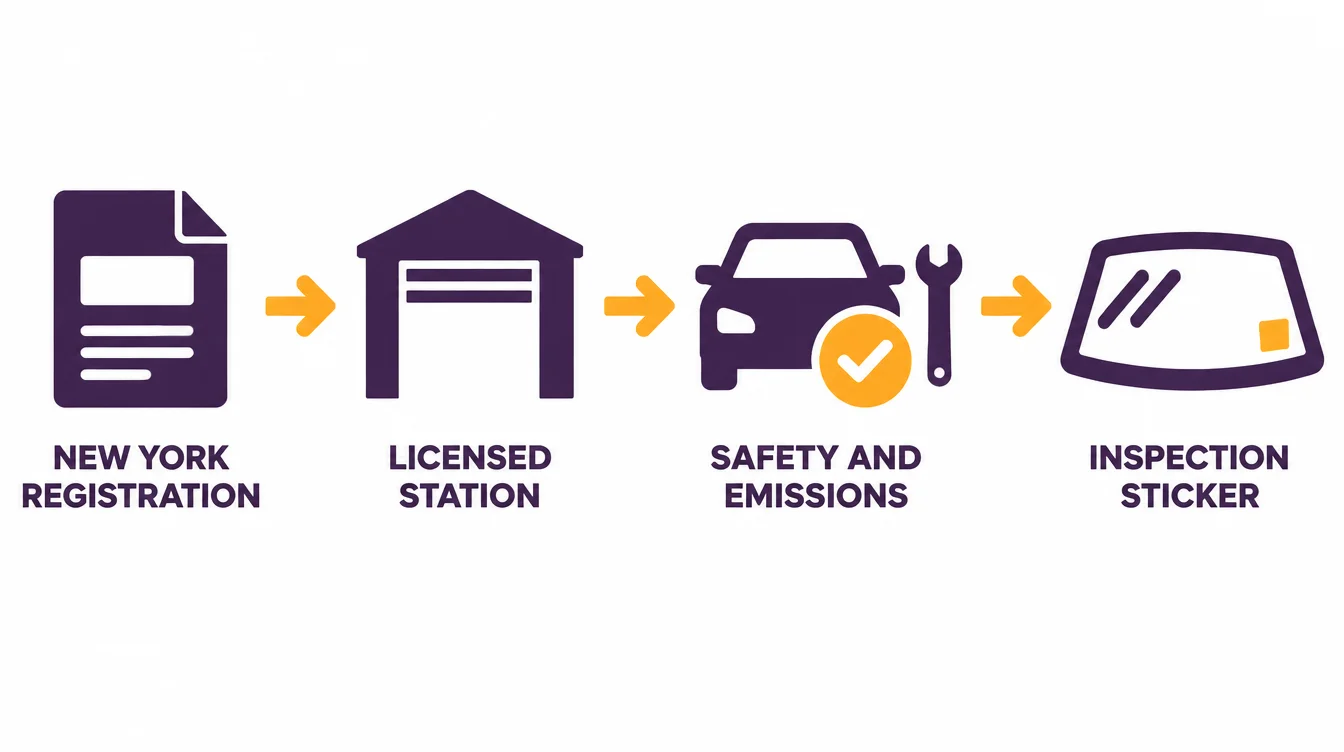
It is a check that the car meets New York's minimum standards for safe operation on public roads, done by a certified motor vehicle inspector at a licensed inspection station. The DMV requires every vehicle registered in New York to be inspected at least every 12 months, and again when the vehicle is registered in a new owner's name. Most inspections also include an emissions check at the same visit, which the federal Clean Air Act requires New York to run.
A car that passes gets a sticker for the windshield. The inspection expires on the last day of the month punched on that sticker, and the DMV asks you to keep the emissions inspection receipt as proof the car was inspected. Its page About New York State Inspections sets out these basics.
Who Needs a New York State Inspection?
Anyone with a car registered in New York. The requirement follows the New York registration, not the roads the car happens to use. The DMV's Safety/Emissions Inspection Program page says each vehicle registered in the state must be inspected at least every 12 months, and that when a vehicle is registered in a different name, the new registrant must have it inspected. An inspection issued to the previous owner does not carry over.
A car registered elsewhere does not need a New York inspection just for being in New York. The DMV says that if you are not a New York resident, the registration from your state of residence is valid in New York, so a visiting car or one passing through keeps following its home state's rules.
For someone moving in, the trigger is the New York registration. The DMV gives new residents 30 days from the move to register, and the inspection timeline starts from there, on one of the paths below.
When Does a Car New to New York Need Its First Inspection?
It depends on how the car came into your name and where it was registered before. The DMV sets out these cases.
Bought from a New York dealer. The dealer must have the car inspected within 30 days of the date of sale and before delivery, so it should reach you with a current sticker.
Bought from a private seller. If you buy or receive a car from anyone other than a dealer registered with the New York DMV, you get an inspection extension that lasts 10 days from the date of registration. The previous owner's inspection is not valid for you.
Moving in from a state that issues inspection stickers. You do not need a New York inspection right away. The DMV says the out-of-state inspection stays valid until it expires or for one year after the New York registration date, whichever comes first. When it runs out, the car needs a New York inspection.
Moving in from a state that issues no sticker. If the car's previous inspection was done in a jurisdiction that does not issue a sticker, the DMV says it must be inspected in New York. The DMV page gives no separate number of days for this case, so plan the inspection for soon after the car is registered rather than waiting for a deadline.
Idaho is an example. It has no inspection sticker to carry over, and the Idaho Department of Environmental Quality says the state's vehicle emissions testing requirement was repealed effective July 1, 2023. A car moving from Boise therefore needs a New York inspection once it is registered in New York.
Registered by mail from outside New York. The DMV mails a 10-day Inspection Extension Sticker (VS-1077) with the plates and registration documents. It goes on the car when the car enters New York, not before, with the box marked and the entry date written on it, according to the DMV page on registering an out-of-state vehicle.
How Does the 10-Day Inspection Extension Work?
New York uses a 10-day extension in three situations, and each one starts its clock at a different moment.
After a private purchase, the 10 days run from the date of the New York registration. When you register by mail from another state, the VS-1077 sticker is dated for the day the car enters New York. For a New York car that is out of state when its sticker expires, the owner applies by mail, allows 14 days for the extension sticker to arrive and keeps it in the car, and the 10 days run from the date the car returns to New York.
That last case is mostly a seasonal one, and our guide to New York inspection while your car winters elsewhere covers it step by step.
In each case the extension only delays the inspection. It is not a pass, and the car still has to be inspected at a licensed station before the 10 days run out.
What Does the Safety Inspection Check?
The DMV publishes the equipment items an inspector checks on cars and light trucks. In summary:
- Seat belts. Proper operation and anchorage, with one belt for each seating position on 1969 and newer models.
- Brakes. At least one front wheel comes off. The inspector checks pedal reserve and fade, the power brake unit, the master cylinder, pads, linings, drums and rotors, calipers or wheel cylinders, every brake line and hose, the parking brake and whether the car stops straight.
- Steering, suspension and frame. Steering wheel play and linkages, power steering, shock absorbers, springs and torsion bars, the chassis and frame at the suspension mounting points, and the wheel fasteners.
- Tires. Every tire except the spare needs at least 2/32 inch of tread, measured in two adjacent major grooves, with no fabric break or cut of an inch or more and no bumps, bulges or knots.
- Lights. Headlamps on low and high beam, tail lamps, stop lamps, turn signals and their indicator, backup lights, license plate lights and the hazard flashers.
- Glass. Approved safety glass in every window, a check of window tint, and no windshield crack 11 inches or longer if any part of it sits in the area the wipers clear.
- Wipers, horn and mirrors. Working front wipers with sound blades, a working horn, and mirrors that are properly mounted and free of cracks. Cars from 1970 on need a left outside mirror plus an inside mirror, or both outside mirrors.
- Fuel leaks. Any leak that causes dripping or pooling fails.
Two checks are advisories only. The station tells you if the air bag warning lamp is on or not working, or if tire pressure is outside the manufacturer's recommendation, but neither one is a reason to fail the car.
Which Cars Need an Emissions Inspection?
Most of them, and the emissions check happens at the same visit as the safety inspection. Most 1996 and newer gasoline cars, and most 1997 and newer diesels, with a gross vehicle weight rating (GVWR) under 8,501 pounds get the onboard diagnostics test, known as OBDII. It checks that the check engine light works and reads the results stored by the car's own emissions diagnostic system, so the DMV advises having the car properly repaired first if that light signals a problem.
Most other non-exempt vehicles, up to 25 model years old and 18,000 pounds or less, get a Low Enhanced inspection instead. Every gasoline emissions inspection also confirms that the gas cap is present, in good condition and fits properly, and that required emissions equipment such as the catalytic converter is in place and connected.
The DMV exempts these vehicles from the emissions inspection: motorcycles, vehicles less than two model years old, vehicles more than 25 model years old, electric vehicles, vehicles with historical plates, vehicles subject to the heavy vehicle safety inspection, and diesels other than 1997 and newer models under 8,501 pounds GVWR. An exemption covers the emissions check only, not the safety inspection.
The emissions result also matters at renewal. Under what the DMV calls registration-based enforcement, it will not renew a registration unless its records show the car passed the required emissions inspection within the last 12 months, or you can prove it with the inspection report.
How Much Does a New York State Inspection Cost?
The DMV caps what a station may charge in its Inspection Groups and Fee Chart (VS-77), and a station may charge less but not more. The safety inspection for a car or light truck under 10,001 pounds has a maximum fee of $10. The OBDII emissions inspection adds up to $27 at a station inside the New York Metropolitan Area and up to $11 at a station outside it, and a Low Enhanced emissions inspection is capped at $11.
For a typical gasoline car, that puts the most you can be charged for the combined inspection at $37 inside the New York Metropolitan Area and $21 outside it.
The station can charge these fees whether the car passes or fails, and there is no sales tax on inspection fees. Any repairs the car needs to pass are billed separately.
Where Can You Get a Car Inspected in New York?
At a licensed inspection station. Licensed stations display a yellow and black sign that reads Official Inspection Station, and a certified motor vehicle inspector must do the work. The DMV's facility lookup finds stations by facility type and location.
A station has to inspect any vehicle it is licensed to inspect when you ask. If it cannot do the inspection promptly, it must give you a written appointment date within eight working days, and it may ask for a deposit no larger than the inspection fee. It also needs your permission before it begins any repairs.
What Happens If Your Car Fails?
The station does not issue a sticker. You do not have to have the repairs or the reinspection done where the car failed: the DMV says you can take it to any registered repair shop or make the repairs yourself, then have it inspected again at a station of your choice.
Timing decides how much is rechecked. According to the VS-77 chart, a car brought back within 30 days of the rejection needs a complete inspection of only the portion it failed, safety or emissions. After 30 days, both portions must be inspected in full, even if the car failed only one. A reinspection fee may be charged only when you take the car away from the station and bring it back.
What Happens If Your Inspection Sticker Expires?
You can be ticketed. The DMV lists a fine of $25 to $50 if the sticker expired within the past 60 days, and $50 to $100 if it expired more than 60 days ago or the car has no sticker at all. A mandatory state surcharge of $88, or $93 in town and village courts, is added to the fine. A parked car with an expired or missing sticker can also get a parking ticket.
An overdue inspection can also hold up your registration renewal, as described above. The DMV offers email and text reminders before an inspection expires.
When Should You Inspect a Car Shipped to New York?
After it is registered in New York, on whichever timeline applies. A car that arrives on another state's registration does not need a New York inspection on delivery day. Register it first, within the 30 days, and our guide to registering an out-of-state car in New York takes those steps in order.
Then match the car to its case above. A car from a state with no sticker, Idaho included, needs a New York inspection, and a mail registration means the VS-1077 sticker is dated for the day the car enters New York. If the car travels by truck, find a licensed station near the delivery address before it arrives.
Rivalane coordinates door to door transport into New York with licensed, insured carriers. On the Idaho lane, a carrier is usually in place between one and three working days after you book, and once the car is loaded it typically reaches New York in 6 to 8 days. Pickup and delivery dates are estimates, not guarantees, so leave some room before any 10-day window starts instead of booking the inspection for the delivery morning.
Our page on shipping a car from Idaho to New York covers the I-80 lane, our page on car shipping in New York covers pickups and deliveries across the state, and the car shipping calculator prices your move.
Frequently Asked Questions
Do I need a New York inspection if my car is registered in another state?
Does New York still use inspection stickers?
Do electric cars need a New York inspection?
Can repairs be done somewhere other than the inspection station?
How long is a New York inspection good for?