





California to New York covers roughly 2,510 to 3,010 road miles, and cars typically arrive 7 to 9 days after loading. Los Angeles to New York City costs $1,300 to $1,850 for an open-trailer sedan. Reserve about two weeks ahead, and line up New York coverage, since registration is due within 30 days.
How Car Shipping From California to New York Works
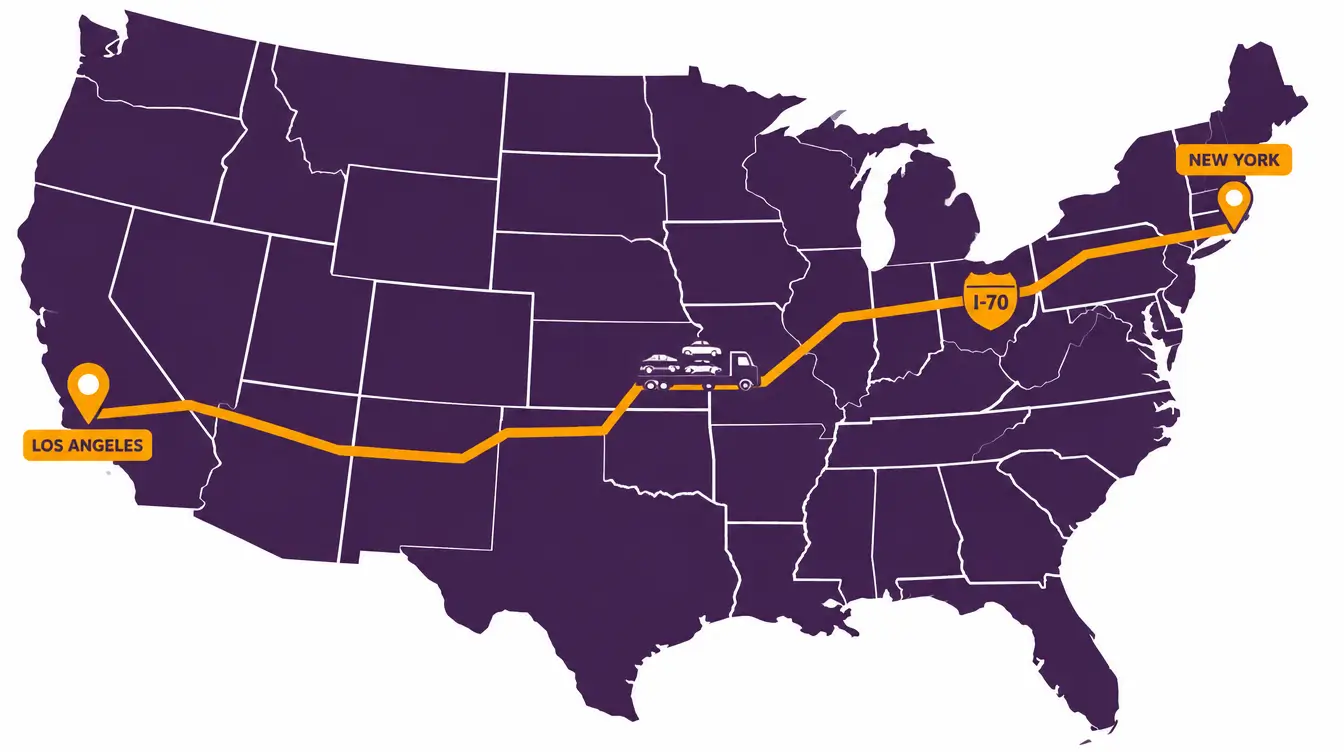
This lane leaves California on two very different lines. Out of Southern California, a route calculator climbs past Victorville toward Albuquerque, crosses the Texas Panhandle at Amarillo, then works through Oklahoma City, Tulsa and Springfield, Missouri and only then swings toward the Northeast. San Francisco, San Jose, Sacramento and Redding go north instead, taking I-80 over the Sierra to Reno and Salt Lake City and across Nebraska past Lincoln and Omaha. Riverside starts roughly 30 miles closer to Manhattan than Los Angeles, and San Jose sits close to 150 miles farther out. On the receiving side, Buffalo comes about 250 miles sooner than the city for a Los Angeles car, while Albany and Hempstead each add 25 to 30. Most cars share the trailer with vehicles unloading across the Midwest and Northeast, so finding a truck with an open slot varies more than the drive.
How Much Does Car Shipping California to New York Cost?
Nearly 2,800 miles sets the baseline, and your two addresses move the number from there. What counts is how far each address pulls an eastbound truck off its path.
Southern California pickups in the Inland Empire and around Los Angeles sit right on the southern line, and San Diego is not far behind. Bay Area and Sacramento cars join the northern line, while Fresno, Redding and remote corners of the state add miles before the trip starts. Upstate, Buffalo, Rochester and Syracuse come sooner by road than Manhattan, and Long Island, Albany and the North Country come later.
A big vehicle eats deck space. A full-size pickup or three-row SUV occupies room that two compact cars might share, and the quote reflects it.
Be cautious with a price well under everyone else. Across this many miles, a figure no driver has signed for tends to rise when dispatch starts looking for one.
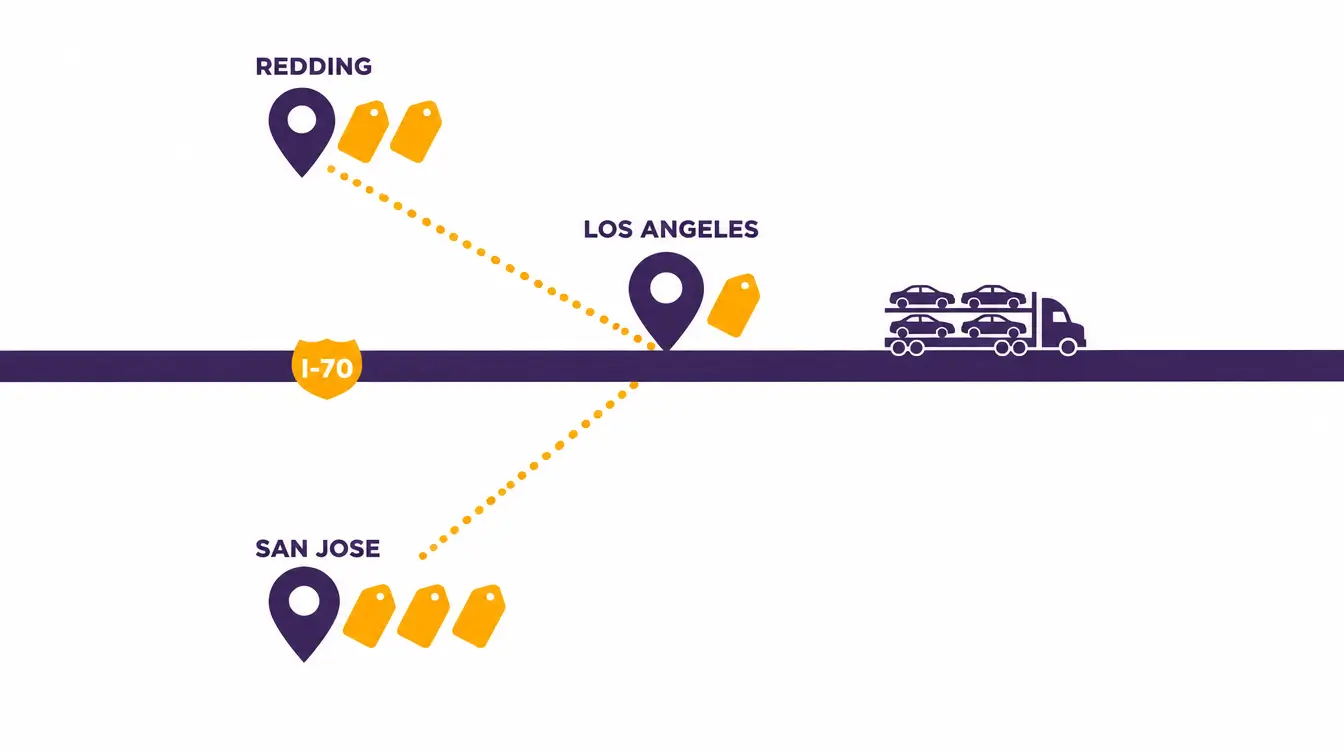
The Los Angeles to New York City price for a sedan riding open is $1,300 to $1,850. Southern California pickups, a suburban drop in New York and flexible loading dates pull a quote toward $1,300. Bay Area, Fresno or Redding starts, Manhattan drops and fixed dates pull it toward $1,850, occasionally higher.
A covered trailer raises the rate by 40 to 60 percent, worth it mainly for show cars, exotics, slammed builds or a new respray, seldom for a commuter.
Past raw distance, these move the figure:
- Where in California. Riverside begins about 30 miles nearer New York City than Los Angeles, and Bakersfield about 15 farther. Sacramento adds 25 to 30 miles, Redding about 95, San Francisco about 115, Fresno about 125 and San Jose close to 150.
- Where in New York. From Los Angeles, the calculators show Buffalo at 2,536 to 2,544 miles, Rochester near 2,600, Syracuse near 2,680 and Manhattan near 2,790. Albany and Hempstead land 25 to 30 miles beyond the city, Plattsburgh further again.
- What you ship. Put an SUV or pickup truck on the trailer and the sedan price climbs by $150 to $250. Cars that do not run go up on a winch, and fewer trucks carry one, so the rate climbs.
Treat any number here as a guide until a named trucker accepts your car at that rate.

What Factors Actually
Influence Pricing on This Route?
Booking early protects your timeline, keeps pricing steady, and reduces the risk of last-minute carrier changes.
Many customers on this route relocate permanently or move seasonally, which makes predictability more important than speed.
This article explains how auto transport Alabama to New York works, what it costs, and how long it takes, so you can make a clear, informed decision before you schedule your shipment.


Type
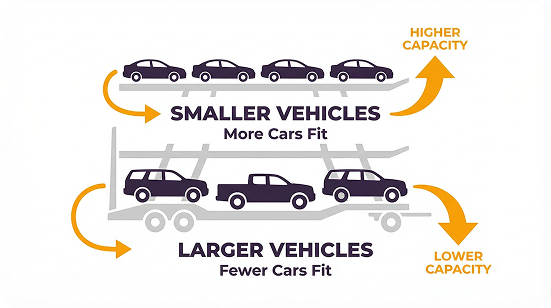
Size decides how much deck space your vehicle takes and how many other cars fit alongside it. A standard sedan is the cheapest thing to move because it slots almost anywhere on the trailer. SUVs, pickups and vans take more room and typically add a few hundred dollars on the same lane.


Is It Cheaper to Drive or Ship a Car From California to New York?
Shipping Instead of Driving
It makes sense when you fly east for a job, sell a car in California to someone back East, or relocate with more cars than drivers. Students and people short on vacation days often pick it for the same reason: nobody spends five days on the interstate.
One handoff in California spares the car close to 2,800 miles and spares you the hotel bills along the way.
Driving the Route Yourself
One calculator counts about 41 hours behind the wheel between Los Angeles and New York City. Alone, that is usually five or six long days of hotels, food, fuel and any tolls picked up in the East.
If your family is relocating together and the car is staying in New York for good, the road trip may be cheaper. If you are flying anyway, returning west later, or protecting a low-mileage car, shipping usually is.
How Long Does Shipping a Car From California to New York Take?
After loading, most cars reach New York in 7 to 9 days. Short runs like Riverside to Buffalo typically finish near 7 days, and long ones like San Jose to Plattsburgh or Long Island near 9.
Getting on a truck is the uncertain part. Dispatch usually assigns a truck within several business days, and giving a few alternative pickup dates widens the choice of eastbound trucks.
Counting stops and other deliveries, a loaded hauler usually logs 400 to 500 miles daily, so Los Angeles to Manhattan runs about six to seven days of driving. Mountain storms in winter can stretch that by a day or two.
When is the Best Time to Book Auto Transport From California to New York?
Figures other shippers publish for this corridor show demand peaking between spring and midsummer, with December to February quieter. The difference is small, so plan around your move rather than the calendar.
Reserve about two weeks ahead, or three between April and July. Extra notice gives dispatch room to hold out for a truck already heading your way instead of the earliest reply.
In winter, build a little slack into the New York delivery date. Snow in the Sierra Nevada, across Wyoming or in the Northeast can cost a day in transit, and a fixed date has no cushion for it.
Open vs Enclosed Auto Transport on a California to New York Route
Most California cars heading to New York travel on open multi-car trailers, picking up roughly the dirt a cross-country drive would.
Enclosed trailers shield the paint from desert dust, rain and winter salt end to end. Each one carries fewer cars, so it is pricier and space goes faster.
Choose one for collector cars, exotics, new paint or a body too low for normal ramps. Everyday cars are well served by an open trailer.
Enclosed Car Transport
Enclosed demand rises for high-value, specialty and seasonal vehicles, and enclosed trailers protect against road debris and weather, which matters most on longer hauls. Enclosed rigs are a small fraction of the trailers working any given lane, and that scarcity is what drives both the higher price and the longer booking lead time.
Open Car Transport
Most vehicles move on open trailers, and for most routes that is the more cost-effective way to ship a car.
Open transport works well for standard vehicles and keeps costs predictable. It also offers the widest carrier availability.
What New York Requires When Your Car Arrives
Insurance comes first in New York. A car cannot be registered in New York until a New York-licensed insurer covers it, and new residents get 30 days to finish registering, so it pays to set up the policy while the car is still in California.
- Insure it in New York. Coverage has to be written by a company the state Department of Financial Services licenses, and policies from other states are refused. At minimum the policy must carry $25,000 of injury coverage and $50,000 of death coverage for one person, then $50,000 and $100,000 respectively when more than one person is hurt or killed, plus a $10,000 minimum for damage to property. The DMV looks for two confirmations, your insurance ID card and an electronic notice from the insurer, and registration must follow within 180 days of the date on the card.
- Register inside 30 days. File Form MV-82 with the original title (photocopies are refused), identity documents and sales tax paperwork. When a lender holds the California title, the DMV asks for a copy the lender certifies, with the certification and the copy on one page, along with a lender letter stating that it holds the original. You can also apply by mail before you arrive.
- Clear the sales tax question. Registration requires paying New York sales tax, showing it was paid, or showing an exemption, and even an exempt registration gets a sales tax receipt. For a car bought while you lived outside New York, the DMV directs you to Form DTF-803 for the non-resident exemption. Expect county use tax too, which the DMV says is probably due.
- Book a New York inspection. Every New York-registered car needs a yearly safety inspection, and most also get an emissions check. An unexpired sticker from another state stays good until it runs out or for one year after registration, whichever comes first, and a car arriving from a state that issues no inspection sticker has to go through a New York inspection.
- Check the emissions label on a nearly new car. A vehicle with fewer than 7,500 miles generally has to meet the California emissions standard to be registered in New York, which the DMV checks by looking for wording such as California-Only Vehicle or 50-State Vehicle on the underhood emissions sticker. Form MV-74 certifies compliance, and a car registered to you while you lived in another state is exempt.
- Trade in your California license within 30 days. The exchange happens in person at a DMV office, with a vision test taken there or an eye test report, and the California card is handed in. The DMV normally does not count out-of-state students at New York schools as residents, so they may keep their current license.
Sources: the New York DMV page Register an Out-of-State Vehicle, together with its guidance on insurance requirements, inspections, California emissions standards, sales tax and swapping an out-of-state license. These pages change now and again, so confirm what applies at dmv.ny.gov before you ship.
What to Expect at Pickup and Delivery
California pickups depend on the street. Suburban roads in the Inland Empire, the San Fernando Valley and around Sacramento usually fit a full-size hauler, while hillside streets in Los Angeles and San Francisco, older tight blocks and gated communities often mean meeting on a wider road or in a store lot. Mention access when you book.
Manhattan deliveries need a plan. Much of the island, and many narrow blocks in Brooklyn and Queens, offer nowhere legal for a full trailer to stop, so the driver calls to set a meeting point on a broad avenue or in a big lot. Long Island, Westchester and upstate cities are easier, and delivery at the curb is common there.
Buying in California? Standard plates generally stay with the vehicle, while personalized plates come off unless the seller releases them, and the seller has 5 calendar days to file a notice of transfer. Source: California DMV, License Plates and Notice of Transfer and Release of Liability.
If possible, join the walkaround at pickup and at delivery. Existing marks are written on the inspection report at loading, checked again at delivery, and backed by your own dated photos. Read it before you sign.
Key Things to Know Before Shipping a Car From California to New York
Rivalane plans every shipment on this lane from Melville, Long Island, at the New York end, lining up a carrier already hauling east on the southern or northern line. Give the California city when you ask for a quote, because Riverside and San Jose starts differ by about 180 miles to Manhattan.
Frequently Asked Questions



