




Most pairings on this lane run 40 to 520 road miles, and cars typically arrive 1 to 3 days after loading. Open-trailer sedans generally cost $450 to $800. Book about a week ahead, register the car in New York within 30 days, then cancel the Massachusetts registration.
How Car Shipping From Massachusetts to New York Works
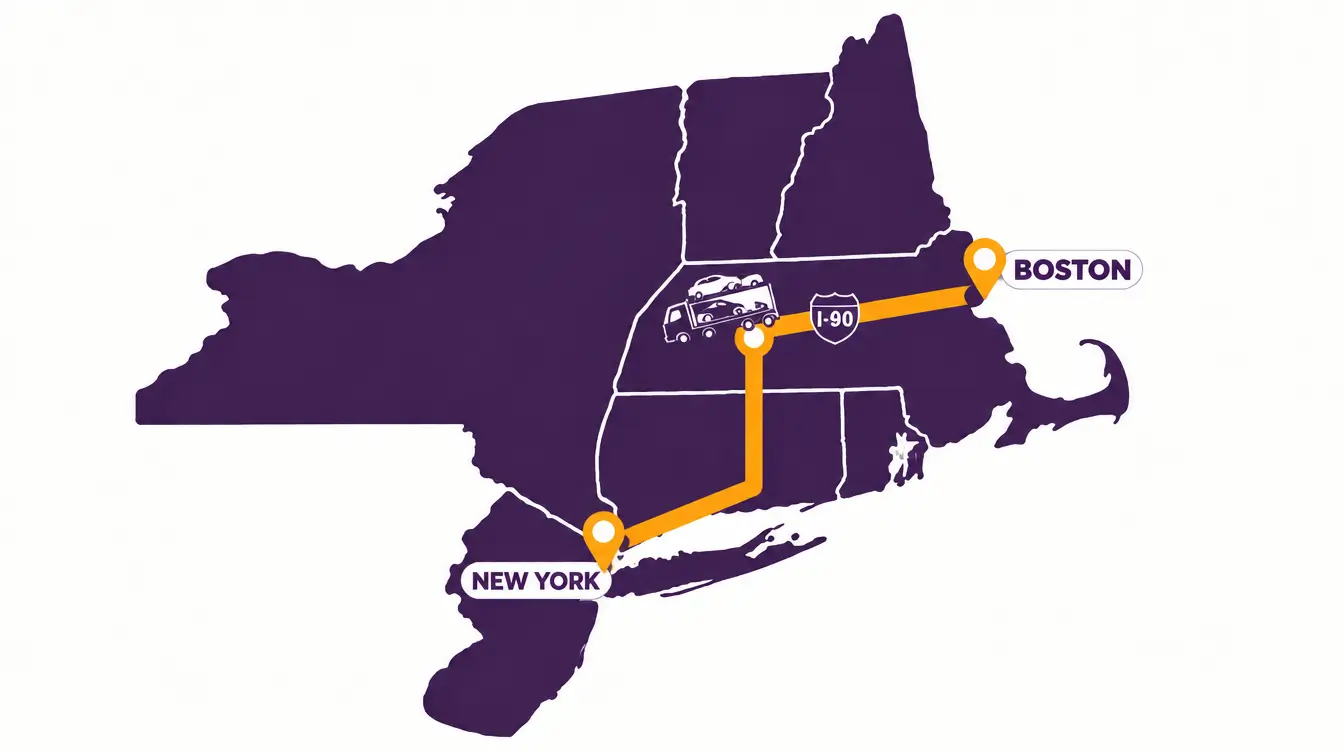
Cars leaving Massachusetts for New York usually fill an open slot on a truck that is already loading around Boston, Worcester or Springfield. From Greater Boston the hauler heads west on I-90, the Massachusetts Turnpike, then turns south through central Connecticut toward the city, Westchester and Long Island. New Bedford and Cape Cod loads start farther east and more often follow I-95 along the shoreline instead. Upstate deliveries, from Albany out to Buffalo, stay on I-90 the whole way, since it continues across New York as the Thruway. Connecticut bars trucks from the Merritt Parkway, so a hauler bound for Westchester sticks with the interstate network even where a map suggests the parkway. With so little road time involved, the effort is spent choosing the two handoff spots and waiting for a truck with space to pass your pickup.
How Much Does Car Shipping Massachusetts to New York Cost?
Your quote depends on your vehicle, the exact pickup and delivery addresses, the season and the trailer type, so run the calculator for a figure on your dates.
On a trip this short, the carrier minimum does more to set the price than the mileage. A Springfield car bound for Manhattan covers about 143 miles and a Boston car about 215, yet the two often quote within a narrow band.
Where the car starts in Massachusetts carries more weight. Towns along the Turnpike between Worcester and Springfield slot easily onto an existing run, while Cape Cod, the Berkshires and crowded Boston neighborhoods take extra time to reach.
Vehicle size counts too. A full-size pickup or large SUV uses more deck space, and not every truck has room for it, so the quote rises.
An offer well under the others often counts on a driver who has not accepted the job. To see a realistic figure for your two addresses, try the cost calculator first.
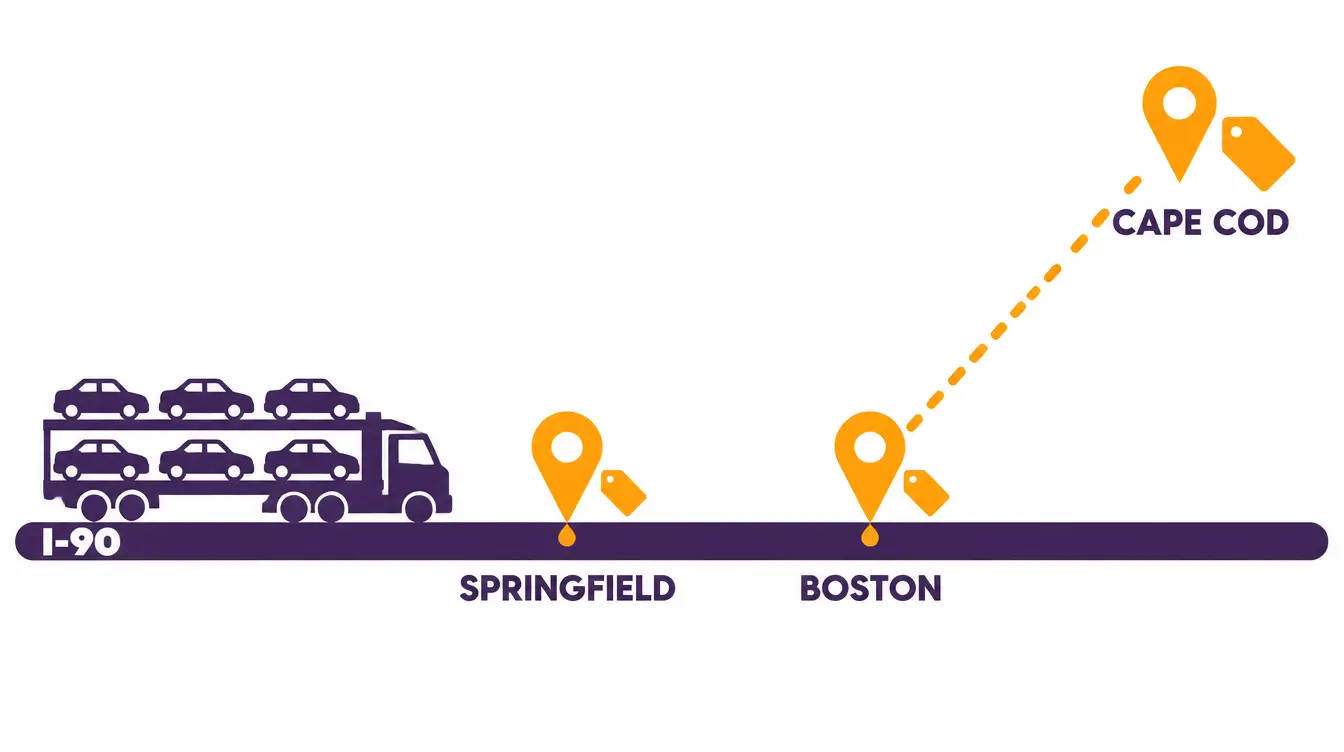
Between Boston and New York City, a typical sedan riding an open trailer costs $450 to $800. Turnpike-area pickups headed for Westchester, the Bronx or Long Island tend to land in the lower part of that range, while far pairings such as Hyannis to Buffalo reach the top and can pass it.
Covered transport usually runs 40 to 60 percent above what the open trailer costs. Because the base price on this lane is modest, that premium becomes a large share of the bill, so it mostly suits classics, exotics, newly painted cars and lowered builds.
The biggest price drivers here:
- The Massachusetts pickup. Greater Boston and the Turnpike towns sit on busy lines. Cape Cod and the Berkshire hill towns are detours for most trucks and can take longer to schedule.
- The New York delivery. Long Island and Westchester drop-offs are simple, Manhattan normally means a meeting spot agreed in advance, while the upstate part of New York is a longer run west on the Thruway.
- The vehicle. Pickup trucks and big SUVs usually cost $100 to $150 extra. Tell the dispatcher about a car that does not run, because it has to be winched aboard.
Heading the opposite direction? The New York to Massachusetts route guide covers that lane.

What Factors Actually
Influence Pricing on This Route?
Five things move the price on any lane: the vehicle's size, whether it runs, how easy each end is to reach, the season and the trailer type. Booking early protects your timeline, keeps pricing steady and reduces the risk of last-minute carrier changes.


Type
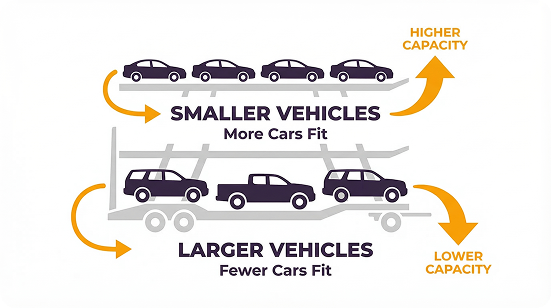
Size decides how much deck space your vehicle takes and how many other cars fit alongside it. A standard sedan is the cheapest thing to move because it slots almost anywhere on the trailer. SUVs, pickups and vans take more room and usually cost more on the same lane.


Is It Cheaper to Drive or Ship a Car From Massachusetts to New York?
Shipping Instead of Driving
Shipping makes sense when the car needs to travel while you do not. A graduate starting a job in Manhattan, a Westchester buyer of a car from a Boston seller, or a second household car during a move are common cases.
It also saves the trip back. Nobody has to catch a train or bus to Boston afterward, and there is no hunt for city parking on arrival day.
Driving the Route Yourself
Traveling with the car to New York? Driving it yourself usually costs less. Boston sits about 215 miles from New York City, around four hours behind the wheel in light traffic, and Springfield is closer still.
The numbers flip once a driver needs a way home. A round trip turns a half-day drive into most of a weekend, and a Buffalo delivery from Boston means about 455 miles each way.
How Long Does Shipping a Car From Massachusetts to New York Take?
Once loaded, most cars are handed over in New York within 1 to 3 days. A Boston car bound for Manhattan may be delivered the next day, while a Cape Cod car going to Rochester or Buffalo typically uses more of that window.
Before loading is where the delay usually sits. Your car joins a route the driver has already mapped out, so the schedule depends on when a hauler with an open space passes near your pickup. Pairing your booking with a carrier generally needs one to three working days.
In a normal driving day a hauler covers 400 to 500 miles, close to the longest pairing on this lane, so road time is rarely the holdup. Naming several workable pickup days usually cuts the total time more than anything else.
When is the Best Time to Book Auto Transport From Massachusetts to New York?
This lane has carrier traffic year round, and because the trip is short, flexible dates matter more than the month.
About a week of lead time is usually enough. If you need one specific pickup day, say so when you book, because a single fixed date narrows the choice of trucks.
When a New York lease or a new job begins on a set date, book earlier and share that date with the dispatcher, who can then look for a truck that fits it.
Open vs Enclosed Auto Transport on a Massachusetts to New York Route
The usual choice here is open transport on a standard two level hauler. A few hours on the road exposes the car to about the same weather and dust as an ordinary drive.
Enclosed transport loads the car into a trailer with sides and a roof. Each truck carries fewer cars, so openings are scarcer and the price is higher, and on a short run that difference stands out.
Covered space is worth it for a collector car, an exotic, a new restoration or anything that sits very low. Daily drivers, student cars and private sales usually travel open.
Enclosed Car Transport
Enclosed demand rises for high-value, specialty and seasonal vehicles, and enclosed trailers protect against road debris and weather, which matters most on longer hauls. Enclosed rigs are a small fraction of the trailers working any given lane, and that scarcity is what drives both the higher price and the longer booking lead time.
Open Car Transport
Most vehicles move on open trailers, and for most routes that is the more cost-effective way to ship a car.
Open transport works well for standard vehicles and keeps costs predictable. It also offers the widest carrier availability.
What New York Requires When Your Car Arrives
Once you live in New York, the DMV allows 30 days for registration, and it will not process one without active New York coverage. Because the drive from Massachusetts is short, line up that policy before pickup.
- A New York insurance policy. Only an insurer licensed in New York can cover the car, and a Massachusetts policy does not qualify. Minimum liability is $10,000 for property damage and $25,000 for injury or $50,000 for death of one person; with two or more people, the figures become $50,000 and $100,000. Your Insurance ID Card shows when coverage begins, and New York expects the registration within 180 days of that day.
- Your original title. The DMV accepts only original proof of ownership, not photocopies. If a lender holds the Massachusetts title, ask it for a copy of the title in your name, certified by the lender or the Massachusetts RMV, with the certification on the same page or on a Memorandum of Title or an RMV abstract of ownership. The DMV form MV-82.1 also asks for a statement on the lender's letterhead that gives the owner's name and the car's year, make and VIN, says the lender holds the original title and understands the copy will be used to register the car in New York, and carries no conditions.
- Registering by mail. Mail registration brings a 10-day inspection extension sticker as well; it goes on the car only after the car reaches New York. Our guide covers registering an out-of-state car in New York by mail, including what goes in the envelope.
- Sales tax. Expect to pay New York sales tax unless you can show it was already paid or that an exemption applies. Form DTF-803 claims the nonresident exemption if you qualify based on your status when you bought the car, such as a car you bought while living in Massachusetts with no home, business or job in New York. Ask for the DMV sales tax receipt even when the car is exempt, and a county vehicle use tax may still apply depending on where you live.
- Inspection. Massachusetts requires every registered car to pass a yearly inspection and puts a sticker on cars that pass. If a car you already own carries a valid Massachusetts inspection, New York accepts it until it expires or one year after the New York registration date, whichever comes first, and the car then needs a New York inspection. If you don't have a valid out-of-state inspection certificate, you can ask NY DMV for an inspection extension of up to 10 days. DMV decides whether to grant it. Our guide explains how a current Massachusetts inspection carries over in New York and what the New York check covers.
- Driver license. New residents exchange the Massachusetts license at the DMV during their first 30 days in the state.
- Closing out Massachusetts. After the New York registration, cancel the Massachusetts registration, online unless two people own the car. Plates do not go back to the RMV, so recycle or destroy them. Cancel the registration before the Massachusetts policy ends, then keep the Registration Cancellation Receipt and give your insurer a copy. Our guide to canceling your Massachusetts registration covers the receipt, the plates and the excise abatement.
Sources: New York DMV guidance for new and departing residents, the DMV pages it points to on registration, coverage, inspections and sales tax, NY DMV form MV-82.1, and the Massachusetts RMV pages on canceling a registration and on vehicle inspections. Agencies update these pages, so reread them shortly before the pickup date.
What to Expect at Pickup and Delivery
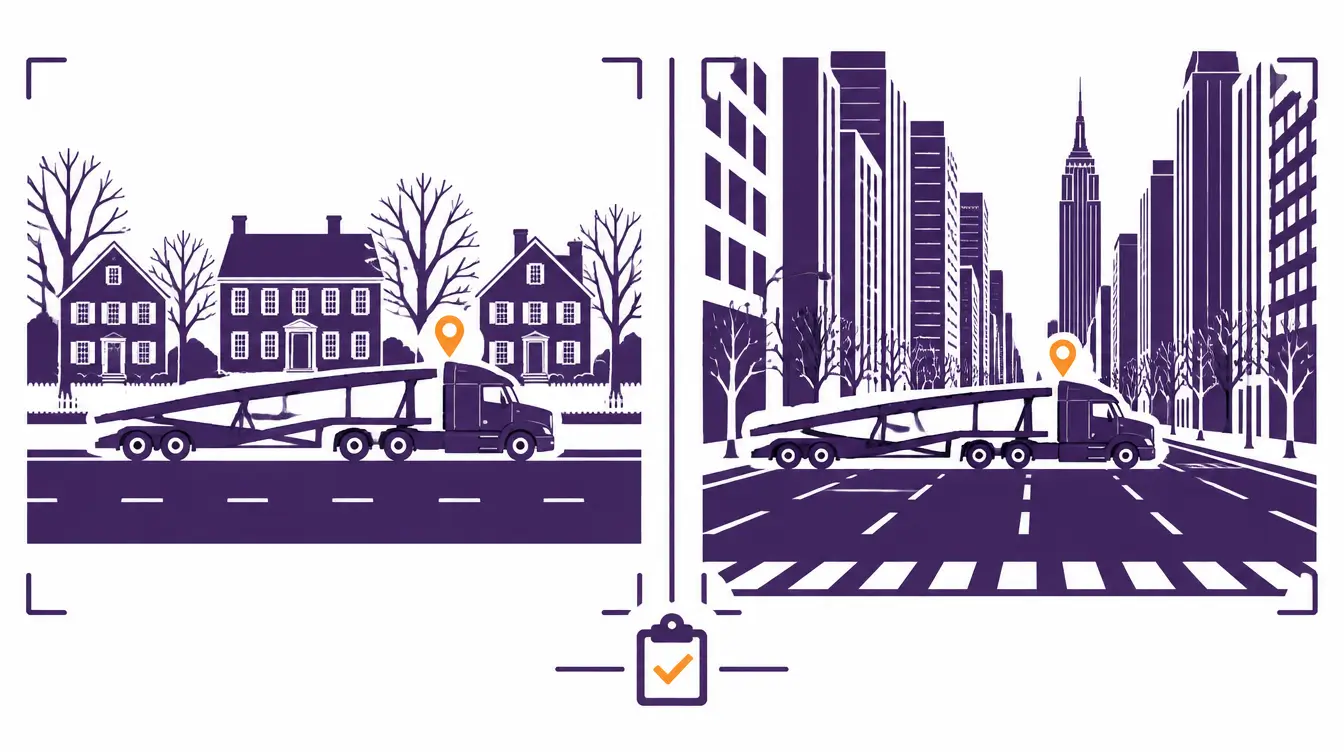
A loaded car carrier is long and needs clear room at both ends, so agree on the two handoff points before a truck is assigned.
In Boston, Cambridge and Somerville, narrow streets and packed curbs often move the handoff to a parking lot or a broad road close by. Suburban driveways west of Route 128 and most Cape Cod and Berkshire addresses are easier, though a long private lane may still call for a meeting point.
At the New York end, Manhattan and much of Brooklyn usually need a meeting spot on a wide avenue or in a parking lot. Most homes in Queens, Nassau and Suffolk counties or Westchester can take the truck, and upstate addresses are seldom a problem.
Each handoff begins with an inspection. At pickup the driver writes every existing scratch, chip or dent into the bill of lading, and you compare the car against that report before signing at delivery. Dated photos you take yourself at both ends are worth having too.
Key Things to Know Before Shipping a Car From Massachusetts to New York
Rivalane coordinates this lane from its home base on Long Island and books your car with a carrier already running west on I-90 or south toward the city. Buy New York coverage and register the car in New York before canceling the Massachusetts registration, because Massachusetts expects the car to stay insured until that cancellation goes through.


Frequently Asked Questions