





Expect about 900 to 1,300 miles on I-80 from New York to Iowa, and delivery usually lands 3 to 5 days after pickup. Open transport for a sedan typically runs $850 to $1,300, lowest to Des Moines and other I-80 cities. Book one or two weeks out, more in early summer, and allow for Iowa's 30-day registration deadline.
How Car Shipping From New York to Iowa Works
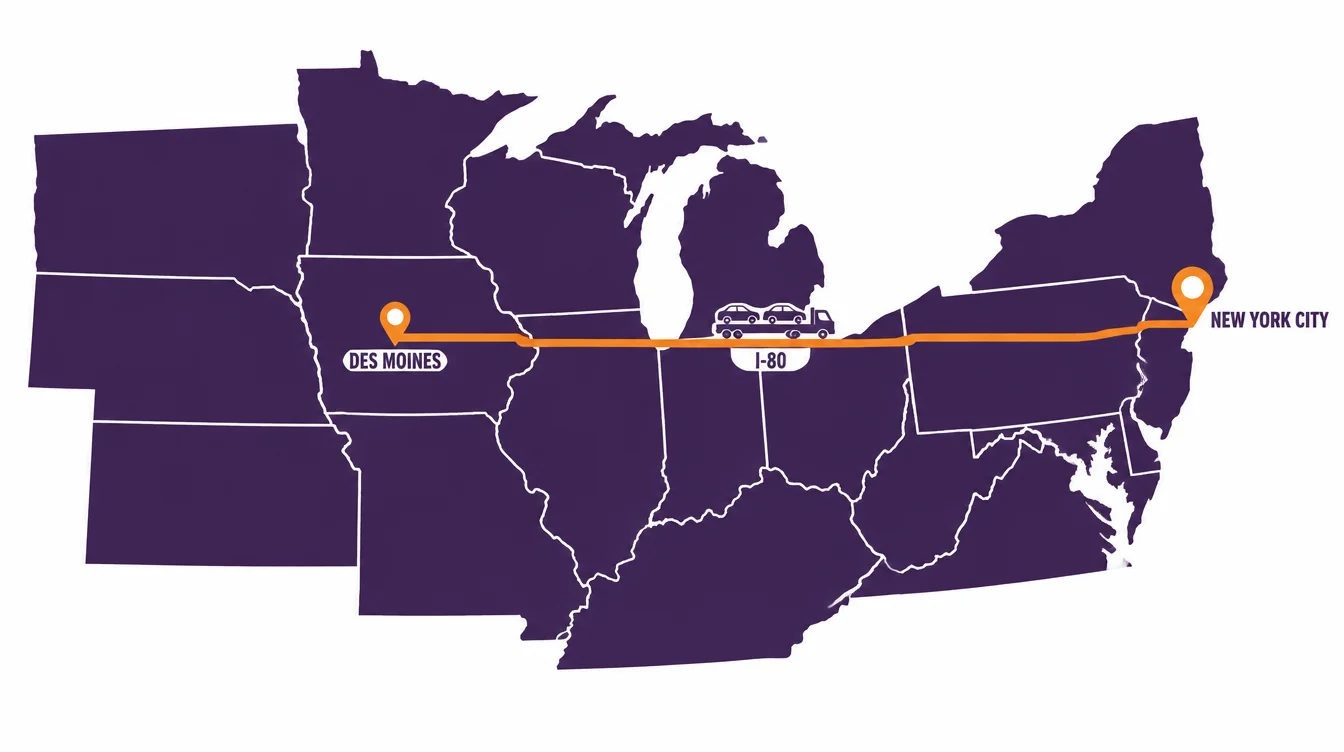
New York to Iowa car shipping is essentially one long run on I-80. Haulers load around the New York metro, reach the interstate in northern New Jersey, and hold it through Pennsylvania, Ohio, Indiana and Illinois before crossing the Mississippi River into Iowa at the Quad Cities. From there the highway passes Iowa City and Des Moines before reaching Council Bluffs, so a delivery to any of them is a stop along the truck's existing path instead of a detour. Cedar Rapids and Waterloo lie a short way north on I-380, Ames is up I-35 from Des Moines, and Sioux City in the northwest corner means turning off at Council Bluffs onto I-29. Some trucks on this lane keep going to Omaha, Denver or farther west, so your car may share a trailer with vehicles bound well beyond Iowa. The part of the schedule that moves around is the gap between booking and loading, while dispatch lines your car up with a Midwest-bound truck. Iowa to New York shipments usually head back east on that same I-80 line. In Manhattan and other crowded parts of the city, loading and unloading usually happen at an agreed spot a few blocks away rather than at your curb.
How Much Does Car Shipping New York to Iowa Cost?
The price of car shipping New York to Iowa hinges less on mileage than on two questions: how close your Iowa address sits to I-80, and how easily the truck can load in New York.
Davenport, Iowa City and Des Moines sit directly on I-80 and tend to be the cheapest deliveries. Cedar Rapids, Waterloo and Ames add a short run off the route, while Sioux City, Mason City and rural addresses across the north and west price higher, because getting there takes the hauler far from its line west.
Size comes next. A sedan slots into almost any position on an open trailer, whereas an SUV, pickup or van claims room that could have carried another car.
Be careful with a quote that undercuts every other by a wide margin. It usually reflects a figure no truck has agreed to yet, and it tends to rise once dispatch actually tries to place the car.
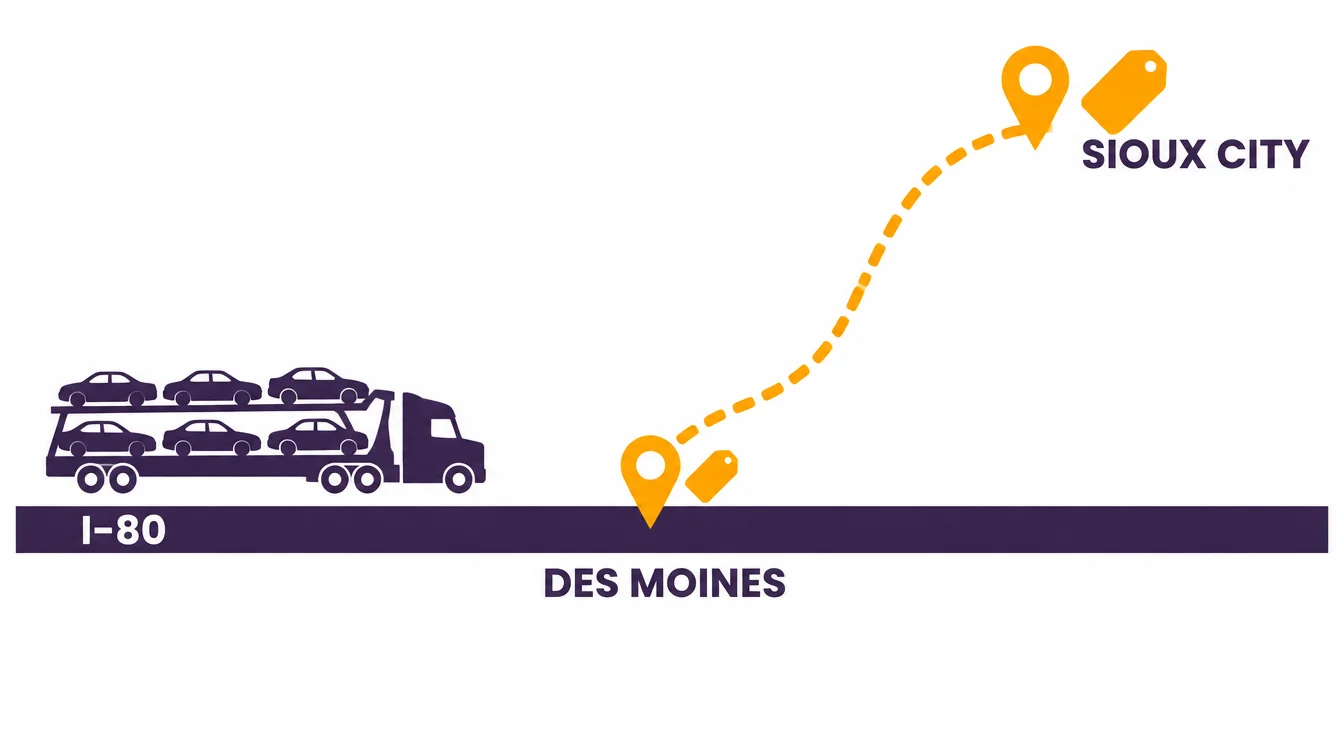
Plan on $850 to $1,300 for a standard sedan traveling open from New York to Iowa. The lower end fits a pickup anywhere outside Manhattan heading for Davenport, Iowa City or Des Moines on a flexible date. The upper end comes with a Manhattan pickup, a peak summer booking or a date that cannot move, and deliveries to Sioux City or northwest Iowa can reach the top of the range or go past it. Moving the other direction, a car picked up in Iowa for delivery to New York is priced within this same band.
Enclosed transport generally carries a 40 to 60 percent premium over open. That extra spend suits a collector car, an exotic or a very low car, and is hard to justify for a commuter car.
Three details on this lane matter more than distance:
- Iowa delivery point. Addresses on I-80 between the Quad Cities and Council Bluffs price best. Cedar Rapids, Waterloo and Ames add a little, and Sioux City, Mason City and farm addresses in the north and west cost more because the hauler has to leave the interstate to get there.
- New York pickup. Pickups from Staten Island, Long Island or Westchester are the easiest to load. Manhattan pickups generally happen at a meeting point, and Buffalo, Rochester or Syracuse rely on finding a hauler that is already working the upstate region.
- Vehicle type and condition. Budget an extra $100 to $200 when the vehicle is an SUV or pickup. Cars that will not run have to be winched onto the trailer, and fewer haulers carry a winch, which pushes the rate up.
If one quote sits well under this range, ask whether any carrier has accepted it. A price that no truck has taken is still an estimate rather than a booking.

What Factors Actually
Influence Pricing on This Route?
Booking early protects your timeline, keeps pricing steady, and reduces the risk of last-minute carrier changes.
Many customers on this route relocate permanently or move seasonally, which makes predictability more important than speed.
This article explains how auto transport Alabama to New York works, what it costs, and how long it takes, so you can make a clear, informed decision before you schedule your shipment.


Type
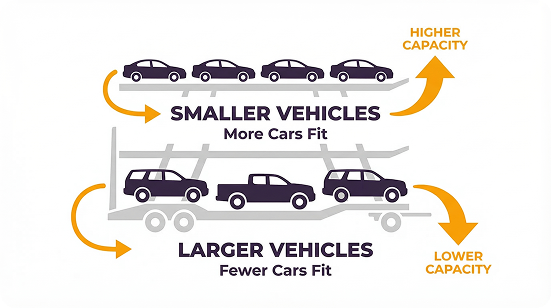
Size decides how much deck space your vehicle takes and how many other cars fit alongside it. A standard sedan is the cheapest thing to move because it slots almost anywhere on the trailer. SUVs, pickups and vans take more room and typically add a few hundred dollars on the same lane.


Is It Cheaper to Drive or Ship a Car From New York to Iowa?
Shipping Instead of Driving
Shipping fits when you are starting work in Des Moines or Cedar Rapids and flying there, when the car must reach Iowa ahead of a summer move, or when a buyer in Iowa has purchased your car and you cannot drive it out. It also suits a family that wants a second vehicle ready in Iowa while they fly.
One handoff in New York stands in for two days on the interstate and keeps roughly a thousand miles or more off the odometer.
Driving the Route Yourself
Driving from New York City to Des Moines takes about 17 hours, and Sioux City is closer to 21. Spread over two or three days, that adds lodging, food, gas and the tolls on the turnpike stretches that carry I-80 through Ohio and Indiana.
For a permanent move with the car coming along, the road trip often costs less. Shipping wins out if you are flying either way, owe yourself a trip back east, have more than one vehicle to relocate, or would sooner skip Pennsylvania and Iowa on I-80 in a snowstorm.
How Long Does Shipping a Car From New York to Iowa Take?
Once a car is on the trailer, delivery in Iowa typically follows in 3 to 5 days. Deliveries along I-80, such as Davenport, Iowa City and Des Moines, often land toward the short end, while Sioux City and northern Iowa tend to need the full window.
A loaded hauler covers a daily range of roughly 400 to 500 miles and pauses to load and unload other vehicles as it goes, so a run of 900 to 1,300 miles takes several days on the road.
The stretch before pickup is the less predictable part. Allowing a couple of days of flexibility on pickup lets dispatch use a hauler with westbound space it already needs to fill, rather than waiting for a full load to form around your car.
When is the Best Time to Book Auto Transport From New York to Iowa?
This is a relocation lane. Demand is highest from late May through July, when job transfers and household moves stack up, with a smaller lift in October.
For that early summer stretch, allow two to three weeks ahead of your pickup date so dispatch has room to place the car. Outside that window, booking one or two weeks out normally covers it.
Winter raises a separate planning question. From December into February, snow and ice on I-80 through Pennsylvania, Illinois and Iowa sometimes stall trucks a day or two, and addresses in northern and western Iowa feel it first, so keep some slack around a winter delivery date.
Open vs Enclosed Auto Transport on a New York to Iowa Route
Open transport carries most cars between New York and Iowa, and it is the place to start. Your car travels on an uncovered trailer with other vehicles and faces roughly the same rain and road grime it would on the drive west.
Enclosed transport keeps the car inside a closed trailer from pickup to delivery. On this lane that matters most in winter, when salt and slush spray up along I-80 from Pennsylvania to Iowa, and during summer thunderstorms across the Midwest. Enclosed trailers hold fewer vehicles, so they cost more and generally need more notice.
Enclosed is the better call for collector cars, exotics, fresh restorations and cars that sit too low for normal loading ramps. A family car or commuter moving once is well served by open transport.
Enclosed Car Transport
Enclosed demand rises for high-value, specialty and seasonal vehicles, and enclosed trailers protect against road debris and weather, which matters most on longer hauls. Enclosed rigs are a small fraction of the trailers working any given lane, and that scarcity is what drives both the higher price and the longer booking lead time.
Open Car Transport
Most vehicles move on open trailers, and for most routes that is the more cost-effective way to ship a car.
Open transport works well for standard vehicles and keeps costs predictable. It also offers the widest carrier availability.
What Iowa Requires When Your Car Arrives
Iowa handles titles and plates at county treasurer offices, and the deadline counts from the day you become a resident, not the day the car arrives. Two details matter most for a car coming from New York: whether you owe the state's fee for new registration, and whether the car has a title at all. Our guide to registering an out-of-state car in Iowa covers both, along with the documents and the annual fee.
- 30 days to title and register. You have 30 days after you establish Iowa residency to title and register the vehicle, and any county treasurer's office in Iowa can handle it. Iowa registration is required even while your New York plates are still valid.
- Bring your New York paperwork. Take the New York title, your current registration and the Iowa DOT Application for Certificate of Title and/or Registration (form 411007) signed by every owner. When the title sits with a lender, the county can issue a non-transferable registration and plates based on the New York registration. Converting the title can wait, but you will need an Iowa title before you sell, trade or junk the car in Iowa.
- The move-in fee usually does not apply. Iowa charges a fee for new registration of $10 plus 5 percent of the purchase price, but a car a nonresident bought for use somewhere else is exempt when it moves in, and an exempt car pays neither part. The county treasurer weighs how long you owned the car, where it was registered and how many miles you drove it there, and a purchase made close to the move can suggest the car was bought for use in Iowa. When the fee is due, state sales tax already paid to another state is credited against it, and a leased car pays the fee on the remaining lease balance.
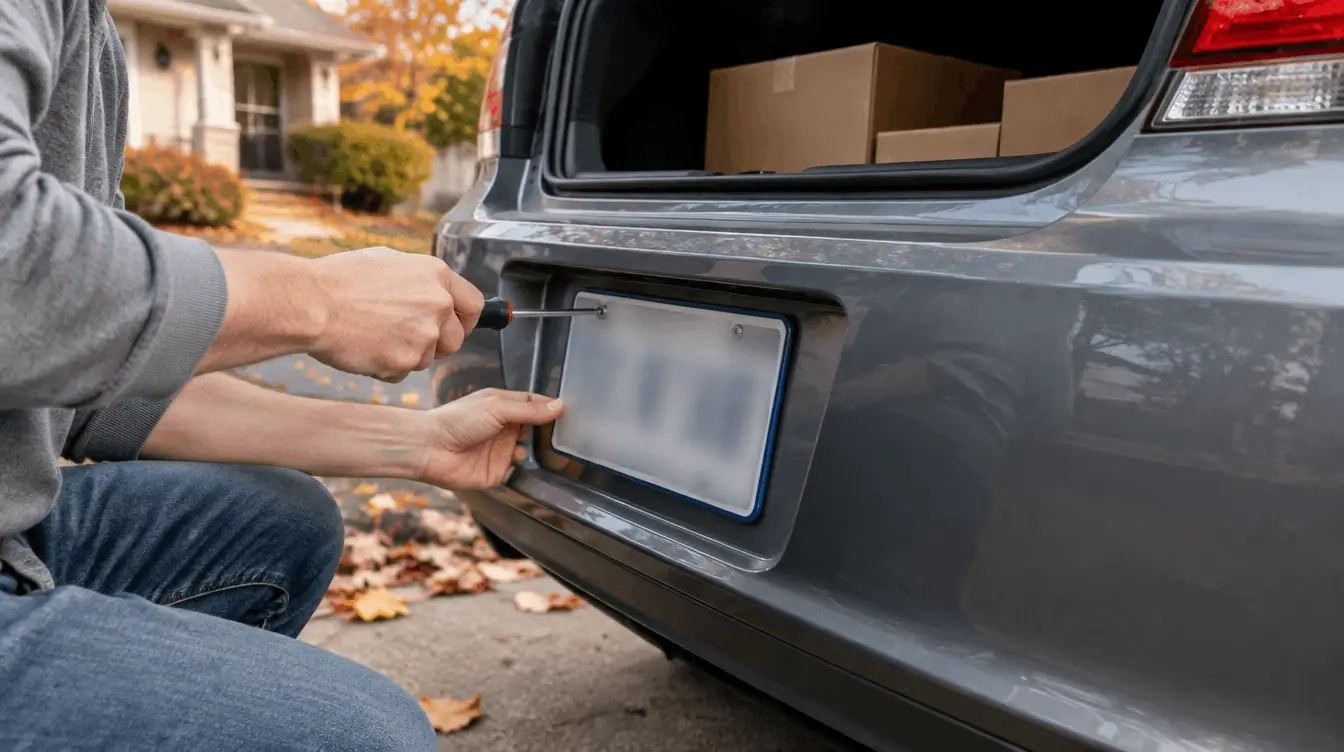
- Do not surrender the New York plates too early. Iowa wants the car registered within 30 days of residency even if the New York plates are still valid, and the New York registration can still matter at the treasurer's counter. When a lender holds the title, the county registers the car from the current New York registration, and where the car was registered before the move is one of the factors the treasurer weighs for the move-in exemption. Surrender the New York plates and registration to the New York DMV once the treasurer has issued Iowa plates, and cancel the New York policy only after that. Our guide to returning New York plates after a move covers the PD-7 form and the FS-6T receipt.
- Bought the car in New York? If you already live in Iowa, the move-in exemption does not apply, and Iowa collects its fee for new registration, $10 plus 5 percent of the purchase price, when you title and register the car. You have 30 calendar days from the purchase to apply, and shipping the car does not start a new clock. Iowa credits qualifying state-level sales tax paid to another state, but not county or local tax, so when a New York purchase leaves no New York sales tax paid, as with a dealer sale made exempt from New York tax with Form DTF-820 or a private sale, there is nothing to offset the Iowa fee. Filing after the deadline can add a penalty of 10 percent of the fee due. Our guide to buying a car in New York as a nonresident covers the form and getting the car out of New York.
- Cars from model year 1972 or earlier. New York does not title cars, trucks or vans that old, so the transferable registration serves as the ownership document. Iowa DOT lists out-of-state vehicles whose only ownership document is a registration among the cases where the county treasurer may ask for an inspection before titling.
- Your Iowa license. Iowa treats you as a resident for licensing once you register to vote, enroll a child in public school, accept a permanent job or live in the state for 30 days in a row, among other tests. With a valid New York license you may not need the knowledge or driving test, and students in Iowa can keep driving on their home-state license.
- Carry proof of insurance. Iowa drivers must carry current proof of registration and an insurance card showing liability coverage whenever they drive.
Source: Iowa Department of Transportation, Register a Vehicle, with the fee amount from Iowa Code section 321.105A, the move-in exemption and credit rules from Iowa Administrative Code rule 701-250.17, the purchase deadline from Iowa Code section 321.46, move-in paperwork from the Polk County treasurer, the inspection scope from Iowa DOT Vehicle Inspections, the pre-1973 title rule from the New York DMV, and license rules from the Iowa DOT driver's manual. Because each county treasurer processes the paperwork, check the current document list and fees with yours before shipping.
What to Expect at Pickup and Delivery
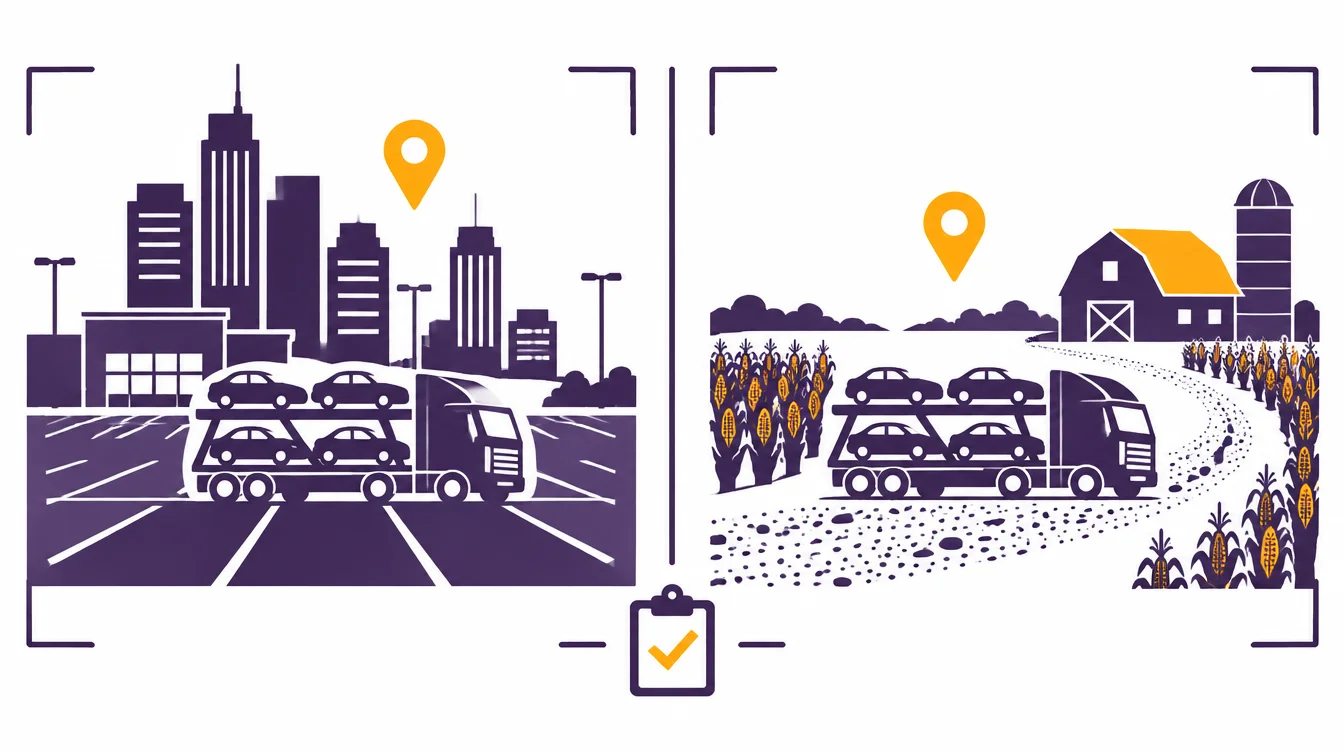
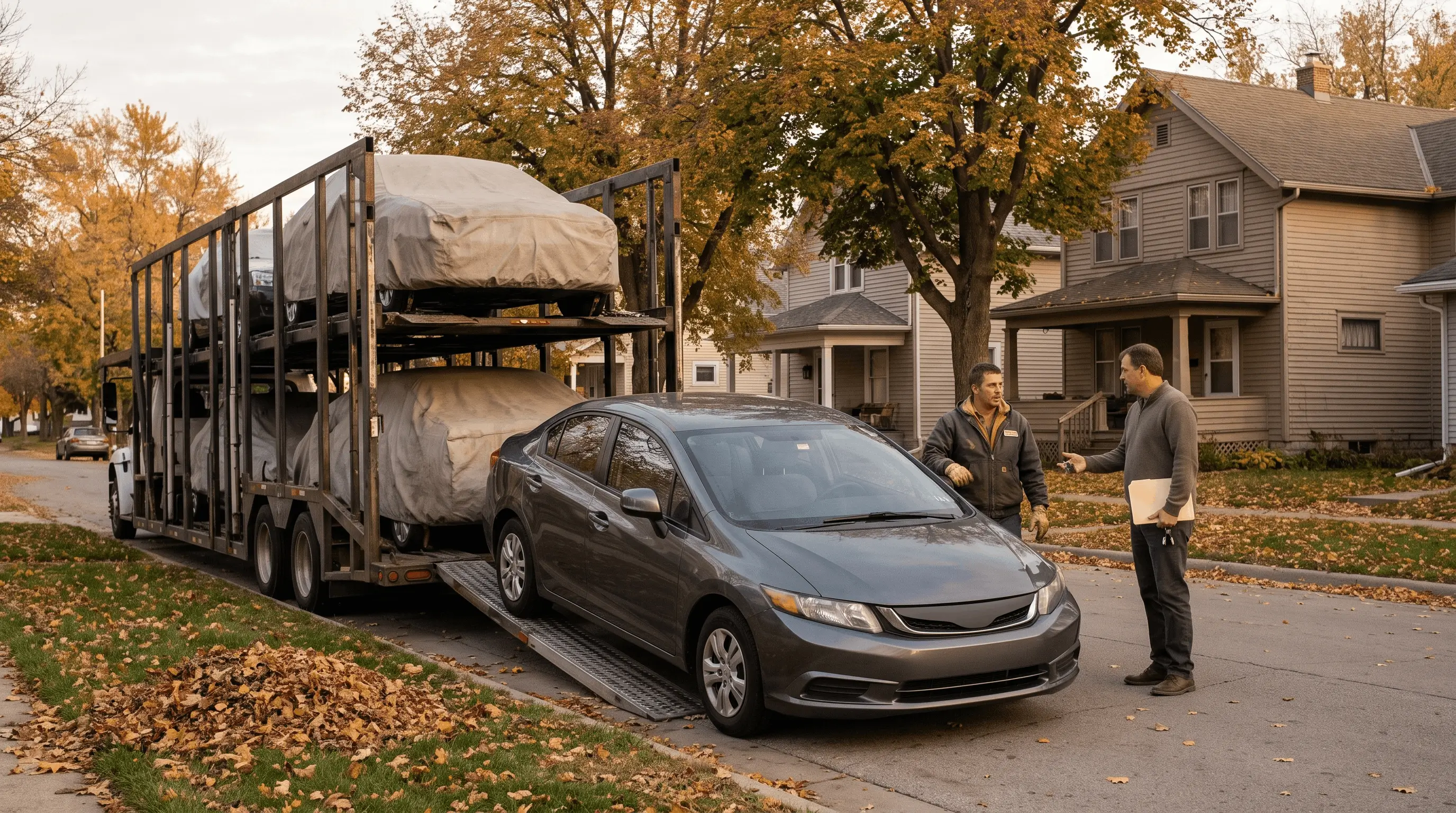
Of the two ends, New York City usually needs more planning than Iowa, whether the car is being picked up there or delivered. City curbs rarely have room for a car hauler, while most Iowa addresses are easy for a big truck to reach.
For pickups and deliveries in dense parts of Brooklyn, Queens, the Bronx or Manhattan, the driver will usually call ahead and suggest a place with room to load or unload, such as a large store parking lot or a wide road nearby. Suburban addresses in Nassau, Suffolk or Westchester usually get closer to the door, and upstate timing depends on when a hauler is working that region.
In Iowa, neighborhoods in Des Moines, Davenport, Cedar Rapids and Iowa City are generally straightforward. Gravel county roads, farm lanes and long private drives can call for a pickup or delivery in the closest town, and winter weather can change that plan on short notice.
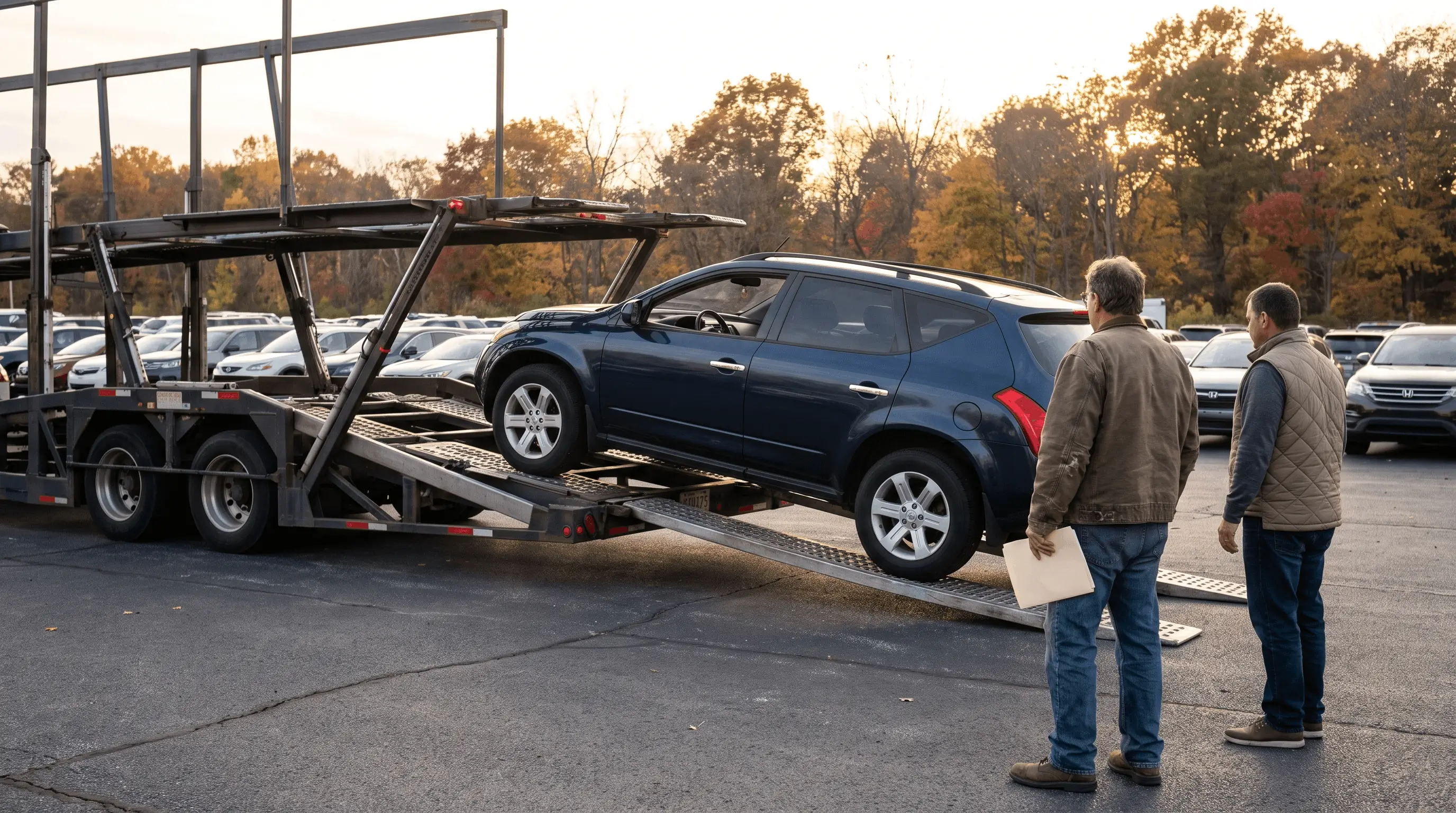
Plan to be there for the inspection. Before loading, the driver writes up every scratch and dent already on the car in the bill of lading, you confirm the notes match what you see, and the same sheet is used to compare the car on arrival. Photos you take yourself, with a date on them, settle most questions quickly.
Key Things to Know Before Shipping a Car From New York to Iowa
Rivalane coordinates this lane in both directions out of Long Island, so our team sits at the New York end where most of the planning happens and matches each car with a carrier running I-80 in whichever direction the car is going. Agreeing on a New York meeting spot at booking and naming the Iowa city up front lets both the price and the pickup dates hold. Anyone moving east should have a New York auto policy in force before the car arrives, because New York requires New York coverage on any car it registers, with registration due there within 30 days of moving in.
Frequently Asked Questions


