





Shipping a car from New York to Pennsylvania covers 95 to 370 miles depending on the destination and takes 1 to 3 days once loaded. Most sedans on open transport fall between $400 and $800, with Philadelphia at the low end and Pittsburgh at the high end. Book one to two weeks ahead, and if you are becoming a Pennsylvania resident plan to register within 20 days and pass a state inspection within 10 days of registering.
How Car Shipping From New York to Pennsylvania Works
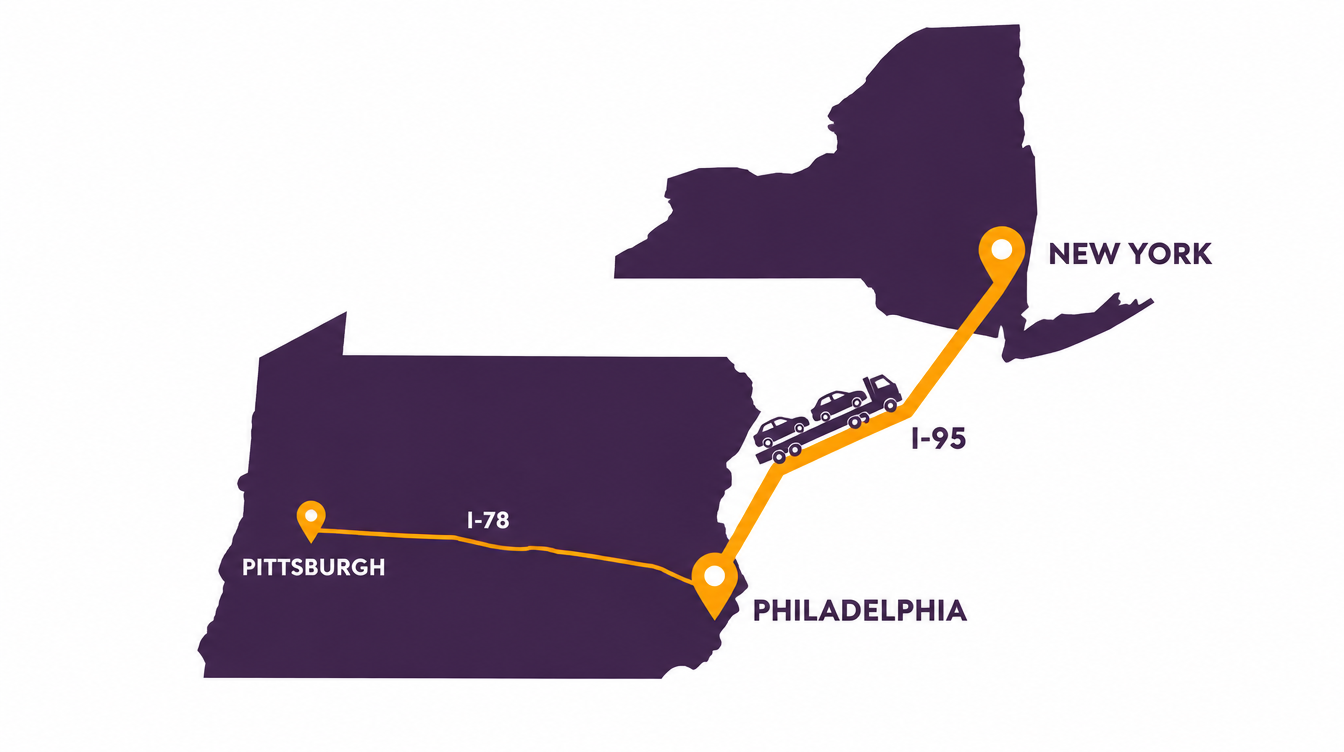
Car shipping from New York to Pennsylvania works differently from a cross-country move. The distance is short, between about 95 miles to Philadelphia and 370 miles to Pittsburgh, so the vehicle is rarely the only car on the truck and almost never the reason the truck is running. Carriers work the Northeast corridor daily, and your car is one stop on a route that is already moving through New Jersey and into Pennsylvania on I-95 or I-78. That is why pickup timing, not transit time, decides how fast the car arrives: the wait is for a truck to reach your pickup point, and once loaded the drive is a day or less for most of the state. In the New York metro area, vehicles are usually collected at an agreed meeting point rather than the front door, because a full-size hauler cannot work most city streets.
How Much Does Car Shipping New York to Pennsylvania Cost?
Car shipping New York to Pennsylvania is priced differently from a cross-country move. On a lane this short, the carrier minimum matters more than the mileage, so the cost depends heavily on where in Pennsylvania the car is going.
Philadelphia and the eastern corridor sit directly on the I-95 flow and price lowest. Pittsburgh and the western half of the state are a dedicated detour for most carriers and price higher for the same vehicle.
Sedans price lower because they are easier to load, while SUVs, trucks and specialty vehicles reduce placement flexibility and increase overall rates.
Quotes that appear unusually low often depend on open-ended timing or unconfirmed carrier availability. Clear expectations and a flexible pickup window keep pricing stable.
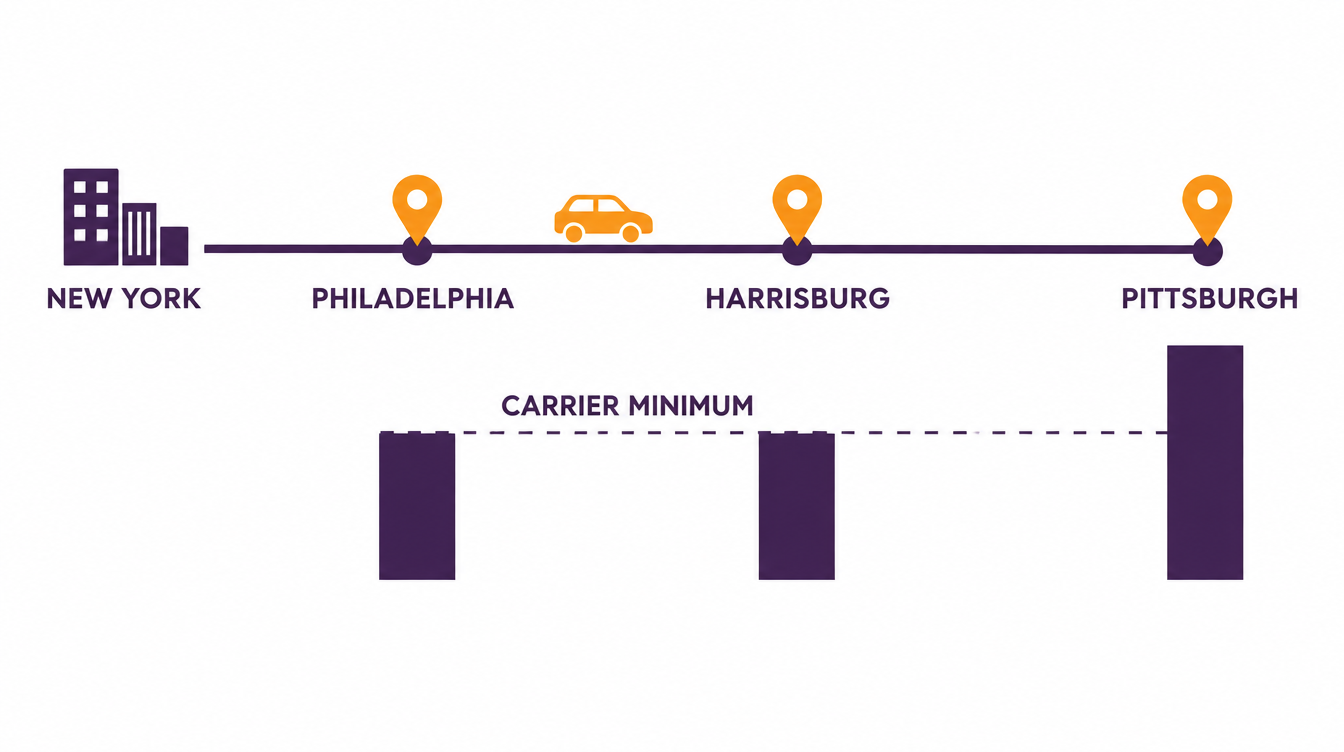
Most New York to Pennsylvania shipments for a standard sedan on open transport fall between $400 and $800. That is a wide range for a short lane, and the spread is almost entirely about where in each state the car is going.
Short routes are priced closer to a carrier minimum than by the mile. A New York City to Philadelphia run and a New York City to Harrisburg run can cost nearly the same, because the truck still has to make a dedicated stop. Pittsburgh and points west sit at the top of the range.
Enclosed transport runs roughly 40 to 60 percent above open rates. On a lane this short it is rarely worth it for a daily driver, and mostly makes sense for a collector car or a low-clearance vehicle.
Three factors move the number more than mileage does:
- Destination. Philadelphia, the Lehigh Valley and Harrisburg sit on the main I-95 and I-78 flow and price lowest. Pittsburgh, Erie and rural western Pennsylvania are off the primary lane and price higher.
- Pickup access. A pickup in Long Island, Westchester, the outer boroughs or northern New Jersey usually prices better than Manhattan, where a full-size hauler cannot reach the door.
- Vehicle size and condition. SUVs and pickups typically add $75 to $150, and a car that does not run needs a winch and a carrier equipped for it.
Quotes well below this range usually rest on carrier availability nobody has confirmed yet. A price only holds if a truck actually accepts the load at that rate.

What Factors Actually
Influence Pricing on This Route?
Booking early protects your timeline, keeps pricing steady, and reduces the risk of last-minute carrier changes.
Many customers on this route relocate permanently or move seasonally, which makes predictability more important than speed.
This article explains how auto transport Florida to California works, what it costs, and how long it takes, so you can make a clear, informed decision before you schedule your shipment.


Type
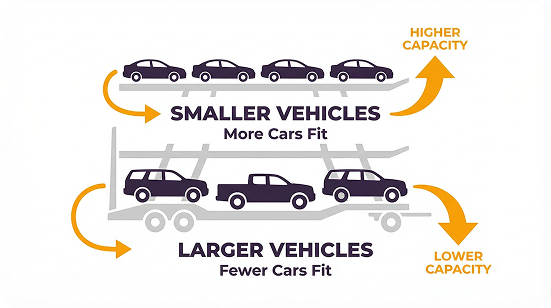
Size decides how much deck space your vehicle takes and how many other cars fit alongside it. A standard sedan is the cheapest thing to move because it slots almost anywhere on the trailer. SUVs, pickups and vans take more room and typically add a few hundred dollars on the same lane.


Is It Cheaper to Drive or Ship a Car From New York to Pennsylvania?
Shipping Instead of Driving
Shipping makes sense on this short lane when the car is going one way and you are not: a student car, a second household vehicle, or a move where you are travelling separately.
It replaces a return trip, a second driver or a train ticket home with a single handoff, and keeps the miles off the vehicle.
Driving the Route Yourself
Driving New York City to Philadelphia is about two hours; to Pittsburgh it is closer to six, plus turnpike tolls both ways if you are coming back.
The real cost of driving is usually the return trip. Unless you are relocating and the car stays, you need a second driver or a train ticket home, which is where a two hour drive becomes a full day.
How Long Does Shipping a Car From New York to Pennsylvania Take?
Transit itself is typically 1 to 3 days once the vehicle is loaded. Philadelphia and the eastern corridor often deliver the same day or the day after pickup. Pittsburgh and points west usually take the full window.
On a lane this short, pickup timing matters more than transit speed. Your car is one stop on a truck that is running the Northeast corridor, and the wait is for the truck to reach you, not for the drive itself.
A flexible pickup window of two or three days shortens the overall timeline more than anything else.
When is the Best Time to Book Auto Transport From New York to Pennsylvania?
This lane does not have the seasonal swings of the long Florida routes. Trucks run between New York and Pennsylvania every day of the year, so the question is not whether a carrier is available but how quickly one can fit your car around the loads it is already moving.
One to two weeks of notice is usually enough. Booking with a two or three day pickup window rather than a single fixed date is what shortens the wait, because a dispatcher can slot your vehicle onto the next truck heading that way instead of holding space.
The end of month and the start of the academic year in late August are the busiest stretches, when relocations and student moves stack up on the same corridor. If your dates land there, add a week.
Open vs Enclosed Auto Transport on a New York to Pennsylvania Route
Open transport carries the large majority of vehicles on this route and is the sensible default. Your car rides on a standard multi-car trailer, exposed to weather and road debris much as it would be if you drove it down the turnpike yourself, and on a trip this short the exposure is measured in hours.
Enclosed transport places the vehicle inside a covered trailer. It carries fewer cars per load, which is why it costs more and books further ahead, and on a short lane the premium is a larger share of the total than on a cross-country move.
Choose enclosed if the car is a classic, an exotic, freshly restored, or low enough that standard ramps become a problem. For a normal daily driver, a student car or a household second vehicle, open transport is the practical choice.
Enclosed Car Transport
Enclosed demand rises for high-value, specialty and seasonal vehicles, and enclosed trailers protect against road debris and weather, which matters most on longer hauls. Enclosed rigs are a small fraction of the trailers working any given lane, and that scarcity is what drives both the higher price and the longer booking lead time.
Open Car Transport
Most vehicles move on open trailers, and for most routes that is the more cost-effective way to ship a car.
Open transport works well for standard vehicles and keeps costs predictable. It also offers the widest carrier availability.
What Pennsylvania Requires When Your Car Arrives
Pennsylvania has one of the shorter registration windows in the Northeast and, unlike New York, it inspects every vehicle every year. If you are moving rather than visiting, plan this before the car ships.
- 20 days to title and register. PennDOT requires new residents to apply for a Pennsylvania title and registration within 20 days of establishing residency. You need a Pennsylvania ID or driver license to file, so that step comes first even though the license itself has a 60 day deadline.
- Pennsylvania insurance before you file. Proof of a Pennsylvania policy is required at the time of application. The state minimums are $15,000 per person and $30,000 per accident in bodily injury liability, $5,000 in property damage, and $5,000 in medical benefits. A New York policy does not satisfy this.
- VIN verification. The VIN on the vehicle must be checked against the out-of-state title and confirmed on the application by a certified inspection mechanic or a notary public at a dealership. Most people handle this through a PennDOT authorized tag and notary agent in one visit.
- Safety inspection within 10 days of registration. Every registered vehicle in Pennsylvania passes an annual safety inspection at an official station. A newly registered vehicle has 10 days to get its first one. New York inspection stickers do not carry over.
- Emissions inspection in 25 counties. Philadelphia, Allegheny and the surrounding counties, along with most of the populated eastern half of the state, require an annual emissions test alongside the safety inspection. Check your county at Drive Clean PA before you register.
Source: PennDOT, Motor Vehicle Information for New Residents. Confirm current requirements and fees at pa.gov before booking, since they change.
What to Expect at Pickup and Delivery
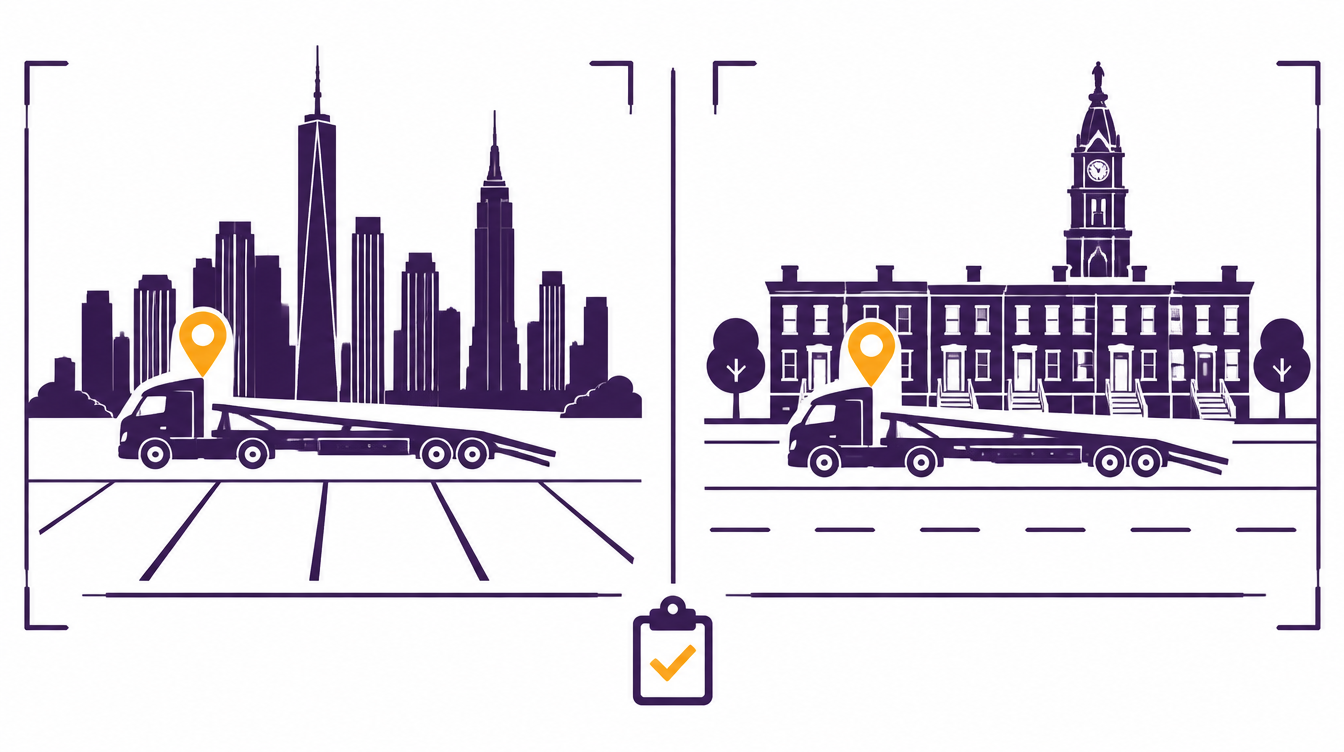
Pickup and delivery planning matters more on this lane than the distance suggests, because both ends are dense urban areas where a full-size trailer cannot work most residential streets.
In New York City, a 75-foot car hauler cannot work most residential streets, and Manhattan is close to impossible. Expect the driver to arrange a meeting point with room to load, often a large parking lot, a wide commercial street, or a location in Long Island, Westchester or northern New Jersey.
In Philadelphia the same applies to Center City and the rowhouse neighborhoods. Pittsburgh adds hills and narrow bridges. In both cases the driver will propose a nearby lot or wide street if the delivery address cannot take the truck. Suburban and rural Pennsylvania addresses are usually straightforward.
At pickup, the driver inspects the vehicle and documents its condition on the bill of lading. The same inspection happens at delivery so both sides can confirm the car arrived as it left. Photograph the car yourself at both ends.
Key Things to Know Before Shipping a Car From New York to Pennsylvania
Rivalane coordinates New York to Pennsylvania vehicle transport from its Long Island base with clear pricing, structured timelines and carriers that run the Northeast corridor daily. Agreeing a pickup point ahead of time and knowing where in Pennsylvania the car is headed keeps the price and the schedule predictable on this short lane.
Frequently Asked Questions



