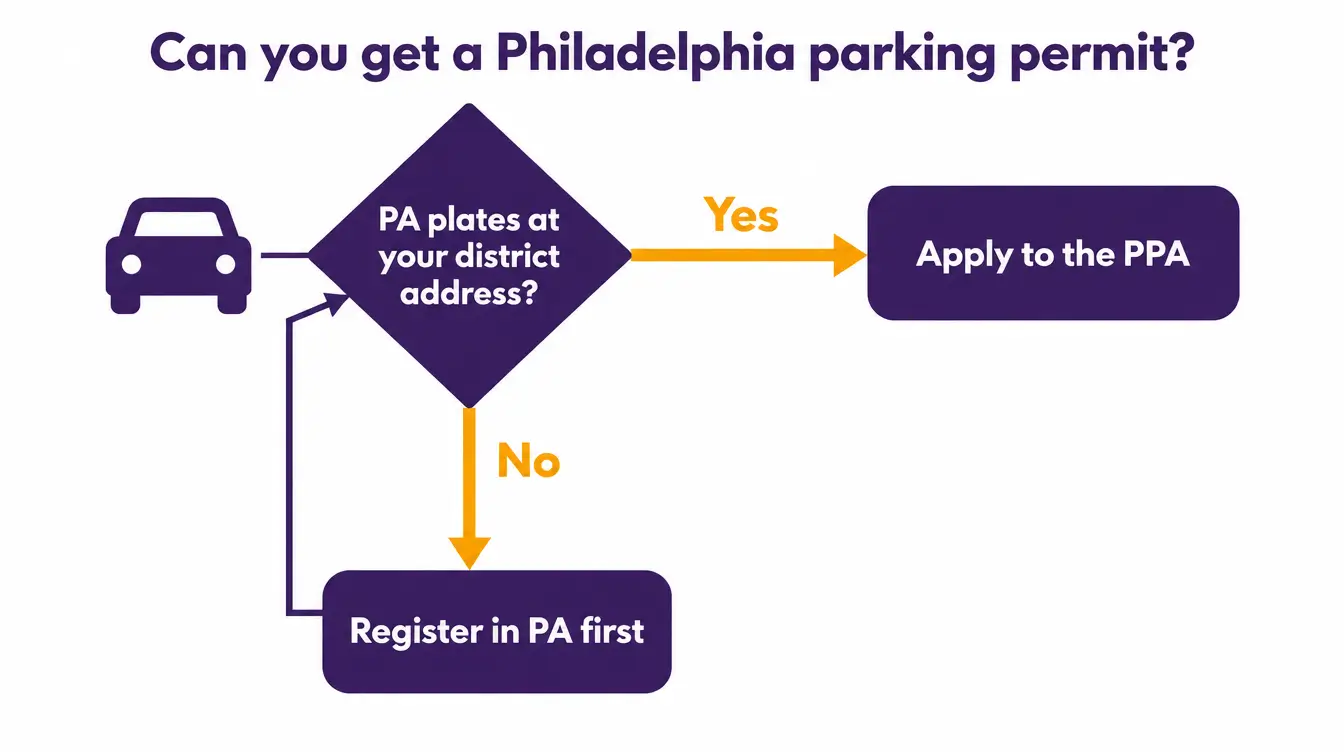
The Philadelphia Parking Authority (PPA) issues residential parking permits that let residents park past the posted time limits and skip the meters on permit blocks in their own district. To qualify, your car must carry Pennsylvania license plates and be registered to your address inside that district, according to the PPA's residential parking permit page.
That second rule shapes the first weeks after a move. A car that arrives from New York or any other state cannot get a permit until it is registered in Pennsylvania, so this guide covers the order of the steps as well as the permit itself.
Who Qualifies for a Philadelphia Residential Parking Permit?
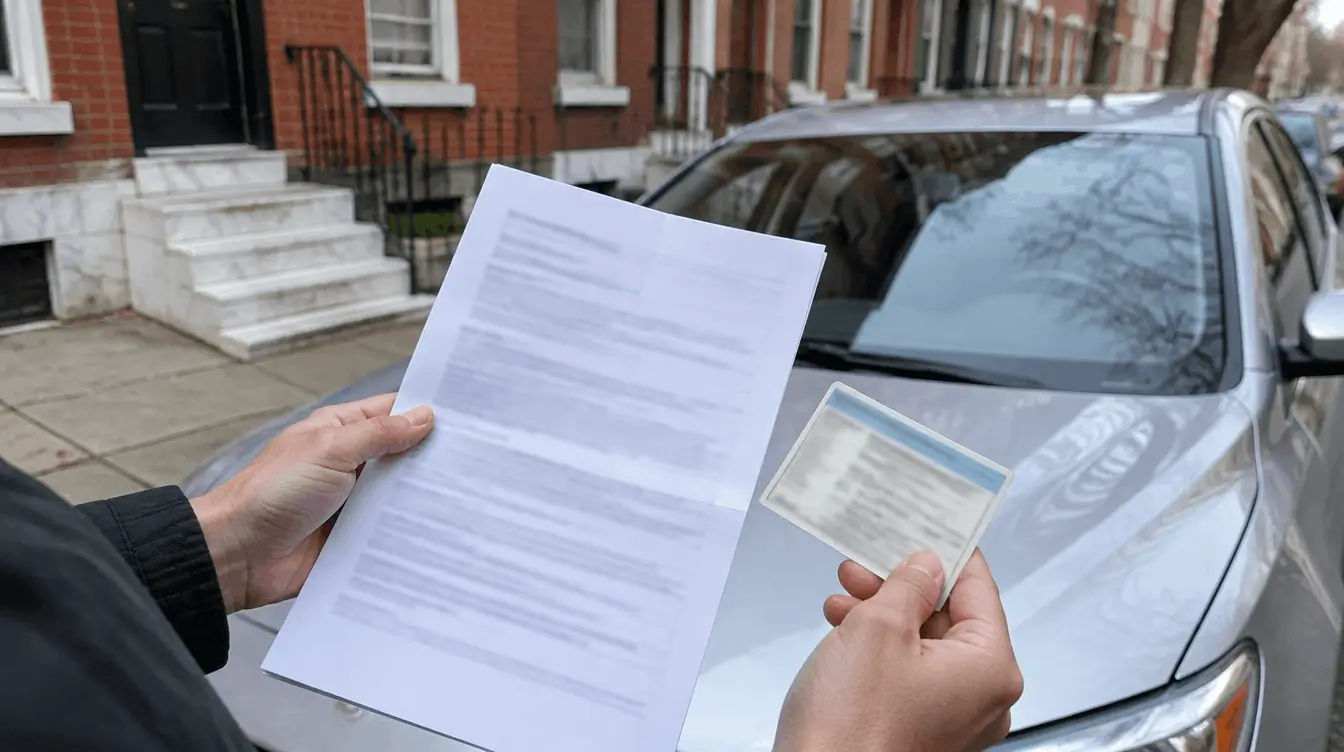
The permit goes to a vehicle whose owner and principal driver lives inside a permit parking district. The vehicle must display a valid Pennsylvania plate and be registered to that home address. You give the PPA proof of the registration and proof of residency, which can be your driver license, your lease or a recent utility bill in your name. If you have an apartment number, every document has to show it.
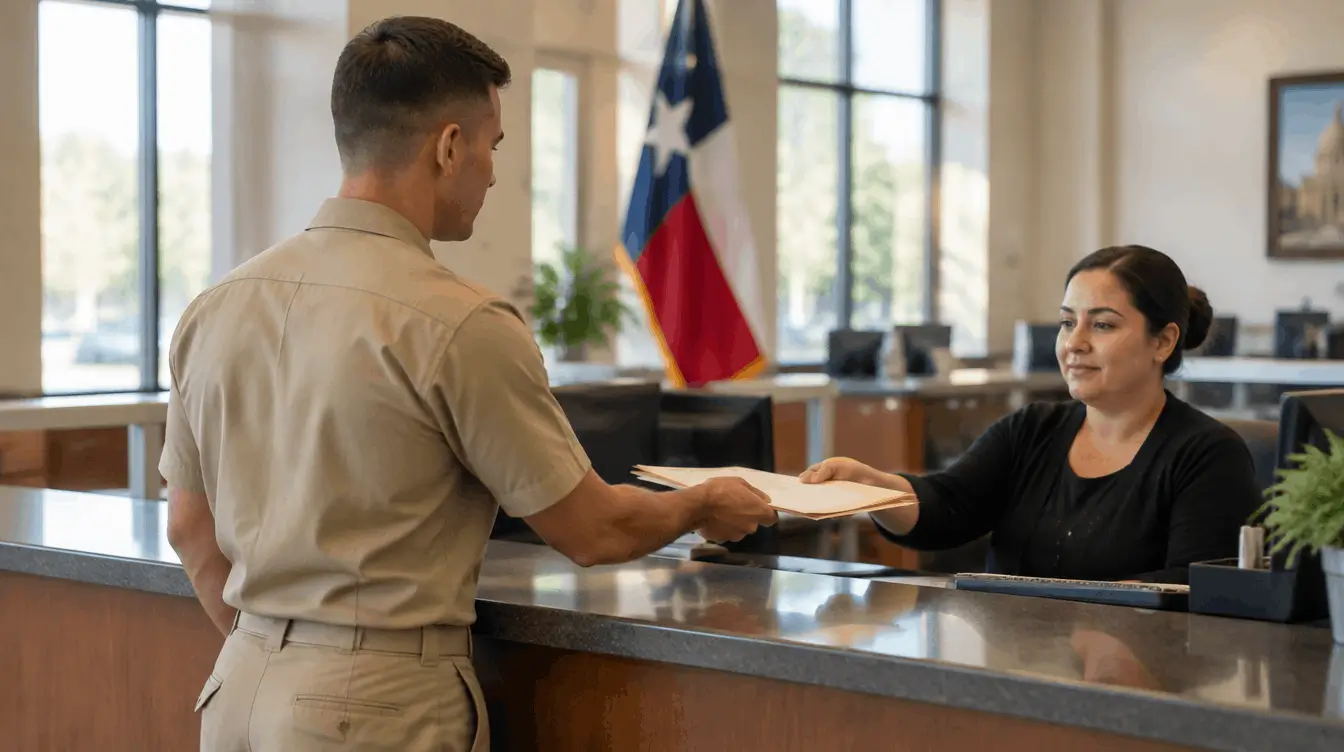
The PPA can waive the registration requirement in two cases: a company car, including a leased company car, and applicants in military service. For a company car, you show the PPA that you live in the district, that you are the car's principal operator and that it is a company vehicle. The permit office answers questions about acceptable documents at 215-683-9730.
Can You Get a Permit With New York or Other Out-of-State Plates?
No. Outside those two exceptions, the PPA only issues a residential permit for a vehicle with Pennsylvania plates that is registered to an address in the district. A car you bring from New York keeps its New York plates until it is titled and registered in Pennsylvania, so the permit comes after the registration, not before.
Pennsylvania sets a deadline for new residents to title and register a car from another state. Our guide to transferring an out-of-state title and registration to Pennsylvania covers that deadline and the order of the steps. Once the car has Pennsylvania plates, the New York side still needs closing out, and our guide to returning New York license plates explains how.
Where Can You Park Before the Car Has Pennsylvania Plates?
On a block posted for permit parking, a car without a permit can stay for the posted time limit, the same allowance the PPA gives residents' guests. Past that limit it can be ticketed, because parking enforcement officers patrol permit districts and ticket vehicles without a permit that stay overtime. On blocks without permit signs, the posted limits and meters apply to everyone.
For longer stays the PPA sells temporary parking permits, but it presents them as the option for guests. Its permit pages do not say whether a resident can use one for their own car while it still carries out-of-state plates, so call the permit office at 215-683-9730 before you rely on one. Off-street parking is the other option, and the PPA lists its garages and community lots on its website.
The more lasting fix is timing. Starting the Pennsylvania paperwork early shortens the stretch when the car has nowhere to stay past the time limit. Rivalane coordinates door to door transport into Pennsylvania with licensed, insured carriers. We typically assign a carrier within one to three working days after you book, and pickup and delivery dates are estimates, not guarantees. Our New York to Pennsylvania car shipping page covers the lane, including deliveries on Philadelphia's rowhouse streets, and our page on car shipping in Pennsylvania covers the rest of the state.
How Do You Know If Your Block Is in a Permit District?
Look at the signs. A permit only applies on blocks posted for permit parking, and the sign shows the district number. A permit issued for one district does not work in another, so a District 1 permit is not valid on a District 3 block. The PPA also publishes an interactive map of permit districts and streets on its residential permit page, but it tells drivers to check the posted signs, because the map may not always be current.
Not every residential street can carry permit signs. Under a city ordinance, permit parking cannot be posted on a block where commercial or institutional use takes up more than half of the ground floor. Residents can ask the PPA for a petition packet to request permit parking on their block, though a petition does not guarantee the signs go up.
How Do You Apply for or Renew a Residential Parking Permit?
The PPA takes new applications and renewals three ways:
- Online through the PPA's permit portal, linked from its residential parking permit page.
- By mail, with the completed application, copies of your vehicle registration card and proof of residence, and a check or money order payable to PPA Permit Parking. Every document must show your current address inside the district.
- In person at the permit office, 35 North 8th Street, Philadelphia, PA 19106, open 8:30 a.m. to 4 p.m. on weekdays. The office takes credit and debit cards, checks and postal money orders, but not cash.
Permits are virtual. No sticker goes on the car; parking enforcement officers scan the license plate to confirm an active permit, and you receive a receipt for it. The PPA does not publish a standard processing time, so apply as soon as the Pennsylvania registration shows your Philadelphia address, and call 215-683-9730 if you need to know when the permit will be active.
How Much Does a Residential Parking Permit Cost?
The PPA lists an annual fee of $75 per vehicle, with a limit of three permits per household. Motorcycle and scooter permits cost $50 a year and do not count toward the three. These fees took effect under a city ordinance on September 1, 2024, and the PPA notes that the cost can change, so check its page before you pay.
Low-income households can have the fee waived on their first vehicle, though not on any others. Eligibility runs through programs such as the Senior Citizen Discount, the Philadelphia Water Department's Tiered Assistance Program, PECO's Customer Assistance Program and Philadelphia Gas Works' Customer Responsibility Program, and the PPA asks for supporting documents such as utility bills.
Two other costs can apply. A replacement permit costs $10 when your plate changes or you move to a different district. And if you have three or more unpaid parking tickets, the PPA will not issue a permit until all outstanding fines and penalties are paid.
What Does the Permit Cover, and What Does It Not?
A residential permit exempts the car from posted time limits and meter fees, but only on blocks posted for permit parking in your own district. On blocks in your district without permit signs, the normal time limits and meters still apply to you.
Every other rule stays in force. No Parking, No Stopping and loading zone signs still apply, as do safety rules such as keeping clear of fire hydrants and corners.
How Do Guests and Visitors Park on a Permit Block?
Guests can park on a permit block for the posted time limit. For longer stays, the PPA sells temporary parking permits, listed at $7 for one day, $75 for 15 days, $150 for 30 days and $300 for 60 days. The PPA also states a limit of 60 temporary permits per household per year. You buy them through the online portal or at the permit office.
Since January 1, 2026, guest passes are virtual. The PPA no longer issues physical day-pass books, and passes bought before that date expire one year after purchase. To register a guest, log in to your portal account, open the guest pass section and enter the guest's license plate number. Older PPA blog posts still describe paper day-pass booklets and lower temporary pass prices, so treat the residential permit page as the current source.
Street space for a moving truck on move-in day is a different permit altogether: a Temporary No Parking permit from the City's Streets Department.
What Happens When You Get New Plates, a New Car or a New Address?
The permit is tied to the license plate. If you move your plate to a new car, you can transfer the permit as well. A new plate needs a new permit at the $10 replacement fee, and so does a move to a different permit district. For a new arrival, that means the first permit is issued for the Pennsylvania plate, once the registration is done.
Keep the address on your registration current as well, because the PPA's eligibility rule requires the registration to show your home address inside the district.
Frequently Asked Questions
Can I get a Philadelphia residential parking permit with out-of-state plates?
How much is a residential parking permit in Philadelphia?
How long does it take to get a residential parking permit?
Is a temporary no parking permit the same as a residential parking permit?
Do I need a new permit if I move to another district in Philadelphia?