





Expect roughly 1,000 to 1,700 road miles and, typically, 3 to 6 days on the truck. An open sedan from Milwaukee to Miami usually costs $800 to $1,250. Book two to three weeks ahead in the fall, and buy a Florida policy before registering, since Florida insists on it.
How Car Shipping From Wisconsin to Florida Works
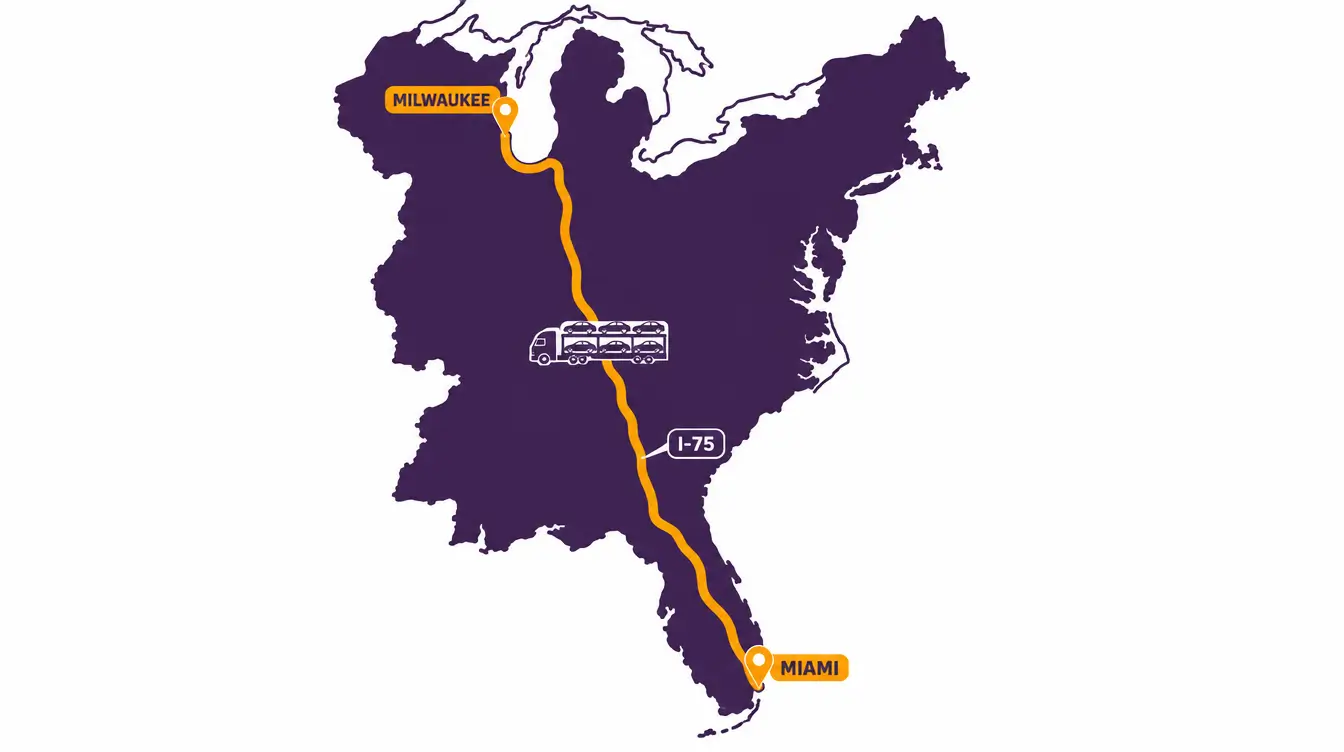
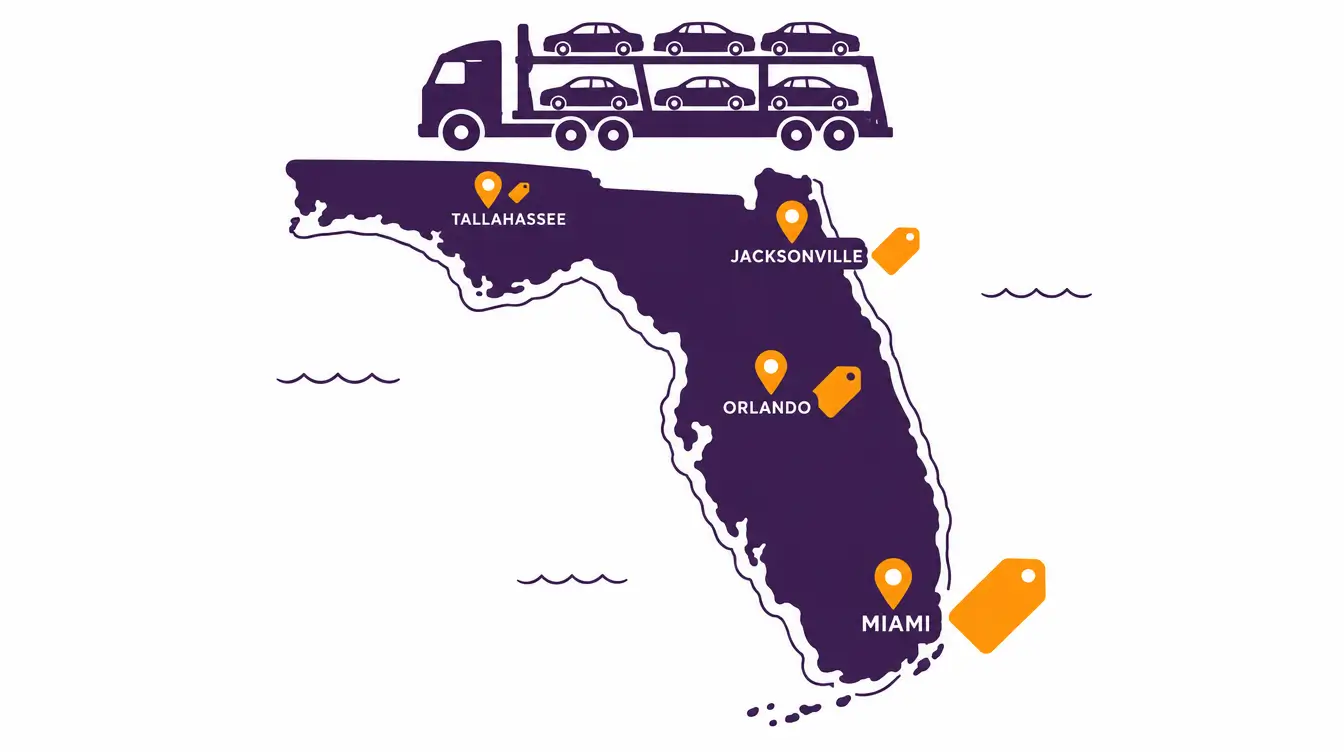
Wisconsin pickups fall into two groups long before the trucks reach the Ohio River. Cars from Milwaukee, Kenosha, Green Bay and Appleton usually head south through Chicago and Indianapolis to Louisville, while loads from Madison, Eau Claire, La Crosse and Wausau skirt Chicago to the west, passing Rockford, Champaign and Paducah on the way to Nashville. Every pair except the Tallahassee ones picks up I-75 in the Chattanooga area and follows it through Atlanta, Macon and Valdosta, and on a Milwaukee to Miami run the halfway point comes up in northwest Georgia, between Dalton and Cartersville. Jacksonville cars turn east on I-10 at Lake City. Tampa and Fort Myers deliveries stay on I-75 down the Gulf side of the state. Orlando loads leave it near Wildwood, and West Palm Beach, Fort Lauderdale and Miami loads split off there too, running past Orlando and Fort Pierce to the coast. Tallahassee is the exception, reached by running south on I-65 through Birmingham and Montgomery and then past Dothan.
How Much Does Car Shipping Wisconsin to Florida Cost?
The pairs we measured run from about 1,022 road miles, Kenosha to Tallahassee, up to about 1,699, Eau Claire to Miami. On a lane this long the mileage sets the base, and the month and the two addresses move the figure up or down.
Counting from Milwaukee, a Tallahassee delivery in Florida saves about 420 miles over Miami and Jacksonville about 315. Orlando and Tampa land in the middle, around 205 to 225 miles shorter, and Fort Myers and the southeast coast cities all come within about 90 miles of the longest run.
On the Wisconsin side, Kenosha starts about 25 miles closer to Miami than Milwaukee does. Madison adds roughly 60 miles, Appleton and Green Bay about 105 to 115, and the northern and western starts in Wausau, La Crosse and Eau Claire about 195 to 230.
A price far below every other quote you collect deserves one question before you book: has a driver signed on at that number? Postings like that can sit for days while the pickup date drifts. Leaving a few days of slack in the pickup window usually saves more than chasing the lowest figure, and the car shipping calculator shows what your own pair is likely to cost.
Shipping a sedan that runs, open, from Milwaukee to Miami usually costs $800 to $1,250. Kenosha and Milwaukee cars headed for Tallahassee, Jacksonville or Orlando tend to land in the lower half, and Eau Claire, La Crosse or Wausau starts bound for the southeast coast push toward the top or past it.
A full size pickup, large SUV or van typically adds $100 to $200. Enclosed space sells at a premium, generally running 40 to 60 percent over what the same pair costs open.
What moves a southbound Wisconsin quote most:
- The calendar. Fall snowbird season fills the trucks heading south, and quotes and waits rise with it. From midwinter into summer, southbound space is usually easier to find.
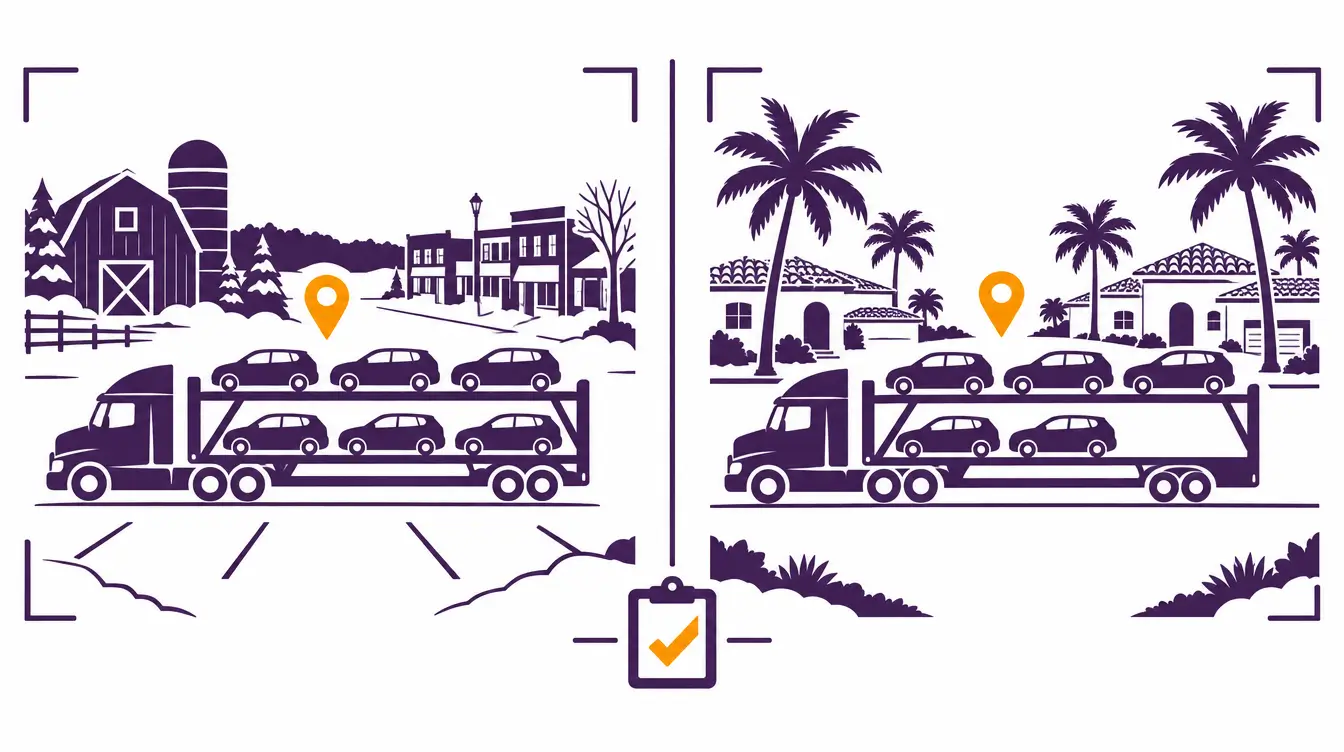
- The pickup town. Milwaukee, Kenosha and Madison sit close to the interstates the trucks already use. A farm road in the Northwoods or a winter driveway packed with snow can mean meeting the driver in a nearby town.
- The Florida stop. Tallahassee and Jacksonville are the shortest runs, and Miami, Fort Lauderdale and West Palm Beach the longest. Condo towers and gated streets on the southeast coast often call for a meeting point.
Treat any offer well below this band with caution until a driver has confirmed it.

What Factors Actually
Influence Pricing on This Route?
Booking early protects your timeline, keeps pricing steady, and reduces the risk of last-minute carrier changes.
Many customers on this route relocate permanently or move seasonally, which makes predictability more important than speed.
This article explains how auto transport Alabama to New York works, what it costs, and how long it takes, so you can make a clear, informed decision before you schedule your shipment.


Type
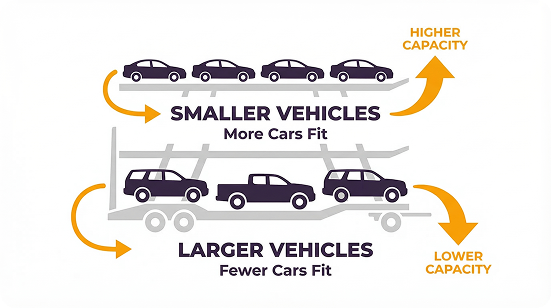
Size decides how much deck space your vehicle takes and how many other cars fit alongside it. A standard sedan is the cheapest thing to move because it slots almost anywhere on the trailer. SUVs, pickups and vans take more room and typically add a few hundred dollars on the same lane.


Is It Cheaper to Drive or Ship a Car From Wisconsin to Florida?
Shipping Instead of Driving
Shipping is the practical pick when the car belongs in Florida, for the winter or for good, and no one in the family can lose half a week on the road. Typical cases are a snowbird who flies down each fall, a retiree settling near Tampa or Fort Myers, and a Florida buyer who bought a car from a Wisconsin seller.
Shipping also cancels the return leg. Someone who drives a car 1,000 miles or more south still has to get back to Wisconsin, which usually means a one way flight, a hotel night or two and lost workdays.
Driving the Route Yourself
For a household moving south together, driving can cost less. The distance-cities calculator puts Milwaukee to Miami at close to 23 hours of driving, usually broken up over two or three days with motel stops, fuel and meals. If you are making the trip anyway and the car can carry the luggage, the numbers often favor the drive.
The answer flips when the car travels alone. Taking one from Eau Claire to Miami means about 1,699 miles south and the same distance again, or a plane ticket, to get back.
How Long Does Shipping a Car From Wisconsin to Florida Take?
Once loaded, a Wisconsin car typically reaches Florida in 3 to 6 days. Kenosha to Tallahassee, about 1,022 miles, can finish at the short end, while Eau Claire to Miami, about 1,699 miles, generally needs the whole window.
Getting onto a truck is often the slower part. Dispatch has to find a southbound hauler with an open slot, a step that normally needs one to three working days once you book and can stretch while the fall rush is on.
Plan around a range of 400 to 500 miles for each full day the hauler spends on the road. At that pace the roughly 1,468 miles from Milwaukee to Miami come to three or four driving days, with more time for every other car on the deck that needs dropping off. A flexible pickup range is the simplest way to shorten the whole trip.
When is the Best Time to Book Auto Transport From Wisconsin to Florida?
Southbound demand on this lane follows the snowbird calendar. As Wisconsin owners head to Florida ahead of the cold, trucks going south fill faster and prices tend to climb, so the fall months are the time to plan furthest ahead.
For a fall pickup, two to three weeks of notice usually gives dispatch enough room. At other times of year one to two weeks is typically plenty, and listing a few workable pickup days lets the car ride with the first truck that has space.
Winter pickups need slack of their own. Snow and ice across northern and central Wisconsin can push back a pickup on rural or unplowed roads, so loose dates help most from December through March.
Open vs Enclosed Auto Transport on a Wisconsin to Florida Route
The usual choice on this lane is open transport, on the two level haulers that carry most cars along I-75. The car meets about the same rain, dust and road grime it would on a drive south of its own, and in winter that can include salt picked up before the truck leaves Wisconsin.
Enclosed transport shields the car on every side from loading until it rolls off in Florida. Fewer cars fit on each of those trailers, so openings are scarcer and every spot costs more.
A covered trailer suits a classic, a collector car, an exotic or a car with very low clearance. Daily drivers, family SUVs and most winter moves go open.
Enclosed Car Transport
Enclosed demand rises for high-value, specialty and seasonal vehicles, and enclosed trailers protect against road debris and weather, which matters most on longer hauls. Enclosed rigs are a small fraction of the trailers working any given lane, and that scarcity is what drives both the higher price and the longer booking lead time.
Open Car Transport
Most vehicles move on open trailers, and for most routes that is the more cost-effective way to ship a car.
Open transport works well for standard vehicles and keeps costs predictable. It also offers the widest carrier availability.
What Florida Requires When Your Car Arrives
Florida ties its vehicle paperwork to residency. The steps below apply once you establish residency there, start a job in the state or enroll children in a Florida public school.
- Coverage before registration. Florida registers the car only if it already carries Personal Injury Protection of at least $10,000 and Property Damage Liability of at least $10,000, bought from an insurer licensed to do business in Florida. That coverage has to stay in force for as long as the car keeps its Florida registration, wherever the car happens to be.
- VIN check. Florida wants the VIN physically inspected and written down on form HSMV 82040 or HSMV 82042. Law enforcement and military police officers can do it, and so can licensed Florida dealers, compliance examiners from the Division of Motorist Services and employees of a county tax collector.
- Title paperwork. With no loan on the car, bring the original Wisconsin title, proof of identity for every owner and proof of Florida insurance. A financed car needs the lender involved: it can send the title on to Florida, and if it refuses, its written answer on company letterhead is enough to apply for registration at a service center.
- First registration fee. An owner without a Florida plate to put on the car pays the $225 initial registration fee, in person at a service center when the car is titled.
- Driver license. Florida expects you to hold a Florida driver license within 30 days of establishing residency.
- The Wisconsin registration. Wisconsin refunds a registration fee only when the request, on form MV2030, arrives before that registration period begins, so the unused part of a period already underway is not refunded.
Sources: the FLHSMV new resident page and its pages on Florida insurance requirements and motor vehicle registrations, plus the Wisconsin DMV page on registration refunds. These rules change, so confirm them with a Florida service center before the car ships.
What to Expect at Pickup and Delivery
A full car hauler needs room to stop and turn, so settle both handover spots before dispatch assigns a truck.
In Wisconsin, suburban streets around Milwaukee, Madison and the Fox Valley usually let the driver load close to the house. Narrow lake roads, long rural driveways and winter snowbanks often move the pickup to a paved lot in town.
On the Florida end, condo towers and gated neighborhoods along the coast from Miami to Palm Beach often bar full size haulers at the gate, and the meeting point then becomes a store parking lot or a broad street outside. Suburban addresses around Tampa, Orlando and Jacksonville tend to be simpler, with room to unload near the driveway.
Before loading, the driver goes over the car with you, and each chip, scratch or dent already there is written into the bill of lading. Repeat that look at delivery before you sign, and keep dated photos from the Wisconsin end to compare against.
Key Things to Know Before Shipping a Car From Wisconsin to Florida
Rivalane coordinates Wisconsin to Florida moves from its Long Island base, booking each car onto a truck already heading south with space to spare. Give us the Florida city when you book, because Tallahassee runs down I-65 while the rest of the state sits on the I-75 side, and buy the Florida policy before visiting a service center, since Florida will not register the car without it.
Frequently Asked Questions


