.png)
What Is Auto Transport Insurance Coverage And Who Provides It?
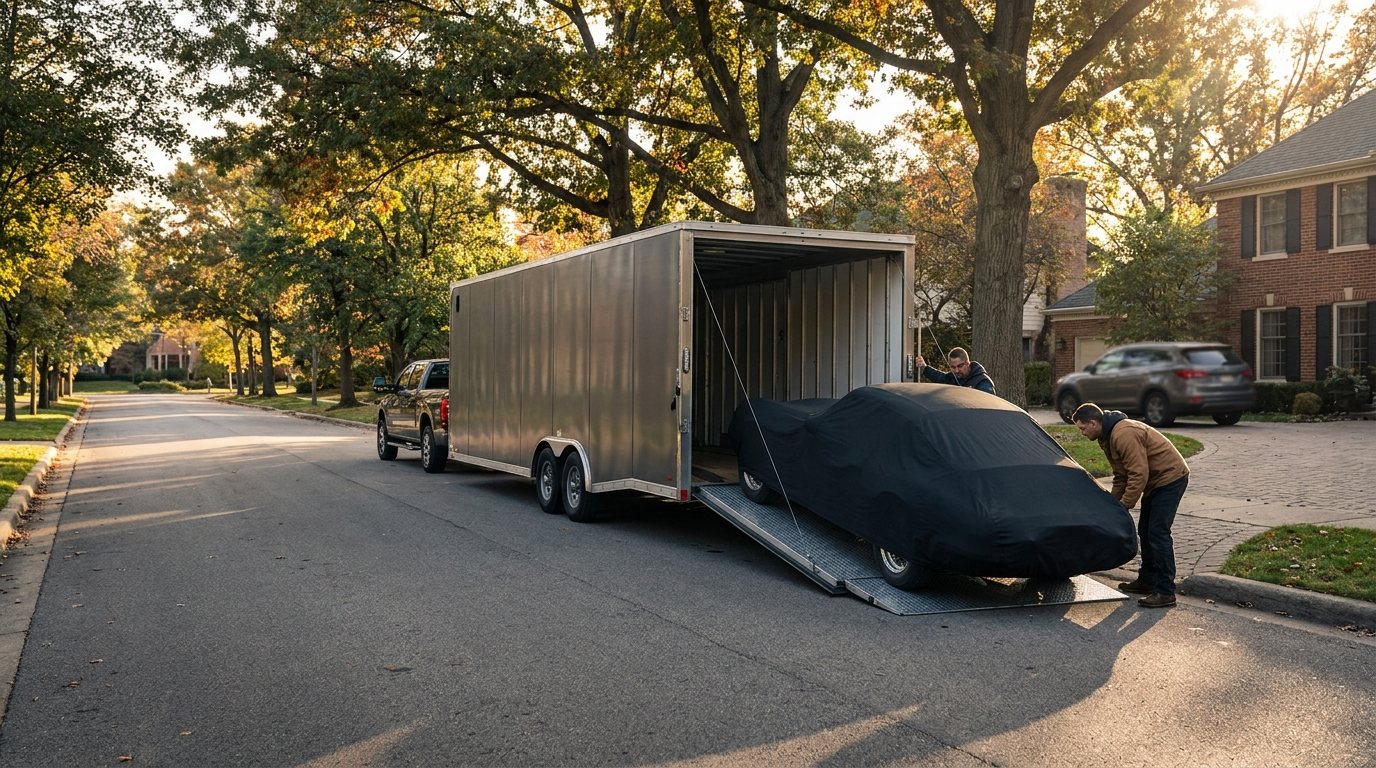
Auto transport insurance coverage comes directly from the carrier handling your vehicle, not the broker you book through. That detail matters more than most people expect. While brokers coordinate the shipment, they do not provide the protection itself. Instead, the carrier’s policy becomes your vehicle shipping insurance from the moment your car is picked up.
Just as important, this coverage only applies while the vehicle is in transit or under the carrier’s control. Once the car is delivered and signed off, that protection ends.
Because of that, understanding who actually holds the policy and when it applies helps you avoid costly assumptions.
What Does Auto Transport Insurance Cover
Most coverage focuses on physical damage that happens while your car is in the carrier’s care.
Is Damage During Loading And Transit Covered?
Damage during loading and transit is the main reason this coverage exists. If your vehicle gets scratched while being loaded, dented during unloading, or affected in a road accident, the carrier’s insurance is expected to cover those issues.
However, documentation plays a critical role. If damage is not properly recorded at pickup and delivery, the claim process becomes much harder to support.
Are Theft, Fire, Or Vandalism Included?
Theft, fire, and vandalism are often included, but coverage depends on the carrier’s specific policy. Some carriers provide broader protection, while others place limits or exclude certain situations.
Because of this variation, it is important to confirm exactly what risks are covered before booking. Relying on assumptions here can easily lead to gaps in protection.
Does Vehicle Delivery Insurance Cover The Full Trip?
Vehicle delivery insurance covers the full trip, but only within a defined window. Coverage typically begins when the vehicle is loaded onto the carrier and ends once it is delivered and signed for.
Outside of that timeframe, the policy no longer applies. At the same time, limits matter. Coverage is not unlimited and is often shared across multiple vehicles on the trailer, which makes it essential to review both timing and coverage amount in advance.
What Is Not Covered By Auto Transport Insurance?
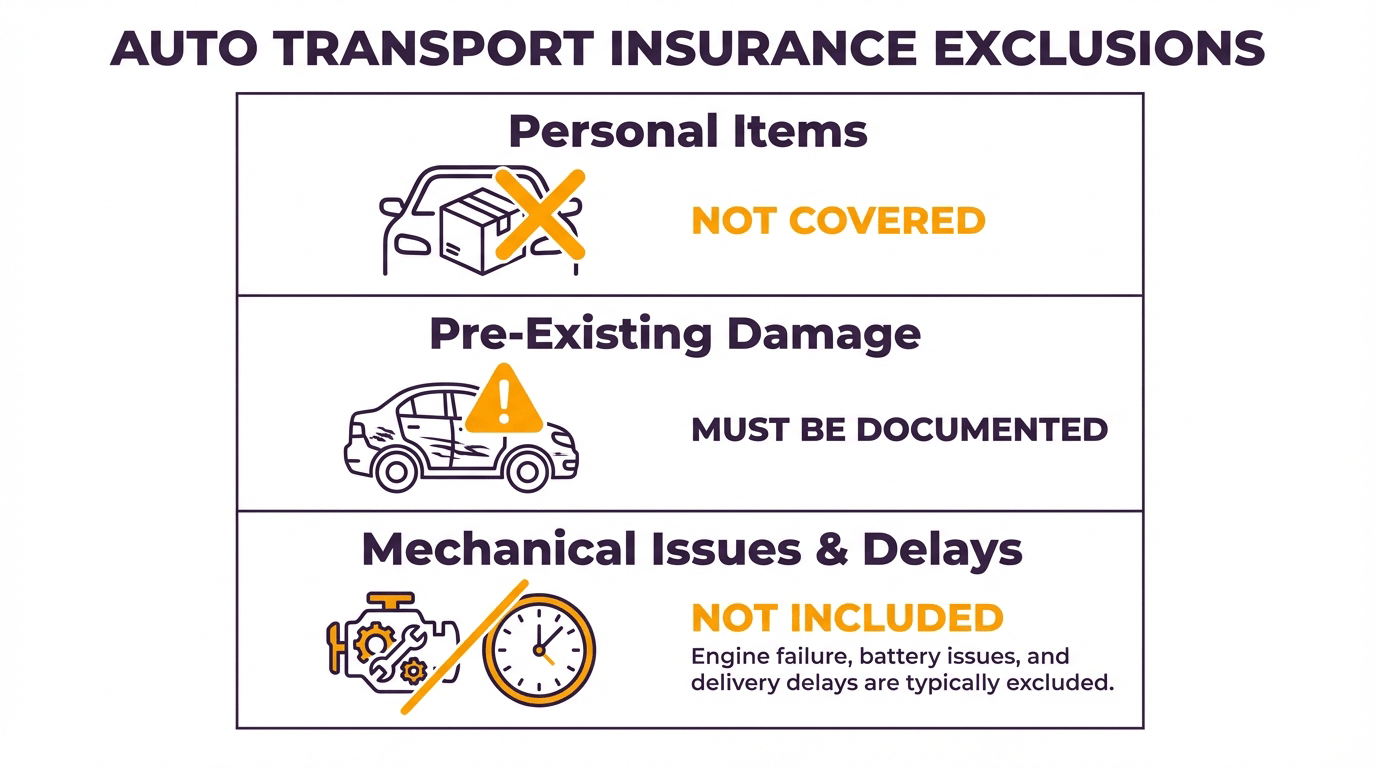
This is where most expectations break. Coverage sounds broad, but several things are clearly excluded, and missing this can cost you later.
Personal Items Inside The Car
Personal items inside the car are not covered by auto transport insurance. Carriers focus strictly on the vehicle itself, not what you leave inside it. Even if something goes missing or gets damaged, the policy will not apply.
Pre-Existing Damage And Claims
Pre-existing damage is not included in claims unless it is properly documented before transport. The inspection report at pickup sets the baseline. If a scratch or dent is not listed there, it becomes very difficult to prove it happened during transit.
Mechanical Issues Or Delivery Delays
Mechanical issues and delays are not covered under standard policies. If your car develops an internal problem during transit or arrives later than expected, insurance will not step in.
Carrier Liability Insurance vs Cargo Insurance Explained
Carrier liability insurance covers the carrier’s responsibility when they cause damage during transport. In other words, it applies when the carrier is at fault. That sounds straightforward, but proving fault is not always simple, which can slow down or complicate claims.
Cargo insurance, on the other hand, focuses on the vehicle itself. It is designed to cover physical damage regardless of how it happens, depending on the policy terms. Because of this difference, cargo insurance often provides broader protection.
This distinction matters more than it seems. When you understand which policy applies and under what conditions, you can better judge how protected your vehicle actually is before shipping.

Does Your Personal Auto Insurance Cover Car Shipping?
Personal auto insurance can cover car shipping, but only in certain situations. If you have comprehensive auto coverage, your policy may protect the vehicle during transit, especially in cases that fall under interstate auto insurance scenarios.
However, it does not replace the carrier’s insurance. Instead, it acts as a secondary layer, which means it may step in only after the carrier’s policy is used.
That said, coverage depends on your provider and policy terms. Some insurers limit or exclude transport-related claims entirely. Because of this, you should not assume protection without checking first. A quick call to your insurer can clarify exactly what applies before your vehicle is handed over.
How Much Coverage Do Car Shipping Companies Offer?
Car shipping companies usually offer coverage between $100,000 and $250,000, but that number does not apply to your car alone. Instead, it is shared across all vehicles on the trailer, which can quickly reduce how much protection is actually available.
For example, if a carrier has $150,000 in coverage and transports 6 vehicles, each one is not guaranteed full value protection. If several cars are damaged in one incident, the payout gets divided. (Source: The Complete Guide to Car Hauler Insurance Requirements)
Pro tip: Always compare your car’s value to the carrier’s total coverage. If you are shipping a higher-value vehicle, especially over $50,000, this gap becomes real fast. In that case, you should seriously consider additional protection instead of relying on standard limits.
How Can You Verify Insurance Before Booking?
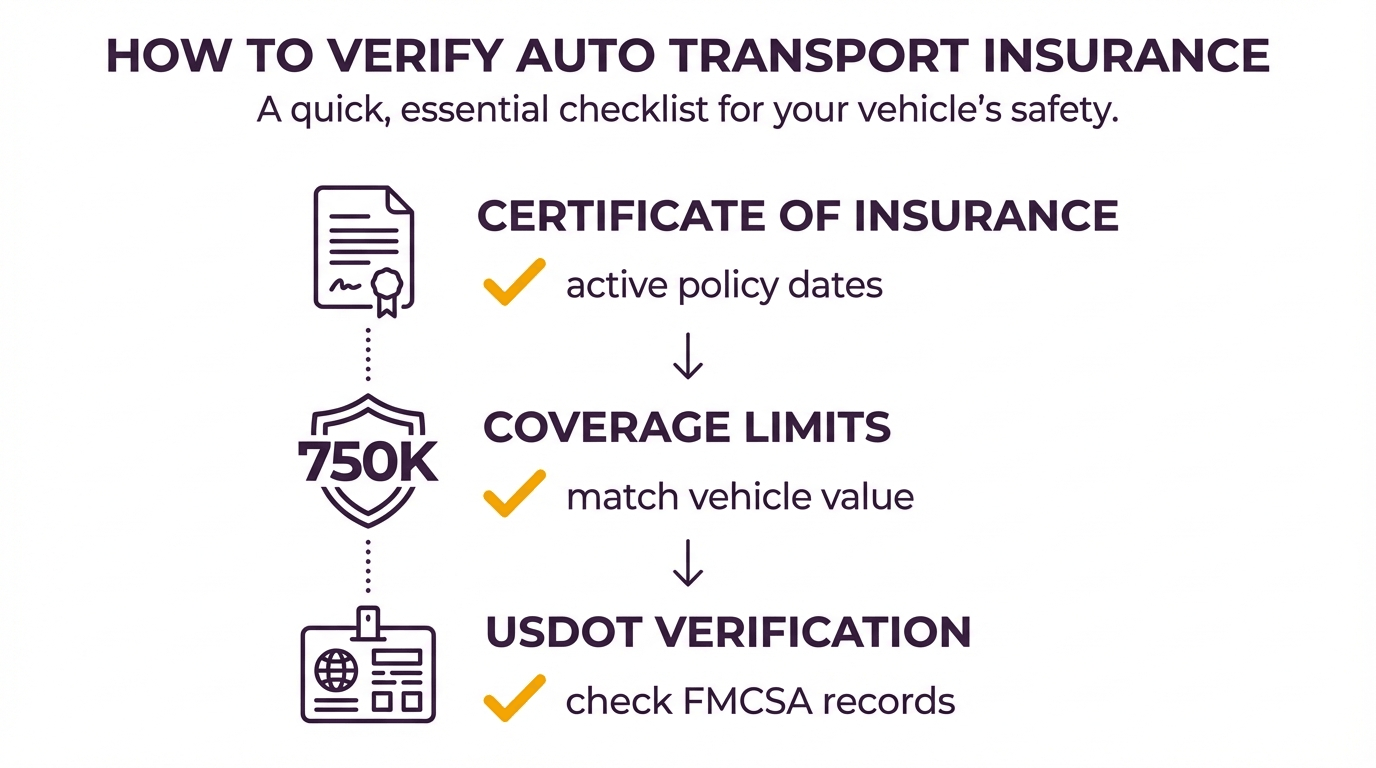
You can verify insurance before booking by asking the carrier for proof and checking it yourself. Start with the Certificate of Insurance. This document shows the coverage limits, policy dates, and insurer details.
Focus on three key checks:
- Ask for a valid Certificate of Insurance with active dates
- Compare coverage limits to your vehicle’s actual value
- Verify the carrier’s USDOT number through the FMCSA database
How Can You Verify Insurance Before Booking?
You verify insurance before booking by asking for proof and checking it yourself, not just taking someone’s word for it. Start with the Certificate of Insurance. This document shows whether the policy is active and what it actually covers.
Focus on a few key checks:
- Ask for a valid Certificate of Insurance with active dates
- Compare coverage limits to your vehicle’s real value
- Verify the carrier’s USDOT number through the Federal Motor Carrier Safety Administration database
Final Answer: What Does Auto Transport Insurance Really Protect?
Auto transport insurance protects your vehicle from damage caused by the carrier during loading, transit, and unloading. That is its core purpose, and everything else builds around that.
At the same time, it does not mean full protection. It will not cover personal items, mechanical issues, or anything outside the carrier’s responsibility. Because of that, you need to treat it as limited coverage, not a guarantee.
In the end, real protection comes down to one thing. You verify the details before booking. At Rivalane, we focus on making those details clear from the start, so you know exactly what protection you have before your vehicle is on the road.
Frequently Asked Questions