Who Actually Insures Your Car During Transport
The coverage on your vehicle belongs to the carrier that moves it, not to the company that books the shipment. That distinction decides who pays if something goes wrong, and most articles on this subject blur it.
Rivalane is a property broker. We arrange transport through licensed carriers, and we never take possession of your vehicle. Our own terms and conditions state it plainly: Rivalane operates only as a transportation broker, is not a motor carrier, and does not assume liability for the shipment. The policy that responds to transit damage is the assigned carrier's cargo policy. If you want the full picture of how the two roles differ, our guide to auto transport brokers and carriers covers how to check which one you are dealing with.
This is not a technicality. It tells you who to ask for a certificate of insurance, whose limits apply to your car, and who receives a claim.
What the Carrier's Cargo Policy Covers
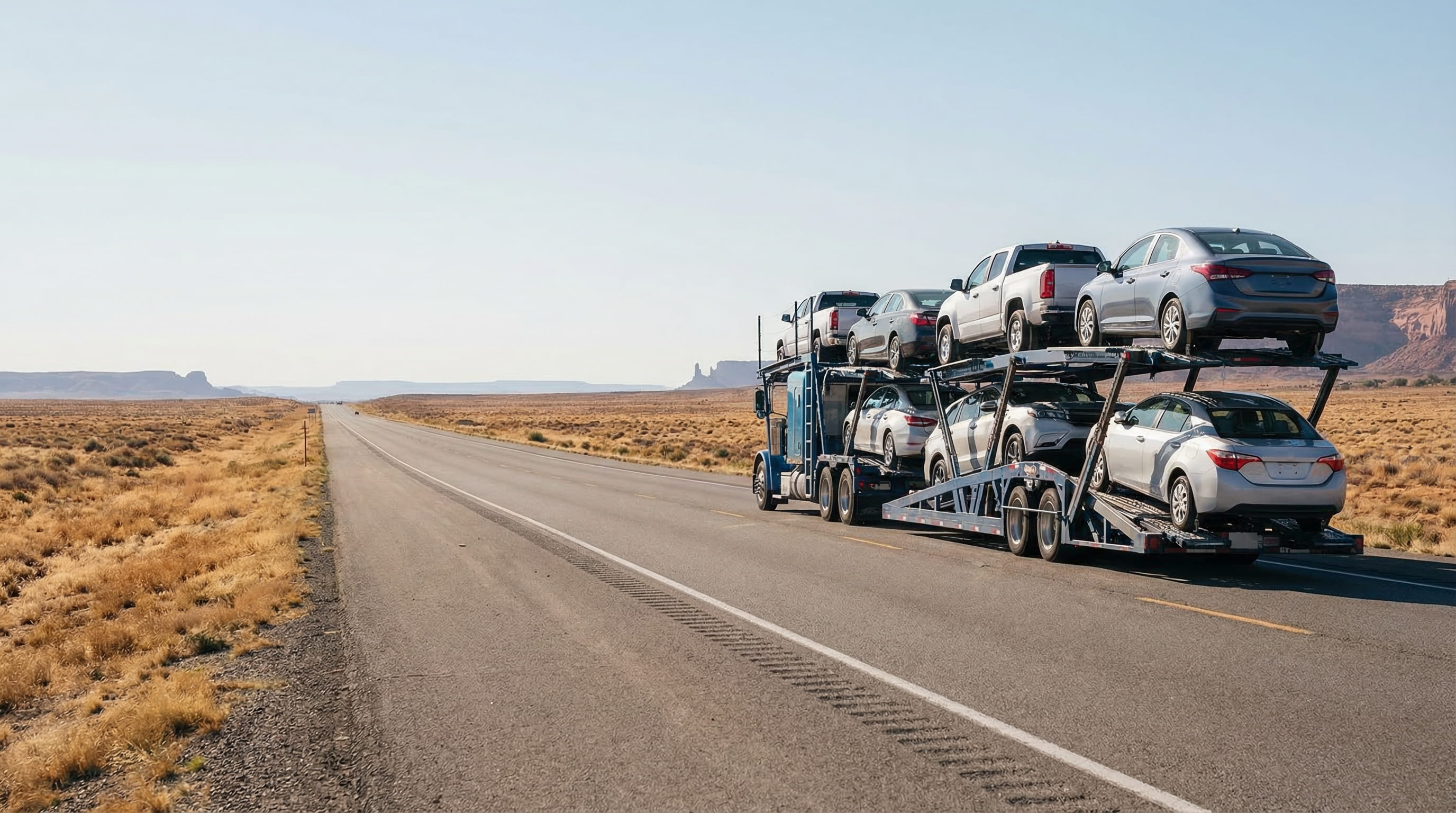
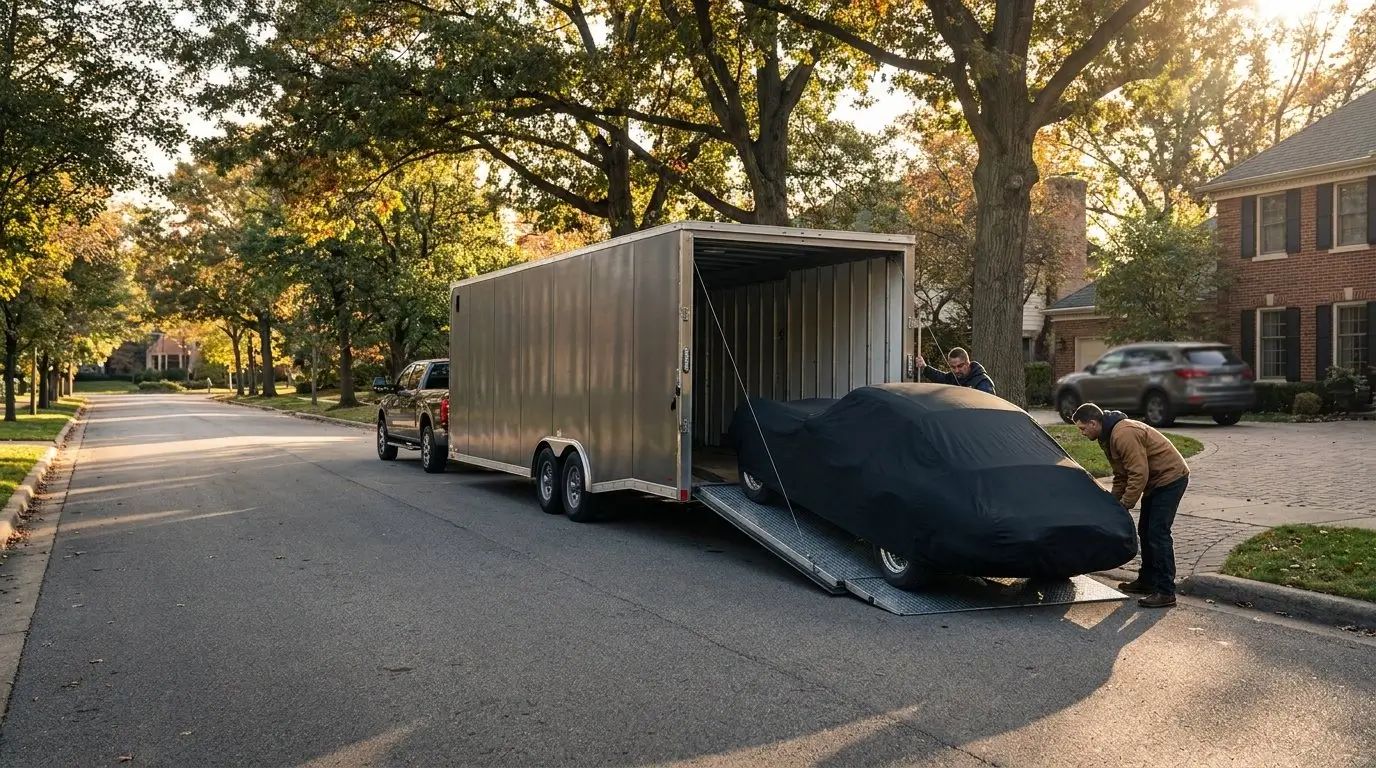
Cargo coverage responds to physical damage that happens while the vehicle is in the carrier's care: during loading, in transit, and during unloading. A door dinged on the ramp, a stone chip from the road, damage from a collision involving the transport truck. That is the core of it.
Two details change how much protection that actually represents.
The first is that the limit is usually shared. A cargo policy covers the load, not your car individually, so the stated figure may be spread across every vehicle on the trailer. Ask what the per-vehicle limit is rather than the policy total.
The second is the deductible. Cargo policies carry one, and its size varies between carriers. Theft, fire and vandalism are often included as well, though that varies by policy, so it is worth asking rather than assuming.
What Is Not Covered
Expectations break here more often than anywhere else.
- Personal items in the vehicle. Rivalane's terms allow one suitcase or bag under one hundred pounds in the trunk, and state that neither the carrier nor Rivalane is liable for personal property of any kind or value left inside.
- Pre-existing damage. If a scratch is not recorded at pickup, there is no baseline to prove it happened in transit.
- Weather and events outside anyone's control. Hail, storms, acts of God, riots, strikes and acts of terrorism sit outside carrier liability.
- Mechanical faults and delays. An engine problem that develops on the road is not transit damage, and no carrier can commit to an exact delivery date.
- Anything after a clean signature. Signing the bill of lading at delivery without noting damage confirms you received the vehicle in satisfactory condition.
That last point is the one that costs people money, and it is worth reading our guide to the auto transport bill of lading before the driver arrives.
Do You Need to Buy Insurance to Ship a Car?
No. You do not purchase a separate policy to move a vehicle, and any company telling you that coverage is an optional upgrade is worth a second look.
Federal law requires registered motor carriers to file evidence of liability coverage before they can operate. Cargo coverage works differently: for general freight it sits outside that federal minimum and exists because brokers and shippers require it commercially before they will hand over a load. So the coverage on your car is real, but it comes from a contract between businesses rather than from a rule that names your vehicle.
Brokers carry something different again, and it is often misdescribed as insurance. Under 49 CFR 387.307, a property broker must keep a surety bond or trust fund of $75,000 on file with FMCSA. That bond secures the broker's obligation to pay the carriers and shippers it works with. It is not cargo coverage on your vehicle and it will not repair a dented fender.
Your own auto policy is the remaining piece. Comprehensive coverage sometimes extends to a vehicle in transit, usually as a second layer behind the carrier's policy rather than the first. Some insurers exclude transport claims entirely. One call to your provider settles it.
How to Check Coverage Before You Book
Three checks, none of which take long.
Ask for the certificate of insurance. Read the limits, the deductible and the policy dates. A current certificate should arrive without friction.
Look the company up on the FMCSA SAFER Company Snapshot. It shows operating status, authority type, and whether the company runs equipment of its own. Many companies trade under a brand name that differs from their legal entity, so ask for the legal name or the USDOT number if a search returns nothing. Our guide to verifying an auto transport company covers the wider set of checks.
Compare the limit to your car's value. If the gap is uncomfortable, that is the moment to discuss it, not after pickup.
Who Pays If Your Car Arrives Damaged
The carrier does. Rivalane's terms are explicit that the party liable for cargo loss or damage claims is the carrier, and that filing goes directly to the carrier that transported the vehicle.
The sequence matters. Note the damage on the bill of lading before you sign, with the driver present. Photograph the vehicle. Then submit a written claim to the carrier, because a note on a delivery receipt does not by itself meet the federal claim filing requirements. If you booked through Rivalane, report the claim to us within 48 hours of delivery and we will supply the carrier documentation you need to pursue it.
Claims against motor carriers run under the Carmack Amendment, 49 U.S.C. 14706. The deadlines and the full procedure are set out in our bill of lading guide.
The Short Version
The carrier insures your car. The broker arranges the move and holds a bond that protects carriers, not vehicles. Coverage is real but limited, shared across the load, and it ends when you sign at delivery. Ask for the certificate, check the limits against your car's value, and inspect before you sign.
If you are planning a shipment, run your route through our car shipping calculator, or contact us with questions about a specific vehicle. Weighing the move against driving it yourself? We compared both in auto shipping versus driving, and seasonal conditions are covered in how weather affects vehicle shipping.
Frequently Asked Questions