What an Auto Transport Bill of Lading Actually Is
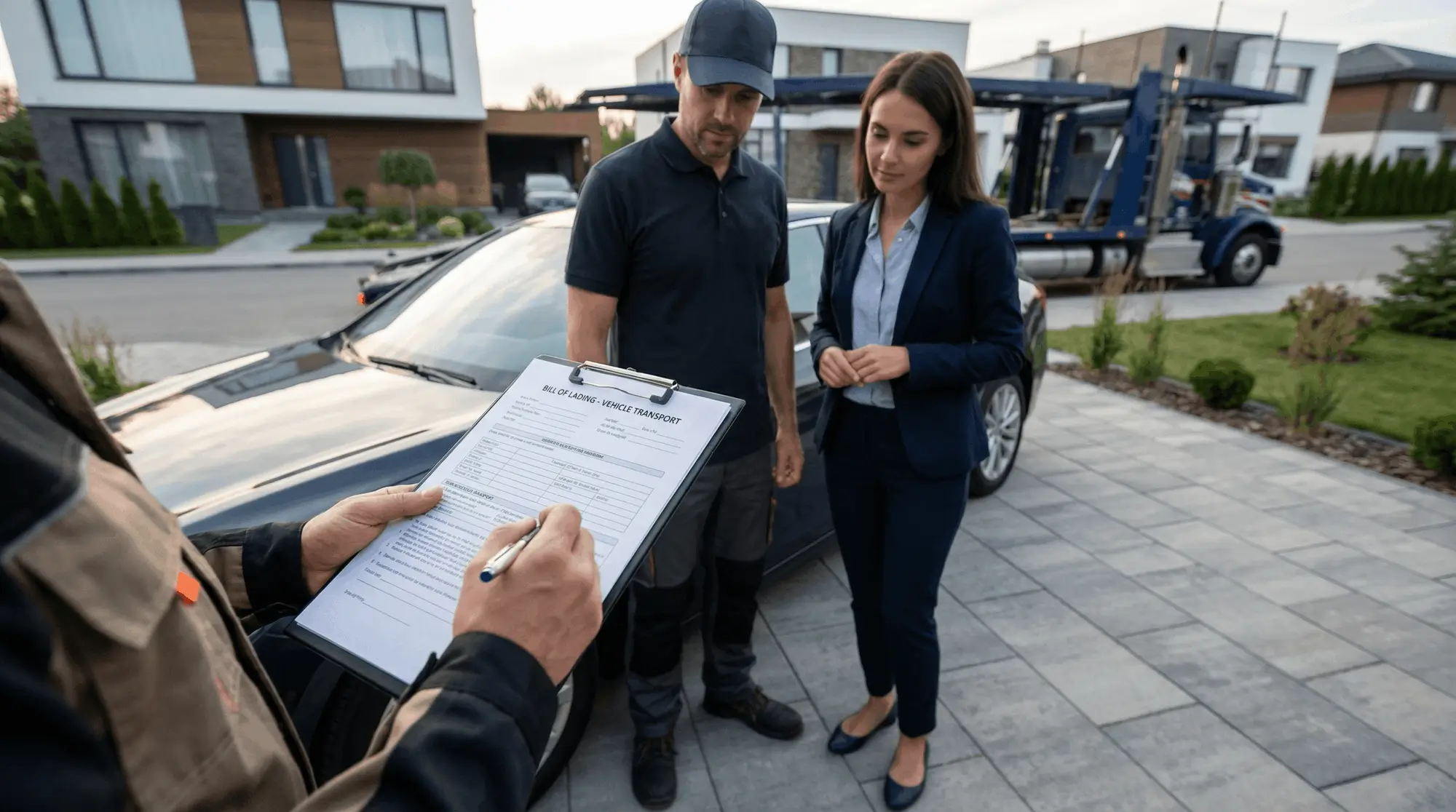
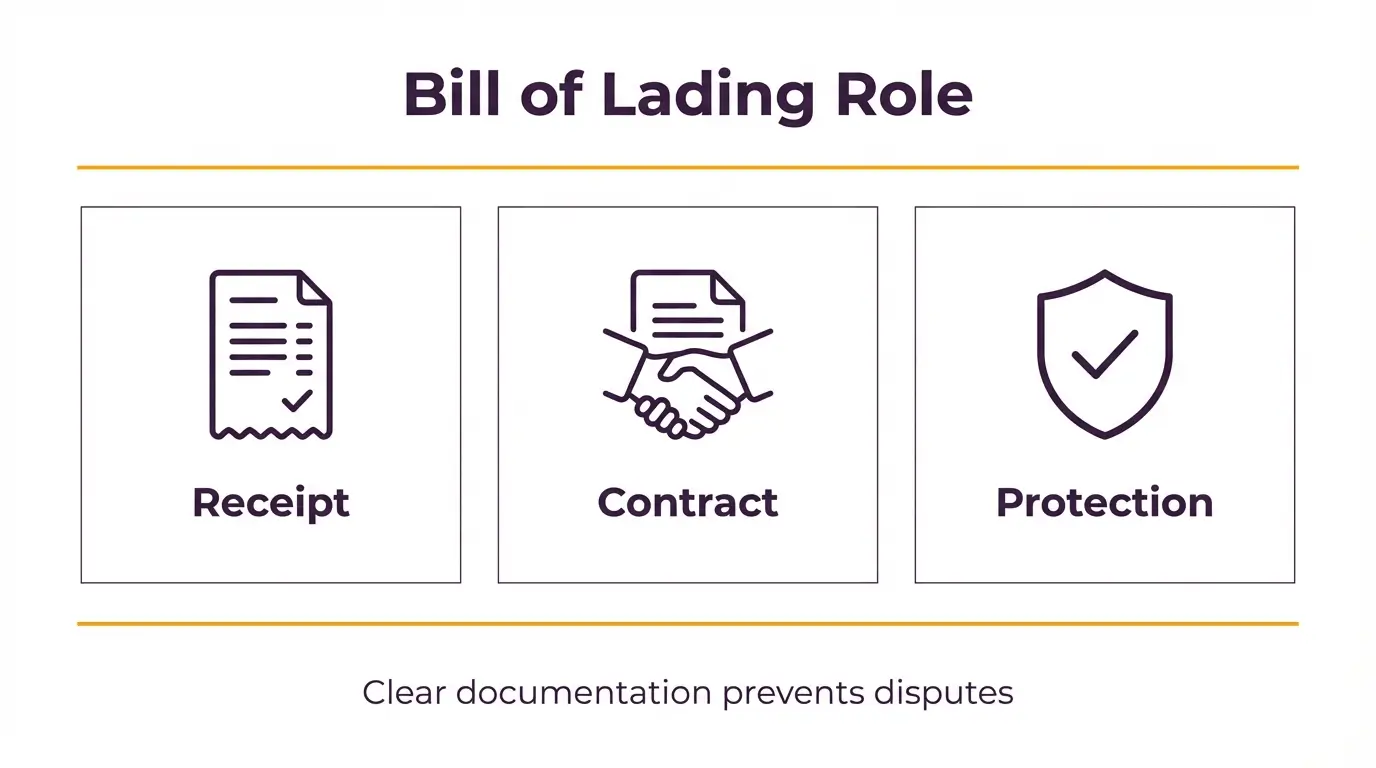
The bill of lading is the document that decides who pays if your car arrives with a scratch that was not there before. It does three jobs at once. It is the contract of carriage between you and the carrier, it is the receipt proving the carrier took possession of your vehicle, and it is the condition report describing what the car looked like when it was loaded.
The carrier issues it, not the broker. Federal law places that duty on the motor carrier that physically moves the vehicle, and a property broker has no part in it. If you booked through a broker, the driver who arrives at your curb hands you the carrier's form, signs it on the carrier's behalf, and takes a copy back to the carrier. Rivalane is a broker, so the bill of lading you sign belongs to the carrier matched to your route. Our guide to the difference between auto transport brokers and carriers explains how to check which one you are dealing with.
One clarification before the detail. A marine bill of lading, used when a vehicle crosses an ocean, is a different document under different rules and can transfer ownership in ways a road bill of lading cannot. If your car is going overseas, see international shipping. Everything below covers domestic road transport inside the United States.
What a Bill of Lading Must Legally Contain
Most guides on this subject list a dozen fields and call them requirements. Five of them are.
Under 49 CFR 373.101, a for-hire motor carrier must issue a receipt or a bill of lading showing the names of the consignor and consignee, the origin and destination points, the number of packages, a description of the freight, and its weight or volume where that affects how the shipment is rated. That is the federal floor, and it reads generically because the same rule covers pallets of paper and your car alike.
Your VIN is not on that list. Neither is the damage diagram, the odometer reading, or whether the car runs. Those appear on every auto transport bill of lading because carriers put them there, not because a regulation compels it. The distinction matters more than it sounds. Fields the carrier added by choice are contract terms you accept when you sign, which means the form in front of you, rather than the regulation, defines what you can argue about later.
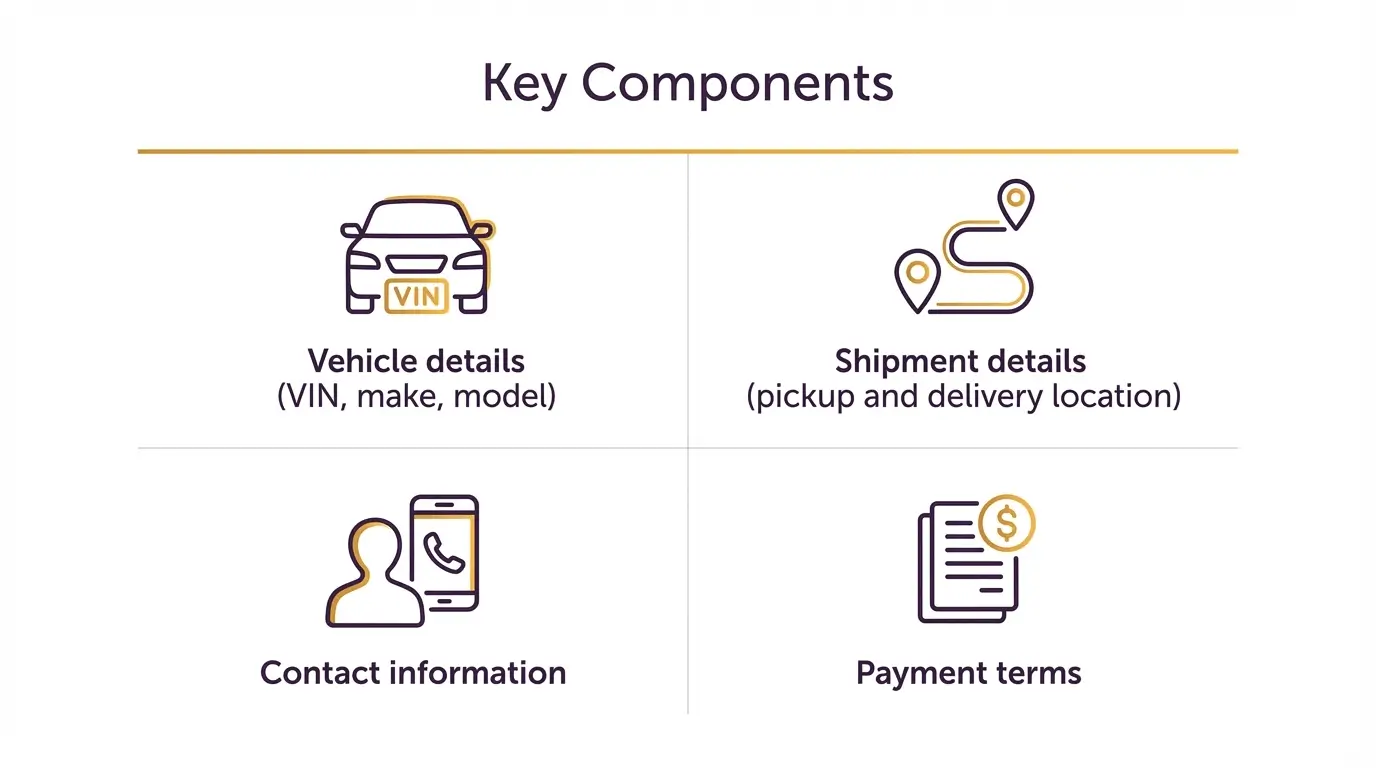
In practice, a complete auto transport bill of lading records:
- Vehicle identification: the VIN, year, make, model, color and license plate
- Odometer reading at pickup and again at delivery
- Exterior condition, marked on a diagram of the vehicle
- Interior condition, covering seats, carpets and the dashboard
- Accessories and aftermarket parts such as roof racks, spoilers, custom wheels and tow hitches
- Operable or inoperable status, which changes the equipment the carrier needs to bring
- Pickup and delivery addresses, contact names and dates
- The carrier's legal name, USDOT number and MC number
- Payment terms and the balance due at delivery
- Signatures from the driver and from whoever releases and receives the vehicle
Check the USDOT and MC numbers against the name on the truck. They should match the company that quoted you, and you can confirm both in a minute on the FMCSA SAFER Company Snapshot. Our guide to verifying an auto transport company covers the rest of those checks.
The Condition Report and How Damage Is Marked
The condition report is the part of the form that earns its keep. The driver walks the car, marks what is already wrong on a printed diagram of a vehicle, and codes each mark by the type of damage it represents.
Codes vary between carriers, but the pattern holds: a letter or short abbreviation for the kind of damage, placed at the point on the diagram where it appears. Scratches, dents, chips, cracked glass, rust, missing parts and paint damage each get their own mark. No federal standard governs these codes, which is exactly why you should read the legend printed on the form rather than assume you already know it.
Two habits protect you here. Walk the car with the driver instead of watching from the porch, and photograph it yourself before it loads. Dated photographs of every panel, the roof, the wheels and the odometer take five minutes and give you evidence that does not depend on how legible the driver's handwriting turned out to be. Photographs do not replace the bill of lading. They corroborate it.
What to Check Before You Sign at Pickup
Read the condition report against the car, not against your memory of the car. Confirm the VIN matches your vehicle and that the addresses and dates match your booking. If the driver missed an existing scratch, say so and have it added. If the driver marked damage that is not there, have it removed before anyone signs.
Then keep your copy. It is the baseline every later argument is measured against, and it is worth nothing to you sitting in the truck. For the wider sequence between booking and the driver arriving, our guide to what happens after booking car shipping covers the steps.
What Your Signature at Delivery Actually Does
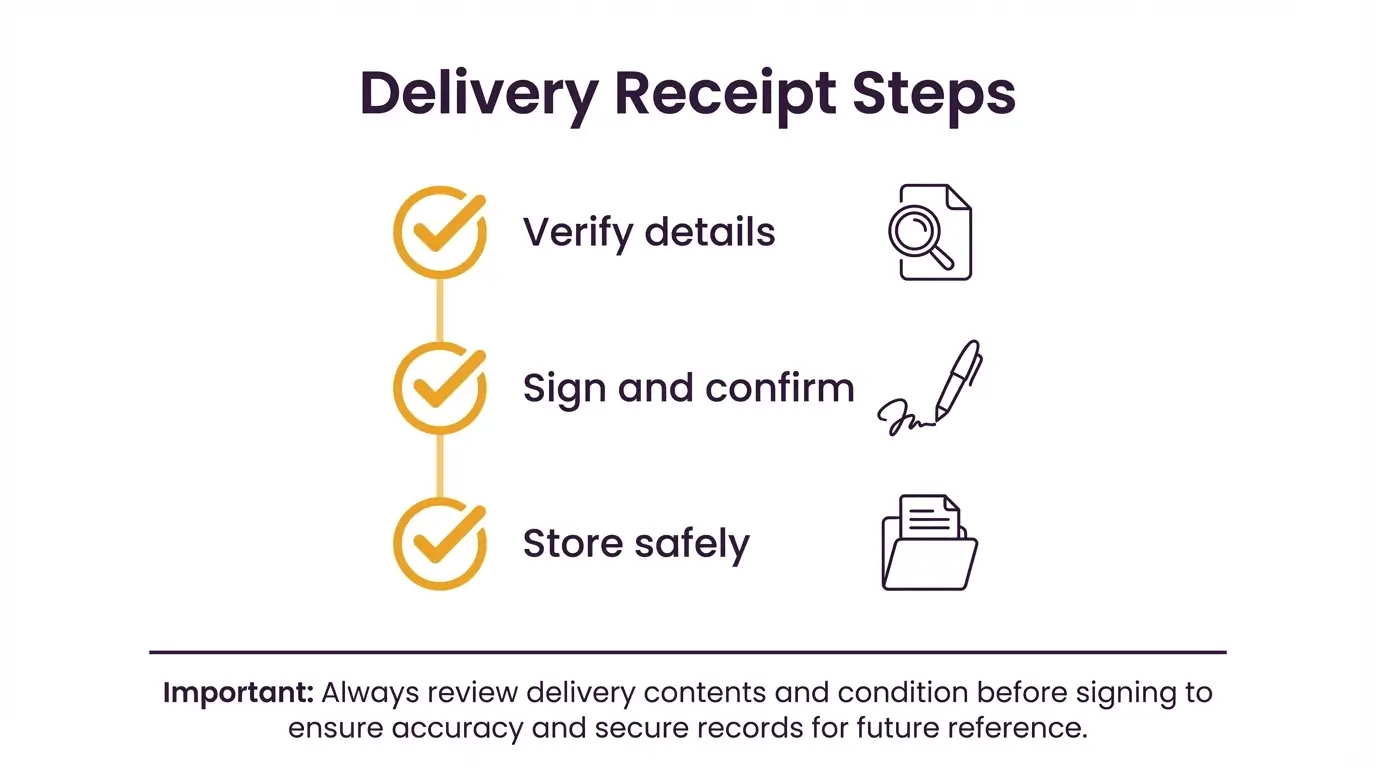
At delivery the driver produces the same document and asks you to sign again. That second signature is your written statement that the car arrived in the condition recorded on the form. Sign a clean form and you have agreed, in writing, that nothing new happened in transit.
So inspect before you sign, and inspect properly. Compare the car against your pickup photographs, look along the panels rather than straight at them, and check the roof and the lower bumpers, which is where transport damage tends to land.
Delivery After Dark or in Bad Weather
Carriers run on road schedules, so a truck can reach you after sunset or in heavy rain. A wet or badly lit car hides exactly the kind of damage you are looking for.
You are not obliged to accept an inspection you cannot perform. Bring a strong flashlight and check panel by panel. If conditions genuinely prevent a proper inspection, write that on the bill of lading before you sign. A note reading "delivered after dark, inspection limited, condition not verified" is a factual statement, and it stops a clean signature from being read as your agreement that the car was undamaged. Ask the driver to initial the note, then photograph both the car and the annotated form on the spot.
What to Do If the Car Arrives Damaged
Note the damage on the bill of lading before you sign, in writing, with the driver present. That step is necessary. What almost every article on this subject gets wrong is what the step achieves.
Writing damage on the bill of lading does not file a claim. 49 CFR 370.3 states that notations of damage on freight bills, delivery receipts or other documents, and inspection reports issued by carriers, standing alone are not sufficient to meet the minimum claim filing requirements. The annotation preserves your evidence. A separate written claim to the carrier is what starts the process.
Once you file that written claim, the carrier is on a clock. Under 49 CFR 370.5 it must acknowledge the claim in writing within 30 days and tell you what further documentation it needs. Under 49 CFR 370.9 it must then pay, decline, or make a firm written settlement offer within 120 days, and if it cannot resolve the claim in that time it must write to you at the end of each following 60 day period with the status and the reason for the delay.
Your own deadline comes from the bill of lading rather than from the statute. 49 U.S.C. 14706(e) sets a floor, not a limit: a carrier cannot contractually allow you less than nine months to file a claim, or less than two years to bring a civil action after it denies one. It does not make nine months your deadline. Whatever period your carrier's bill of lading states, provided it is not shorter than those floors, is the period you actually have. This is the most common misunderstanding in the field, and it is why the terms printed on the back of the form deserve a read.
Carrier cargo insurance covers damage that happened in transit. It does not cover pre-existing damage, and policies carry limits, deductibles and exclusions that differ between carriers. Our guide to auto transport insurance coverage goes through what those policies typically include and where the gaps sit.
Electronic Bills of Lading
Many carriers now use an electronic bill of lading, signed on a tablet or a phone at the curb. The document does the same three jobs and the terms are the same. Only the medium changes.
Two practical differences are worth knowing. A tablet screen in daylight is harder to read than paper, so zoom in on the damage diagram instead of signing at a glance. And settle how you will receive your copy before the driver leaves, because an emailed file that never arrives leaves you with no record at all. Ask for it on the spot and check that it landed.
Bill of Lading and Vehicle Delivery Receipt
Some carriers issue a separate delivery receipt confirming handover, and the two documents are easy to confuse.
The bill of lading covers the whole shipment from pickup to delivery: the contract, the receipt of the vehicle, and the condition record at both ends. A delivery receipt confirms a single event, that the vehicle changed hands, and often supports invoicing rather than condition. Where a carrier uses both, the bill of lading remains the document that matters in a damage dispute. Keep both, and make sure the condition noted on each matches what you actually saw.
Knowing what the form does before the driver arrives is most of the work. If you are still planning the shipment, run your route through our car shipping calculator, or contact us with questions about a specific vehicle or route.
Frequently Asked Questions