Your Booking Confirmation and What It Should Say
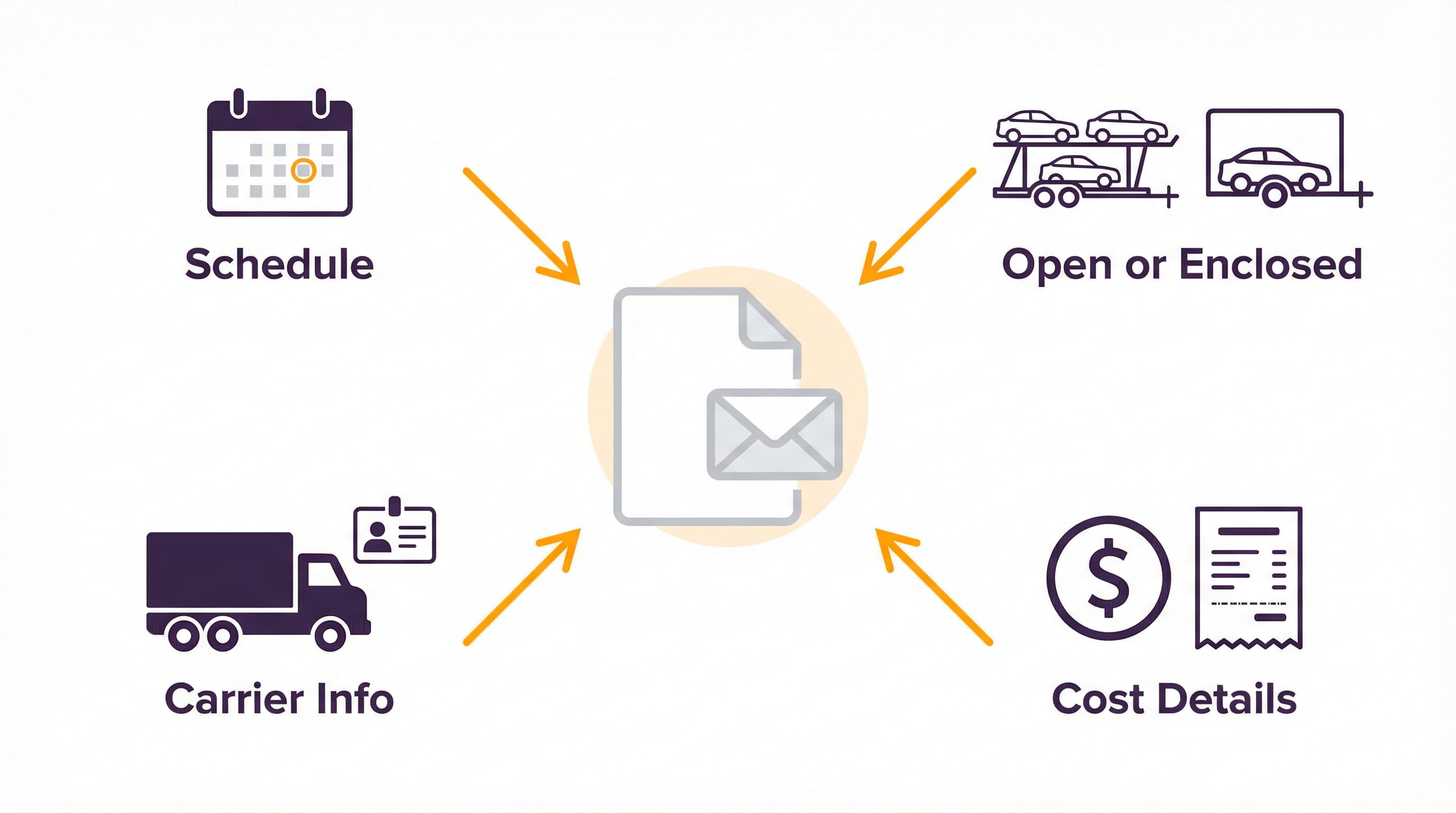
A confirmation email lands once your booking goes through, and it is worth more than a quick glance. It records the pickup and delivery locations, the vehicle you listed, and whether you chose open or enclosed transport. It lists the price you agreed and the dates the shipment is planned around. Read it against what you actually discussed on the phone. Mistakes are cheapest to correct in the hour after booking and most awkward to correct once a carrier has already accepted the route.
The dates in that email are estimates rather than appointments, and your agreement says as much. An estimated pickup date and an estimated delivery date are what a broker owes you. A guaranteed pickup date exists as a paid upgrade if you need one. A guaranteed arrival date does not exist on any booking, and a company offering you one is telling you something about itself.
How Long Before a Carrier Is Assigned
Assignment typically takes one to three working days from booking. That window covers a single leg, the stretch between your booking and a carrier accepting your route. It is not a pickup date, and it says nothing about how long the drive itself will take.
Routes between large metro areas fill faster than routes with a remote pickup or a remote delivery. Season, vehicle size, and how much flexibility you have on dates all move the number. Should your booking sit past that window with no news, call and ask what the route is doing. A quiet inbox is not the same thing as progress. For how long the drive takes once the car is loaded, see our guide to how long it takes to ship a car across the country.
Who Actually Moves Your Car
Rivalane is a broker, not a carrier. Rivalane is the trade name of Zone Auto LLC, licensed as a Broker of Property under USDOT 4178374 and MC 1608310. It owns no trucks and employs no drivers. What it does is match your shipment to a licensed carrier, agree the terms, and coordinate both ends of the route.
That distinction decides who carries which responsibility, so it is worth verifying rather than taking on trust. Both numbers are public and take a minute to check on the FMCSA SAFER Company Snapshot. Run the same check on the carrier once you have its name, and confirm that the name on the truck matches the name on your paperwork.
Getting the Vehicle Ready for Pickup
Strip the car of anything you are not willing to lose. Personal belongings sit outside carrier cargo insurance and they add weight nobody priced for. Leave roughly a quarter tank of fuel, which is enough to load, unload, and drive away without carrying dead weight across the country.
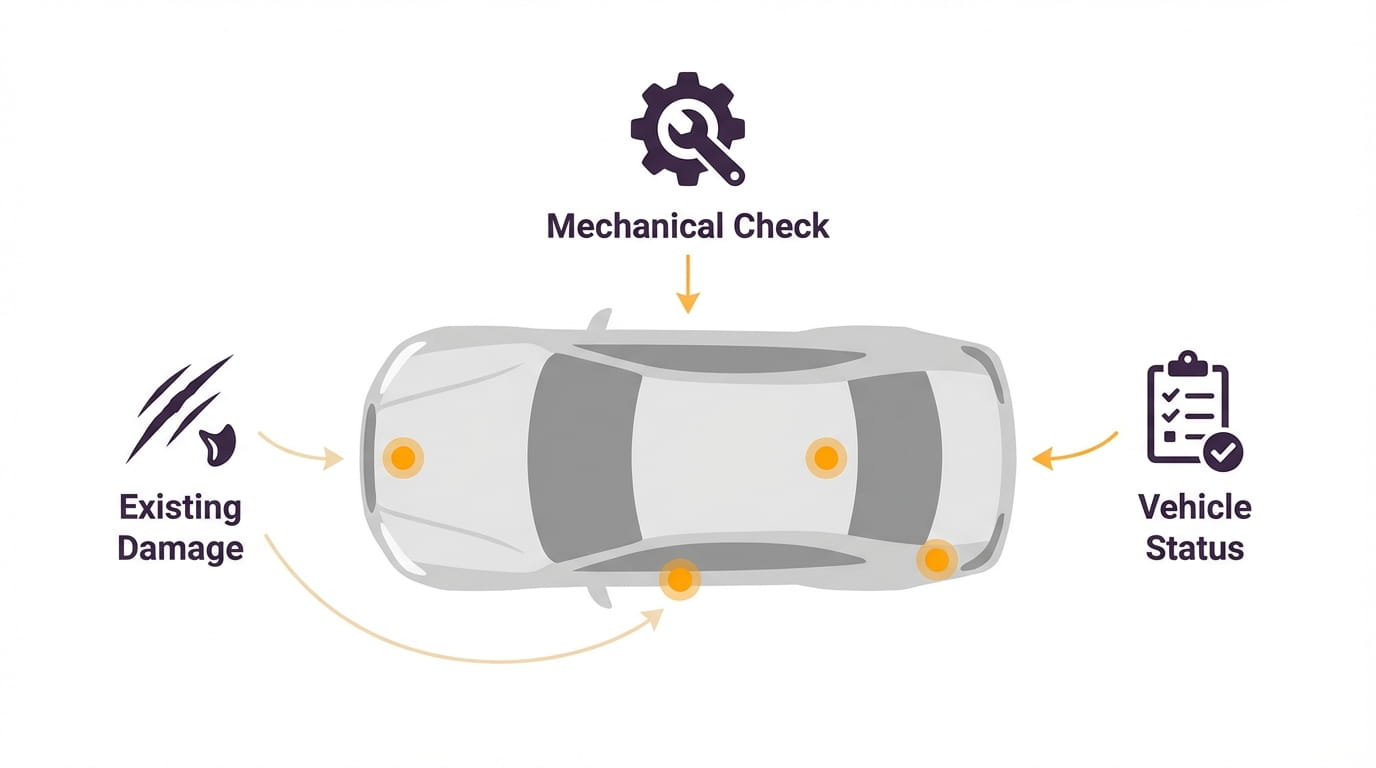
Wash the car before pickup. A clean panel shows an existing scratch clearly, and existing scratches are the entire point of the inspection that happens next. Fold the mirrors, remove or secure roof racks and spoilers and anything else that protrudes, and switch the alarm off so it does not fire on the trailer. Tell your contact before the driver arrives if the car will not start, will not steer, or sits unusually low. That changes the equipment the carrier has to bring.
Pickup Day and the Bill of Lading
The driver inspects the car with you and records its condition on the bill of lading. That document belongs to the carrier rather than to Rivalane, and it does three jobs at once. It is your contract with the carrier, the receipt proving the carrier took your vehicle, and the condition report every later dispute gets measured against.
Walk the car with the driver instead of watching from the doorway. Photograph every panel, the roof, the wheels, and the odometer yourself, dated. Have any missed scratch added before anyone signs, and keep your copy. Our guide to the auto transport bill of lading covers what the form must legally contain and what your signature commits you to.
What Happens While the Car Is in Transit
Pickup windows are windows, not appointments. The driver is routing several vehicles at once and calls ahead to confirm timing, usually the day before or the morning of.
Ask your point of contact how updates will reach you and how to get hold of the driver, and get that answer before the car loads rather than after. It saves a great deal of chasing. Dispatch is responsible for telling you when a carrier runs late.
Arrival timing shifts for ordinary reasons. Weather, traffic, the hours of service limits a driver has to observe, and changes to other vehicles on the same load all move the date. For why exact delivery dates are so difficult to promise in this industry, see the truth about guaranteed delivery times.
Delivery and the Second Inspection
The same form reappears at delivery, and the signature you give there is a written statement that the car arrived in the condition recorded on it. Sign a clean form and you have agreed, in writing, that nothing happened in transit.
Inspect before you sign, and inspect properly. Compare the car against your pickup photographs, and look along each panel at an angle rather than straight at it. Check the roof and the lower bumpers, where transport damage tends to land. Bring a flashlight if the truck arrives after dark or in heavy rain, and write on the form that conditions limited the inspection before you sign it. Damage you find goes on the bill of lading in writing, with the driver present, before your signature does.
If Something Goes Wrong
Carrier cargo insurance covers damage that happened in transit. Coverage sits with the carrier assigned to your shipment rather than with Rivalane, and terms differ by carrier. Ask for the certificate of insurance before the vehicle loads, photograph the vehicle at pickup, and check the condition report at both ends.
Writing damage on the bill of lading preserves your evidence. It does not file a claim. A separate written claim to the carrier is what starts that process, and the carrier's own paperwork sets the deadline you have to meet.
Here is the part worth being plain about. Rivalane can chase the carrier, escalate, and help you assemble what a claim needs. It cannot pay a cargo claim, because it is not the insurer and no broker is. Any company that suggests otherwise before you book deserves a much harder look than it is asking for.
If You Have Not Booked Yet
Most people reading this have already booked. Anyone still comparing options can run a route through the car shipping calculator and see what the shipment looks like before committing to it.
Frequently Asked Questions