


Plan on about $1,150 to $1,650 for a running sedan on an open deck from Los Angeles to Miami, most often delivered 7 to 9 days after loading. The 64 town pairs we routed span 2,178 to 3,041 road miles on I-10 or I-40. Book two to three weeks ahead; Florida wants title and registration within 10 days of residency.
Which Roads Take a California Car to Florida?
We routed all 64 pairs between eight California pickup towns and eight Florida delivery cities, and california to florida car shipping comes out at about 2,178 to 3,041 road miles. Where the car starts decides the road. Every load from Los Angeles, Riverside, Irvine and San Diego crosses the South on I-10, passing Tucson, El Paso, Houston, Baton Rouge, Mobile and Pensacola, and San Diego cars reach it by I-8. Fresno, San Jose, San Francisco and Sacramento loads head east on I-40 instead, through Flagstaff, Albuquerque and Amarillo, then drop toward the Gulf on I-20 and meet that southern line by Mobile. Inside Florida, loads bound for Orlando, Tampa, Fort Myers or the Atlantic side of South Florida leave I-10 near Lake City and run south past Ocala, while Jacksonville and Tallahassee deliveries stay on I-10 to the end.

How Much Does Car Shipping From California to Florida Cost?
Your quote depends on your vehicle, the exact pickup and delivery addresses, the season and the trailer type, so run the calculator for a figure on your dates.
Mileage at the California end moves the price more than the Florida end does. Into Miami, San Diego is the shortest start at about 2,655 road miles, Riverside follows near 2,681, Irvine and Los Angeles sit around 2,719 and 2,734, Fresno comes in near 2,866, and San Jose, San Francisco and Sacramento run longest at about 2,997, 3,039 and 3,041.
The Florida end spreads less but still counts. From Los Angeles, Tallahassee is about 2,256 miles and Jacksonville about 2,417, while Miami, at the bottom of the peninsula, adds close to 480 miles over Tallahassee.
Vehicle size and trailer type come next. A pickup, minivan or full-size SUV takes more deck room than a sedan, and a covered trailer costs more than an open one.
Very low quotes deserve a second look. A price set well under the going rate for a run this long can sit unclaimed while carriers take better-paying loads, and the pickup date slips.

Right now, an open carrier taking a running sedan from Los Angeles to Miami is being quoted at roughly $1,150 to $1,650. For a number built on your own two addresses, the car shipping calculator takes about a minute.
A full-size SUV, pickup truck or minivan generally costs $100 to $200 extra, and an enclosed trailer typically adds between 40 and 60 percent.
- Starting point. A Bay Area or Sacramento pickup adds roughly 260 to 310 miles over Los Angeles on the run to Miami.
- Florida drop. From every California start we measured, Tallahassee and Jacksonville are the two shortest legs and Miami the longest.
- Flexibility. A pickup window of a few days lets dispatch fit the car onto a truck already heading east instead of paying to fill an empty slot.
The broader picture of long-distance pricing is in our guide on how much it costs to ship a car cross country. Two neighboring lanes make useful comparisons: the shorter southern run on California to Georgia and the other long western haul into Florida on Oregon to Florida.

What Factors Actually
Influence Pricing on This Route?
Five things move the price on any lane: the vehicle's size, whether it runs, how easy each end is to reach, the season and the trailer type. Booking early protects your timeline, keeps pricing steady and reduces the risk of last-minute carrier changes.


Type
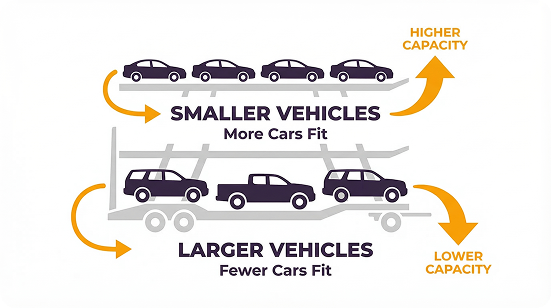
Size decides how much deck space your vehicle takes and how many other cars fit alongside it. A standard sedan is the cheapest thing to move because it slots almost anywhere on the trailer. SUVs, pickups and vans take more room and usually cost more on the same lane.


Is It Cheaper to Ship or Drive a Car From California to Florida?
Shipping Instead of Driving
Shipping fits when you need to be in Florida by a set date, when two cars are going and one person is moving, or when a flight beats most of a week crossing the desert Southwest and the full width of Texas.
The car also stays clear of about 2,700 extra miles of wear, and you skip the gas, food and hotel bills that pile up on a drive of that length.
Driving the Route Yourself
Driving can come out cheaper for someone with a second driver, a loose schedule and real enjoyment of long road trips. Our routing has Los Angeles to Miami at about 48 hours of pure driving, and most people need six or seven days to cover it once they add nights and breaks.
Even the shortest pair we measured, San Diego to Tallahassee, is about 2,178 miles. For a fair comparison, total the fuel, hotels, food and the days off work, then hold that number up against the quotes.
How Long Does Car Shipping From California to Florida Take?
Once loaded, a California car typically reaches Florida in 7 to 9 days. San Diego to Tallahassee, at about 2,178 miles the shortest pair we routed, usually sits near the front of that range, while Sacramento to Miami, about 3,041 miles and the longest, can need all of it.
Before any of that, the order has to be matched with a carrier. Rivalane puts one to three working days on that step in most cases, and a handful of workable pickup dates shortens it more than anything else.
Long-haul carriers commonly cover around 400 to 500 miles a day, so close to 2,700 miles fills most of a week on the road, with the stops for other vehicles on the same trailer coming on top.
When Should You Book Car Shipping From California to Florida?
On this route, a booking placed two or three weeks before the pickup you want usually works well. It gives dispatch room to wait for a licensed carrier with space heading east rather than grabbing whichever truck replies first. If the car will come back west later, the Florida to California route covers that trip.
Winter matters more for the northern California loads. Their I-40 run climbs to high ground around Flagstaff and Albuquerque, where snow can slow trucks for a day or two, so build in some slack from December through February. The I-10 line out of Southern California stays lower and is seldom held up by snow.
Late summer and fall bring a different risk at the Florida end. The Atlantic hurricane season lasts from June to the end of November, and a storm near the Gulf Coast or the peninsula can push delivery back, so keep the delivery plan loose if a system is forming.
Open or Enclosed Car Shipping From California to Florida?
Most owners here choose open car transport on a two-level carrier, where the car sees desert sun, Gulf Coast rain and road grit for close to 2,700 miles.
With enclosed car transport, the car rides shut away in a hard-sided, roofed trailer all the way from the California pickup to the Florida drop. Fewer cars fit in those trailers, which makes each space pricier and the open dates harder to come by.
Go enclosed for a classic, an exotic, fresh paint or a low front end, or for anything you would hate to see sitting through a summer downpour. An everyday car usually travels open without trouble.
Enclosed Car Transport
Enclosed demand rises for high-value, specialty and seasonal vehicles, and enclosed trailers protect against road debris and weather, which matters most on longer hauls. Enclosed rigs are a small fraction of the trailers working any given lane, and that scarcity is what drives both the higher price and the longer booking lead time.
Open Car Transport
Most vehicles move on open trailers, and for most routes that is the more cost-effective way to ship a car.
Open transport works well for standard vehicles and keeps costs predictable. It also offers the widest carrier availability.
What Starts the Florida Clock After a California Move
Florida does not count from the day the truck pulls up. FLHSMV starts the clock when you become a Florida resident, and any one of these events makes you one: registering to vote in Florida, spending more than six straight months in Florida, enrolling your children in a Florida public school, filing for a homestead exemption, or starting a job, trade or profession there.
From that day the car has 10 days to be titled and registered, and your own Florida driver license follows inside 30 days, applied for in person at a driver license office. Fitting the car into those 10 days takes four things:
- Florida coverage first. The policy must be written by an insurance agent licensed in Florida, and no title or registration is issued until it exists.
- A checked VIN. Florida accepts the check from four kinds of official: licensed Florida dealers; staff at the county tax collector; Division of Motorist Services compliance examiners; and police, meaning law enforcement or military police officers. The result is recorded on HSMV 82040 or on HSMV 82042. Our guide to Florida VIN verification covers where to find each one.
- A complete folder. Pack the original California title, an HSMV 82040 signed by every owner, Florida proof of insurance and identification for each person on the title. The service center visit itself is laid out in our Florida out-of-state registration guide.
- A lender on the title. Ask the lienholder to send the title to Florida, since registration is required either way. If it declines, ask for its refusal in writing on letterhead and take that letter to a motor vehicle service center to register the car.
Source: the FLHSMV New Resident page.
What to Expect at Pickup in California and Delivery in Florida
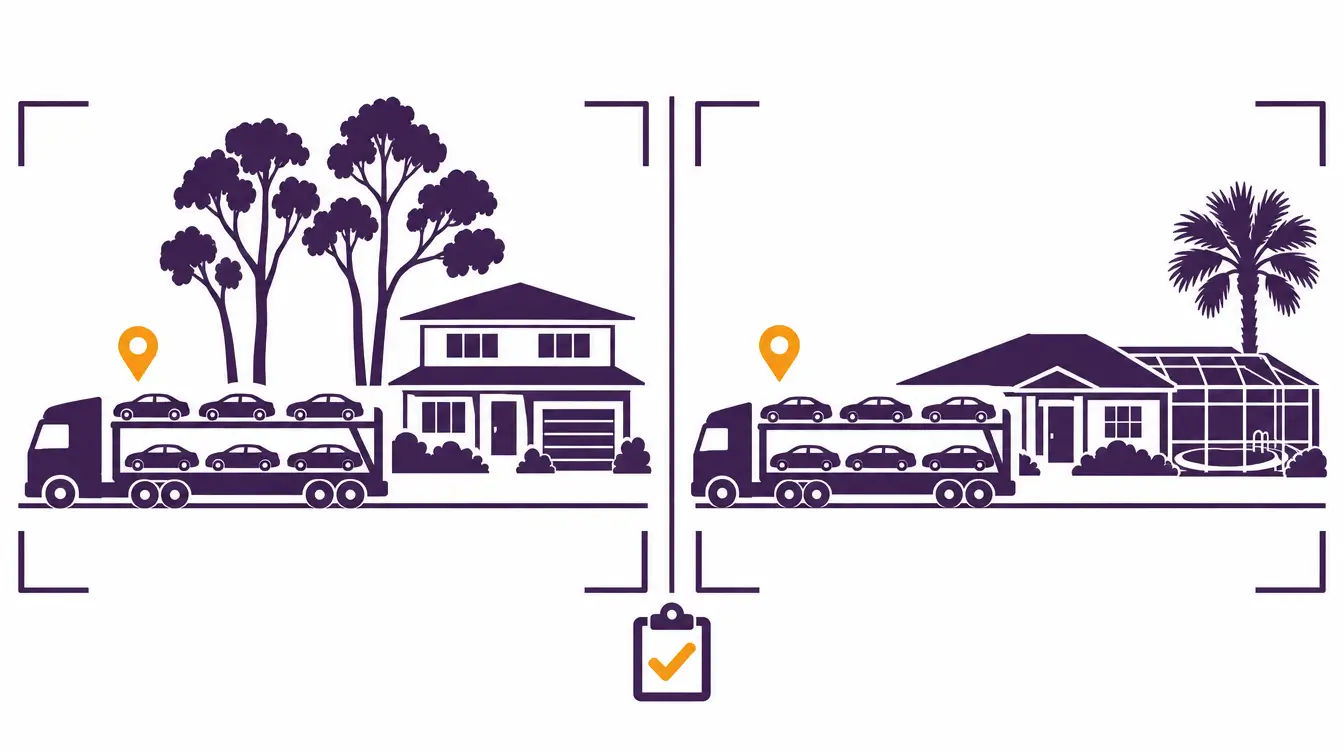
Agree the meeting spot in California and the one in Florida before dispatch takes the order. A loaded car carrier is long and heavy, so it needs a straight, level street or a large lot to stop in, lower its ramps and turn back out.
In California, steep Bay Area streets, tight parking in older Los Angeles neighborhoods and gated communities across Orange County and San Diego County often move a home pickup to a nearby shopping center or office lot. In Florida, gated communities, condo towers with low garage entrances and HOA rules on large trucks in South Florida and around Orlando and Tampa do the same at delivery. Our pages on car shipping in California and car shipping in Florida go deeper on each end.
Each handover starts with a joint inspection: the driver checks the car alongside you and writes down any marks on the bill of lading. Ahead of the first check, photograph every side with the date showing, take out personal items, leave roughly a quarter tank of fuel and keep the keys within reach.
Rivalane gives you real-time tracking on the way east, so whoever is meeting the car in Florida can plan around the truck instead of waiting on it.
Key Things to Know Before Shipping a Car From California to Florida
Rivalane coordinates California to Florida orders out of Melville, New York. Carrier matching normally runs one to three working days, then real-time tracking follows the car to delivery. Start the Florida paperwork early, because title and registration are due 10 days after you become a Florida resident, and that can happen before the car arrives.
Frequently Asked Questions