


An open trailer sedan costs $875 to $1,400 on sixteen California to Texas pairs that span 1,070 to 2,022 miles, and transit typically takes 3 to 7 days. The Texas end shifts the total by up to 465 miles, the California start by up to 487.
Which Highways Carry a Car From California to Texas?
Every figure here comes from sixteen town pairs. California supplies Anaheim, Palmdale, Modesto and Chico as starts, and Texas supplies Odessa, Carrollton, Georgetown and Tomball as ends. The pairs measure 1,070 to 2,022 road miles. I-10 does most of the work: it carries 892 to 934 miles of every Odessa load and 1,416 to 1,458 of every Tomball load. Georgetown loads stay on I-10 for 1,161 to 1,203 miles of the Anaheim, Palmdale and Modesto trips. Carrollton loads divide, with Anaheim riding I-10 and I-20 while Palmdale, Modesto and Chico ride I-40 and US 287. A routing engine chose these roads, and the carrier booked for you may pick others.

How Far Apart Do the California Starts and Texas Ends Land?
Your quote depends on your vehicle, the exact pickup and delivery addresses, the season and the trailer type, so run the calculator for a figure on your dates.
Both ends of this haul swing the distance, and by nearly the same amount. Holding the California start still, the four Texas ends land exactly 465 miles apart for every start. Holding the Texas end still, the four California starts land 420 to 487 miles apart.
The 465 comes from one fixed gap. Tomball sits 465 miles beyond Odessa for Anaheim, Palmdale, Modesto and Chico alike, and Georgetown sits 294 to 295 miles beyond Odessa for all four. Carrollton is the odd one out, because its loads change roads and the gap to Odessa runs from 243 to 354 miles.
Fix the end at Carrollton and the starts measure 1,389 miles from Palmdale, 1,424 from Anaheim, 1,639 from Modesto and 1,809 from Chico. Fix the start at Anaheim and the ends measure 1,070 to Odessa, 1,365 to Georgetown, 1,424 to Carrollton and 1,535 to Tomball. An SUV or pickup uses more trailer space than a compact, which can lift the price too.
Name both towns and your earliest pickup day when you request a price, so the figure matches the pair you plan to ship.
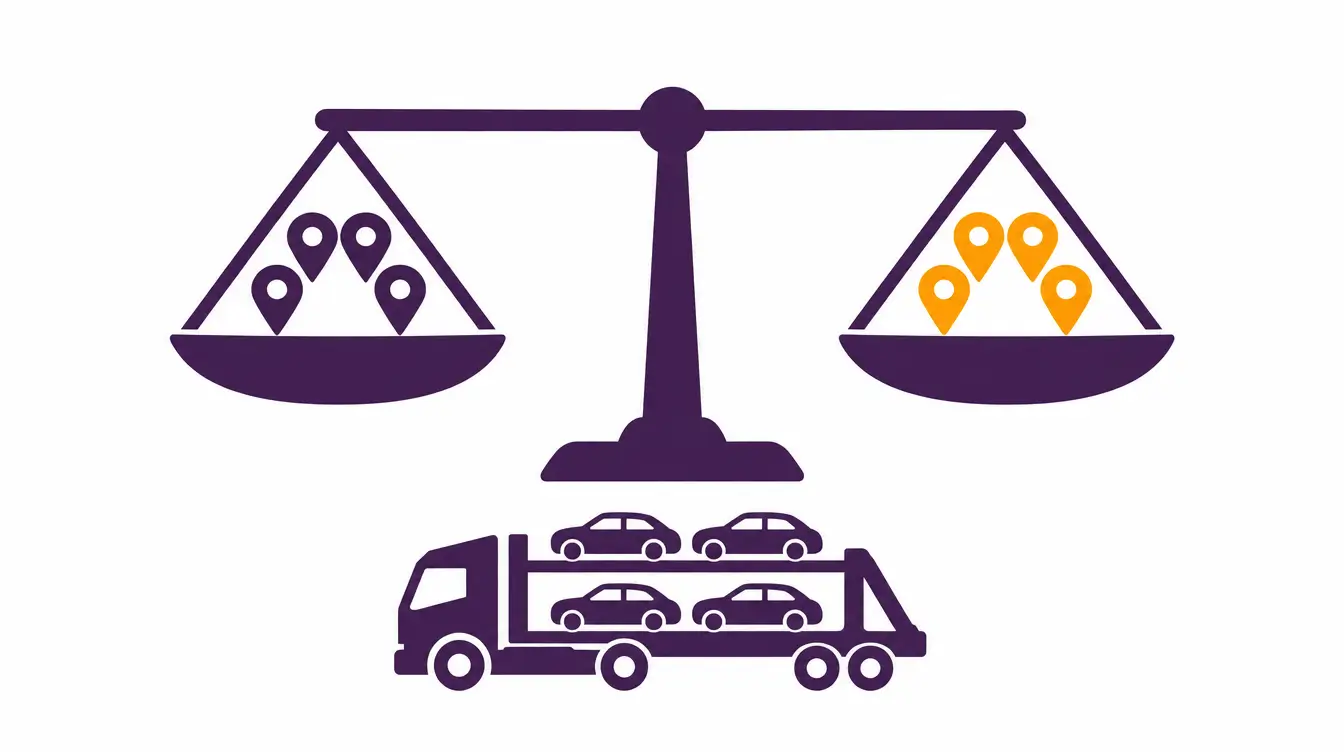
An open trailer sedan runs $875 to $1,400, with Anaheim to Odessa at the low end of the band and Chico to Tomball at the high end. Use the price calculator with both towns and a date to see your own pair.
Enclosed service costs extra, because every trailer holds fewer vehicles. Expect 100 to 200 dollars on top for a van or pickup, and a separate fee if a dead car needs winching aboard.
- Texas end. The four ends span exactly 465 miles for every California start.
- California start. Starts span 420 to 487 miles for any Texas end.
- I-10 share. Tomball loads spend 1,416 to 1,458 miles on I-10, nearly the whole trip.
Be wary of any bid well under this band. Find out who will load the car and if a truck is already assigned.

What Factors Actually
Influence Pricing on This Route?
Five things move the price on any lane: the vehicle's size, whether it runs, how easy each end is to reach, the season and the trailer type. Booking early protects your timeline, keeps pricing steady and reduces the risk of last-minute carrier changes.


Type
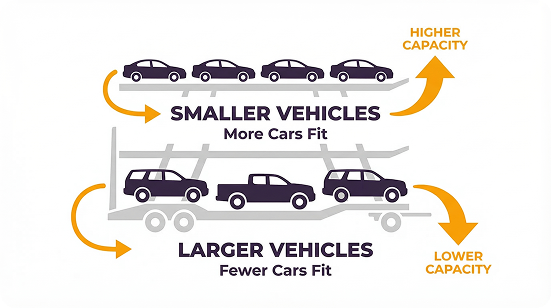
Size decides how much deck space your vehicle takes and how many other cars fit alongside it. A standard sedan is the cheapest thing to move because it slots almost anywhere on the trailer. SUVs, pickups and vans take more room and usually cost more on the same lane.


Should a Carrier Haul It or Should You Drive From California to Texas?
Booking a Carrier
Anaheim to Odessa is the short pair at 1,070 miles and roughly 18.5 hours behind the wheel, while Chico to Tomball is the long one at 2,022 miles and roughly 35.2 hours.
Hiring a carrier fits a family with two vehicles but one licensed driver, a Texas job with a fixed start date, or a car purchased in one state and wanted in the other.
Making the Drive Yourself
Anaheim to Carrollton takes roughly 24.5 hours of seat time on I-10 and I-20, not counting fuel stops, sleep or traffic.
Tally fuel, motel nights, meals and the flight or ride home, and compare that sum with a price for your two exact towns. One car and an open calendar favor the wheel, while a second vehicle or a set start day favors a carrier.
How Many Days Will the Car Be in Transit From California to Texas?
After loading, a car typically rides 3 to 7 days. Anaheim to Odessa at 1,070 miles sets the fast end, and Chico to Tomball at 2,022 miles sets the slow end.
The count begins at loading. Before that, dispatch needs a business day or three to match the car with a driver, so leave slack around your pickup day. A longer guide to hauling times shows what lengthens a trip.
Desert heat, a repair stop or a late handoff may add a day, so use the range as a rough estimate and not a delivery promise.
What Is the Best Moment to Reserve California to Texas Transport?
Reserve when your move date is firm, and mention if pickup can shift a day or two. Extra flexibility lets dispatch slot the car onto an eastbound truck that already has room.
California keeps Pacific time and every Texas end on this page keeps Central time, so clocks jump two hours ahead on arrival. Anaheim and Palmdale sit in the south of California, while Modesto and Chico sit in the Central Valley and north, which is why Chico to Odessa runs 487 miles longer than Anaheim to Odessa.
Before the truck shows up, the car prep guide covers the chores to finish.
Choosing Between Open and Enclosed Trailers for This Move
Open transport means an uncovered carrier and is what most households choose on this lane. Over 1,070 to 2,022 miles a car meets desert sun, dust and some rain.
Enclosed trailers wrap the car from loading to unloading and cost more, because every trailer fits fewer vehicles.
A classic, a show car or newly painted bodywork can earn the extra spend, while an everyday sedan usually rides open and arrives fine.
Enclosed Car Transport
Enclosed demand rises for high-value, specialty and seasonal vehicles, and enclosed trailers protect against road debris and weather, which matters most on longer hauls. Enclosed rigs are a small fraction of the trailers working any given lane, and that scarcity is what drives both the higher price and the longer booking lead time.
Open Car Transport
Most vehicles move on open trailers, and for most routes that is the more cost-effective way to ship a car.
Open transport works well for standard vehicles and keeps costs predictable. It also offers the widest carrier availability.
Arranging the Texas Handover
Give dispatch the complete Texas address before delivery day, with a suite number or gate code where relevant, and answer when the driver rings to fix the meeting time. A full size trailer that cannot enter the street means offering a wide road or a lot nearby.
Examine the vehicle in daylight after unloading and check it against the photos from loading day. Record any fresh scratch or dent in the carrier paperwork before signing, and retain a copy.
Where a Hauler Can Meet You in California and Texas
A car hauler is long and heavy and cannot turn into every lane. A tract home dead end in Anaheim, a desert subdivision in Palmdale, a narrow street in Modesto or a shaded lane in Chico may be too tight, so a wide road or open lot nearby often works better. Readers wanting more pickup areas can open California car shipping.
Texas delivery has the same limits. A lease road in Odessa, a gated subdivision in Tomball, a busy corner in Carrollton or a quiet dead end street in Georgetown may call for a handoff at a nearby lot. For more drop off areas, open Texas car shipping.
Stand next to the driver at either end and mark any change on the condition report. Take dated photos, sign the final report and store your copy alongside the bill of lading.

What Should Be Clear Before You Request a California to Texas Quote?
Rivalane is a licensed broker with no trucks of its own, and a carrier it books moves each car. Changing the Texas end shifts the total by up to 465 miles and changing the California start by up to 487, so state both exact towns in your request.
Frequently Asked Questions