


An open trailer spot for a running sedan from Los Angeles to Burlington typically runs $1,400 to $1,950. The 64 town pairs we routed cover about 2,819 to 3,177 road miles, with I-80 the main road, and the trip typically lasts 7 to 9 days after pickup. Book about two to three weeks ahead.
What Route Does a Car Follow From California to Vermont?
California to Vermont car shipping crosses the whole country, and I-80 is the main road on all 64 town pairs we routed. Cars from Los Angeles, Riverside, Bakersfield and Fresno leave California on I-15 past Barstow and Las Vegas, cut across southern Utah and climb through the Rockies on I-70 to Denver before joining I-80 in Nebraska. Bay Area, Sacramento and Redding cars pick up I-80 early, cross the Sierra Nevada to Reno and continue through Salt Lake City and Cheyenne. Both groups share the road on the Plains past Lincoln, Omaha and Des Moines, then trace the southern shore of Lake Erie past Cleveland and Erie to Buffalo and run east across New York on I-90 by Syracuse. The deliveries split only in the last stretch. Burlington, St. Albans, Montpelier, Barre and Rutland cars turn north on I-87 past Glens Falls, St. Johnsbury cars come up I-91 through White River Junction, and Bennington and Brattleboro loads cross into southern Vermont from near Albany.

How Much Does California to Vermont Car Shipping Cost?
Your quote depends on your vehicle, the exact pickup and delivery addresses, the season and the trailer type, so run the calculator for a figure on your dates.
Distance sets the base, and on this lane the California pickup moves it the most. To Burlington, a Riverside car covers about 2,943 road miles and a Los Angeles car about 2,977. Bakersfield and Sacramento land within about 30 miles of the Los Angeles figure, Redding adds roughly 95, and San Francisco, Fresno and San Jose add 117 to 148. Pickups elsewhere in the state are covered on our California car shipping page.
The Vermont address moves the total less. Counting from Los Angeles, Bennington is the nearest delivery at about 2,854 miles, with Rutland and Brattleboro close behind, while Montpelier and Barre run about a dozen miles past Burlington, St. Johnsbury about 35 and St. Albans about 52. For towns not listed here, see our Vermont car shipping page.
Vehicle size and the calendar matter too. A big pickup or three-row SUV takes up more deck space, and winter weather can slow the mountain stretches and the last miles in Vermont. Our guide to cross-country shipping costs explains how the longest runs are priced, and the car shipping calculator gives a first estimate for your two addresses.

A sedan that runs, booked open from Los Angeles to Burlington, usually costs $1,400 to $1,950. Where the two addresses fall moves the figure within that range, since the longest pairs we routed run about 360 miles farther than the shortest.
A full-size SUV, van or pickup truck needs extra deck space, so its quote usually lands $150 to $250 above the sedan figure. An enclosed trailer, by comparison, tends to raise the open rate by about 40 to 60 percent.
What moves a quote most on this lane:
- Where in California. Riverside starts closest to Vermont and San Jose farthest, about 180 road miles apart.
- Where in Vermont. Bennington, Rutland and Brattleboro in the south are the shortest deliveries, and St. Albans, north of Burlington, the longest.
- Time of year. Winter storms in the western mountains and snow on Vermont back roads can stretch both the pickup window and the trip itself.
A quote far under the others is worth questioning before you book.

What Factors Actually
Influence Pricing on This Route?
Five things move the price on any lane: the vehicle's size, whether it runs, how easy each end is to reach, the season and the trailer type. Booking early protects your timeline, keeps pricing steady and reduces the risk of last-minute carrier changes.


Type
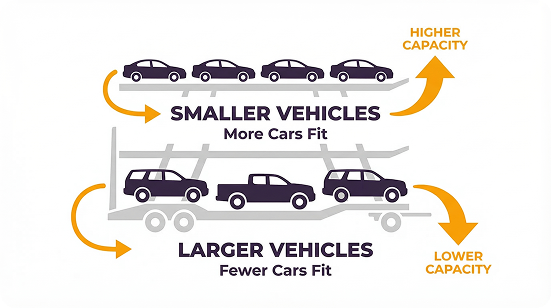
Size decides how much deck space your vehicle takes and how many other cars fit alongside it. A standard sedan is the cheapest thing to move because it slots almost anywhere on the trailer. SUVs, pickups and vans take more room and usually cost more on the same lane.


Is It Better to Ship or Drive a Car From California to Vermont?
When Shipping Makes Sense
Shipping suits people moving to Vermont for a new job, school or family who would rather fly than spend most of a week on the interstate, and buyers who found a car in California and need it delivered to a Vermont address. If you are the one selling in California, our California car selling guide covers the paperwork on that side.
It also keeps close to 3,000 miles of wear and fuel off your own car.
When Driving Makes Sense
Driving can cost less if two people share the wheel and want the car with them on arrival, and we will say so if that fits your move. Our routing puts Los Angeles to Burlington at about 54 hours behind the wheel, which works out to five or six long days with hotel nights, fuel and meals along the way.
For one driver or a fixed start date, shipping usually wins. Even the shortest pair we measured, Riverside to Bennington, runs about 2,819 miles.
How Long Does It Take to Ship a Car From California to Vermont?
Once the car is loaded, the trip to Vermont typically takes 7 to 9 days. Riverside to Bennington, the shortest pair at about 2,819 miles, can finish near the quick end, and San Jose or San Francisco to St. Albans usually needs the whole window.
Matching the car to a carrier comes first, and that step generally fills one to three working days of the calendar, while naming a few workable pickup dates widens the choice of eastbound carriers.
At the 400 to 500 daily miles a loaded hauler manages around its other stops, the driving alone on a Los Angeles to Burlington run comes to roughly six to seven days. The halfway point of that run falls in eastern Nebraska, near Lincoln. Winter storms in the mountains or in Vermont can add a day or two.
When Should You Book California to Vermont Car Shipping?
Give dispatch about two to three weeks for this lane. Rivalane matches the car with a carrier already running toward the Northeast rather than a dedicated Vermont truck, and extra notice leaves time to find one with an open slot instead of taking the first offer.
Winter calls for more slack. Snow and ice can slow the mountain crossings in the West, and snow on Vermont back roads can move the delivery to a plowed main road, so a flexible delivery date helps from December through March.
If the car is going to New York instead, see California to New York car shipping for that route.
Should You Ship Open or Enclosed From California to Vermont?
Most cars on this route travel on open transport, the standard two-level carriers seen on every interstate. Over close to 3,000 miles the car rides exposed, so it collects about the dust, rain and winter road grime you would expect from driving the distance yourself.
Enclosed transport loads the car into a covered trailer with solid walls at the California pickup and opens it again at the Vermont address, so weather and road salt never reach the paint. Each trailer carries fewer cars, which raises the price and can mean a longer wait for space.
Owners of classics, exotics and cars with new paint tend to choose enclosed, and most daily drivers go open.
Enclosed Car Transport
Enclosed demand rises for high-value, specialty and seasonal vehicles, and enclosed trailers protect against road debris and weather, which matters most on longer hauls. Enclosed rigs are a small fraction of the trailers working any given lane, and that scarcity is what drives both the higher price and the longer booking lead time.
Open Car Transport
Most vehicles move on open trailers, and for most routes that is the more cost-effective way to ship a car.
Open transport works well for standard vehicles and keeps costs predictable. It also offers the widest carrier availability.
What Vermont Requires When the Car Arrives
These steps cover a permanent move to Vermont.
Under Vermont DMV rules, the car must be registered in Vermont no later than 60 days after the move, and sooner if the California registration expires before then. In practice it comes down to four steps:
- Before the DMV visit. Complete the Registration, Tax and Title Application (form VD-119), note the current odometer reading, arrange liability insurance that meets the Vermont minimum and gather proof of the sales or use tax already paid in another state.
- At the DMV. Bring the application, the California title and the tax paperwork. If a lender holds the title, the owner has to come in person with the lender name and address and the original California registration.
- The tax. Vermont values the car with J.D. Power figures and credits sales or use tax paid in another state, so you owe only any difference. Property or excise taxes paid elsewhere earn no credit.
- Within 15 days of registering. Have the car inspected at a Vermont-licensed inspection station.
For your license, Vermont asks for an eye exam when your out-of-state license is valid or expired for less than three years, and the California license is surrendered when the Vermont one is issued. The Vermont DMV page for people moving to Vermont lists the current requirements and forms.
What to Expect at Pickup in California and Delivery in Vermont
Agree on both meeting points before dispatch, because a loaded hauler needs a wide, level spot to stop, lower its ramps and leave safely.
Pickups in California go easiest on wide suburban streets, such as many in the Central Valley, Riverside County and the Sacramento suburbs. Steep canyon roads, narrow city blocks in San Francisco and gated estates usually call for a handover on a larger street or in a shopping center lot.
Vermont deliveries depend on the road. A car hauler cannot climb most steep driveways or turn on a narrow dirt road, and soft gravel during the spring thaw makes that harder, so plan on meeting at a paved spot a large truck can reach and leave, such as a commuter lot or a store parking area near the main road. In Burlington, the driver will usually look for a wider street outside the downtown blocks.
Before the car is loaded, go over the inspection report with the driver and sign only when every existing scratch, chip and dent appears on it, since the Vermont check at delivery is compared with that report. Your own time-stamped photos of every side back that report up.

Key Things to Know Before Shipping a Car From California to Vermont
Rivalane, based in Melville, New York, books each California to Vermont car with a licensed carrier already heading east with space to spare, and you can watch the car cross the country on real-time tracking. Moving for good? Vermont gives you 60 days to register the car after you move, or less if the California registration runs out first, and the car needs liability insurance that meets the Vermont minimum when you register it.
Frequently Asked Questions