


An open trailer sedan costs $1,175 to $1,650 across sixteen measured Connecticut to Colorado pairs of 1,847 to 1,971 miles, and transit typically 6 to 8 days. The Colorado end shifts the mileage by up to 70, while the Connecticut start shifts it by up to 54.
Where Do the Roads Split on a Connecticut to Colorado Haul?
Connecticut to Colorado car shipping is measured here on sixteen town pairs. The four Connecticut starts are Norwich, Middletown, New Britain and Naugatuck, and the four Colorado ends are Wheat Ridge, Parker, Commerce City and Silverthorne. The pairs run from 1,847 to 1,971 road miles, and none needed a forced stop, because the router kept every one on interstates. Middletown, New Britain and Naugatuck loads travel I-84 for 155 to 175 miles, then I-81 for 35 miles near Scranton, then I-80 for the long run through Pennsylvania, Ohio, Indiana, Illinois, Iowa and Nebraska. Norwich loads head south on I-395 for 11 miles and I-95 for 115, then reach I-80 in New Jersey instead. In western Nebraska I-76 takes over and carries a car 168 to 186 miles into Colorado. Commerce City drops use 176 miles of I-76 and Wheat Ridge drops use 186, Parker drops leave it sooner at 168 miles, and Silverthorne drops add 63 miles of I-70 into the mountains. A router chose these roads, and a carrier may choose differently.

Which Adds More Miles, the Connecticut Start or the Colorado End?
Your quote depends on your vehicle, the exact pickup and delivery addresses, the season and the trailer type, so run the calculator for a figure on your dates.
On this haul the Colorado end moves the total more. For any Connecticut start the four Colorado ends land 70 miles apart, while for any Colorado end the four Connecticut starts land only 53 or 54 miles apart.
Hold the Colorado end at Wheat Ridge and the four starts measure 1,856 miles from Naugatuck, 1,874 from New Britain, 1,876 from Middletown and 1,909 from Norwich. Hold the start at Middletown and the four ends measure 1,868 miles to Commerce City, 1,876 to Wheat Ridge, 1,890 to Parker and 1,938 to Silverthorne.
The Colorado steps run 8 or 9 miles from Commerce City to Wheat Ridge, 13 or 14 more to Parker and 48 or 49 more to Silverthorne, the I-70 mountain end. On the Connecticut side New Britain sits 18 or 19 miles beyond Naugatuck, Middletown 2 or 3 beyond New Britain and Norwich 33 beyond Middletown. Vehicle size counts as well: a three row SUV takes more deck length than a compact does.
Name both towns and a pickup window in the quote request, so the price reflects your real pair.

A sedan hauled open runs $1,175 to $1,650, with Naugatuck to Commerce City toward the low end and Norwich to Silverthorne toward the high end. Price your own two towns in the calculator with your dates.
Enclosed trailers carry fewer cars per load, which is why that service is priced higher. A pickup, three row SUV or van typically adds about 100 to 200 dollars. A car that will not start needs winch loading, and the quote shows that as its own line.
- Colorado end. For one Connecticut start, the four ends differ by 70 miles.
- Connecticut start. For one Colorado end, the four starts differ by 53 or 54 miles.
- Shared spine. All sixteen pairs use I-80 and I-76.
A bid far beneath this band should prompt two questions: which carrier is booked, and has a truck truly been confirmed?

What Factors Actually
Influence Pricing on This Route?
Five things move the price on any lane: the vehicle's size, whether it runs, how easy each end is to reach, the season and the trailer type. Booking early protects your timeline, keeps pricing steady and reduces the risk of last-minute carrier changes.


Type
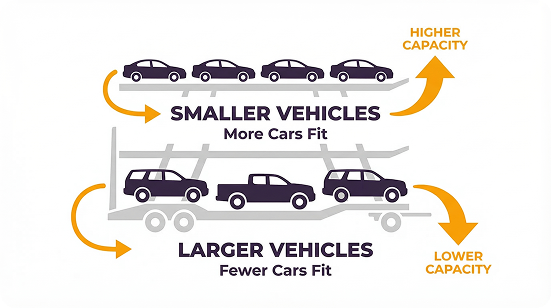
Size decides how much deck space your vehicle takes and how many other cars fit alongside it. A standard sedan is the cheapest thing to move because it slots almost anywhere on the trailer. SUVs, pickups and vans take more room and usually cost more on the same lane.


Is It Worth Driving Connecticut to Colorado or Hiring a Carrier?
Putting the Car on a Truck
Even the shortest pair, Naugatuck to Commerce City at 1,847 miles, asks for about 33.4 hours of driving, and Norwich to Silverthorne takes about 36.1 hours over 1,971 miles.
A truck makes sense when a second car cannot follow the moving van, when a new job in Colorado starts before a long drive fits, or when a car has been bought or sold across the two states.
Driving the Whole Way
Middletown to Wheat Ridge means about 34.0 hours behind the wheel, so a solo drive turns into several long days on I-84, I-80 and I-76.
Price the drive honestly, since fuel, hotel nights, food and the trip home all count. Compare that sum with a quote priced for your own two towns. One car and a loose calendar tend to favor driving, while two cars or a fixed start date tend to favor a carrier.
How Many Days Does Connecticut to Colorado Car Shipping Take?
Once loaded, a truck usually spends 6 to 8 days getting from Connecticut to Colorado. Naugatuck to Commerce City at 1,847 miles is the short end, and Norwich to Silverthorne at 1,971 miles is the long end.
Counting starts at loading. Before loading, expect carrier assignment to land somewhere between one and three working days, and a roomy pickup spot keeps the schedule intact.
Snow on I-80 across Nebraska or on I-70 into Silverthorne, a late handover or a repair stop can add about a day. Read all of this as a planning range and not a delivery date promise.
When Is the Right Time to Book Connecticut to Colorado Transport?
Book once the move dates are settled, and let dispatch know how much the pickup day can flex. A flexible window lets the car join a truck already heading west on I-80.
Connecticut keeps Eastern time and Colorado keeps Mountain time, a two hour gap all year. Norwich sits on the Thames River in New London County, Middletown on the Connecticut River in Middlesex County, New Britain in Hartford County and Naugatuck in the Naugatuck River valley in New Haven County. Wheat Ridge lies west of Denver, Parker southeast of it, Commerce City northeast and Silverthorne in the mountains of Summit County. Naugatuck to Commerce City runs 124 miles shorter than Norwich to Silverthorne.
The what happens after booking guide walks through dispatch, assignment and pickup.
Should a Car Moving From Connecticut to Colorado Go Open or Enclosed?
Open transport puts the car on a standard hauler with no cover, which is how most cars travel this lane. Across the plains and the mountain end of the trip, the finish meets grit, weather and strong sun.
Enclosed trailers shield the car for all 1,847 to 1,971 miles and cost more, since each trailer holds fewer cars.
A collector car, a show car or a repaint may be worth paying the enclosed premium for. A daily driver normally travels open and arrives in good condition.
Enclosed Car Transport
Enclosed demand rises for high-value, specialty and seasonal vehicles, and enclosed trailers protect against road debris and weather, which matters most on longer hauls. Enclosed rigs are a small fraction of the trailers working any given lane, and that scarcity is what drives both the higher price and the longer booking lead time.
Open Car Transport
Most vehicles move on open trailers, and for most routes that is the more cost-effective way to ship a car.
Open transport works well for standard vehicles and keeps costs predictable. It also offers the widest carrier availability.
Planning the Colorado Delivery
Give dispatch the whole Colorado street address in advance, including any suite, unit or gate code, and answer the call when the driver phones to set a meeting time. A street too narrow for a long trailer calls for a wide road or a parking lot close by.
Once the car is down from the truck, examine each panel in daylight against your photos from loading. Write anything new on the driver form before you sign, and keep your own copy.
Colorado sets its own rules for titling, registration and insurance, so confirm each one with the state agency before the car arrives.
Handoffs in Connecticut and Colorado: What to Plan For
A car hauler is a long rig, and many residential streets cannot fit one. A hillside street in Middletown, a dense block in New Britain or a valley lane in Naugatuck may shift the handover to a broader street or a retail lot, and Norwich can bring similar limits. More Connecticut pickup areas are on the Connecticut car shipping page.
Colorado brings different limits. A gated subdivision in Parker, a steep drive in Wheat Ridge, a frontage road in Commerce City or a mountain street in Silverthorne can keep a full length trailer away, so the meeting often moves to an open lot close by. Other Colorado drop areas are on the Colorado car shipping page.
Inspect the car beside the driver as it is loaded and again as it is unloaded, checking every panel against the written condition report. Snap dated photos of your own, sign the report and keep a copy alongside your bill of lading papers.

What Is Worth Knowing Before Requesting a Connecticut to Colorado Quote?
Rivalane acts as a broker with no trucks of its own. Your booking goes to a licensed carrier that sends its own rig and driver. A different Connecticut start moves the total by up to 54 miles and a different Colorado end by up to 70, so name the pickup and delivery towns when you ask for a quote.
Frequently Asked Questions