





The lane spans 400 to 1,020 miles. Once loaded, most cars spend 2 to 4 days aboard. An Indianapolis sedan bound for New York City on an open trailer generally costs $700 to $1,100. Leave dispatch one to two weeks and arrange New York coverage early, since the registration window is only 30 days from the move.
How Car Shipping From Indiana to New York Works
An Indianapolis car bound for Manhattan usually rolls east on I-70 past Columbus, crosses Pennsylvania and finishes through New Jersey, close to 710 miles in total. One route calculator labels the Fort Wayne, South Bend, Gary and Lafayette runs to the city as I-80, a more northern line toward the same end. From Terre Haute, Bloomington or Evansville the car picks up that same I-70 line, and Evansville adds the most mileage of any Indiana town we measured. Buffalo, Rochester, Syracuse and Albany deliveries leave every Indiana end on I-90, largely along Lake Erie, while Binghamton is reached on I-86. Rivalane looks for an eastbound carrier already working one of those lines with room for your car, so the town where the car waits in Indiana shapes timing just as strongly as the delivery street.
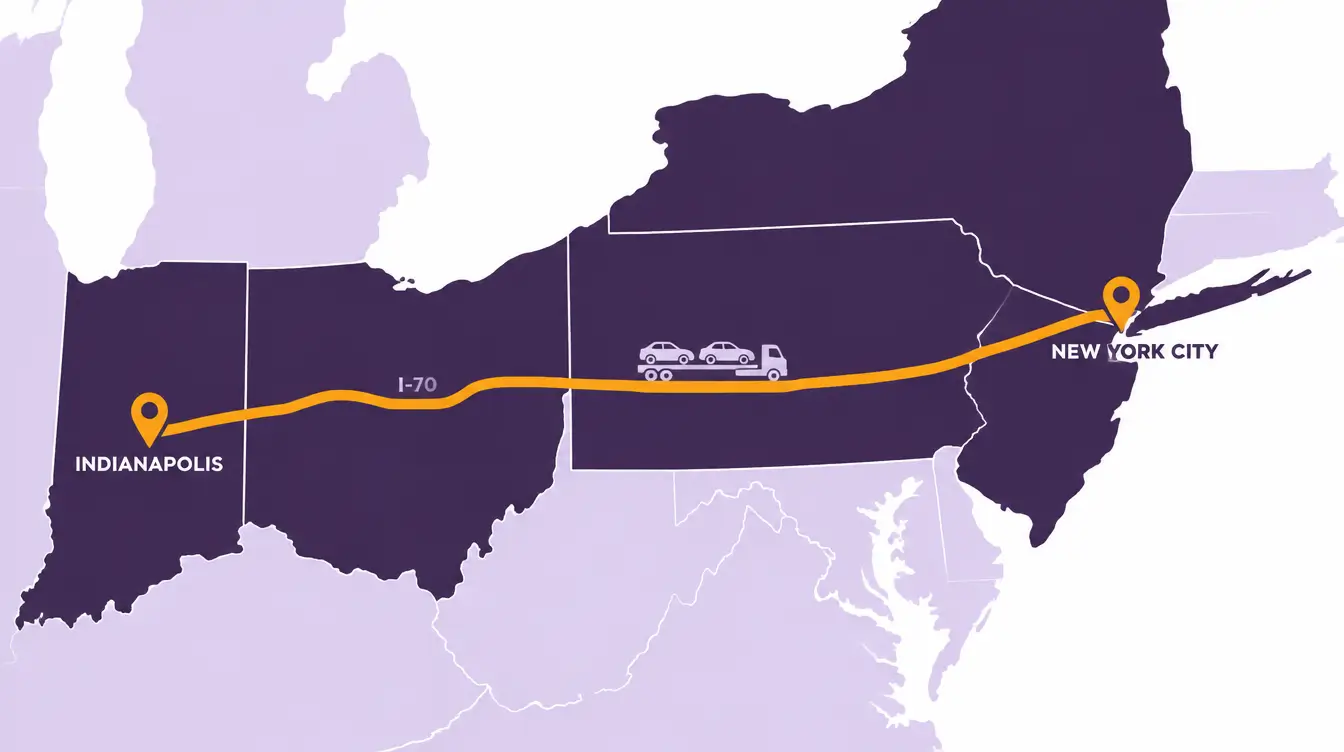
How Much Does Car Shipping Indiana to New York Cost?
Pair any Indiana town we checked with a New York city and the drive lands between 400 and 1,020 miles. Across a trip that size, the pickup town, the delivery street and your dates do more to set a quote than the raw mileage does.
Anywhere in Indiana, a pickup close to an interstate is the easy case, because eastbound trucks pass that way constantly. A farmhouse far from the highway or a narrow county road can leave the car waiting longer for a driver willing to detour, and occasionally costs more.
Size counts too. Compact and midsize sedans leave deck room for other cars, whereas crew-cab trucks, three-row SUVs and vans eat up a slot that could carry one more vehicle. Anything that cannot roll up the ramp on its own power must be winched.
Loose pickup dates remain the surest way to bring a quote down. Treat a number far below every other offer with suspicion, since no carrier may have agreed to haul at that rate.
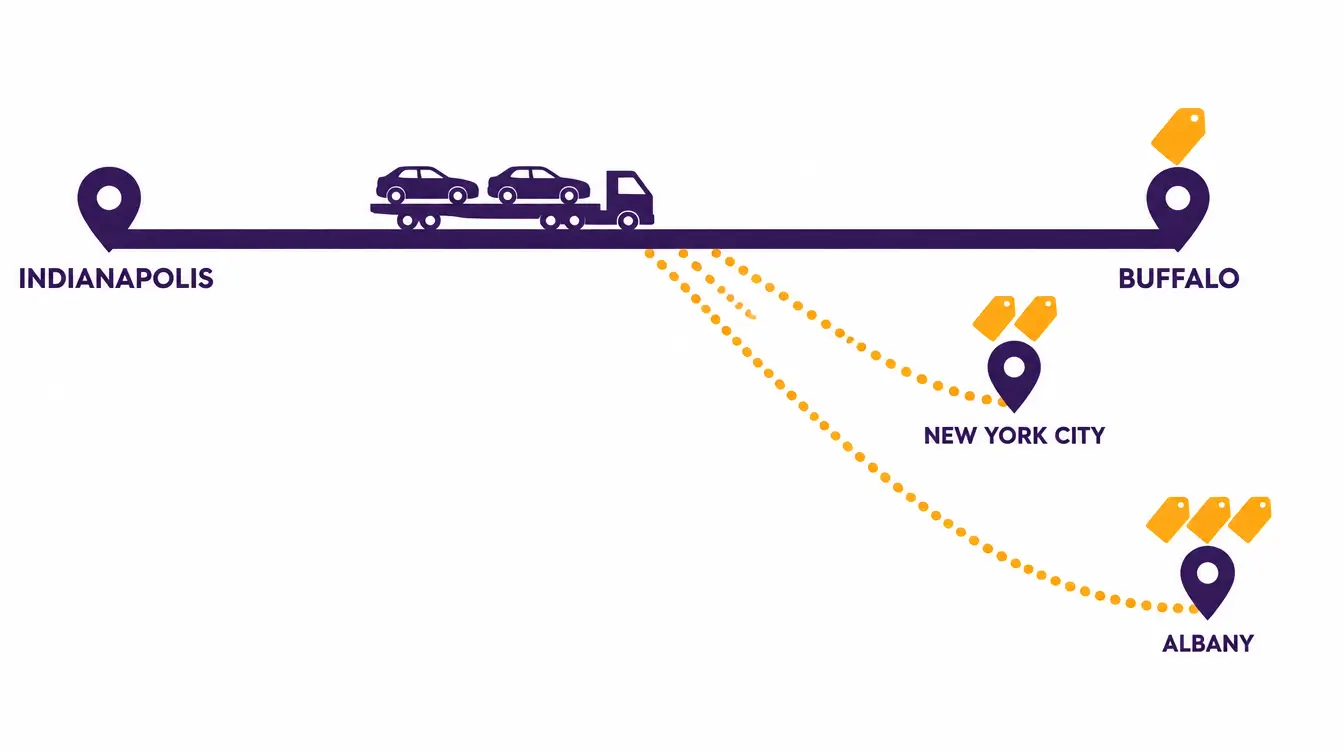
Most quotes for an everyday sedan riding on an open deck, Indianapolis to New York City, land between $700 and $1,100. Collecting in Fort Wayne or South Bend, dropping in Buffalo or Rochester and flexible dates lean low. An Evansville pickup, a Manhattan delivery or one exact date push it up, occasionally beyond the top. Try the car shipping calculator with your own addresses and dates.
Closed trailers on this route carry a premium in the 40 to 60 percent range over open. Across roughly 700 miles, a collectible, a recent respray or a car that grinds its bumper on driveways justifies it, and a commuter rarely does.
Three details weigh most in the price:
- Where the car starts. Starting in Fort Wayne shortens the Manhattan run by roughly 60 miles compared with Indianapolis, and starting in Evansville lengthens it by about 150.
- Where it ends. Buffalo came out nearest for every Indiana starting city in our New York set, and the Indianapolis to Buffalo run comes in some 210 miles under the Manhattan run. Albany, Long Island and Plattsburgh sit at the long end.
- The vehicle. Size moves the quote, with SUVs and pickups carrying a surcharge of roughly $100 to $200 and raised, oversize or non-running vehicles higher again.
When one offer sits far under the rest, check that a real driver stands behind it. Without that, the number is just an opening bid.

What Factors Actually
Influence Pricing on This Route?
Booking early protects your timeline, keeps pricing steady, and reduces the risk of last-minute carrier changes.
Many customers on this route relocate permanently or move seasonally, which makes predictability more important than speed.
This article explains how auto transport Alabama to New York works, what it costs, and how long it takes, so you can make a clear, informed decision before you schedule your shipment.


Type
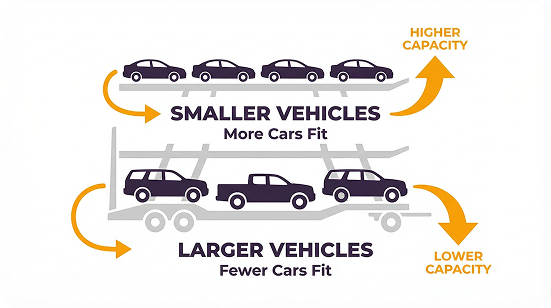
Size decides how much deck space your vehicle takes and how many other cars fit alongside it. A standard sedan is the cheapest thing to move because it slots almost anywhere on the trailer. SUVs, pickups and vans take more room and typically add a few hundred dollars on the same lane.


Is It Cheaper to Drive or Ship a Car From Indiana to New York?
Shipping Instead of Driving
Shipping fits when you fly east ahead of a new job, when a New York buyer has taken ownership, or when the household has a second car to send to family already settled there.
A single Indiana pickup saves a long day of interstate driving and keeps around 700 miles off the odometer.
Driving the Route Yourself
Two route calculators put the Indianapolis to Manhattan trip near 11 to 11.5 hours of steering, before traffic, fuel and meals. Many people break the trip with a hotel night in Ohio or Pennsylvania, and turnpike tolls add to the cost.
When the car has to come east with you regardless, the drive is usually cheaper. Shipping pulls ahead once your time, a second vehicle or the added wear counts for more than the fare.
How Long Does Shipping a Car From Indiana to New York Take?
Most loads arrive in New York between two and four days after they leave Indiana. Buffalo-bound cars from Fort Wayne usually land early in that range, while Evansville cars going to Long Island, Albany or Plattsburgh more often use the full span.
Plan for the wait before loading as well. Lining up a carrier is usually a one to three business day job. Offering a flexible pickup window brings more eastbound trucks into contention.
With the truck covering 400 to 500 miles each day and pausing for other customers, an Indianapolis car bound for Manhattan normally stays aboard two to three days. Bad winter weather in Ohio or Pennsylvania may add one.
When is the Best Time to Book Auto Transport From Indiana to New York?
Demand on the run from Indiana to New York shows no busy stretch in the figures we reviewed, so your moving date, not the season, should set the booking.
Give dispatch a week or two where you can. A locked pickup day, or a car parked well away from I-65, I-69, I-70 and I-74, needs a little more lead time before a truck commits.
Pad the schedule in winter. Weather on the turnpikes through Ohio and Pennsylvania sometimes costs a truck a day, so allow one extra day around a cold-season delivery.
Open vs Enclosed Auto Transport on an Indiana to New York Route
An open car carrier handles most traffic on this run, and most daily drivers need no more than that. For two to four days the paint faces the same weather as on an eastbound road trip.
An enclosed car transport trailer keeps the car sealed away until unloading. Because it holds fewer vehicles, the space is priced higher and usually booked further ahead.
Enclosed makes sense for classics, costly or rare models, recent paintwork and cars with very little clearance. Through winter the enclosure also shields the finish from road salt.
Enclosed Car Transport
Enclosed demand rises for high-value, specialty and seasonal vehicles, and enclosed trailers protect against road debris and weather, which matters most on longer hauls. Enclosed rigs are a small fraction of the trailers working any given lane, and that scarcity is what drives both the higher price and the longer booking lead time.
Open Car Transport
Most vehicles move on open trailers, and for most routes that is the more cost-effective way to ship a car.
Open transport works well for standard vehicles and keeps costs predictable. It also offers the widest carrier availability.
What New York Requires When Your Car Arrives
The New York DMV registers a car only after New York coverage is in place, and people who move to the state get 30 days to complete registration. With two to four days on the road, there is time to have that policy active before the car is unloaded.
- Get a New York policy. The DMV accepts only coverage from an insurer licensed by the New York Department of Financial Services, and out-of-state policies do not count. The liability floor is $25,000 if one person is injured and $50,000 if one person dies, with higher limits of $50,000 for injuries and $100,000 for deaths when a crash involves two or more people. Property damage coverage starts at $10,000. Your insurer issues an ID card and also notifies the DMV electronically, the DMV needs both, and you must register within 180 days of the effective date on the card.
- Register within 30 days. Apply on Form MV-82, submitted with the original Indiana title (the DMV turns away photocopies), identity proof and sales tax forms. If your lender holds the title, it must supply a copy with its certification on the same page, plus a signed statement on its own stationery saying it has the original. Applying by mail from outside New York is also possible.
- Settle sales tax. At registration you pay New York sales tax, prove it was paid, or prove the car is exempt, and the DMV issues a sales tax receipt either way. If you bought the car before becoming a New York resident, Form DTF-803 covers the non-resident exemption. County use tax is probably due as well, according to the DMV.
- Plan for inspection. Cars registered in New York need a safety check once a year, and most get an emissions test at the same visit. An out-of-state inspection that has not expired carries over until its expiry or for one year from the New York registration date, whichever arrives first, but where the previous state gives out no sticker the car must be inspected in New York.
- Switch to a New York driver license inside 30 days. Exchanges happen only at a DMV office, in person, where you pass a vision test or submit an eye test report and surrender the Indiana card. Out-of-state students enrolled at New York schools usually do not count as residents, so their current license stays valid.
- Close out the Indiana side. Plates you remove stay with you, since the Indiana BMV does not require their return. After New York issues the registration, State Form 55296 lets you claim part of the Indiana vehicle excise tax back, with proof of the new registration attached.
Based on the out-of-state vehicle registration page of the New York DMV and its linked pages on insurance, inspections, sales tax and license exchange, plus the vehicle registration fees and taxes page of the Indiana BMV and the state FAQ on unused plates. Requirements can be revised, so confirm the latest versions before shipping.
What to Expect at Pickup and Delivery
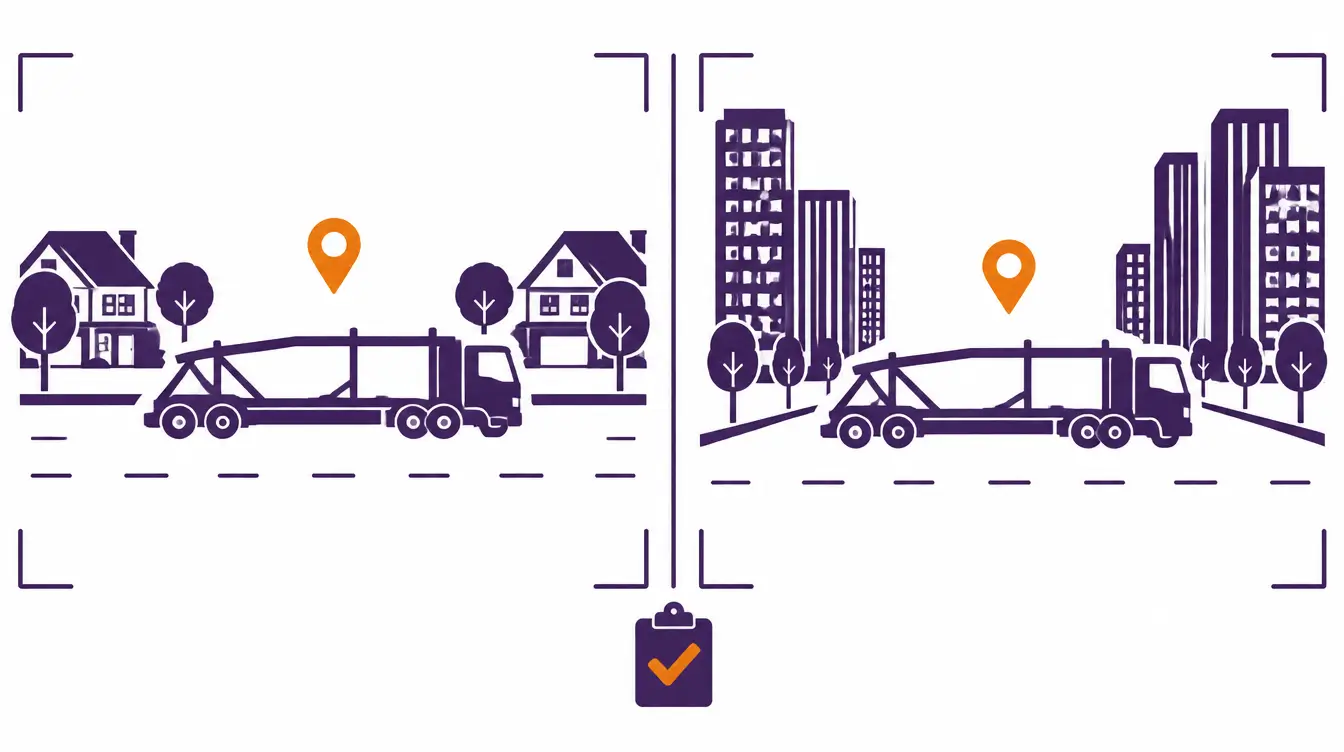
Indiana pickups rarely cause trouble. Residential streets in and around Indianapolis, Fort Wayne and Evansville normally give a full-length hauler room, and a supermarket or big-box lot handles the rest. A farm lane, loose gravel or a gated estate with a tight turn can move the handoff to the nearest paved road, so flag it when booking.
Delivering into New York City takes planning. Big car haulers cannot legally stand on most Manhattan blocks or across much of Brooklyn and Queens, and the driver will ring ahead to pick a broad avenue or large lot nearby with you. Long Island and upstate addresses tend to be simpler.
Attend both inspections yourself or send someone you trust. While the car is still at your curb, go over it together with the driver, agree which scratches and dents belong on the bill of lading and later check that paperwork against the car at delivery. Date-stamped photos you take beforehand support it.
Key Things to Know Before Shipping a Car From Indiana to New York
Rivalane coordinates this eastbound lane from Melville, Long Island, finding each Indiana car a spot on a truck already bound for New York. Arrange a New York policy before delivery day, because the DMV registers nothing without it and the 30-day clock begins when you move.
Frequently Asked Questions



