





Plan for 1,240 to 1,610 miles over the road and a transit of 3 to 5 days in most cases. Open-trailer quotes for a New Orleans to New York City sedan typically fall between $950 and $1,450. Reserve space a week or two ahead, and cancel the Louisiana plate only once New York has registered the car.
How Car Shipping From Louisiana to New York Works
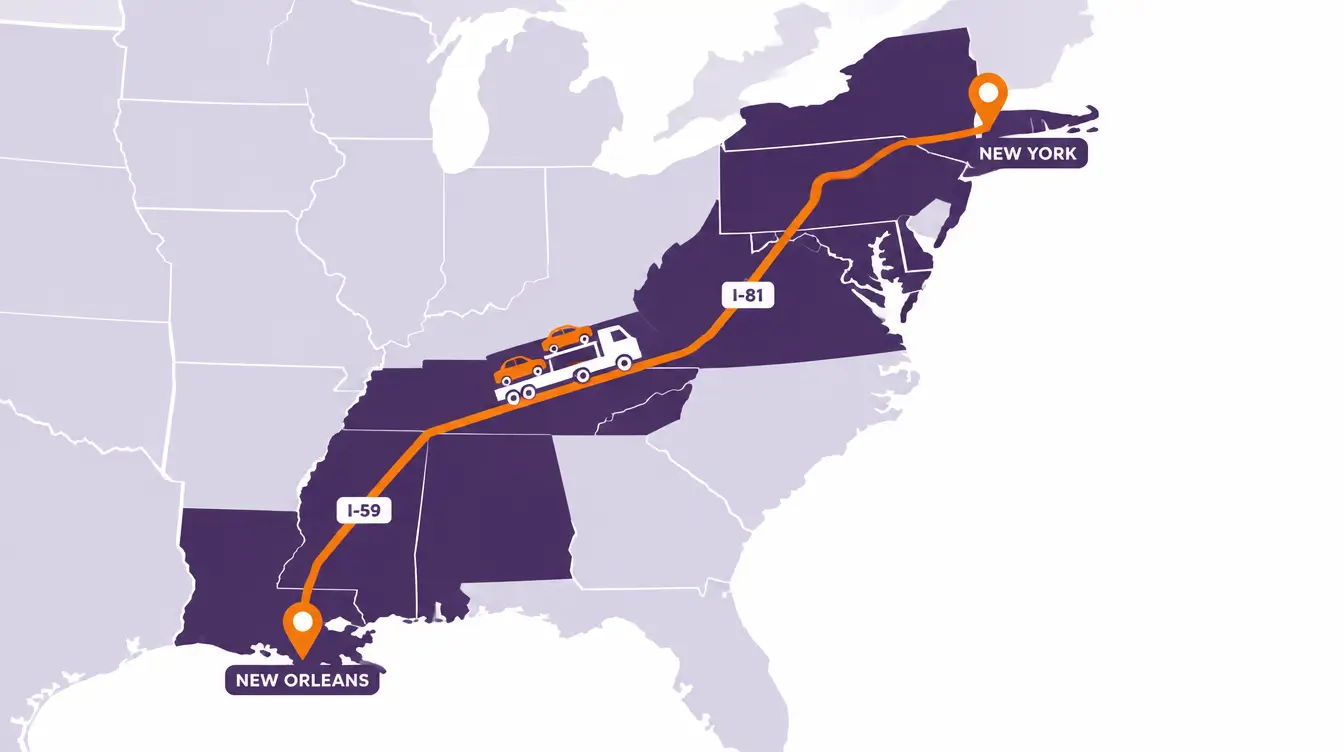
A Louisiana car bound for New York usually rides with a carrier already working northeast, so Rivalane looks for open deck space on a truck using one of two lines out of the state. Cars from the south of the state, anywhere from Lake Charles east through Baton Rouge to New Orleans, head for I-59 through Hattiesburg, while north Louisiana cars from Shreveport or Monroe travel east on I-20 across Mississippi. Those two interstates share the same pavement for about 153 miles between Meridian and Birmingham, and from there the trucks continue northeast through east Tennessee to I-81. Most loads then stay on I-81 up the Virginia valleys toward Pennsylvania and on to New York City, Long Island, Albany or Binghamton. Buffalo and Rochester deliveries leave that path early and travel up through Kentucky and Ohio instead. A pickup close to I-10, I-20 or I-49 is easier to place on a passing truck than one far from them, so share the exact Louisiana address when you ask for a quote.
How Much Does Car Shipping Louisiana to New York Cost?
The city pairs we measured between Louisiana and New York run from about 1,240 to 1,610 road miles. Over a haul that long, the quote depends less on the exact mileage and more on how easily a carrier reaches the car and when it has room on the deck.
In Louisiana, a pickup near I-10, I-12, I-20 or I-49 is simple to route. A rural address an hour from the nearest on-ramp can add a day of waiting and some cost, because the truck has to leave the interstate to collect one car.
Size counts on every mile. A compact sedan leaves room for another vehicle, while a van, a three-row SUV or a full-size pickup claims more of the deck, and a car that will not start needs a winch or a liftgate to load.
A flexible pickup window is the easiest saving. If one quote sits far below the others, ask whether a driver has accepted the load yet.
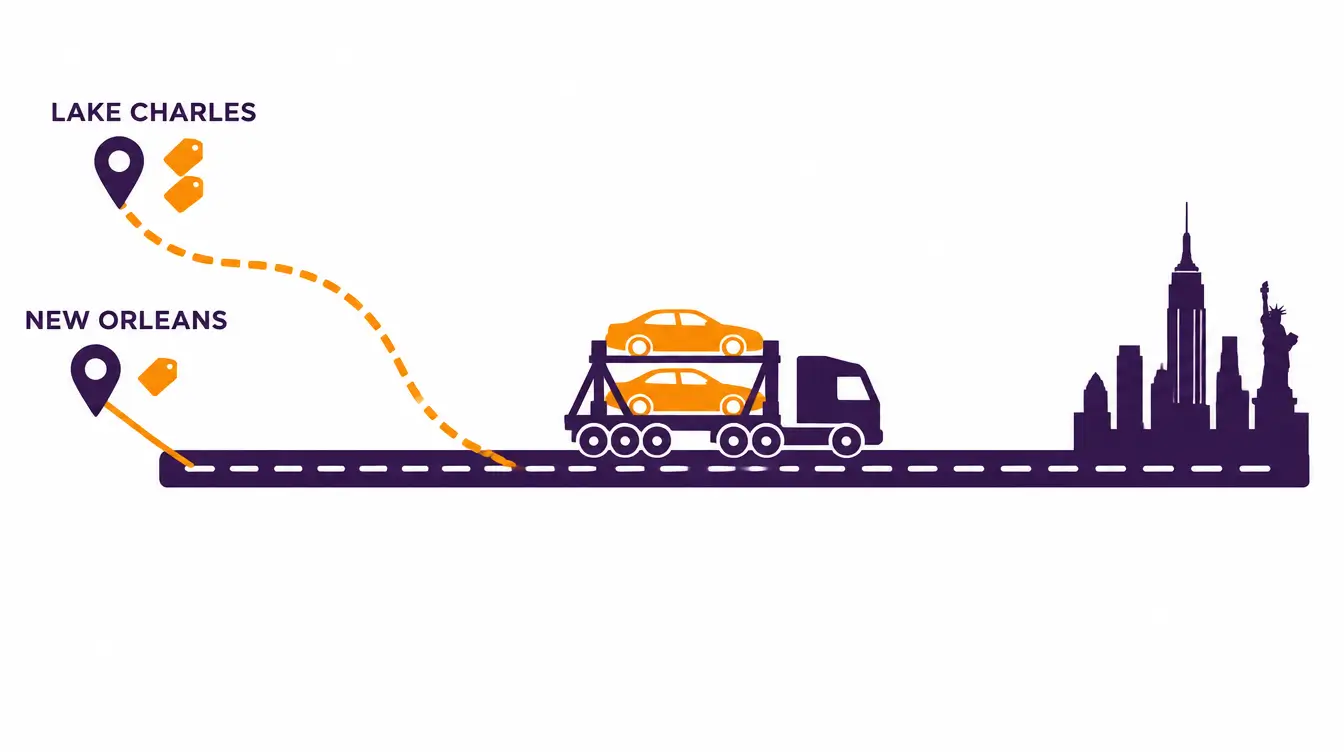
An open-trailer spot for a standard sedan between New Orleans and New York City is typically priced at $950 to $1,450. A pickup near New Orleans, a Buffalo delivery and a loose pickup date keep the quote near the bottom. A Lake Charles or Shreveport pickup, a Manhattan handoff or a single fixed day push it toward the top, and occasionally past it. The car shipping calculator prices your exact addresses and dates.
An enclosed trailer lifts the bill by somewhere between 40 and 60 percent over open. Across more than 1,200 miles, that premium makes more sense for a classic, a car with new paint or a low sports car than for a daily driver.
Three details weigh most on this lane:
- Where the car starts. Among the Louisiana cities we measured, New Orleans was the shortest run to New York City and Lake Charles the longest, about 180 miles farther. A Baton Rouge pickup adds roughly 55 miles over New Orleans.
- Where it lands. Buffalo was the shortest New York destination from every Louisiana city we checked, about 65 miles under Manhattan from New Orleans. Albany and Plattsburgh sit at the far end of the lane.
- The vehicle. An SUV or pickup truck is usually quoted $150 to $250 higher than a comparable sedan. Lifted, oversized or non-running vehicles cost more again.
A price well under every other quote deserves one question before you book: is a driver already assigned, or is it only a posted offer?

What Factors Actually
Influence Pricing on This Route?
Booking early protects your timeline, keeps pricing steady, and reduces the risk of last-minute carrier changes.
Many customers on this route relocate permanently or move seasonally, which makes predictability more important than speed.
This article explains how auto transport Alabama to New York works, what it costs, and how long it takes, so you can make a clear, informed decision before you schedule your shipment.


Type
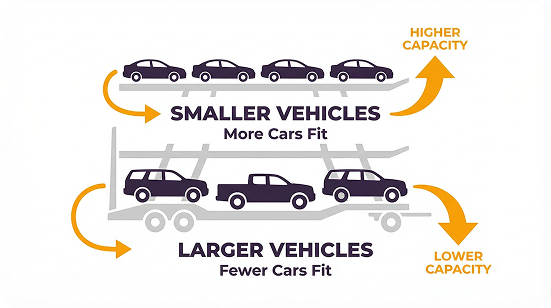
Size decides how much deck space your vehicle takes and how many other cars fit alongside it. A standard sedan is the cheapest thing to move because it slots almost anywhere on the trailer. SUVs, pickups and vans take more room and typically add a few hundred dollars on the same lane.


Is It Cheaper to Drive or Ship a Car From Louisiana to New York?
Shipping Instead of Driving
Shipping fits when you are flying north for a new job or school, when a buyer in New York has purchased the car, or when a household is moving two vehicles at once.
You hand over the keys once in Louisiana, skip two long days on the interstate, and the car arrives without roughly 1,300 extra miles on the odometer.
Driving the Route Yourself
Two route calculators put New Orleans to Manhattan at 19 to 20 hours of driving. Split safely, that means two long days with a hotel night between them, plus meals, fuel for roughly 1,300 miles and bridge or tunnel tolls on the approach to the city.
Add those up and the drive can land close to the cost of shipping, with every mile on your own car. Driving remains the better call when the car must be with you the day you arrive, or when the trip itself is the point.
How Long Does Shipping a Car From Louisiana to New York Take?
Most cars on this lane spend 3 to 5 days on the truck between Louisiana and New York. A car collected near New Orleans for a Buffalo delivery tends to finish near the short end, and one loaded in Lake Charles or Shreveport for Long Island or Albany may need all five.
The wait before pickup matters as much as time on the road. Matching a car with a carrier usually takes one to three business days, and a pickup window of several days rather than one brings more northbound trucks into consideration.
Haulers on long lanes like this one generally log 400 to 500 miles a day between customer stops, so a New Orleans car bound for Manhattan generally spends three to four days in transit.
When is the Best Time to Book Auto Transport From Louisiana to New York?
Search data for this northbound lane shows no seasonal peak, so plan around your own move date rather than the calendar.
One to two weeks of notice suits most shipments. Give more when the pickup date is fixed or the car sits well away from I-10, I-20 or I-49, since those loads take longer to fit onto a passing truck.
If you are relocating for good, set up the New York insurance policy before pickup so the registration can happen soon after the car arrives. Shipping the other way later? The New York to Louisiana car shipping page covers the southbound trip.
Open vs Enclosed Auto Transport on a Louisiana to New York Route
An open car carrier handles most Louisiana cars headed for New York. The car rides uncovered for three to five days and picks up the kind of dust and spray a self-drive north would leave.
With enclosed car transport, the car stays inside a covered trailer from one door to the other. Each enclosed trailer carries fewer vehicles, which raises the price per spot and can stretch the wait for one.
Enclosed is worth it for a vintage or collectible car, a rare or high-value model, recent paint or body repair, or very low ground clearance. An ordinary commuter car travels well in the open.
Enclosed Car Transport
Enclosed demand rises for high-value, specialty and seasonal vehicles, and enclosed trailers protect against road debris and weather, which matters most on longer hauls. Enclosed rigs are a small fraction of the trailers working any given lane, and that scarcity is what drives both the higher price and the longer booking lead time.
Open Car Transport
Most vehicles move on open trailers, and for most routes that is the more cost-effective way to ship a car.
Open transport works well for standard vehicles and keeps costs predictable. It also offers the widest carrier availability.
What New York Requires When Your Car Arrives
New York registers a car only after a New York insurance policy is active, and new residents have 30 days to finish registration. Buying the policy while the car is still on the truck keeps that clock from running short.
- Buy New York coverage first. The DMV takes liability coverage only from an insurer that the New York Department of Financial Services licenses, and never from an out-of-state policy. Required limits: $10,000 for property damage; for injuries, $25,000 covering one person or $50,000 covering two or more people in a crash; for deaths, $50,000 or $100,000 on the same basis. The DMV needs both the Insurance ID card and the electronic notice your insurer sends, and registration has to follow within 180 days of the date coverage begins on that card.
- Register within 30 days of moving. File Form MV-82 with the original Louisiana title, since the DMV does not take photocopies, along with proof of identity and the sales tax paperwork. New residents still out of state can apply by mail, and the plates arrive together with a 10-day extension sticker for inspection, to be placed on the windshield after the car enters New York.
- Settle sales tax when you register. Expect to pay New York sales tax unless you can show it was already paid or that an exemption applies. If you owned the car before moving to New York, claim the non-resident exemption on Form DTF-803.
- Get the car inspected. New York requires a safety inspection every 12 months, and most cars get an emissions check at the same visit. A current sticker from a state that issues them counts until its own expiry date or the first anniversary of New York registration, whichever is earlier. When the car was last inspected somewhere that gives out no sticker, New York wants its own inspection.
- Exchange your license within 30 days. Louisiana licenses must be traded for New York ones within 30 days of the move. The swap requires a visit to a DMV office, where the Louisiana card is surrendered.
- Close out the Louisiana plate in order. Louisiana requires every registered vehicle to stay insured, so cancel the Louisiana plate online, by mail or at an OMV office before you cancel the Louisiana policy. A plate canceled online does not have to be mailed back, but it must come off the car and be destroyed. If an insurance cancellation notice arrives anyway, the New York registration is accepted as proof of compliance, and fees are charged by the number of days the car went uninsured.
Based on the New York DMV guide to moving to New York State and its linked pages on registration, insurance, inspections and sales tax, plus the Louisiana Office of Motor Vehicles pages on plate cancellation and insurance cancellations. Rules change, so check the current versions before the car ships.
What to Expect at Pickup and Delivery
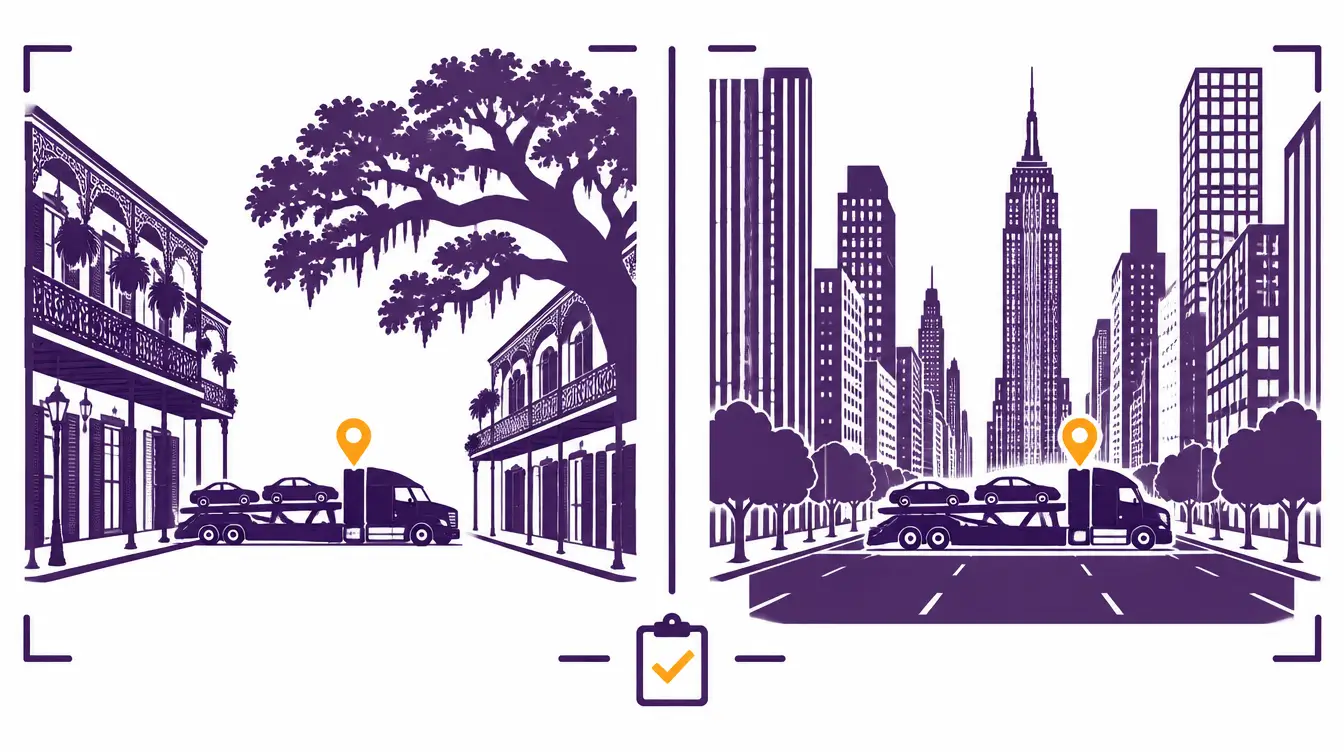
Most Louisiana pickups are straightforward on the wide suburban streets around Baton Rouge, Lafayette, Shreveport and the New Orleans suburbs. Older parts of New Orleans are the exception: tight blocks, parked cars and low oak limbs can keep a full-size hauler from the door, so plan to meet the driver on a wider street or in a large lot nearby. Rural roads with soft shoulders call for the same approach.
In New York City, most Manhattan blocks and many streets in Brooklyn and Queens have no legal place for a long car hauler to stop. The driver calls ahead so you can choose somewhere close by with room for the hauler to unload, often a broad avenue or a supermarket lot. Long Island and upstate addresses can usually take delivery at or near the curb.
Attend the inspection at pickup and at delivery, or ask a trusted friend to stand in. Scratches and dents already on the car go onto the bill of lading in Louisiana and are compared again in New York, and dated photos you take beforehand back up that record.
Key Things to Know Before Shipping a Car From Louisiana to New York
Rivalane coordinates these northbound moves from Melville on Long Island, finding space for each Louisiana car on a carrier already heading toward New York. Keep the Louisiana plate and insurance in force until the car is registered in New York, then cancel the plate before you drop the Louisiana policy.
Frequently Asked Questions



