Rivalane arranges car shipping into and out of Louisiana, from the I-10 corridor between New Orleans, Baton Rouge and Lafayette up to Shreveport and Monroe, and out to the parishes the corridors bypass. Open or enclosed transport, door to door, with licensed and vetted carriers on every shipment. Start with a quote and we will take it from there.





5-Star Average Rating
Fully Insured
Top Rated Service
Nationwide Coverage
Licensed, Vetted Carriers
Rivalane is a broker, and we would rather say so plainly. We do not own the truck that collects your car in Louisiana. What we do own is the decision about which carrier gets it, and on a page full of ratings, that is the only thing worth judging us on. A rating does not come from the trailer. It comes from whether the company choosing the trailer chose well, chased the update you were waiting on, and picked up the phone when something slipped. That is the work, and it is the part we never hand off.


Cost and timing depend on your route, trailer type, vehicle size, and the time of year. The ranges below reflect typical market pricing and transit windows by distance, not a commitment on either. Your actual quote is based on real carrier availability on your specific route at the time of booking.
Louisiana is two freight markets rather than one, and which of them your address sits in shapes the price more than anything else. The southern half runs on I-10 and I-12, where New Orleans, Baton Rouge and Lafayette sit close enough together that carriers work the whole spine as one continuous short-haul lane. Northern Louisiana runs on I-20 and faces west, so a vehicle moving through Shreveport or Monroe is priced against Dallas, Houston and Memphis rather than against the Gulf. Both carry real traffic. They are simply different lanes, and the one your pickup belongs to sets the starting point.
That density is why Louisiana sits at the low end of the national range in both directions. I-10 is one of the busiest freight corridors in the country and it crosses the state end to end, so the short lanes fill quickly and the longer ones ride traffic that is already passing through. Distance still sets the shape of the number, and season adjusts it, since demand across the southern lanes climbs through the summer months and tightens the space available. Vehicle size, whether the car runs, and trailer type all move it as well, and enclosed transport sits meaningfully above open because there is less of it on the road.
The factor most within your control is lead time. Booking a week or two ahead puts your vehicle on a truck already running I-10, I-12, I-20 or I-49 rather than one routed out to collect it. That gap widens once an address sits well off those corridors, and it is widest in the parishes between them, where carriers pass less often and a detour has to earn its place on the schedule. Give us a workable date range rather than a single day and more of the available capacity opens up.
Get your Louisiana quotePick the combination that suits the vehicle and the route. If you are not certain which applies, describe the car and where it is going, and we will tell you which options are genuinely available on that lane rather than which ones sound best.




Share the pickup and delivery addresses, the vehicle details, and roughly when you need it moved. We come back with a price for that specific route, and nothing is committed at this stage.

Once you accept the quote we match the shipment to a carrier already working your route and confirm a pickup window with you. You get the carrier's details and a contact number before the truck is due, not after it arrives.

Take personal items out of the cabin, leave roughly a quarter tank of fuel, and make sure the car is clean enough to inspect properly. Have the keys and the title paperwork to hand. If anything about the vehicle's condition has changed since you booked, tell us before pickup day rather than on it.

Before the car goes on the trailer, the driver walks it with you and records its condition on the bill of lading. Check that document and keep your copy, because it is the reference point for the whole shipment. The vehicle is then loaded and secured for the route, and while it is moving we send updates at the points that actually change something.

At delivery the driver walks the vehicle with you again, and you compare it against the same bill of lading that was signed at pickup. If the two match, you sign and the shipment is closed. If they do not, that document is what supports a claim, which is why the inspection at the other end is worth doing properly.

Every Louisiana shipment runs on the same carrier network and the same checks. What changes is the trailer, the urgency, and where the vehicle is handed over.
Moves that leave the state entirely, from a short run into Texas or Mississippi to a full coast-to-coast lane. These are booked onto routes that already cross the country, and the whole run is planned before the vehicle is collected.
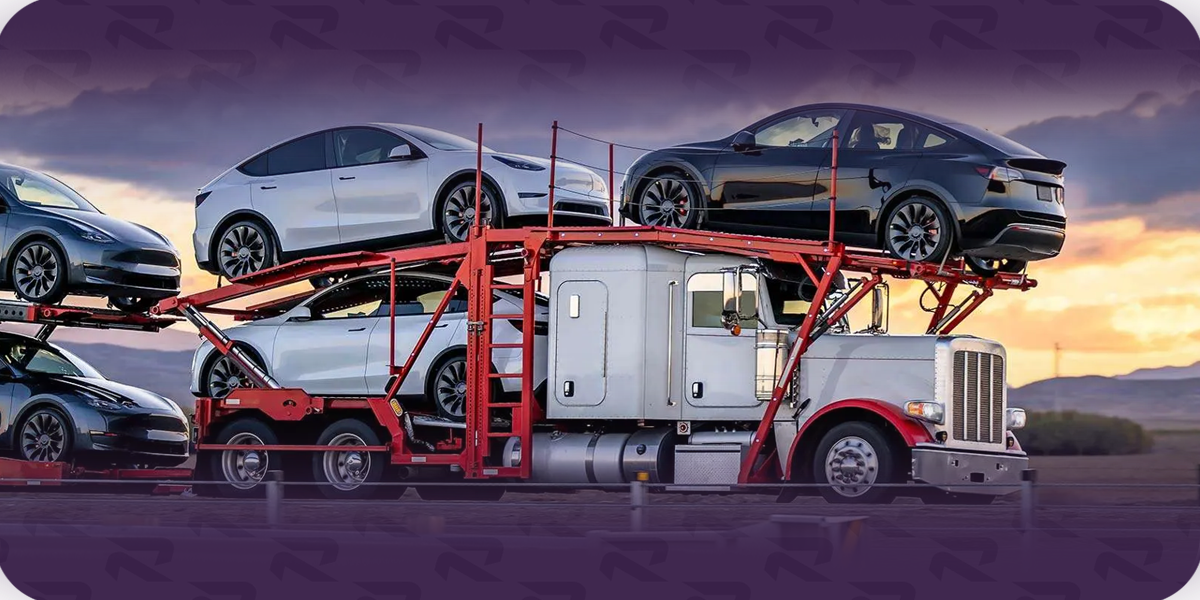
The standard choice for everyday vehicles, and what most Louisiana shipments use. Your car travels on an open trailer alongside others, which makes it the most economical option and the easiest to place at short notice.
A covered trailer for vehicles where condition matters more than cost, including classics, low-clearance builds and anything you would rather not leave exposed for several days. Fewer of these run, so they are worth booking further ahead.
Expedited shipping draws on a separate pool of carriers who take priority loads, and it is used when the pickup window is tight rather than flexible. It costs more and it depends on a truck being free for your lane, so tell us early if the date is fixed.
Collection and delivery at the addresses you give us, whether that is a house, a workplace or a dealership. Where a street cannot take a full transporter, the driver agrees a nearby meeting point with you rather than leaving you to work it out on the day.
Every shipper claims to be reliable. Here is what actually separates a well-run move from a risky one, and what to ask before you book anyone for a Louisiana route.
Ask whether the company can name a real Louisiana constraint before you raise it, such as how they reach an address in a parish the interstates do not pass through, or what changes for a pickup north of I-10 when the only lane running that week is heading for Dallas.
Ask whether the price you are quoted is based on your actual route and vehicle, or a generic distance estimate that gets revised once a carrier is assigned.
Ask what happens if no carrier is available on your exact date. That matters most through the summer, when demand across the southern lanes is heaviest and space tightens. A shipper working from an existing carrier network can usually offer options faster than one starting from scratch.
Get your Louisiana quoteDemand into and out of Louisiana comes from a few clear directions. Here is who ships most often.
.svg)
Most of the demand we see into Louisiana comes from buyers who purchased a vehicle sight unseen from somewhere else in the country. We arrange pickup from the seller or the dealership and deliver it to your Louisiana address, so nobody has to fly out and drive it back. One thing is worth knowing before you buy. Louisiana charges sales and use tax on the purchase price when the vehicle is titled, and the local portion is set by parish rather than statewide, so the total depends on where the car is going. Have the title and a bill of sale ready before the carrier arrives, so nothing waits on paperwork once the vehicle is delivered.
Estimate your shipment →.svg)
A vehicle you already own still has to be titled and registered here, and the clock is thirty days from the date your Louisiana license is issued. Registration runs through the Office of Motor Vehicles, which sits under the Department of Public Safety and Corrections rather than a transport agency, so it helps to know where you are going before you arrive. Addresses in the parishes between the corridors are worth booking earlier, because carriers pass less often and the date has to suit a truck already heading that way.
Vehicle transport services →
A vehicle that does not start needs a carrier with a winch and the right loading setup, and that is a smaller pool than standard open transport. Tell us the condition up front, including whether it rolls, steers and brakes, and we match it to a carrier equipped for it rather than discovering the problem at pickup. The same applies to a project car coming home from a workshop or a long-stored vehicle leaving a garage.
Quote a non-running vehicle →
Work and family moves take vehicles out of Louisiana in every direction, and the lanes we are asked about most run to California, Florida and the Northeast. Those are long runs, which means they are served by carriers crossing the country rather than anyone working locally, and your vehicle joins a load that is already going that way. We arrange pickup from New Orleans, Baton Rouge, Shreveport or wherever the car actually sits, and coordinate the handover at the far end.
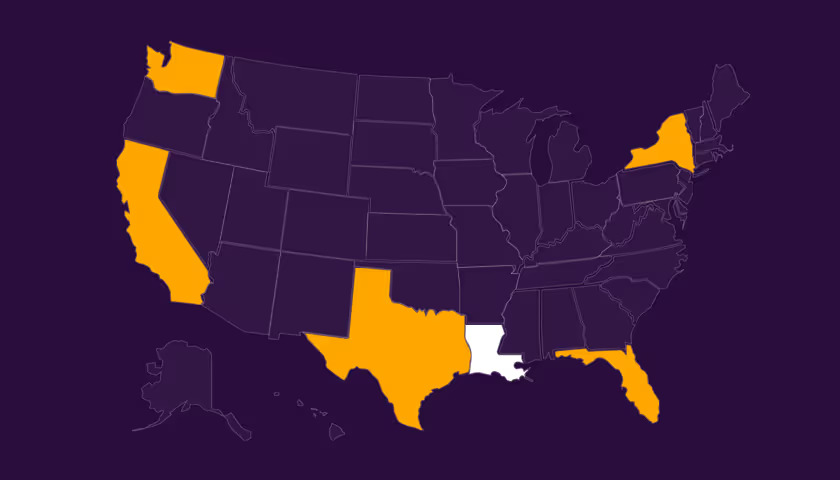
Estimate a long-distance move →Looking to ship your car to another state or across the country? Rivalane ships to all 50 states. Select a state to see how transport into and out of it works.
Louisiana is longer than it looks on a map. A run from Shreveport down to New Orleans covers roughly the same ground as New Orleans across to Houston, so an in-state move is not automatically a short one. The cities below are where most pickups and deliveries happen, with the ZIP codes each one covers, though we collect from addresses well beyond this list.