





Shipping a car from Missouri to New York covers about 950 to 1,220 miles and typically takes 3 to 5 days once loaded. Most sedans on open transport fall between $800 and $1,250, with St. Louis pickups at the low end. Book one to two weeks ahead, and register in New York within 30 days using New York insurance.
How Car Shipping From Missouri to New York Works
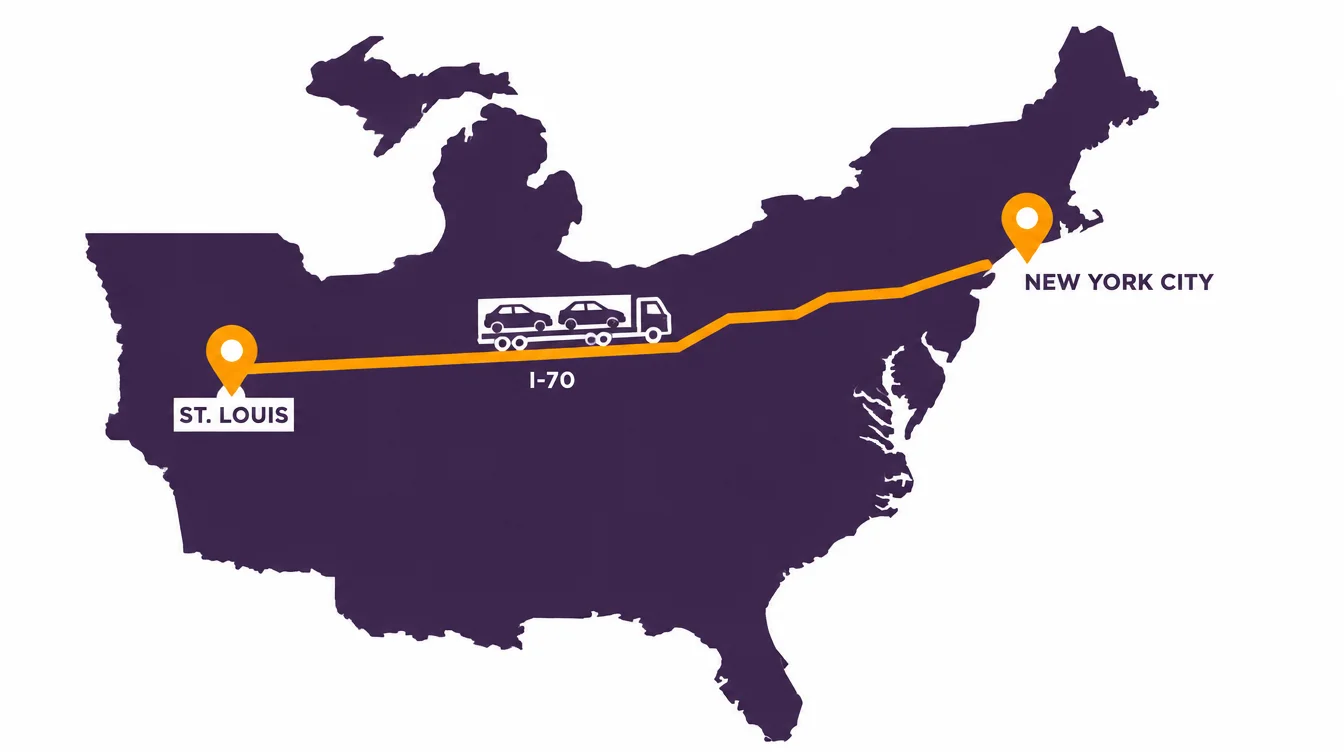
Car shipping from Missouri to New York runs east on one of the main freight corridors between the Midwest and the Northeast. Most carriers leave St. Louis on I-70, cross Illinois, Indiana and Ohio, then take the Pennsylvania Turnpike and I-78 toward the New York metro. Kansas City pickups join the same interstate about 250 miles further west, which adds distance and usually a day. Your car is typically one of several on the trailer, so the carrier builds the load around Missouri pickups and deliveries spread across New York City, Long Island, Westchester and the Hudson Valley. Most of the waiting happens before loading, while a dispatcher fits your car onto a truck already heading east. At the New York end, city deliveries are often made at an agreed meeting point rather than the front door, because a full-size hauler cannot work most residential streets.
How Much Does Car Shipping Missouri to New York Cost?
Car shipping Missouri to New York is priced on both ends of the trip, not only on the miles in between. Where the car starts in Missouri and where it ends up in New York can move the price more than the distance does.
St. Louis sits directly on the I-70 lane and usually prices lowest. Kansas City adds a western leg, and Springfield, Joplin and rural Missouri sit off the main lane entirely. At the other end, the New York metro gets the busiest flow of trucks, while upstate cities such as Buffalo, Rochester and Albany depend on whether a truck is already running that way.
Sedans cost less to ship because they load easily, while SUVs, pickups and specialty vehicles use more deck space and raise the rate.
A quote far below the rest usually assumes an open-ended pickup date or a truck that has not accepted the load. A realistic pickup window is what keeps a price from moving after you book.
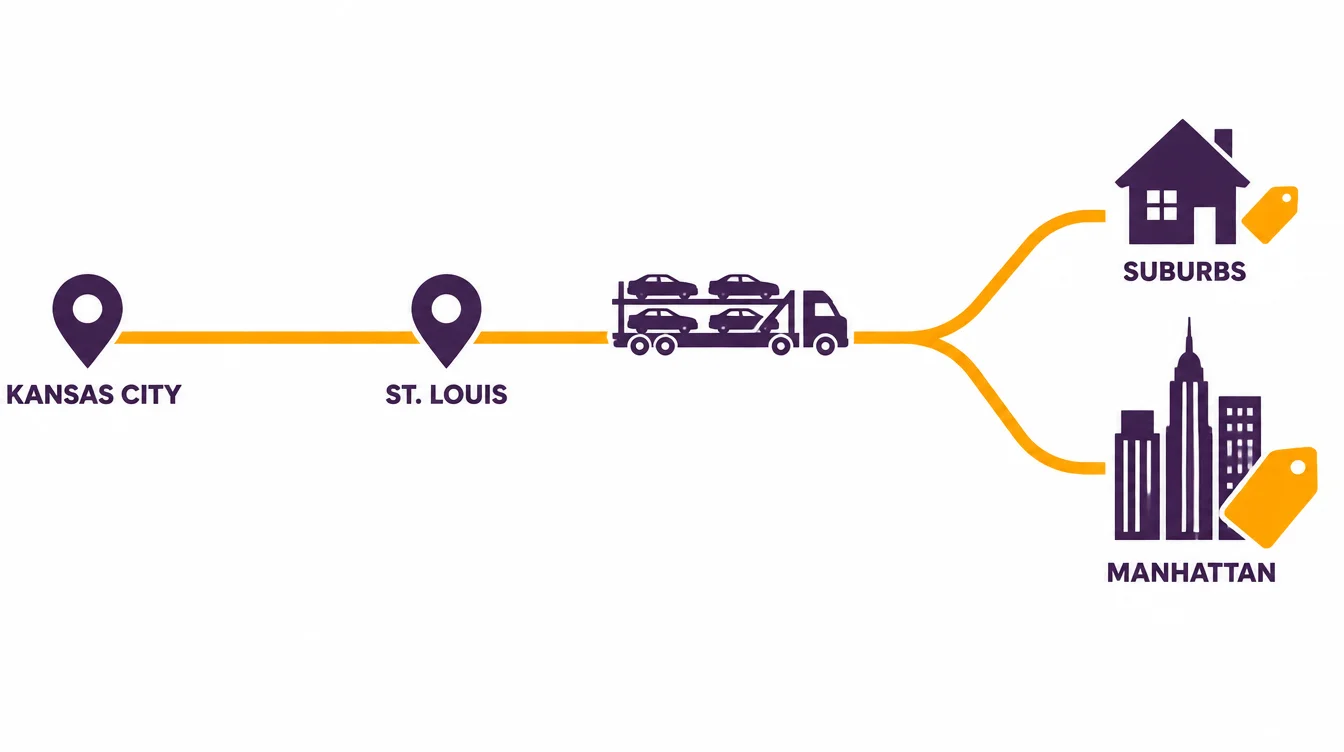
Most Missouri to New York shipments for a standard sedan on open transport fall between $800 and $1,250. The low end is a St. Louis pickup going to Long Island, Westchester or another easy-access address in the New York metro on a flexible window. The high end is a Kansas City or rural Missouri pickup, a Manhattan delivery, or a tight schedule.
Enclosed transport runs roughly 40 to 60 percent above open rates. It suits a classic, an exotic or a low-clearance car, and rarely a daily driver.
Three factors move the number more than mileage does:
- Missouri pickup. St. Louis and its suburbs toward St. Charles and O'Fallon sit on I-70 and price lowest. Kansas City is about 250 miles further west on the same interstate, and Springfield, Joplin and rural pickups price higher when no truck is already nearby.
- New York delivery. Long Island, Westchester and the outer boroughs usually price better than Manhattan, where a full-size hauler cannot reach the door. Upstate deliveries follow a different route and are priced on truck availability.
- Vehicle size and condition. SUVs and pickups typically add $100 to $200, and a car that does not run needs a winch and a carrier equipped for it.
Quotes well below this range usually rest on carrier availability nobody has confirmed yet. A price only holds if a truck actually accepts the load at that rate.

What Factors Actually
Influence Pricing on This Route?
Booking early protects your timeline, keeps pricing steady, and reduces the risk of last-minute carrier changes.
Many customers on this route relocate permanently or move seasonally, which makes predictability more important than speed.
This article explains how auto transport Florida to California works, what it costs, and how long it takes, so you can make a clear, informed decision before you schedule your shipment.


Type
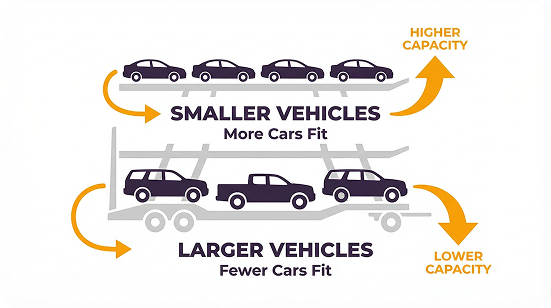
Size decides how much deck space your vehicle takes and how many other cars fit alongside it. A standard sedan is the cheapest thing to move because it slots almost anywhere on the trailer. SUVs, pickups and vans take more room and typically add a few hundred dollars on the same lane.


Is It Cheaper to Drive or Ship a Car From Missouri to New York?
Shipping Instead of Driving
Shipping makes sense on this lane when you are flying to New York for a new job or school, sending a car ahead of a household move, or bringing home a vehicle bought from a Missouri seller or dealer.
It replaces two long days on the road, a hotel night and the Pennsylvania Turnpike with a single handoff, and keeps about a thousand miles off the car.
Driving the Route Yourself
Driving St. Louis to New York City is roughly 14 to 15 hours behind the wheel, and Kansas City adds about four more. Most people split it over two days, which means a hotel night, fuel, meals, and tolls on the Pennsylvania Turnpike and the bridges and tunnels into the city.
If you are relocating and the car stays in New York, driving can cost less than shipping. If you would rather fly, have to return to Missouri afterward, or cannot spare two days away from work, shipping usually comes out ahead.
How Long Does Shipping a Car From Missouri to New York Take?
Transit is typically 3 to 5 days once the vehicle is loaded. St. Louis pickups heading to the New York metro often land at the short end of that window. Kansas City and rural Missouri pickups, and deliveries to upstate New York, usually take the full window.
Carriers typically cover 400 to 500 miles a day while stopping for other pickups and deliveries, so a trip of about a thousand miles takes several days rather than two long ones.
The wait before loading is usually the longer part. A two or three day pickup window lets a dispatcher put your car on the next truck heading east instead of building a load around it.
When is the Best Time to Book Auto Transport From Missouri to New York?
This lane is not tied to a snowbird season. Demand comes from relocations, job transfers, students and vehicle purchases, so trucks run between Missouri and New York all year.
Summer is the busiest stretch, and late August adds student moves into New York City and upstate colleges. During those weeks, two to three weeks of notice gives a dispatcher room to fit your car onto a truck. The rest of the year, one to two weeks is usually enough.
Winter storms across Ohio and the Pennsylvania mountains can push a pickup or delivery back by a day or two, so leave some slack from December through February.
Open vs Enclosed Auto Transport on a Missouri to New York Route
Open transport carries the large majority of vehicles on this route and is the sensible default. Your car rides on a standard multi-car trailer, exposed to rain and road grit much as it would be if you drove it east yourself.
Enclosed transport places the vehicle inside a covered trailer. On this lane it keeps winter road salt from Ohio and Pennsylvania off the paint and shields the car from summer storms across the Midwest. It carries fewer cars per load, which is why it costs more and usually needs more notice.
Choose enclosed if the car is a classic, an exotic, freshly restored, or low enough that standard ramps become a problem. For a daily driver or a student car on a one-time move, open transport is the practical choice.
Enclosed Car Transport
Enclosed demand rises for high-value, specialty and seasonal vehicles, and enclosed trailers protect against road debris and weather, which matters most on longer hauls. Enclosed rigs are a small fraction of the trailers working any given lane, and that scarcity is what drives both the higher price and the longer booking lead time.
Open Car Transport
Most vehicles move on open trailers, and for most routes that is the more cost-effective way to ship a car.
Open transport works well for standard vehicles and keeps costs predictable. It also offers the widest carrier availability.
What New York Requires When Your Car Arrives
New York gives new residents 30 days to register, and one rule catches more movers than any other: the state will not accept your Missouri insurance policy. Line up New York coverage before the car ships.
- 30 days to register. The New York DMV requires new residents to register their vehicle within 30 days of moving to the state. The application is Form MV-82, filed with the original proof of ownership, proof of identity and payment of any sales tax due.
- New York insurance only. You need liability coverage from a company licensed in New York before you can register, and the DMV does not accept out-of-state insurance of any kind. The minimums are $25,000 for bodily injury and $50,000 for death for one person, $50,000 and $100,000 for two or more people, and $10,000 for property damage. The name on the policy must match the name on the registration.
- State inspection. Vehicles registered in New York must pass a state inspection. If you register by mail before the car arrives, the DMV sends a 10-day inspection extension sticker that goes on the vehicle only once it enters New York, so plan a visit to an inspection station soon after delivery.
- Lender paperwork for financed cars. If your lender holds the Missouri title, New York requires a certified copy of the title from the lienholder and a statement on its letterhead confirming it holds the original.
- 30 days for your license. New residents must get a New York driver license within 30 days. Out-of-state students attending school in New York are normally not treated as residents and do not need to exchange their license.
Source: New York DMV, Register an Out-of-State Vehicle, with insurance minimums from the DMV insurance requirements page. Confirm current requirements and fees at dmv.ny.gov before booking, since they change.
What to Expect at Pickup and Delivery
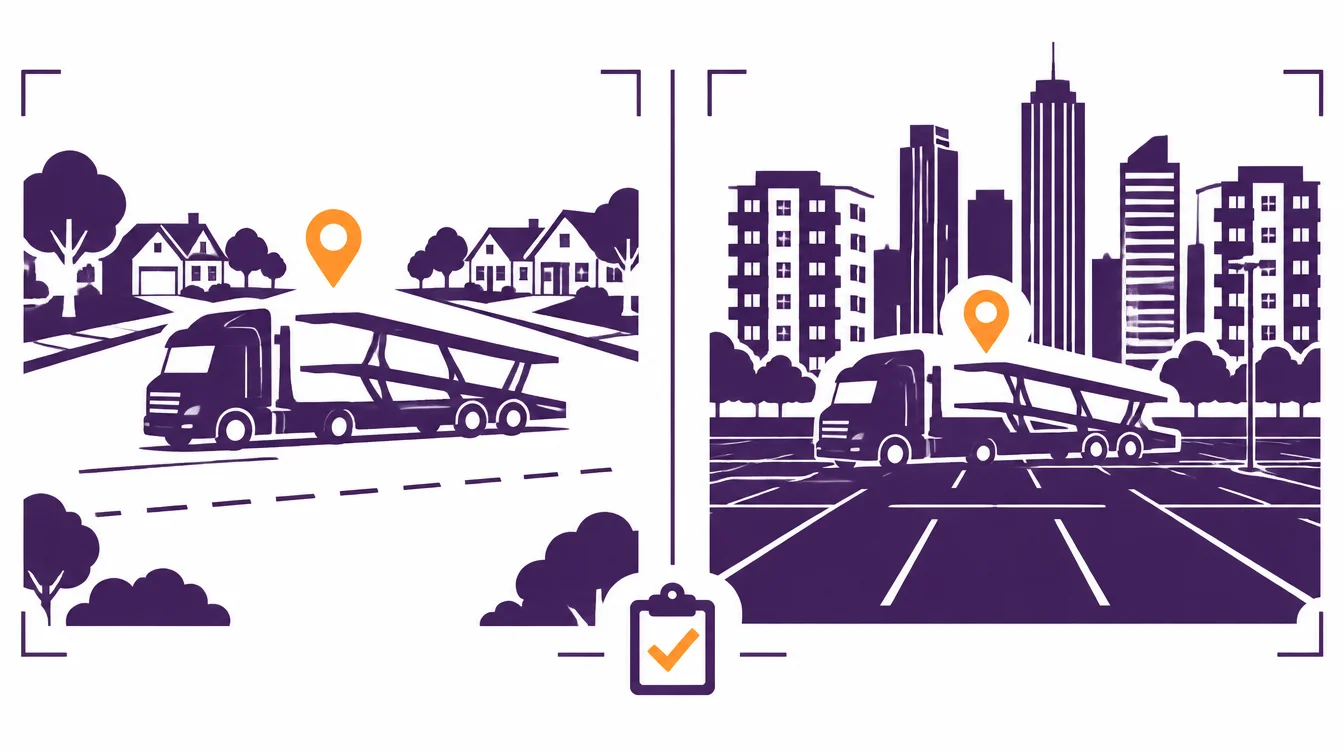
Pickup and delivery planning matters most at the New York end of this lane, where a full-size car hauler cannot work most city streets.
In Manhattan, Brooklyn, Queens and most of the Bronx, expect the driver to arrange a meeting point with room to unload, often a large retail parking lot or a wide commercial street. Suburban addresses on Long Island and in Westchester and the Hudson Valley are usually easier, and upstate cities such as Buffalo, Rochester and Albany tend to be simpler still.
In Missouri, most suburban addresses around St. Louis and Kansas City are straightforward. Older city neighborhoods with narrow streets, and rural roads in the Ozarks, may need a nearby meeting point instead.
At pickup, the driver inspects the vehicle and records its condition on the bill of lading. The same inspection happens at delivery so both sides can confirm the car arrived as it left. Photograph the car yourself at both ends.
Key Things to Know Before Shipping a Car From Missouri to New York
Rivalane coordinates Missouri to New York vehicle transport from its Long Island base, at the delivery end of this lane, matching your car with carriers already running I-70 east. Settling the New York delivery point before booking, and knowing whether the car leaves from St. Louis or Kansas City, keeps both the price and the schedule predictable.
Frequently Asked Questions



