Can You Buy a Car Out of State and Register It in New York?
Yes. The DMV's Register an Out-of-State Vehicle page says that if you are a New York resident and you get a vehicle from another state that you will drive on New York roads, you must register it in New York within 30 days. You apply with Form MV-82 at a DMV office, and the same page explains how to apply by mail to a local DMV office if you are applying from outside New York.
Registration is rarely the hard part. What catches New York buyers is sales tax: paying another state's tax at the dealership does not mean New York will give you credit for it, and for most states it does not. A low-mileage car also has to meet New York's emissions rule, so both checks belong before you pay, not after.
This guide covers a New York resident buying a car in another state. If you are moving to New York with a car you already own, our guide to registering an out-of-state car in New York covers that case, including the insurance and Form MV-82 steps in order.
Do You Pay Sales Tax Twice When You Buy a Car Out of State?
You can. According to the Tax Department's instructions for Form DTF-804, a New York resident who buys a vehicle outside the state owes New York State and local sales and use tax once the vehicle is brought into New York. The rate is the one for the place where you live, not where you bought the car.
Tax you paid to the other state only reduces that bill if all three of these are true: you were required to pay the other state's tax, that state gives a similar credit for tax paid to New York, and you are not entitled to a refund from that state. The credit works rate against rate, it cannot exceed your New York rate, and any excess is not refunded.
For motor vehicles, the Tax Department says New York gives this credit to a very limited number of states. The chart on page 2 of Form DTF-804 splits them three ways:
- Full credit: Arizona, California, Florida, Hawaii, Massachusetts, Michigan, South Carolina and Wyoming.
- Partial credit: Maryland and Indiana, where the credit applies only against the 4 percent New York State portion of the tax.
- No credit: every other state, including New Jersey, Pennsylvania, Connecticut and Missouri.

That last group is where many New Yorkers shop. Pay Pennsylvania sales tax at a dealership across the border and New York still charges its own tax when you register. The Tax Department applied the same chart in a 2024 advisory opinion denying a New York resident credit for sales tax paid in Maine. Its bulletin TB-ST-765 explains the reciprocal credit rule in full.
What If You Paid Tax to a State That Gets No Credit?
The DTF-804 instructions give the path. Apply to the state you paid for a refund of its tax. If that state denies the refund, you may be eligible for a credit for some or all of the New York tax, and you apply on Form AU-11, Application for Credit or Refund of Sales or Use Tax, with proof of the tax you paid and proof of the refund denial.
The cleaner route is to settle the tax question before you sign. Ask the seller which state's tax it will charge an out-of-state buyer, and check that state against the chart above. If the answer is a no-credit state, you are planning for a refund claim, not a credit.
Service members have a separate exemption path. A New York resident who bought the vehicle outside New York while in military service may be exempt from New York sales tax, or able to defer it, by claiming box 12 on Form DTF-803.
This explains New York's published process, not your individual tax position. For your own purchase, go by the forms and the Tax Department's guidance.
Which New York Sales Tax Form Fits Your Purchase?
The form follows what happened to the tax when you bought the car. This is a simplified guide, and the DMV's sales tax page and the forms themselves set out the full rules:
| Form | When it applies |
|---|---|
| DTF-804 | You paid sales tax to another state and that state is on New York's credit list. The bill of sale has to show the purchase price and the tax you paid. |
| DTF-802 | No sales tax was collected when you bought the car, as in most private sales, or you paid tax to a state that gets no New York credit. The DMV works out and collects the tax at registration. |
| DTF-803 | You are claiming an exemption from New York sales tax, such as the military exemption described above. It is not the form for a credit. |
Some out-of-state dealers are authorized to collect New York sales tax. If yours charged you New York tax, keep the bill of sale that shows it. The DMV does not collect the tax again in that case, and its sales tax information page lists the proof to bring. If you bought the car before you became a New York resident, a separate non-resident exemption applies, which our New York registration guide covers.
What Is New York's 7,500-Mile Rule?
New York applies California's emissions standard to low-mileage vehicles. According to the DMV page on California emissions standards, unless it is exempt, a vehicle with less than 7,500 miles on the odometer must comply with the California standard if it is:
- a non-electric vehicle from model year 1996 or newer with a gross vehicle weight rating of 6,000 pounds or less
- a model year 2000 or newer vehicle rated at 8,500 pounds or less
- a model year 2004 or newer vehicle rated at 14,000 pounds or less
- a model year 2005 or newer gasoline vehicle rated at 14,001 pounds or more
- a model year 2005 to 2007 diesel vehicle rated at 14,001 pounds or more
To check, look at the Manufacturer's Certificate of Origin and the emissions label under the hood. The DMV says a compliant vehicle carries wording that identifies it as a 50-State Vehicle or a California-Only Vehicle that conforms to U.S. EPA and California regulations. If you cannot find that wording, ask the dealer for proof before you pay.
Photograph the label before you commit to a car with low miles, especially one bought sight unseen. Meeting the California standard does not replace New York's safety and emissions inspection, which the car still needs. California applies a similar mileage rule to its own residents, which our guide to buying a car out of state as a California resident explains.
When Do You Need Form MV-74?
Form MV-74, the Certificate of Emissions Compliance or Exemption, does two jobs, and you or the dealer can complete it. It certifies compliance when the car meets the California standard but the Manufacturer's Certificate of Origin does not say so, or when there is no certificate of origin. It also certifies an exemption, which the DMV allows when:
- the odometer reads more than 7,500 miles
- you bought the car in another state to replace your previous vehicle after it was damaged, stolen or had a mechanical failure while you were outside New York
- the car came to you through an inheritance or court decree
- the car was registered to you in another state while you lived there, and you are now a New York resident
- you are a New York resident serving in the U.S. Armed Forces and stationed in another state
- the vehicle is an authorized emergency vehicle under the Vehicle and Traffic Law
If a car has less than 7,500 miles, does not meet the California standard and fits none of these exemptions, do not count on registering it in New York.
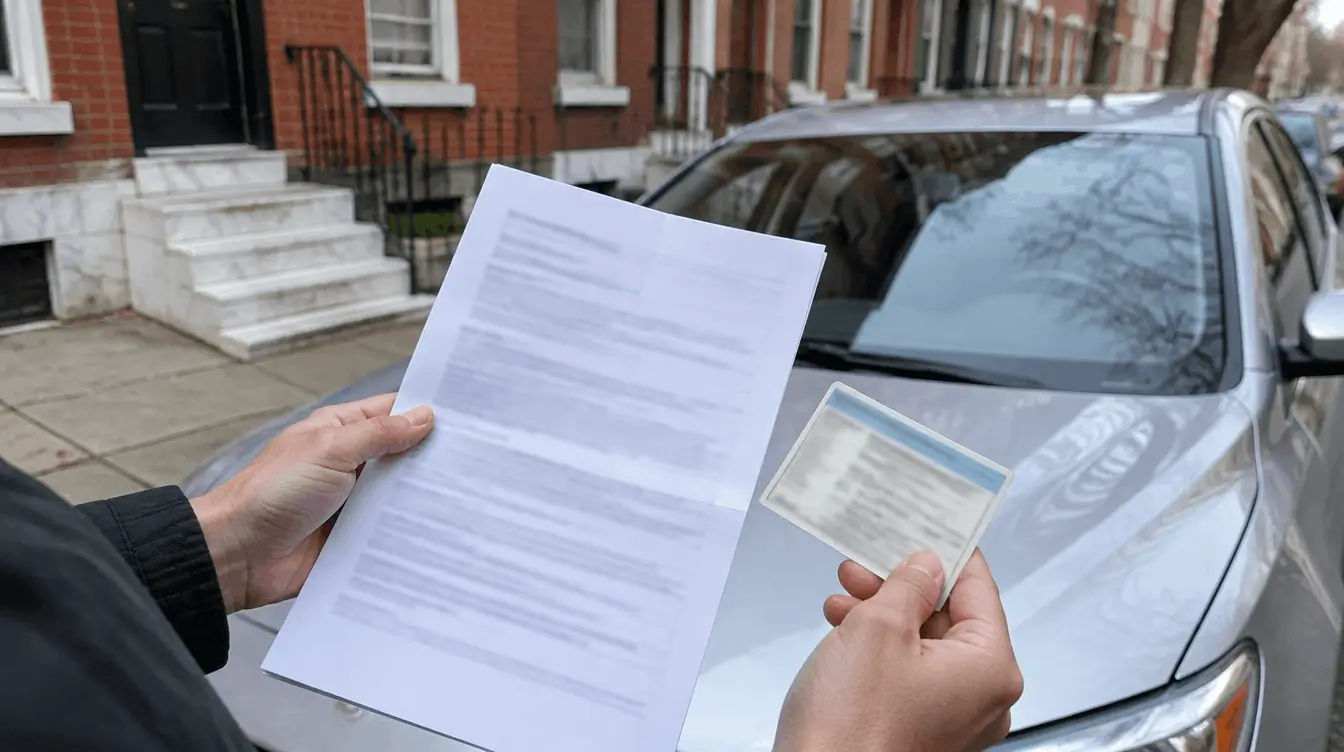
What Paperwork Should You Get From the Seller?
The DMV's out-of-state page lists the proof of ownership it accepts, and it depends on who sold you the car:
- New car from an out-of-state dealer: the Manufacturer's Certificate of Origin and the dealer's bill of sale.
- Used car from an out-of-state dealer: the out-of-state title or transferable registration transferred to the dealer, and the dealer's bill of sale transferring ownership to you.
- Private seller: the bill of sale and the title or transferable registration transferred to you.
Proof of ownership has to be original, since the DMV does not accept photocopies. Out-of-state dealers use their own bill of sale rather than New York's Form MV-50. If you plan to claim a credit on Form DTF-804, the bill of sale must show the purchase price and the amount of out-of-state sales tax paid. If a lender is financing the purchase, ask early who will hold the title, because the DMV has its own requirements for lienholder documents.
How Do You Get the Car Home Legally?
Not with a New York in-transit permit. The DMV's in-transit permits cover vehicles purchased in New York, either to take them to another state or to move them within New York. A car bought elsewhere needs one of these routes instead:
- A temporary permit from the seller's state. Whether one is available, and on what terms, depends on that state, and the rules change. Check with that state's motor vehicle agency rather than relying on what the seller assumes.
- New York registration first. If you apply by mail from outside New York, the DMV sends the registration documents, plates and a 10-day inspection extension sticker in one package and asks you to allow six weeks. You need New York auto liability insurance to register.
- Transport. The car rides home on a carrier instead of being driven.
Shipping means nobody has to drive the car home. Our guide to getting a car you bought out of state delivered covers what to plan between the seller's lot and your driveway. Rivalane coordinates door to door transport into New York with licensed, insured carriers. We typically assign a carrier within one to three working days after you book, and pickup and delivery dates are estimates, not guarantees. If you are buying in St. Louis or Kansas City, our Missouri to New York car shipping page covers that lane, and any Missouri sales tax you pay earns no New York credit. Our page on car shipping in New York covers deliveries across the state, and the car shipping calculator prices the move.
What Should You Check Before You Pay?
Most of the downsides of buying out of state show up after the sale, so check these first:
- Tax: which state's tax the seller will charge, and whether that state is on New York's credit list.
- Emissions: if the odometer reads under 7,500 miles, the label wording and whether an exemption applies.
- Documents: the original title or certificate of origin, and a bill of sale showing the price and any tax paid.
- Getting it home: a temporary permit, registering first, or transport, and what each one costs you in time.
- Timing: the 30-day registration rule and, if you register by mail, the title, which the DMV sends separately and asks you to allow up to 90 days for.
Frequently Asked Questions
Can I buy a car out of state and register it in New York?
Do I pay sales tax twice if I buy a car out of state?
Does New York give credit for New Jersey or Pennsylvania sales tax on a car?
What is the 7,500-mile rule in New York?
Can I get a New York in-transit permit for a car I bought in another state?