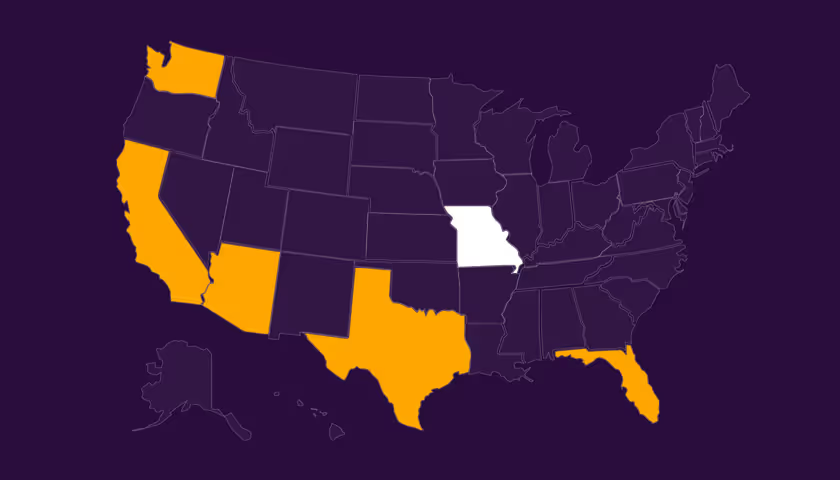
Rivalane arranges car shipping to and from Missouri with licensed, insured carriers. Tell us where the vehicle needs to go and we match it to a carrier already running that direction, whether that is across the state on I-70 or across the country.
Pickups run from St. Louis and Kansas City, from Springfield, Columbia and Joplin, and from the smaller towns in between. You get one point of contact, updates at each stage, and a plan built around your dates rather than a generic estimate.





5-Star Average Rating
Fully Insured
Door to Door Delivery
Nationwide Coverage
Vetted Carriers
The real question on a long move is whether to ship the car or drive it yourself. St. Louis to New York, the route Missouri customers ask us about most, runs about 950 miles. Kansas City to Phoenix is closer to 1,200. Driving either one means two or three days at the wheel, a night or two on the road, fuel both ways if you are flying back, and a thousand miles of wear on a car you were trying to move in good condition. Inside Missouri the calculation flips. St. Louis to Kansas City on I-70 is a single afternoon, and driving it yourself is usually the sensible call. We will tell you so if that is your situation. Shipping starts to earn its place somewhere past 500 miles, and the case gets stronger the further you go. Past that point you are weighing a quote against a real total, not a quote against nothing. Tell us the route and we will give you the number so you can make the comparison properly.

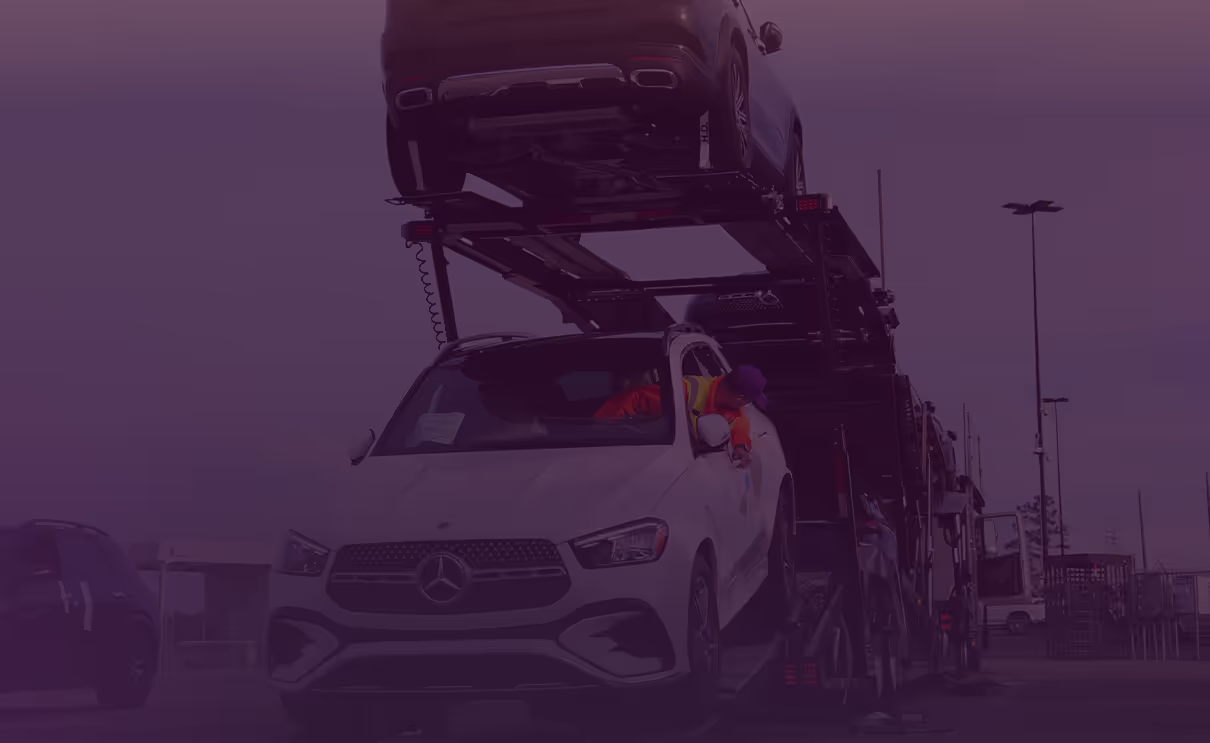
Cost and timing depend on your route, trailer type, vehicle size, and the time of year. The ranges below reflect typical market pricing and transit windows by distance, not a commitment on either. Your actual quote is based on real carrier availability on your specific route at the time of booking.
Missouri prices off a single line rather than a whole surface. St. Louis and Kansas City sit about 250 miles apart at either end of I-70, and that one corridor carries most of the state's volume. St. Louis pulls traffic onto I-55, I-64 and I-44 toward Chicago, Memphis and the Southeast, while Kansas City feeds I-35 and the western run of I-70 toward Denver, Texas and the coast. Missouri also touches eight states, so a good share of what looks like a long haul on a map is a short regional lane in practice, priced on the same curve whether or not it crosses a state line.
That density is why open transport in Missouri sits at the low end of the national range in both directions. Carriers cross the state daily whether Missouri is the destination or not, which keeps deadhead miles short and pickup windows tight in both metros. The picture changes once you leave the axis. Springfield, Columbia, Joplin and the lake areas sit away from the I-70 spine, and a pickup an hour off a main corridor can price above a longer run between the two metros, because a carrier has to leave a lane it is already working to collect it.
Vehicle size, whether the car runs, and trailer type all move the number, and enclosed transport costs meaningfully more than open because far less of it is on the road. The factor most within your control is lead time. Booking a week or two ahead puts your vehicle on a truck already running I-70, I-44, I-55 or I-35 rather than one routed out to collect it, and that gap widens the further your address sits from those roads.
Get your Missouri quoteFive steps from the first quote to the final signature. Here is what happens at each one, and what we need from you.





Give us the pickup and delivery addresses, the year, make and model, whether the car runs, and roughly when it needs to move. The exact street address matters more than the city here, because a pickup off the interstate prices differently from one sitting on it. We come back with a quote for that specific run rather than a distance estimate.

Pick the window that suits you. We match the shipment to a carrier whose route already covers your lane, then tell you who is collecting the vehicle and when. A wider window usually means more carriers to choose between and a better rate, so if your dates have any give in them it is worth saying so.

Clear out personal items, leave roughly a quarter tank of fuel, disable any alarm and remove toll tags. Flag anything the carrier needs to know in advance, such as low clearance, a flat battery, aftermarket modifications or a car that does not start. Have the keys ready and someone available to hand the vehicle over.

The vehicle is secured on the trailer and the shipment sets off. You get updates as it moves, and you can reach us at any point for a position or a revised arrival estimate. Long lanes can shift by a day in either direction depending on weather and traffic, and we tell you when that happens rather than leaving you to work it out from the tracking.
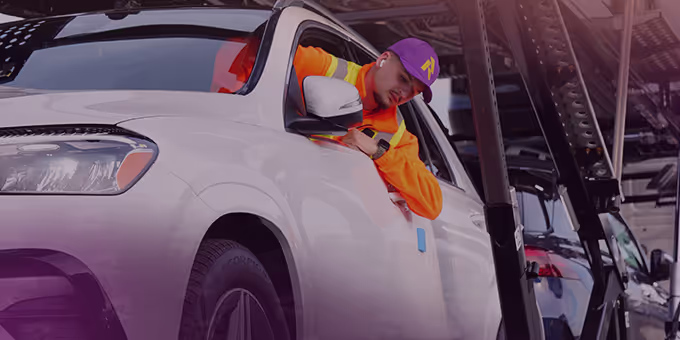
At delivery you walk around the vehicle with the carrier and compare it against the condition report taken at pickup. Once you are satisfied, you both sign it off. If something needs raising, raise it then rather than after the truck has gone, because that signed report is what any claim rests on.
Five ways we move vehicles into, out of and around Missouri.
Collection and delivery happen at the addresses you give us rather than at a terminal. In practice that means a driveway, a workplace car park, a dealership lot or a storage yard. Where a full-size hauler cannot safely or legally reach the door, on a narrow residential street or under a low bridge, the carrier agrees a nearby meeting point with you in advance rather than improvising on the day.
The practical choice for everyday cars and SUVs, and what most Missouri shipments use. Your vehicle travels on an open trailer alongside others, which is why it costs less than enclosed and why carriers running I-70 and I-44 have the most capacity for it.
For high-value, classic, modified or low-clearance vehicles, an enclosed trailer shields the car from weather and road debris for the whole journey. There is far less enclosed equipment on the road than open, so it costs more and benefits from more notice, particularly outside the two metros.
Most of what we move crosses a state line. Missouri to New York car shipping is the single lane we are asked about most, followed by runs to Texas and the Southeast, and the state's eight borders mean plenty of shorter interstate moves as well. Longer lanes fill on the carrier's schedule rather than yours, so more notice on the date opens up more options.
Missouri is more than its two metros. We arrange collection from the Ozark towns, the lake communities and the northern counties, where carriers pass less often than they do on the interstate. That usually means a wider pickup window rather than a different service, and we tell you which it is before you book rather than after.
Every shipper claims to be reliable. Here is what actually separates a well-run move from a risky one, and what to ask before you book anyone for a Missouri route.
Ask whether the company can name a real Missouri constraint before you raise it, such as how they reach an address well off I-70 or I-44, or what an emissions county means for a car being delivered into the St. Louis area.
Ask whether the price you are quoted is based on your actual route and vehicle, or a generic distance estimate that gets revised once a carrier is assigned.
Ask what happens if no carrier is available on your exact date. Winter weather can close a corridor at short notice, and a shipper working from an existing carrier network can usually offer alternatives faster than one starting from scratch.
Get your Missouri quoteDemand into and out of Missouri comes from a few clear directions. Here is who ships most often.
.svg)
Most of the demand we see into Missouri comes from buyers who purchased a vehicle sight unseen from somewhere else in the country. We arrange pickup from the seller or the dealership and deliver it to your Missouri address, so nobody has to fly out and drive it back. One thing is worth knowing before you buy. Missouri charges state and local sales tax on the purchase price when the vehicle is titled, at the state rate plus your local rate, calculated after any trade-in allowance.
Estimate your shipment →.svg)
A vehicle you already own still has to be titled and registered once you get here, and the order matters. The clock starts when you establish residency, not when the car arrives, so a vehicle that lands weeks after you do eats into the window before you have even collected it. The inspection has to be done before the title is issued, which means the car needs to be here and drivable to a station with time left. If your move date and your delivery date are far apart, tell us both and we will aim the delivery at the end of the move rather than the start.
Vehicle transport services →
A vehicle that does not start needs a carrier with a winch and the right loading setup, and that is a smaller pool than standard open transport. Tell us the condition up front, including whether it rolls, steers and brakes, and we match it to a carrier equipped for it rather than discovering the problem at pickup. The same applies to a project car coming home from a workshop or a long-stored vehicle leaving a garage.
Quote a non-running vehicle →
Work and family moves take vehicles out of Missouri in every direction, and the lane we are asked about most runs east to New York and the Northeast, followed by Texas and the Southeast. We arrange pickup from St. Louis, Kansas City and the towns along I-70 between them, then hand the vehicle to a carrier already working that direction. Longer lanes fill on their own schedule rather than yours, so the more notice you can give on a destination and a workable date, the more options open up on both. Tell us where the vehicle is going and we will build the pickup around it.
Estimate a long-distance move →Looking to ship your car to another state or across the country? Rivalane ships to all 50 states. Select a state to see how car shipping works on that route.
Missouri's cities fall into three groups, and that shapes how a pickup gets scheduled. The St. Louis ring takes in St. Charles, O'Fallon, Florissant and Chesterfield. The Kansas City ring covers Independence, Lee's Summit and Blue Springs. Then there are the standalone cities, Springfield, Columbia, Joplin, Jefferson City, Cape Girardeau and St. Joseph, each sitting on its own corridor rather than inside a metro. Find your city below for the ZIP codes we cover.