


.png)


Shipping a car from New York to Florida covers about 1,250 miles and takes 4 to 6 days door to door. Most sedans on open transport fall between $750 and $1,200, with southbound rates rising from October through December. Book two to three weeks ahead, longer in snowbird season, and if you are becoming a Florida resident plan to register within 10 days of arrival.
How Car Shipping From New York to Florida Works
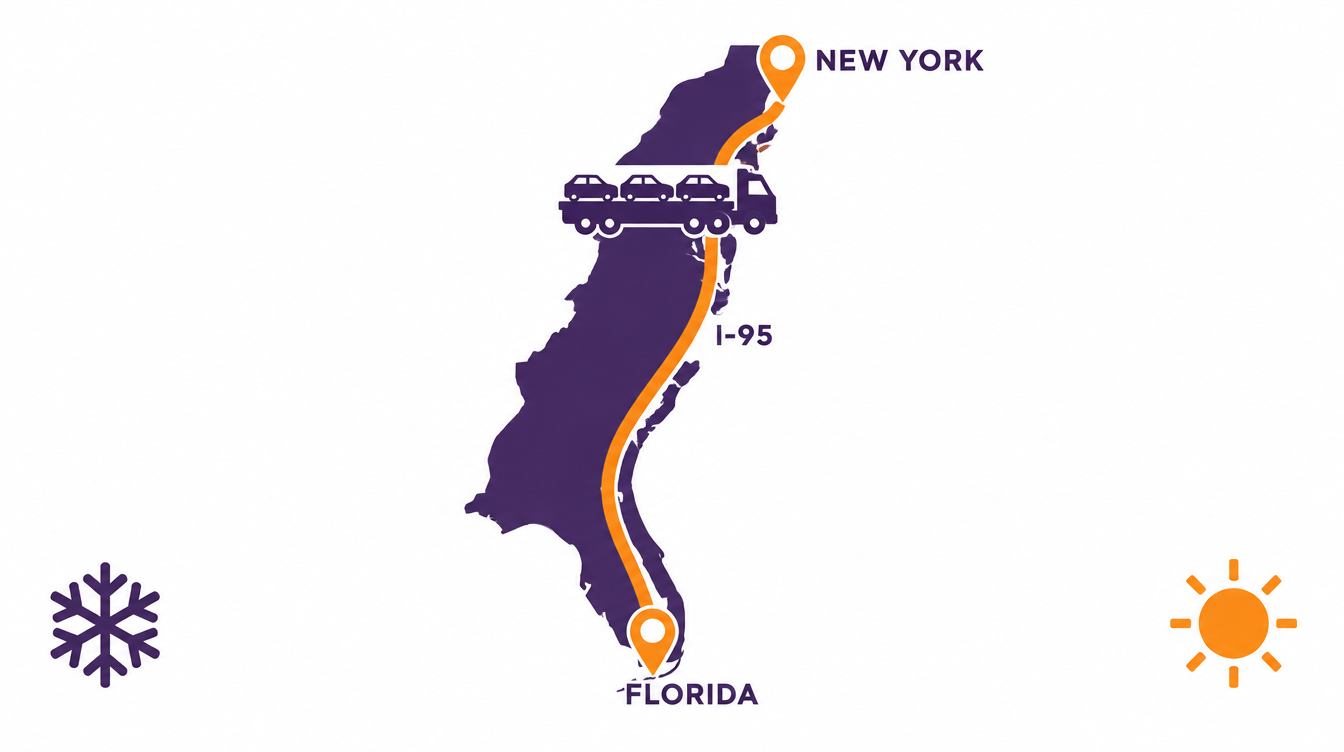
Car shipping from New York to Florida works through carrier sourcing, load staging and regional truck rotation rather than a single nonstop drive. A carrier is matched based on positioning and route flow along I-95, which directly affects pickup timing and scheduling stability. In the New York metro area, vehicles are often collected at an agreed meeting point rather than the front door, because a full-size hauler cannot work most city streets. From there the car joins a southbound load that consolidates pickups through New Jersey, Virginia and the Carolinas before reaching Florida. Because this is the highest-volume seasonal lane in the country, timing matters more than distance: the same vehicle moves faster and prices lower when it is booked with the flow rather than against it.
How Much Does Car Shipping New York to Florida Cost?
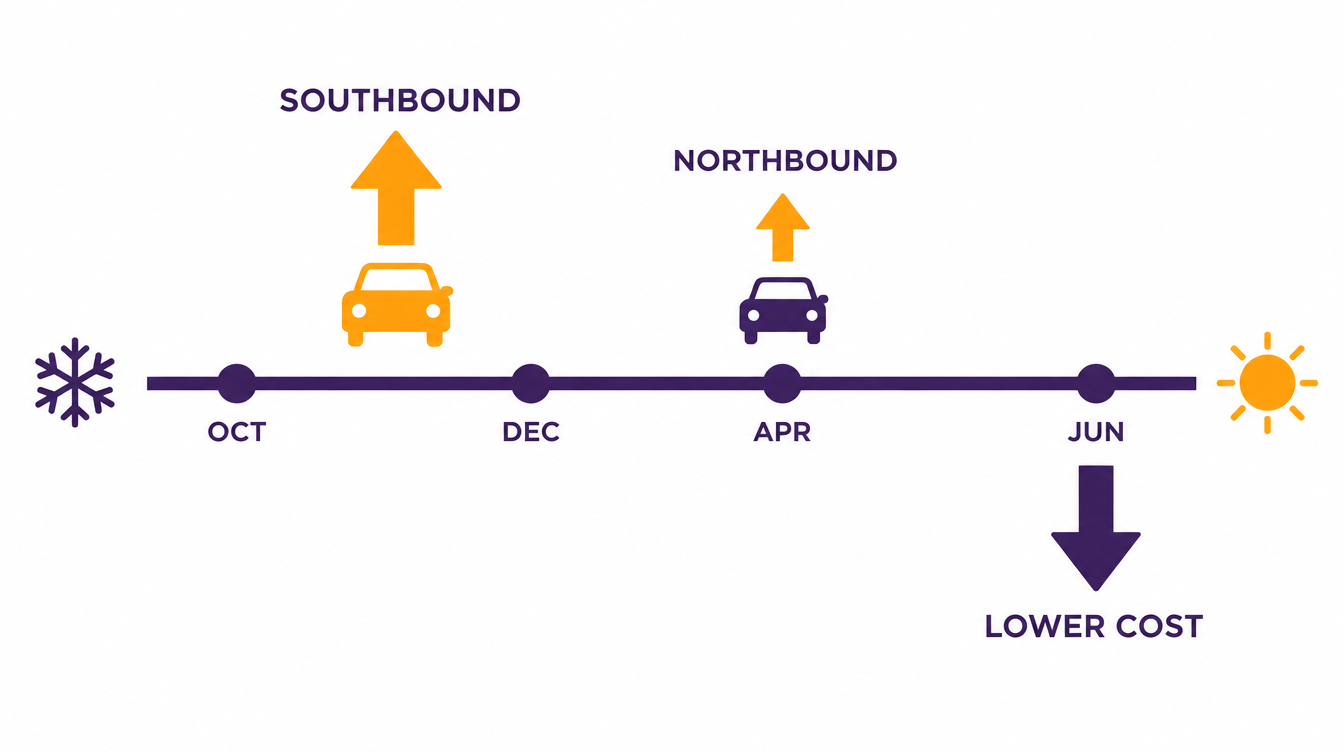
Car shipping New York to Florida costs more when the season pushes everyone in the same direction. In autumn, southbound trailer space tightens and rates rise; in spring the same happens northbound.
Sedans typically price lower because they are easier to load, while SUVs, trucks and specialty vehicles reduce placement flexibility and increase overall rates. Season and direction, not mileage alone, drive most pricing changes on this route.
Quotes that appear unusually low often depend on open-ended timing or unconfirmed carrier availability. When that capacity fails to materialize, pricing pressure shows up later through delays or adjustments.
Clear expectations and a flexible pickup window help stabilize pricing and reduce last-minute changes.
Most New York to Florida shipments for a standard sedan on open transport fall between $750 and $1,200. SUVs and pickups typically add $100 to $250, because they take more deck space and limit what else the carrier can load.
Enclosed transport runs roughly 40 to 60 percent above open rates. That premium earns its keep on a classic, an exotic, or a low-clearance car, and rarely makes sense for a daily driver making a seasonal move.
Three factors move the number more than mileage does:
- Season and direction. Southbound rates climb from October through December when snowbird demand peaks, and ease from January. Northbound does the same in April and May. The same car can price differently in either direction depending on the month.
- Pickup access. A pickup in the outer boroughs, Long Island, Westchester or northern New Jersey usually prices better than one in Manhattan, where carriers cannot bring a full trailer to the door. Delivery into Miami, Fort Lauderdale, Orlando, Tampa or Jacksonville sits on the main flow and prices better than the Panhandle or the Keys.
- Vehicle size and condition. Larger vehicles cost more, and a car that does not run needs a winch and a carrier equipped for it.
Quotes well below this range usually rest on carrier availability nobody has confirmed yet. A price only holds if a truck actually accepts the load at that rate.

What Factors Actually
Influence Pricing on This Route?
Booking early protects your timeline, keeps pricing steady, and reduces the risk of last-minute carrier changes.
Many customers on this route relocate permanently or move seasonally, which makes predictability more important than speed.
This article explains how auto transport Florida to California works, what it costs, and how long it takes, so you can make a clear, informed decision before you schedule your shipment.


Type
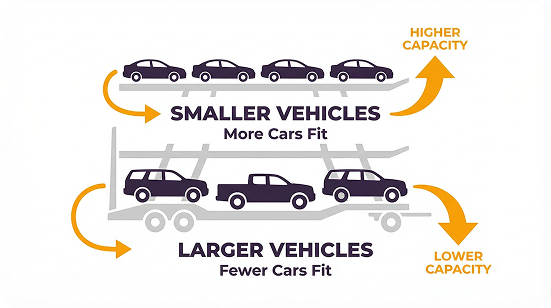
Size decides how much deck space your vehicle takes and how many other cars fit alongside it. A standard sedan is the cheapest thing to move because it slots almost anywhere on the trailer. SUVs, pickups and vans take more room and typically add a few hundred dollars on the same lane.


Is It Cheaper to Drive or Ship a Car From New York to Florida?
Shipping Instead of Driving
Shipping removes the physical strain of a two-day drive down I-95 and keeps your vehicle off the road during a seasonal or permanent move.
It replaces unpredictable travel costs with a coordinated process, and for seasonal residents it means the car is waiting in Florida instead of eating up the first days of the trip.
Driving the Route Yourself
Driving I-95 end to end is roughly 20 hours behind the wheel, which means at least one overnight stop plus fuel, food and tolls through the Northeast corridor.
It also adds about 1,250 miles of wear to the vehicle, and I-95 traffic, weather and fatigue introduce risks that are difficult to control across two days on the road.
How Long Does Shipping a Car From New York to Florida Take?
Shipping typically takes 4 to 6 days door to door, but pickup timing matters more than transit speed. Most delays occur before the vehicle is loaded, not while it is in transit.
I-95 is the densest auto transport corridor in the country, so carriers are rarely the constraint. What sets the timeline is how quickly a dispatcher can place your vehicle on a truck that is already building a southbound load, and a flexible pickup window shortens that more than anything else.
Transit itself is usually consistent once the vehicle is on the truck. Carriers cover 400 to 500 miles a day while making other pickups and deliveries along the way.
When is the Best Time to Book Auto Transport From New York to Florida?
This lane runs on a seasonal clock. From October through December, demand runs heavily southbound as seasonal residents head to Florida, and southbound trailer space is the scarce resource. From April into May the flow reverses and northbound space tightens instead.
In season, book three to four weeks ahead and hold a flexible pickup window. Carriers fill southbound loads fast, and the vehicles that move first are the ones a dispatcher can slot without rearranging a route.
Outside those two windows, one to two weeks is usually enough on this corridor because I-95 sees more carrier traffic than any other lane in the country.
Open vs Enclosed Auto Transport on a New York to Florida Route
Open transport carries the large majority of vehicles on this route and is the sensible default. Your car rides on a standard multi-car trailer, exposed to weather and road debris much as it would be if you drove it down I-95 yourself.
Enclosed transport places the vehicle inside a covered trailer. It shields against winter road salt leaving the Northeast, sun and stone chips across 1,250 miles of interstate, and it carries fewer cars per load, which is why it costs more and books further ahead.
Choose enclosed if the car is a classic, an exotic, freshly restored, or low enough that standard ramps become a problem. For a normal daily driver making a seasonal or one-time move, open transport is the practical choice.
Enclosed Car Transport
Enclosed demand rises for high-value, specialty and seasonal vehicles, and enclosed trailers protect against road debris and weather, which matters most on longer hauls. Enclosed rigs are a small fraction of the trailers working any given lane, and that scarcity is what drives both the higher price and the longer booking lead time.
Open Car Transport
Most vehicles move on open trailers, and for most routes that is the more cost-effective way to ship a car.
Open transport works well for standard vehicles and keeps costs predictable. It also offers the widest carrier availability.
What Florida Requires When Your Car Arrives
Florida is lighter on inspections than most states but strict on deadlines, and the rules depend on whether you are moving or wintering. Sort this out before the car ships.
- 10 days to title and register once you are a resident. The Florida Department of Highway Safety and Motor Vehicles gives new residents 10 days from establishing residency to title and register an out-of-state vehicle. Residency is triggered by taking a Florida job, enrolling a child in a Florida school, or otherwise making Florida your home. Late title and registration fees apply after that.
- Florida insurance comes first. The tax collector cannot process a title or registration without proof of a Florida policy from a Florida-licensed agent. The state minimum is $10,000 in Personal Injury Protection and $10,000 in Property Damage Liability. A New York policy does not satisfy this, so line up the Florida policy before the car lands.
- VIN verification, no emissions test. Florida has no smog or safety inspection. It does require a physical VIN check on an out-of-state vehicle, documented on form HSMV 82042 or section 8 of HSMV 82040 by a law enforcement officer, a licensed Florida dealer, or a tax collector employee.
- 30 days for your license. A separate deadline. New residents have 30 days to convert an out-of-state driver license, and the license is needed before the vehicle can be registered.
- Snowbirds are different. If New York stays your primary residence and you are spending the season in Florida without working or enrolling children there, the registration clock does not start. Keep the vehicle registered and insured in New York and carry those documents in the car.
Source: Florida Department of Highway Safety and Motor Vehicles, New Resident guide. Confirm current requirements and fees at flhsmv.gov before booking, since they change.
What to Expect at Pickup and Delivery
Pickup and delivery planning matters more on this lane than on most, because both ends have access problems a full-size trailer cannot solve.
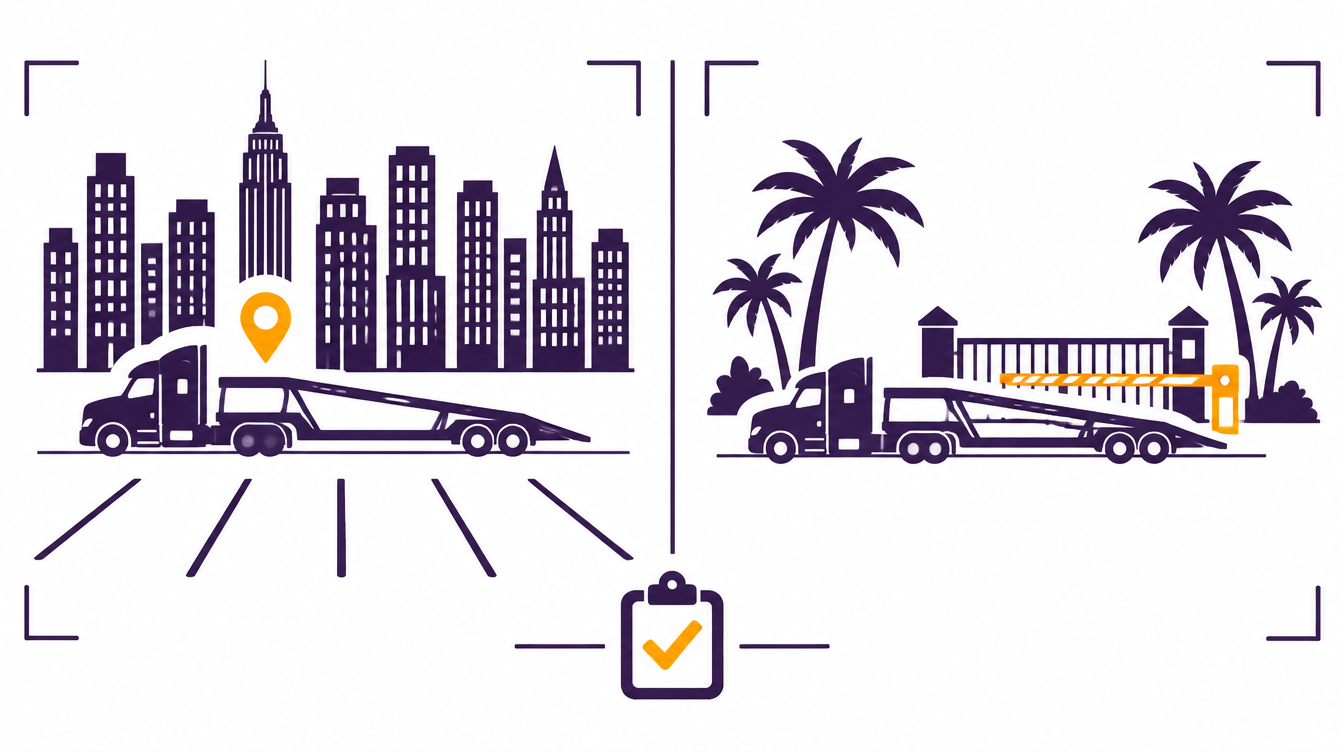
In New York City, a 75-foot car hauler cannot work most residential streets, and Manhattan is close to impossible. Expect the driver to arrange a meeting point with room to load, often a large parking lot, a wide commercial street, or a location in Long Island, Westchester or northern New Jersey. Planning that spot ahead of time prevents the most common delay on this route.
In Florida, gated communities and condo complexes are the usual obstacle. Confirm gate access or agree a nearby meeting point with the driver before delivery day.
At pickup, the driver inspects the vehicle and documents its condition on the bill of lading. The same inspection happens at delivery so both sides can confirm the car arrived as it left. Photograph the car yourself at both ends.
Key Things to Know Before Shipping a Car From New York to Florida
Rivalane coordinates New York to Florida vehicle transport from its Long Island base with clear pricing, structured timelines and reliable I-95 carrier networks. Planning around the seasonal flow and agreeing pickup access ahead of time helps ensure a smooth and predictable shipping experience across this route.

Frequently Asked Questions



