




Expect about 935 to 1,580 road miles and, usually, 3 to 5 days on the truck. A Miami to New York City run for an open sedan usually costs $900 to $1,350. In April and May book three to four weeks out, and set up New York insurance first, since new residents register within 30 days.
How Car Shipping From Florida to New York Works
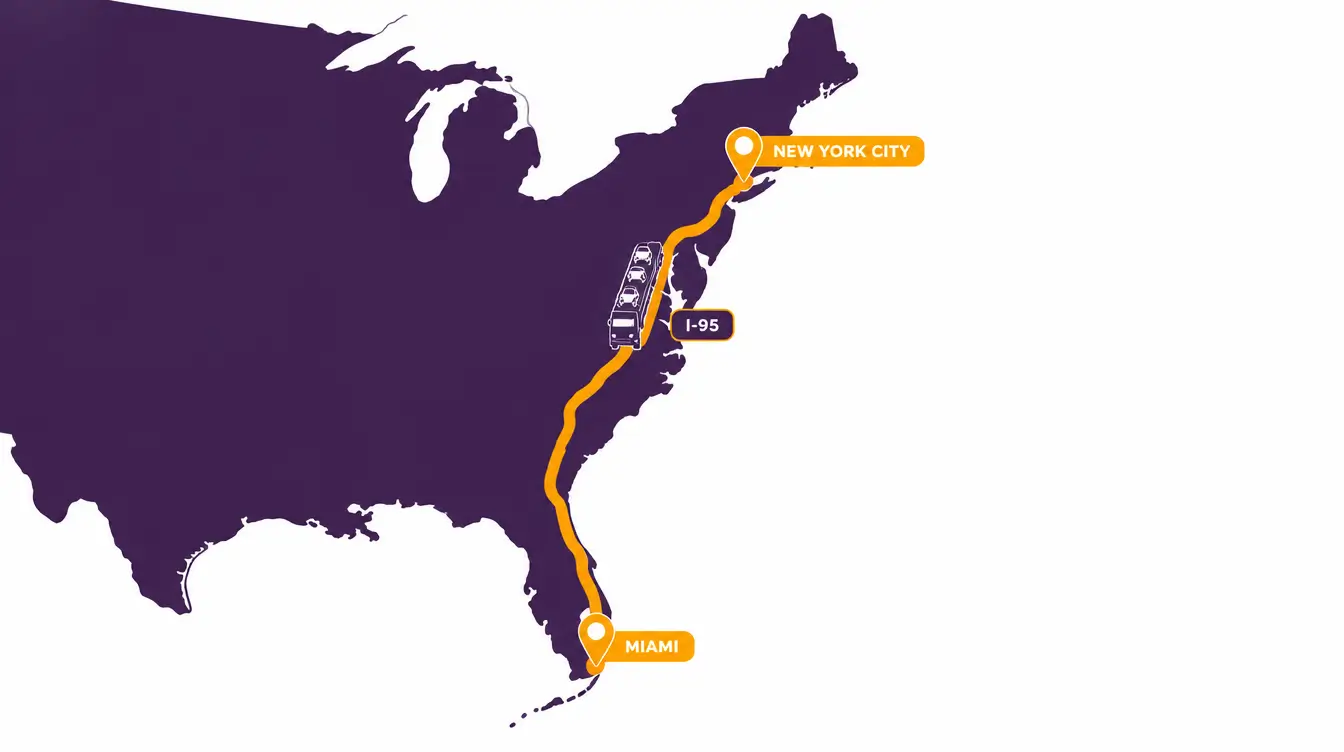
Most Florida cars going to New York are collected along the Atlantic coast or around Orlando and Tampa, then placed on a truck that is building a northbound load. From Miami the run follows I-95 nearly the whole way, and a car bound for New York City crosses the halfway point near Florence, South Carolina. After that the interstate carries it past Fayetteville, Rocky Mount, Petersburg and Fredericksburg, around Washington and Baltimore, and through Wilmington, Delaware, into New Jersey and on to the city. Cars for Albany and Plattsburgh keep going north up the Hudson Valley past Kingston. Deliveries to Buffalo and Rochester leave the coast and head inland past Charlotte, Pittsburgh and Erie, while Syracuse cars cross Pennsylvania past Harrisburg and Scranton and enter New York at Binghamton. Each truck hauls several cars, so dispatch tends to group Florida pickups that sit near one another, and the exact address shapes how soon a spot opens.
How Much Does Car Shipping Florida to New York Cost?
Your quote depends on your vehicle, the exact pickup and delivery addresses, the season and the trailer type, so run the calculator for a figure on your dates.
Measured pairs on this lane range from about 935 road miles, Jacksonville to New York City, up to roughly 1,580, Miami to Plattsburgh. Distance sets the opening figure on this lane, and the season plus the exact pickup and drop off push it up or down.
In Florida, Jacksonville is the shortest start, about 345 miles closer to New York City than Miami. Orlando saves about 205 miles and Tampa about 155, while West Palm Beach, Fort Myers and Fort Lauderdale all sit within about 65 miles of the Miami figure.
In New York, the city is the nearest delivery from every Florida pickup we measured. Counting from Miami, Yonkers and Hempstead on Long Island add about 10 to 25 miles, Buffalo about 100, Albany and Syracuse about 140 and Rochester about 170. Plattsburgh, close to 300 miles past the city, is priced on its own.
To price your exact pickup and delivery, run them through our car shipping calculator. Be careful with a quote far under the rest, since numbers like that are often posted before any driver has accepted the car.
Heading the other way, the New York to Florida route has its own page, with the fall season and the Florida arrival rules.
On an open trailer, Miami to New York City usually costs $900 to $1,350 for an ordinary sedan. Jacksonville, Orlando and Tampa pickups usually price below the middle, while Miami-area cars bound for Rochester, Syracuse or Albany land near the top, and Plattsburgh deliveries can go past it.
Going south instead, from New York to Florida, an open sedan typically costs less, at $750 to $1,200.
An enclosed trailer usually adds 40 to 60 percent to the open rate. That makes sense for a classic or a fresh restoration and rarely for a daily driver.
Three things move a Florida to New York quote the most:
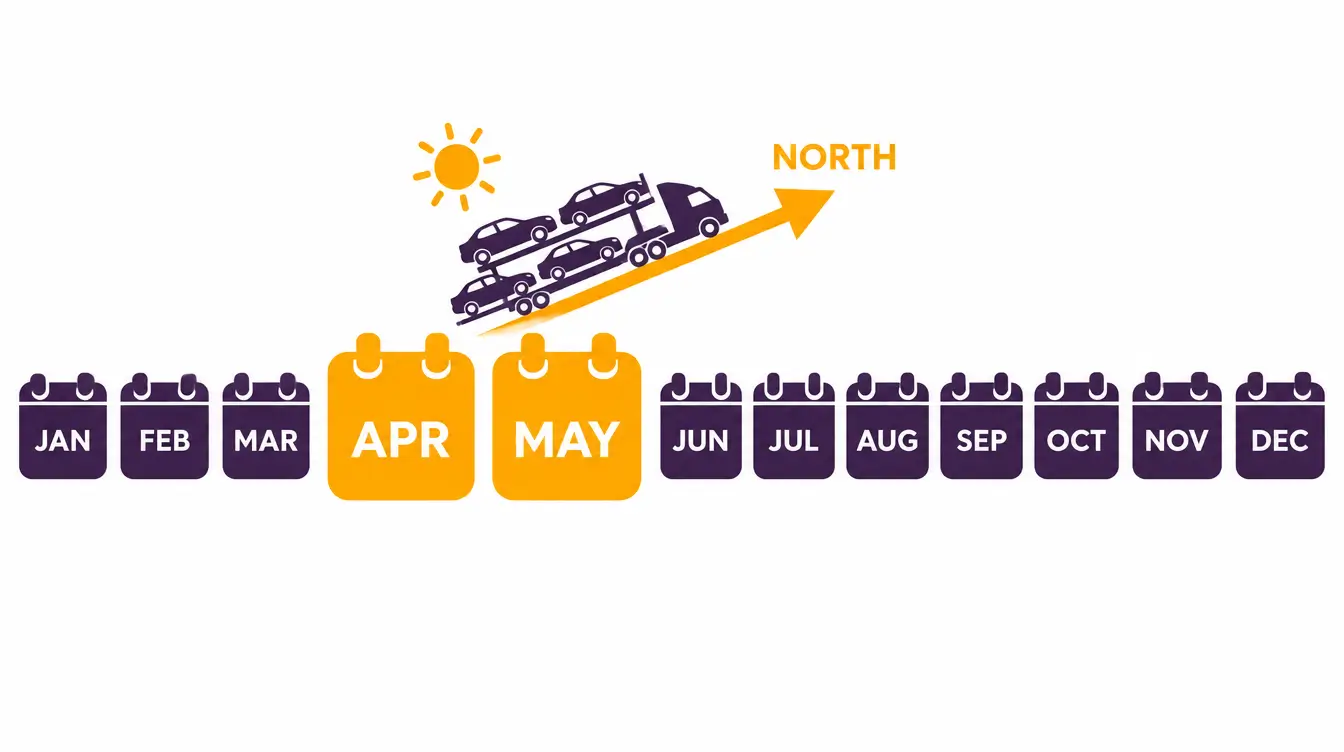
- The month. April and May bring the spring rush north, when snowbirds ship their cars home, and both prices and waits climb. Outside spring, northbound trucks usually have more open spots.
- The Florida pickup. Jacksonville, Orlando and Tampa are shorter starts than Miami, Fort Lauderdale or Fort Myers, and a pickup close to the interstate is simpler to schedule than one far down a rural road.
- The vehicle. A big SUV, a full size pickup or a large van typically adds around $100 to $200. Tell us if the car does not run, because loading it takes a winch.

What Factors Actually
Influence Pricing on This Route?
Five things move the price on any lane: the vehicle's size, whether it runs, how easy each end is to reach, the season and the trailer type. Booking early protects your timeline, keeps pricing steady and reduces the risk of last-minute carrier changes.


Type
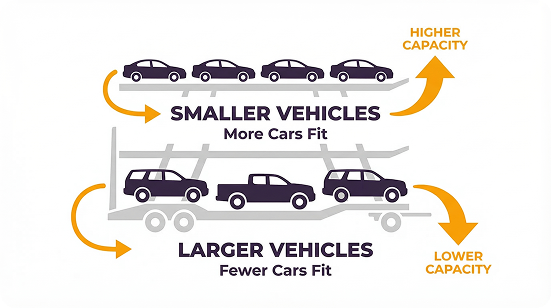
Size decides how much deck space your vehicle takes and how many other cars fit alongside it. A standard sedan is the cheapest thing to move because it slots almost anywhere on the trailer. SUVs, pickups and vans take more room and usually cost more on the same lane.


Is It Cheaper to Drive or Ship a Car From Florida to New York?
Shipping Instead of Driving
Shipping fits when the car is needed up north and nobody can give up several days to drive it along I-95. Common cases are a snowbird heading home for the summer, a retiree moving back north, or a car sold to a buyer upstate.
It also spares someone the trip back. A person who drives the car north then needs a flight home to Florida, plus another day away from work.
Driving the Route Yourself
Mapping tools put the drive from Miami to New York City at about 20 hours, usually broken into a two or three day trip with a hotel stop along the way. Add fuel, tolls in the Northeast, meals and the wear on the car. On a one way move where you travel with the car, driving can be the cheaper option, and we would rather say so.
The picture changes when the car travels without you. Plattsburgh sits about 1,580 miles from Miami, and whoever drives it there faces the same distance again, or a flight, to get home.
How Long Does Shipping a Car From Florida to New York Take?
Once loaded, a car from Florida typically reaches New York in 3 to 5 days. Jacksonville to New York City can finish at the short end, Miami to New York City usually takes 4 to 5 days, and Miami-area cars bound for Plattsburgh sit at the long end.
Finding a northbound truck with room comes first, and that assignment normally takes one to three working days, sometimes longer in the April and May rush.
A loaded hauler typically logs 400 to 500 miles in a day, so the roughly 1,280 miles from Miami to the city means about three days of driving, plus stops for the other cars aboard. Flexible pickup dates are the simplest way to shorten the wait.
When is the Best Time to Book Auto Transport From Florida to New York?
This lane has a clear season. Snowbirds send cars north in spring, and April and May are the busiest months, so trucks fill quickly and quotes climb.
For a spring move, plan on booking three to four weeks ahead. In summer, fall and winter, a week or two of notice normally works, and a window of possible pickup days lets the car join the first truck with space.
Winter deliveries upstate need some slack. Snow off the Great Lakes near Buffalo and Rochester, or a coastal storm, can hold a delivery back, so keep the dates loose from December through March.
Open vs Enclosed Auto Transport on a Florida to New York Route
Open transport moves most Florida cars north, on the same double deck trailers that work I-95 every day. Over a trip of this length the car picks up about as much grime as it would on the road under its own power.
With enclosed transport, the car rides the whole way inside a closed trailer. Each of those trailers fits only a few vehicles, so the price per car is higher and an opening may take a while, especially in spring.
A covered trailer is worth it for classics, exotics, show cars and new paint, and it keeps sun and road grime off the finish. Everyday cars, family SUVs and most cars making a seasonal move go open.
Enclosed Car Transport
Enclosed demand rises for high-value, specialty and seasonal vehicles, and enclosed trailers protect against road debris and weather, which matters most on longer hauls. Enclosed rigs are a small fraction of the trailers working any given lane, and that scarcity is what drives both the higher price and the longer booking lead time.
Open Car Transport
Most vehicles move on open trailers, and for most routes that is the more cost-effective way to ship a car.
Open transport works well for standard vehicles and keeps costs predictable. It also offers the widest carrier availability.
What New York Requires When Your Car Arrives
What New York asks for comes down to one question: are you moving there, or only spending the summer?
Summering in New York, Florida still home. New York accepts a valid registration from your state of residence, so a snowbird whose legal home stays in Florida can keep the Florida plates and the Florida policy while the car is up north.
Bringing a New York car home after the winter. If the New York inspection on a car that wintered in Florida expires while the car is away, you can apply to NY DMV for a temporary extension. The DMV asks you to allow 14 days for the extension sticker to arrive by mail, so apply before the car ships north. An issued extension gives you 10 days from the date the car returns to New York to get it inspected, so plan the inspection around the delivery date. Our guide to the New York inspection extension for a car coming home from Florida explains how to apply and what to send.
Moving north for good. Once you are a New York resident, the car must be registered there within 30 days, and the state also wants you holding a New York license by the same 30 day mark.
- A New York policy first. The DMV does not accept insurance written in Florida or in any other state. The minimums are $25,000 for injuring one person and $50,000 for a death, rising to $50,000 and $100,000 if a crash hurts or kills two or more people, and $10,000 for damage to property.
- The paperwork. Form MV-82, the original title, proof of identity and payment of sales tax. Photocopied titles are refused. When a lender holds the title, the DMV needs a copy of the title certified on the same page by the lienholder or the other state's title agency, plus a statement on the lienholder's letterhead giving the owner, VIN, year and make and confirming that it holds the original title and knows you will register the car in New York. Florida keeps every title with a lien in electronic form, so there is no paper title in your hands; ask the lender early how it will supply the certified copy New York asks for. Our guide to registering an out-of-state car in NY explains what each document is for.
- Registering before the move. The application can go by mail from Florida. Along with the plates comes a sticker that covers inspection for 10 days, and it goes on the car only after crossing into New York. The title arrives on its own, within about 90 days.
- Inspection. If a car you already own carries a current inspection sticker from a state that issues them, that out-of-state inspection stays valid until it expires or one year after the New York registration date, whichever comes first. If it does not, the car must be inspected in New York. If you don't have a valid out-of-state inspection certificate, you can ask NY DMV for an inspection extension of up to 10 days. DMV decides whether to grant it.
- Sales tax. Expect to pay New York sales tax unless you can show it was already paid or that an exemption applies. Form DTF-803 claims the nonresident exemption if you qualify based on your status when you bought the car, such as a car you bought while living in Florida with no home, business or job in New York. Ask for the DMV sales tax receipt even when the car is exempt, and a county vehicle use tax may still apply depending on where you live.
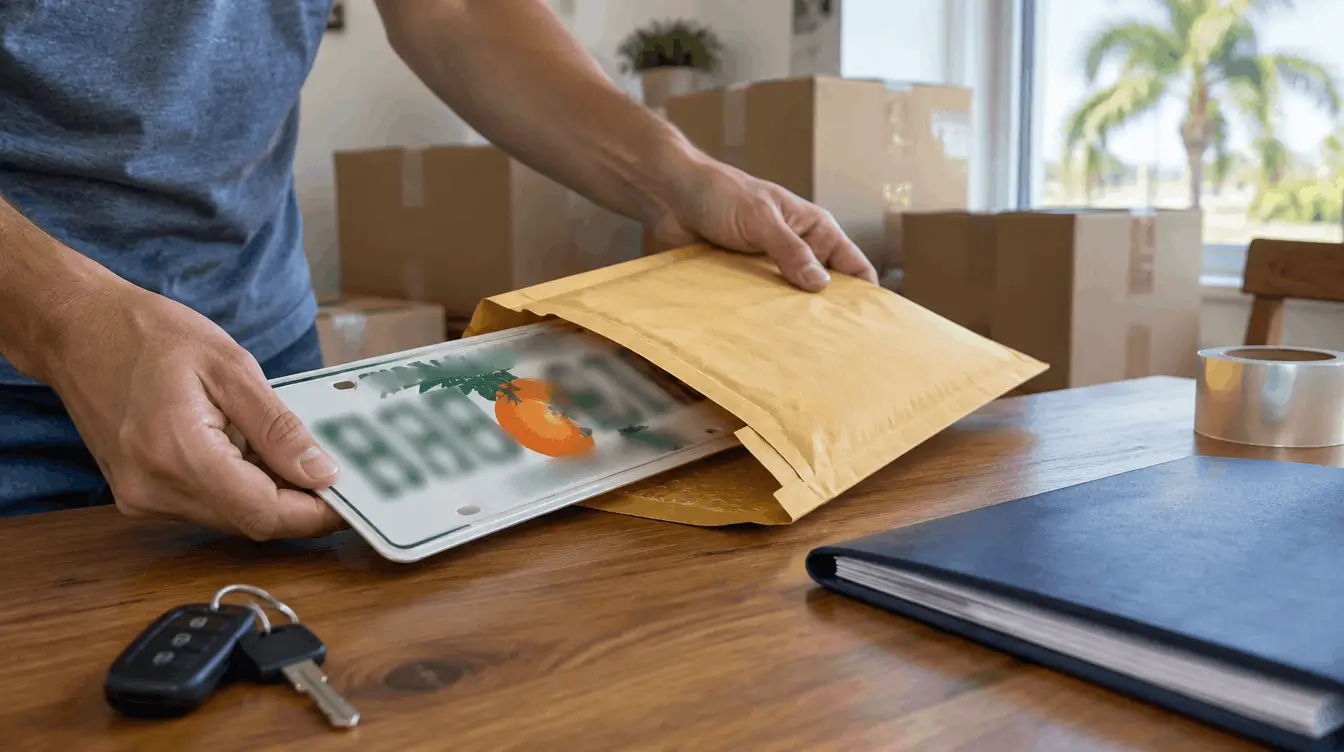
Retiring the Florida plate. Florida expects a car with a Florida registration to carry Florida insurance, so do not cancel the policy first. Surrender the plate, in person or by mail, and cancel the coverage after that. Our guide to Florida license plate surrender covers the mail-in route and the refund rules.
Sources: the New York DMV page on registering an out-of-state vehicle and its pages on insurance, New York State inspections, sales tax and moving to New York, sections 79.4(a) and 79.4(b) of NY DMV regulation CR-79, plus FLHSMV guidance on keeping Florida insurance and surrendering a plate and its electronic lien and title procedure (TL-69). Both agencies update their rules, so check them before the car ships.
What to Expect at Pickup and Delivery
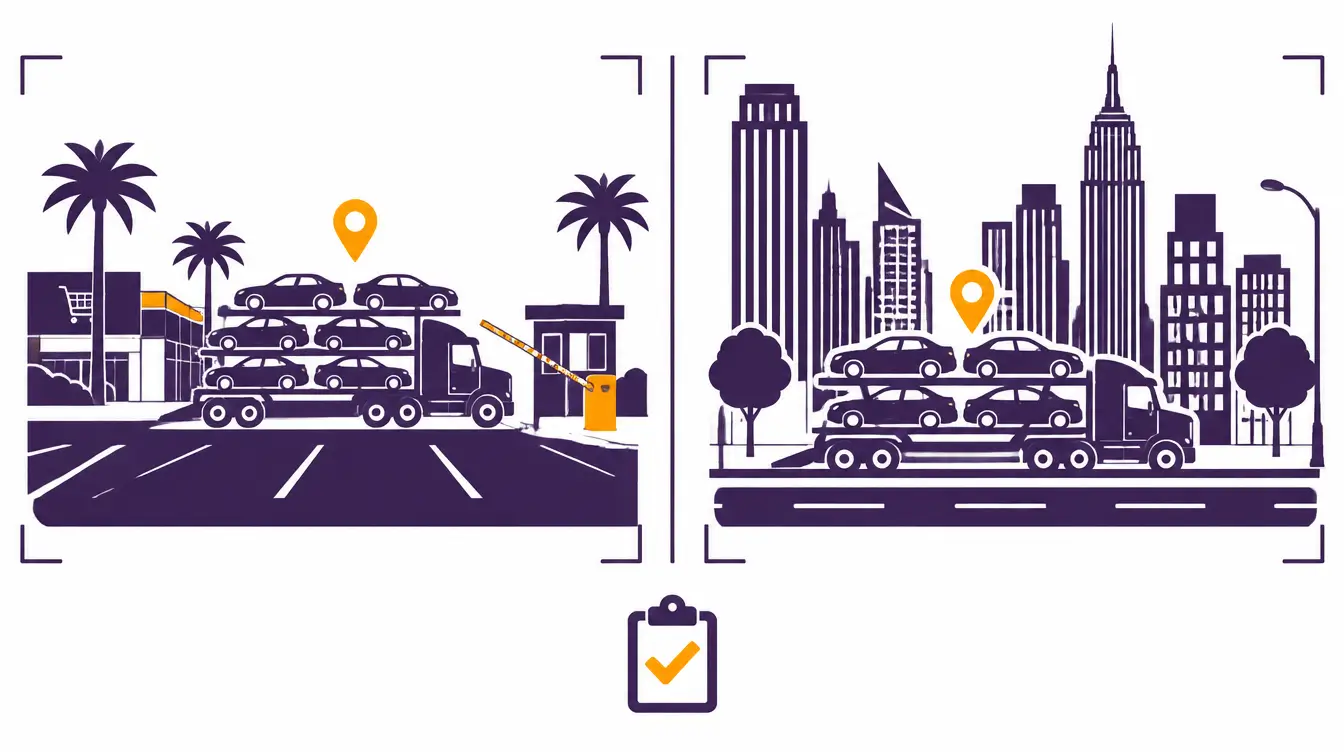
Agree on both handover spots before dispatch, because a full car hauler is long and hard to turn on tight streets.
In Florida, many condo buildings and gated communities in Miami, Fort Lauderdale and Palm Beach limit large trucks, so the driver often meets you at a nearby shopping center or on a wide public street. Houses in the Orlando, Tampa and Jacksonville suburbs are usually easier to reach at the curb.
Manhattan and most of New York City call for a meeting point chosen with the driver, since a hauler rarely fits the street outside the building. Long Island, Westchester and upstate addresses usually let the truck stop close to the door.
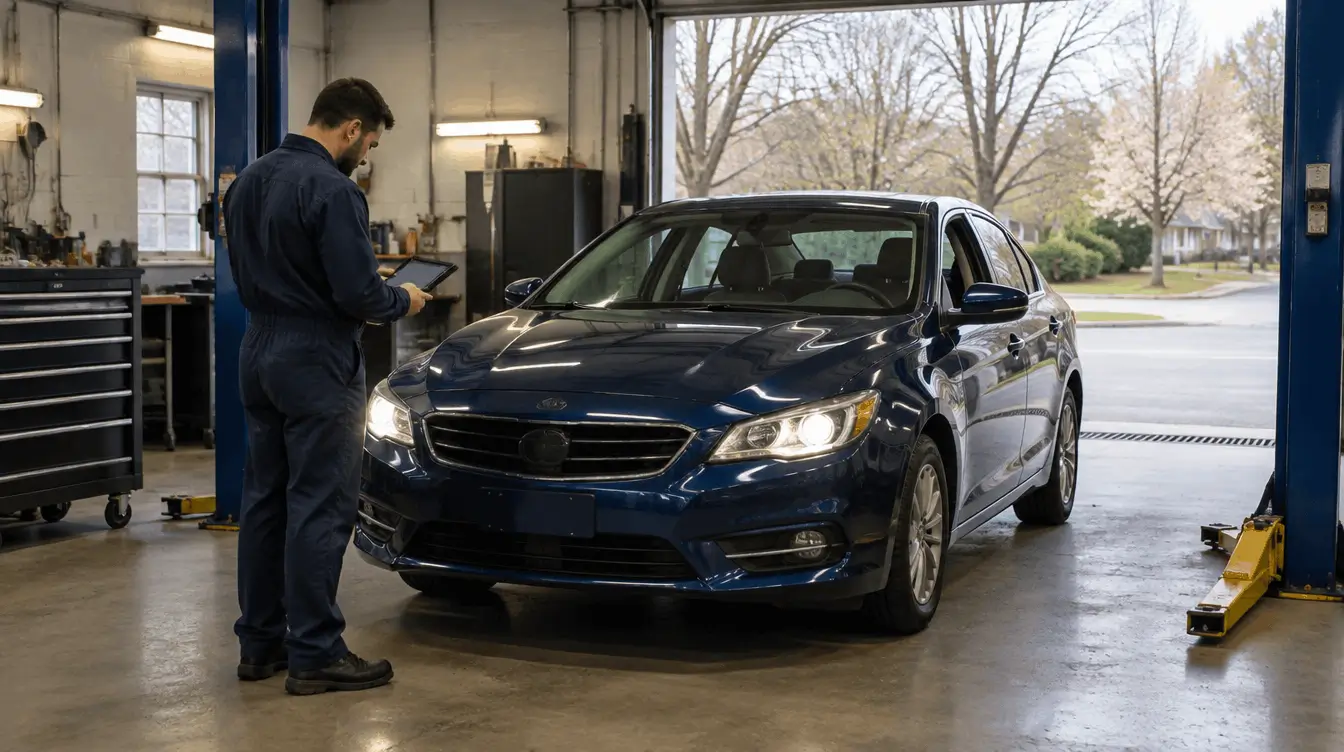
The driver inspects the car when it is loaded and again when it is unloaded, and writes any existing marks onto the bill of lading. Photograph every side, with the date showing, before it leaves Florida, and compare them with the car before you sign at delivery.
Key Things to Know Before Shipping a Car From Florida to New York
Rivalane coordinates Florida to New York moves from its Long Island office, placing each car on a northbound truck with an open spot. If the move north is permanent, keep the Florida policy active until the plate is surrendered, because Florida expects a registered car to stay insured there.

Frequently Asked Questions