





The lane spans about 230 to 880 road miles, and Richmond to New York City measures 333 to 341. Loaded cars typically spend 1 to 3 days on the road. An open-trailer sedan costs $475 to $775. Plan on booking a week out, registering in New York within 30 days and surrendering the Virginia plates.
How Car Shipping From Virginia to New York Works
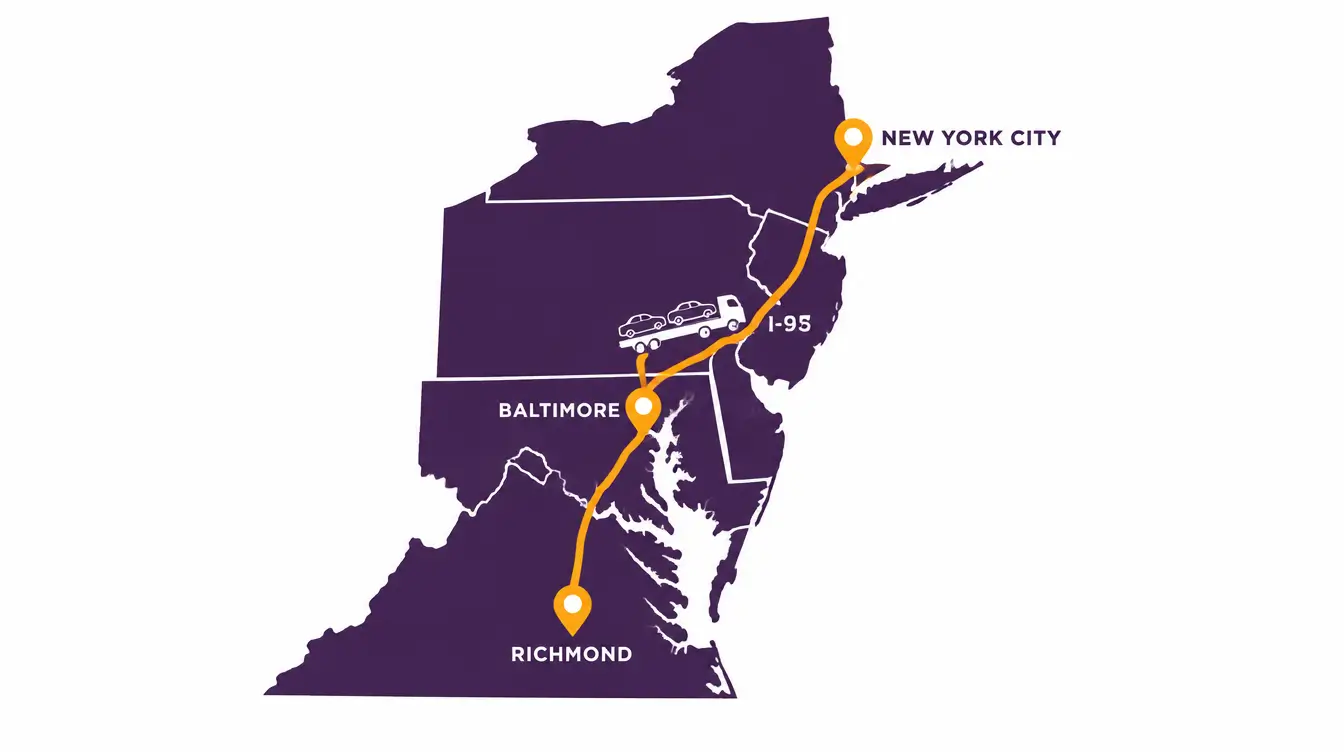
Cars from Richmond and Northern Virginia usually board a truck that is already loading on I-95 between the capital and the Washington suburbs. From there the hauler runs past Baltimore, crosses the top of Delaware and finishes on the New Jersey Turnpike, and on a Richmond to Manhattan run the halfway point falls near Aberdeen, Maryland. Arlington sits about 100 miles closer, at roughly 231 miles to New York City by two route calculators. Virginia Beach and Norfolk are different: for New York City area deliveries, calculator routes send those cars over the Chesapeake Bay Bridge-Tunnel and up the Eastern Shore before they reach I-95 in Delaware. Roanoke and Bristol are far enough inland that their cars usually ride I-81 north through the valley, and Bristol to New York City comes to about 595 miles. Upstate deliveries from Richmond, such as Buffalo, Rochester or Syracuse, leave the coast and cut across central Pennsylvania.
How Much Does Car Shipping Virginia to New York Cost?
On a run of a few hundred miles, much of the quote pays for the two stops rather than the distance. Richmond and Charlottesville sit almost the same distance from New York City, 333 to 341 and 341 to 342 road miles, so a car from either one usually prices alike.
Where the car starts in Virginia matters most at the edges. Arlington is the shortest start at about 231 miles to the city, while Bristol, in the far southwest corner, adds more than 250 miles to a Richmond run.
Size counts as well. A pickup or three-row SUV uses more of the trailer and adds weight, and the quote rises with it.
A quote far below the rest deserves one question: has a truck actually agreed to haul at that price? An unclaimed low figure usually climbs before anyone shows up.
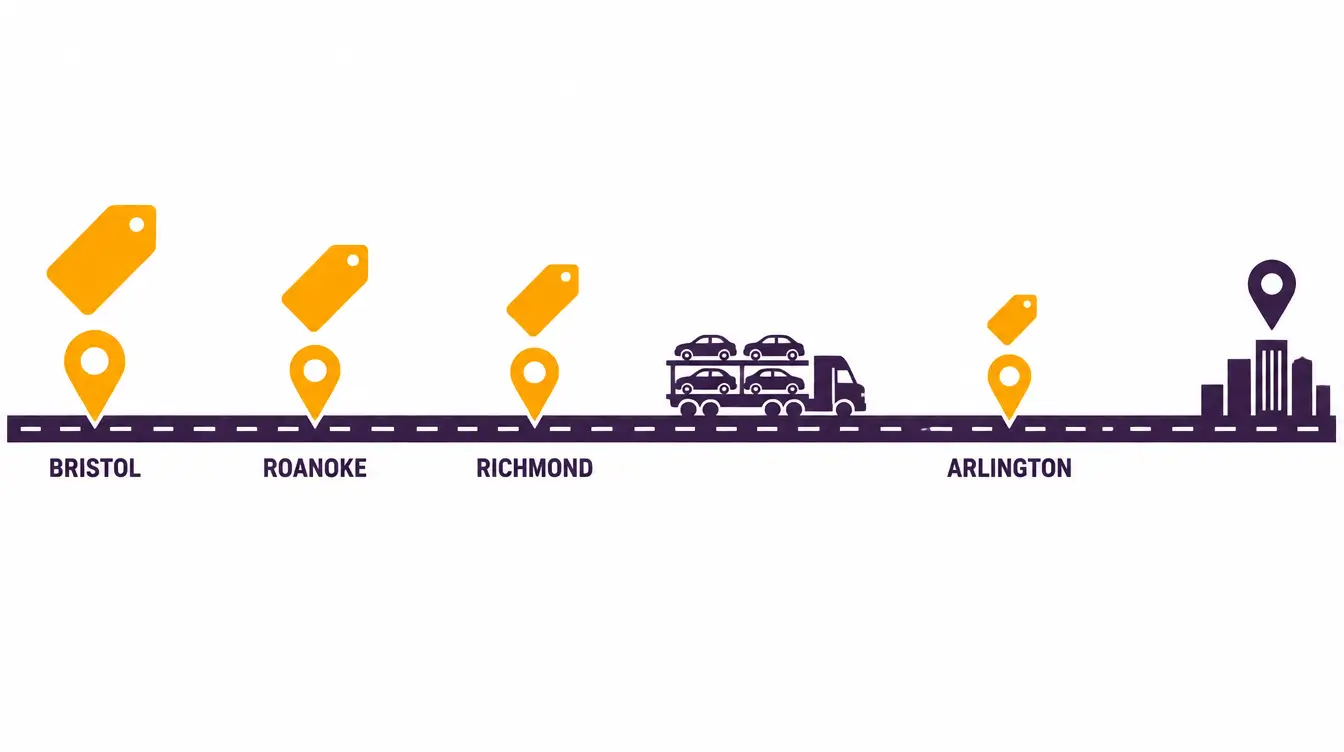
For a regular sedan on an open trailer, Richmond to New York City typically comes in at $475 to $775. Cars picked up near I-95, drops in Queens, Long Island or Westchester and a pickup date with some slack land toward the low side. A Manhattan meeting point, one fixed day, or a Roanoke, Lynchburg or Bristol start pulls it higher, and Buffalo, Rochester, Syracuse or Plattsburgh deliveries can run past it.
Enclosed transport usually costs 40 to 60 percent more than open, a large share of the total on a trip this short, so it mostly pays off for classics, exotics, fresh paint and lowered cars.
The biggest price drivers on this lane:
- Where the car starts. Richmond, Charlottesville and Northern Virginia pickups run roughly 230 to 340 miles to the city. Hampton Roads cars add the bay crossing, and Roanoke, Lynchburg and Bristol are longer runs from the west.
- Where it ends. Long Island and Westchester drops are straightforward, a Manhattan handover normally means agreeing on a meeting spot, and an upstate New York delivery is its own longer run, with Buffalo, Rochester and Syracuse cars crossing Pennsylvania.
- What you ship. Budget about $100 to $150 extra for a pickup or bigger SUV. A car that will not drive up the ramp has to be winched aboard, and not every truck has a winch.

What Factors Actually
Influence Pricing on This Route?
Booking early protects your timeline, keeps pricing steady, and reduces the risk of last-minute carrier changes.
Many customers on this route relocate permanently or move seasonally, which makes predictability more important than speed.
This article explains how auto transport Alabama to New York works, what it costs, and how long it takes, so you can make a clear, informed decision before you schedule your shipment.


Type
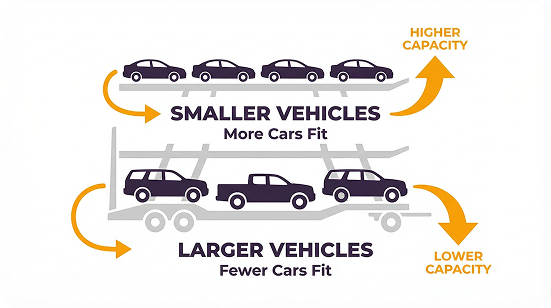
Size decides how much deck space your vehicle takes and how many other cars fit alongside it. A standard sedan is the cheapest thing to move because it slots almost anywhere on the trailer. SUVs, pickups and vans take more room and typically add a few hundred dollars on the same lane.


Is It Cheaper to Drive or Ship a Car From Virginia to New York?
Shipping Instead of Driving
Shipping makes sense when the drive would have to be done twice. A New York buyer collecting a car from a private seller in Virginia, a parent sending a car to a student at an upstate campus, or a family with more cars than drivers all skip the trip back.
It also keeps several hundred miles and the I-95 traffic around Washington and Baltimore off the odometer, which counts on a lease with a mileage cap.
Driving the Route Yourself
Richmond to Midtown is close to six hours of driving without stops, with tolls along I-95 and the Turnpike. If you are moving north yourself, driving the car there is usually the cheaper choice.
The math changes when the driver has to come back. A return flight or train and a lost workday are what a carrier replaces, and from Bristol the one-way trip alone is close to 600 miles.
How Long Does Shipping a Car From Virginia to New York Take?
Once the car is on the truck, Richmond, Northern Virginia and Hampton Roads pickups typically arrive in the New York City area within 1 to 3 days, and an Arlington pickup can be there the following day. Starts in Roanoke or Bristol and drops in Buffalo, Syracuse or Plattsburgh usually take up more of that range.
The slower part is usually getting a truck assigned. Dispatch tends to have a carrier matched in one to three working days, and giving three or four workable pickup dates widens the pool of trucks that can take it.
Haulers generally cover 400 to 500 miles per working day, so Bristol to Plattsburgh, the longest pairing at about 880 miles, works out to roughly two days on the road.
When is the Best Time to Book Auto Transport From Virginia to New York?
Carriers work the I-95 corridor north of Richmond all year, and nothing about this lane points to a seasonal peak.
A week ahead is normally plenty for a pickup near I-95. For a fixed date, a Roanoke, Lynchburg or Bristol start, or an upstate drop, two weeks gives more room. For a first estimate on your dates, try the car shipping calculator.
Winter storms can slow pickups in the Blue Ridge and southwest Virginia, and high winds over the bay can bring traffic restrictions on the Chesapeake Bay Bridge-Tunnel, so leave a little slack when the weather turns.
Open vs Enclosed Auto Transport on a Virginia to New York Route
Most cars on this lane ride on open car transport, a multi-car trailer where the car meets the same rain and road grit it would on a drive north, for a day or two at most.
Enclosed car transport puts the car inside a trailer with walls and a roof. Those trailers carry fewer vehicles, so each space costs more and can take longer to find, and on a short run the premium is a big part of the bill.
Choose it for a collector car, a recent repaint, an exotic or a car sitting low enough to need a gentle ramp angle. An everyday commuter car or a recent private purchase travels fine in the open.
Enclosed Car Transport
Enclosed demand rises for high-value, specialty and seasonal vehicles, and enclosed trailers protect against road debris and weather, which matters most on longer hauls. Enclosed rigs are a small fraction of the trailers working any given lane, and that scarcity is what drives both the higher price and the longer booking lead time.
Open Car Transport
Most vehicles move on open trailers, and for most routes that is the more cost-effective way to ship a car.
Open transport works well for standard vehicles and keeps costs predictable. It also offers the widest carrier availability.
What New York Requires When Your Car Arrives
A new resident has 30 days to register the car in New York, and no registration is issued without New York insurance already active. The drive up I-95 is short enough that the car may beat the paperwork, so arrange the policy before pickup.
- A New York policy. Only a company licensed to sell insurance in New York will do, and the DMV rejects out-of-state policies, Virginia coverage among them. The legal minimum covers $10,000 of property damage and, per person, $25,000 for injury or $50,000 for death, with $50,000 and $100,000 applying when two or more people are hurt or killed in one crash. Complete the registration within 180 days of the date the Insurance ID Card shows as effective.
- Proof of ownership. Bring the original Virginia title, because copies are refused. If a bank or finance company holds it, you need a copy that the lienholder certifies on that same page, and a signed statement on its letterhead listing the owner, VIN, year and make.
- Registering by mail. Mailed applications include a 10-day Inspection Extension Sticker. Wait until the car has crossed into New York before attaching it, then write in the entry date.
- Sales tax. A car bought while you were a Virginia resident qualifies for the non-resident exemption on Form DTF-803. Form DTF-804 covers credit for tax already paid to another state, in the cases where New York allows it.
- Inspection. Virginia uses a windshield safety inspection sticker, so an unexpired Virginia sticker is honored in New York until its own expiration or the first anniversary of the New York registration, if that comes sooner. The next inspection has to be done in New York.
- Driver license. Exchange the Virginia license at a New York DMV office within 30 days of moving.
- Closing out Virginia. After New York registers the car, Virginia DMV asks for the Virginia plates to be surrendered, and it warns against dropping the Virginia policy before that happens. Surrender works online, in person at a customer service center, or by mail together with form FMS 210. When six full months or more remain on the registration, a partial refund may follow, though never for an online surrender. Finally, let the local office that taxed the car, the Commissioner of the Revenue or the Director of Finance, know you moved so the personal property tax bills stop.
Sources: the New York DMV moving guide and the DMV registration, insurance, inspection and tax guidance it points to, together with Virginia DMV pages for owners leaving Virginia and for plate surrender. Rules at both agencies change, so recheck them close to pickup.
What to Expect at Pickup and Delivery
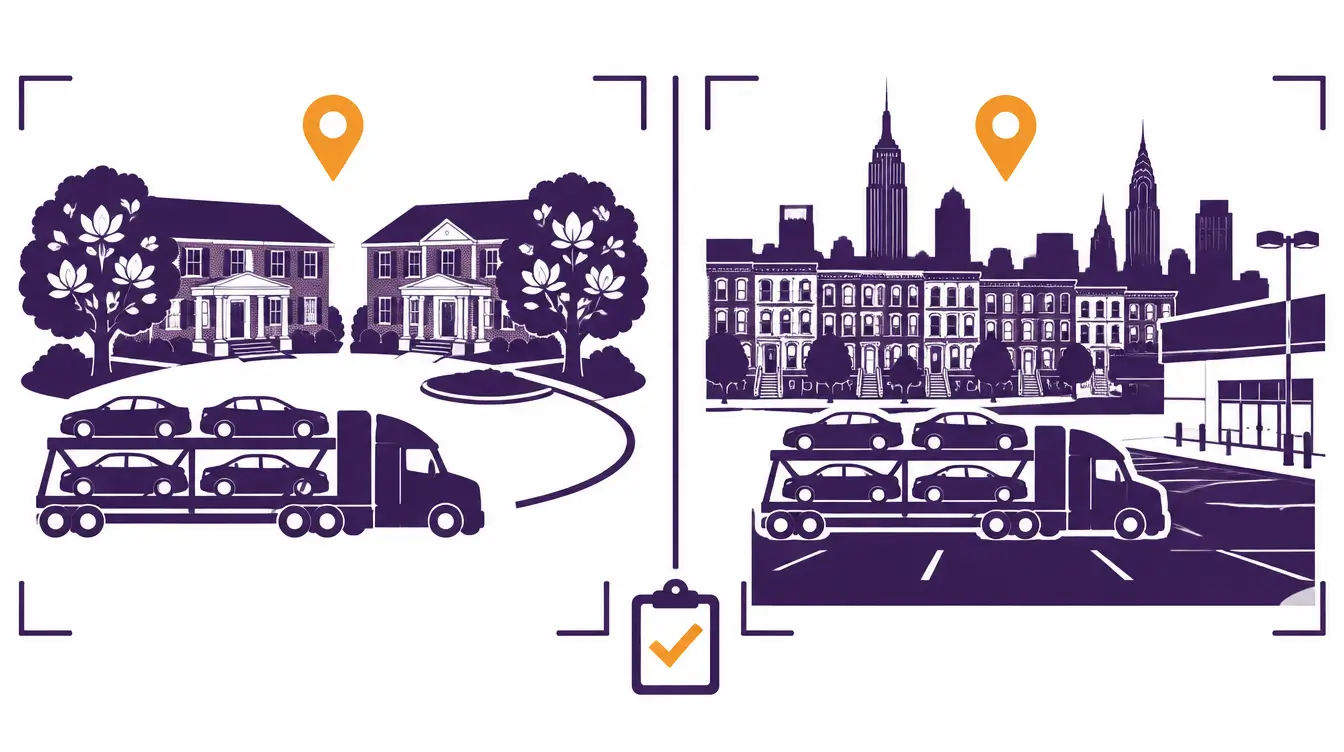
Suburban streets around Richmond, Chesterfield and Henrico usually leave room for a full carrier. Older Arlington neighborhoods, apartment complexes with towing rules and narrow blocks in Norfolk may call for a nearby shopping center lot instead, so mention tight turns, low branches or gates when you book.
New York takes more planning. A full-size hauler cannot use the Holland Tunnel, so trucks bound for Manhattan usually cross the George Washington Bridge on its upper level or come in through Staten Island, and the driver phones ahead to settle on an unloading spot, usually a retail parking lot or a broad side street. Addresses on Long Island, in Westchester or upstate can normally be reached at the curb or close to it.
At pickup the driver writes any existing damage onto the bill of lading. At the New York end, walk around the car with that document in hand, sign only once it matches, and hold on to photos you dated yourself at each handover.
Key Things to Know Before Shipping a Car From Virginia to New York
From Long Island, Rivalane arranges this lane by pairing each car with a truck already heading north on I-95 or up I-81. Give us both ends when you book, the Virginia town and the New York neighborhood or city, since a Richmond car for Queens, a Virginia Beach car for Long Island and a Bristol car for Buffalo take separate roads and price on their own.
Frequently Asked Questions



