Can You Buy a Car Out of State and Register It in California?
Yes. A California resident can buy a car in any state, but California decides whether it can be registered here. Three rules catch out-of-state buyers. A car with fewer than 7,500 miles when you buy it must be certified to California emission standards. California use tax is due even when the seller is in another state. And the 20-day registration deadline starts the day the car enters California.
After that, the car goes through the same steps as any vehicle from another state: a California smog check, a VIN verification and an in-person DMV visit. Our guide to registering an out-of-state car in California walks through those steps. This guide covers what to check before you buy, so the car you pay for is one you can register.
What Is California's 7,500-Mile Rule?
California treats any vehicle with fewer than 7,500 miles on the odometer when a California resident acquires it as a new vehicle, whether or not another state registered it first. That definition sits in California Code of Regulations, title 13, section 151.00. A new vehicle has to be certified to California emission standards, and the DMV can refuse to register one that is not.
The rule exists because many manufacturers build 49-state versions that meet federal emission standards but not California's. A 50-state car is built to be sold in California. At 7,500 miles or more at purchase, the certification rule no longer applies, although the car still needs a California smog check.
The reading that counts is the odometer on the day you buy the car. Driving it home adds miles, but it does not turn a low-mileage 49-state car into one California will register.

The DMV words the rule two ways. Its guide to buying a vehicle from out of state applies it to any vehicle under 7,500 miles, while its out-of-state registration brochure describes vehicles under two years old. If the car you want is older but barely driven, confirm with the DMV before you pay.
A few exemptions exist. The DMV lists a car received in a divorce, inheritance or legal separation, a replacement for a California car stolen or wrecked beyond repair while you were out of state, and a car you registered in the state of your last active military service.
How Do You Check Whether a Car Is California Certified?
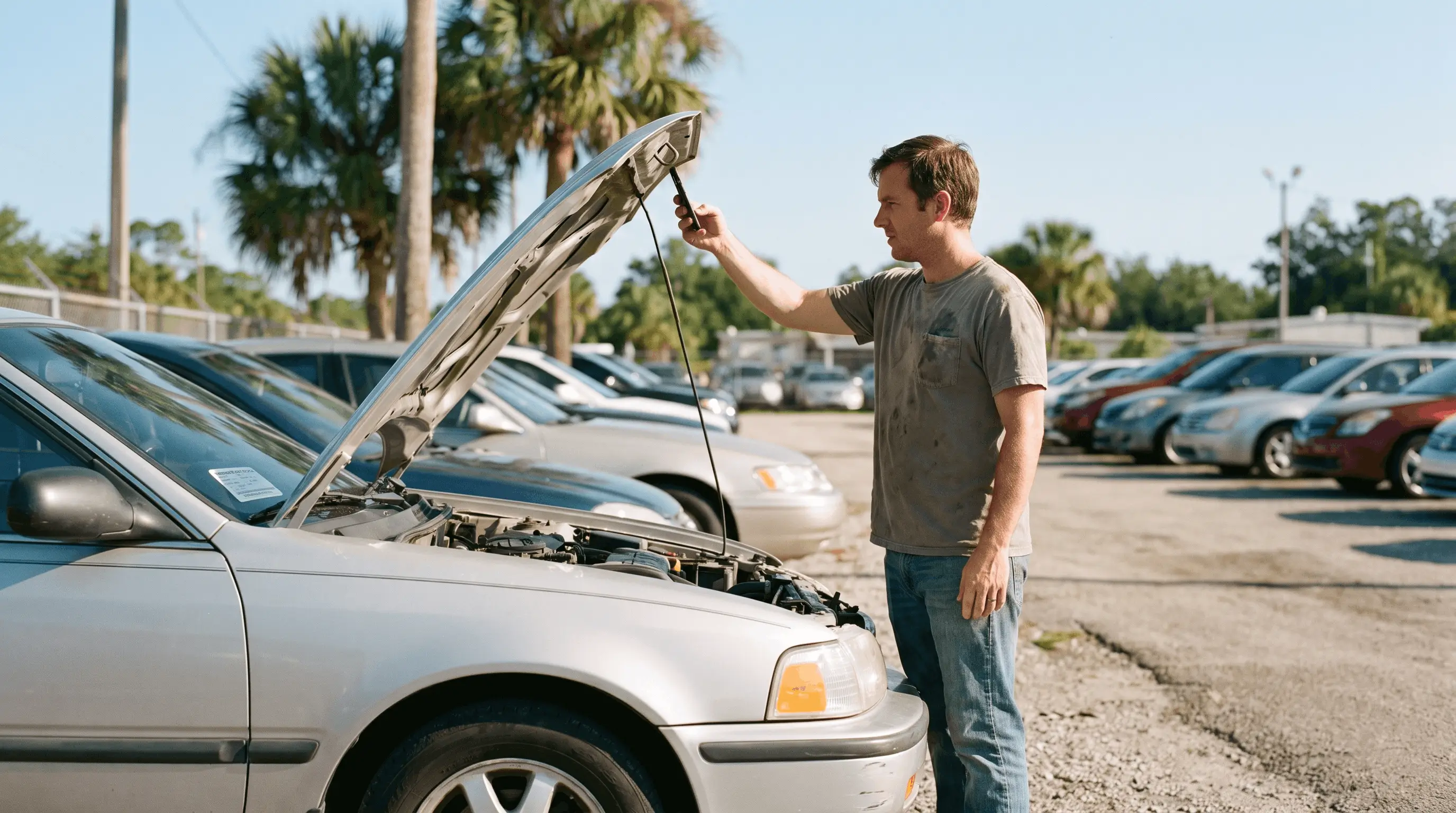
Look at the emission label under the hood. On a California-certified car, it says the vehicle conforms to California regulations or is legal for sale in California.
When you buy from a distance, ask the seller for a clear photo of the label before you send money, and compare it with the year, make and model in the listing. If the label is missing, painted over or unreadable on a car with fewer than 7,500 miles, treat that as a reason to walk away rather than a detail to sort out later.
What Should You Check Before You Pay?
Run the VIN through the National Motor Vehicle Title Information System before you commit. Federal law requires states, insurers and salvage yards to report to it, and a report shows the current title, the latest odometer reading and any brands such as salvage, junk or flood.
That check matters most for cars from hurricane country. After past hurricanes, flood-damaged cars were trucked out of the impact zone, cleaned up and sold in states that do not brand flood vehicles, according to the Bureau of Justice Assistance. A Florida or Gulf Coast car can be perfectly sound, but a title history and an independent inspection are worth far more than they cost on a car you cannot see in person.
Also confirm that the name on the title matches the seller, or that the seller has the paperwork showing how they got the car.
What Paperwork Do You Need From the Seller?
California wants to see the chain of ownership. Get the last title the other state issued, signed off by the seller and by any lender listed on it. A lender can release its interest on the title itself or on a notarized Lien Satisfied/Legal Owner/Title Holder Release (REG 166).
For newer vehicles, the DMV also wants an odometer disclosure on a Vehicle/Vessel Transfer and Reassignment form (REG 262). If the seller is not the registered owner shown on the title, a REG 262 or a Bill of Sale (REG 135) has to connect you to that owner. Both requirements come from the DMV checklist for out-of-state vehicles.
Keep a bill of sale that shows the price, the date and both parties, because California calculates use tax on the purchase price.
Will You Pay Sales Tax in Both States?
Usually not twice, but you will pay California's rate. Use tax applies when you buy a vehicle for use in California without paying sales tax to a California dealer, and that includes out-of-state dealers and private sellers. The rate matches the sales tax rate at the address where you register the car, according to the California Department of Tax and Fee Administration.
If you paid sales tax to the other state, you may be able to claim a credit for it. In the department's own example, someone who paid $1,500 elsewhere and owes $2,000 in California pays the $500 difference. Keep the receipt that shows the tax, because the credit depends on proving it.
Some out-of-state dealers collect the California use tax and send it to the DMV, particularly when you finance through them. Ask how the dealer handles tax for a California buyer before you sign, and get the answer in writing.
When Does the 20-Day Registration Clock Start?
For a car a California resident buys in another state, registration fees become due on the date the vehicle enters California. You then have 20 days to pay them before penalties apply, according to the DMV's guide to when fees are due on out-of-state vehicles.
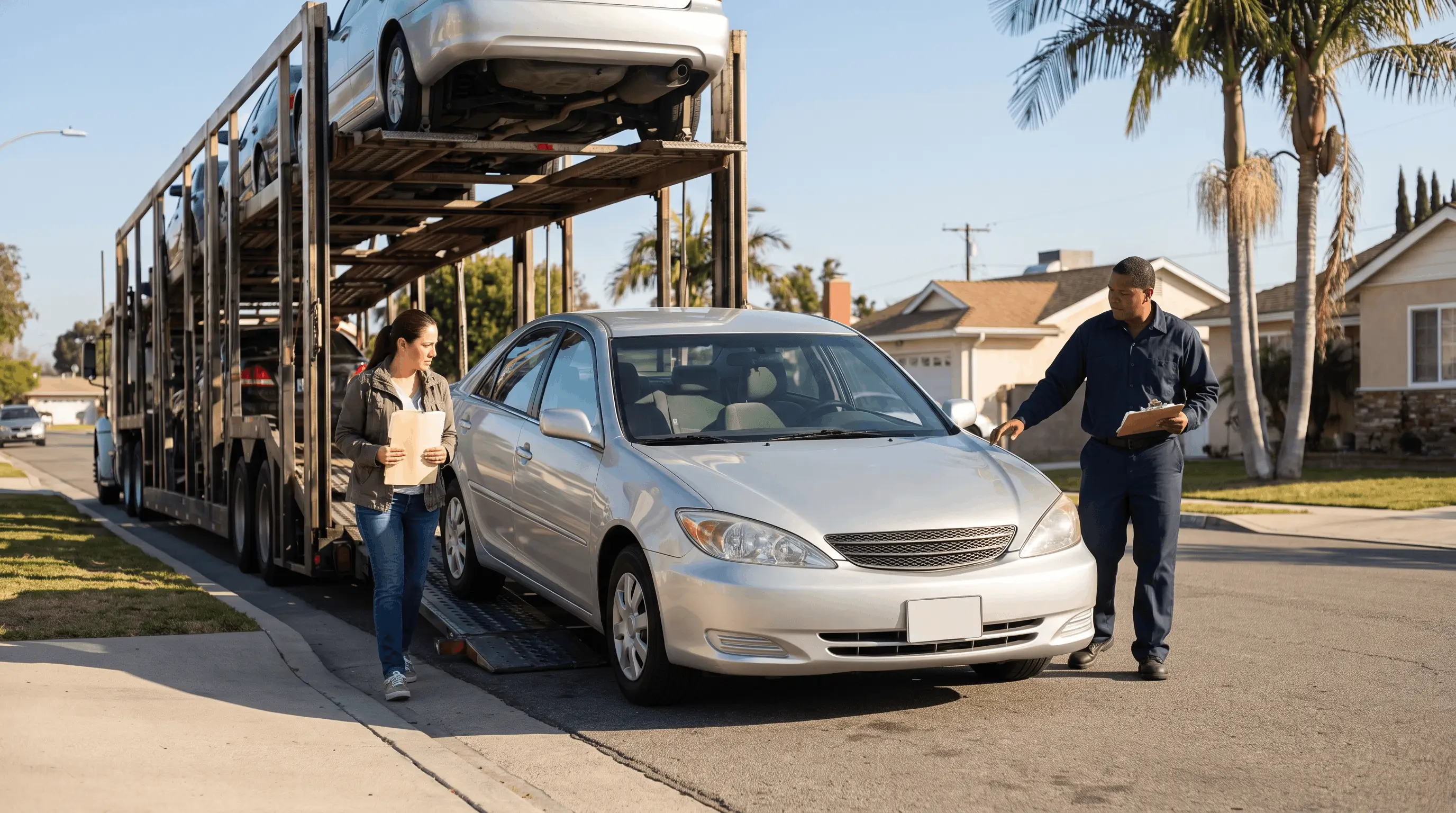
On a shipped car, that is the day the truck crosses into California, which is usually shortly before delivery. Keep the bill of lading from the carrier, because it records pickup and delivery and helps you document when the car arrived. Submit the application and fees on time even if the smog certificate is not ready yet, which the DMV advises to avoid late penalties.
What Happens After the Car Arrives?
California requires a smog certificate from a California station for gasoline vehicles from the 1976 model year onward and for diesels from 1998 onward with a gross vehicle weight rating under 14,001 pounds. Motorcycles are exempt, and a test from the other state does not count. The car also needs a Verification of Vehicle (REG 31), which most owners get at the DMV office during the registration visit.
You register in person with the signed title, an Application for Title or Registration (REG 343), the smog certificate, proof of California insurance and payment for fees and use tax. Book the smog test for the days after delivery, then take the car and the paperwork to the DMV together.
Should You Ship the Car or Drive It Home?
Driving a car home from Florida or New York means the better part of a week on the road and 2,500 miles or more on a car you just checked so carefully. Shipping keeps the odometer close to where it was at purchase, which matters most on a low-mileage or collectible car you want to keep that way. For anything rare or freshly detailed, enclosed transport keeps weather and road grime off it.
Rivalane coordinates door to door transport into California with licensed, insured carriers, and we typically assign a carrier within one to three working days after you book. See our pages on shipping a car from Florida to California and New York to California car shipping, read what to know about shipping a car you bought out of state, or price your route with the car shipping calculator.
Frequently Asked Questions