What Does An Instant Car Shipping Quote Really Show?
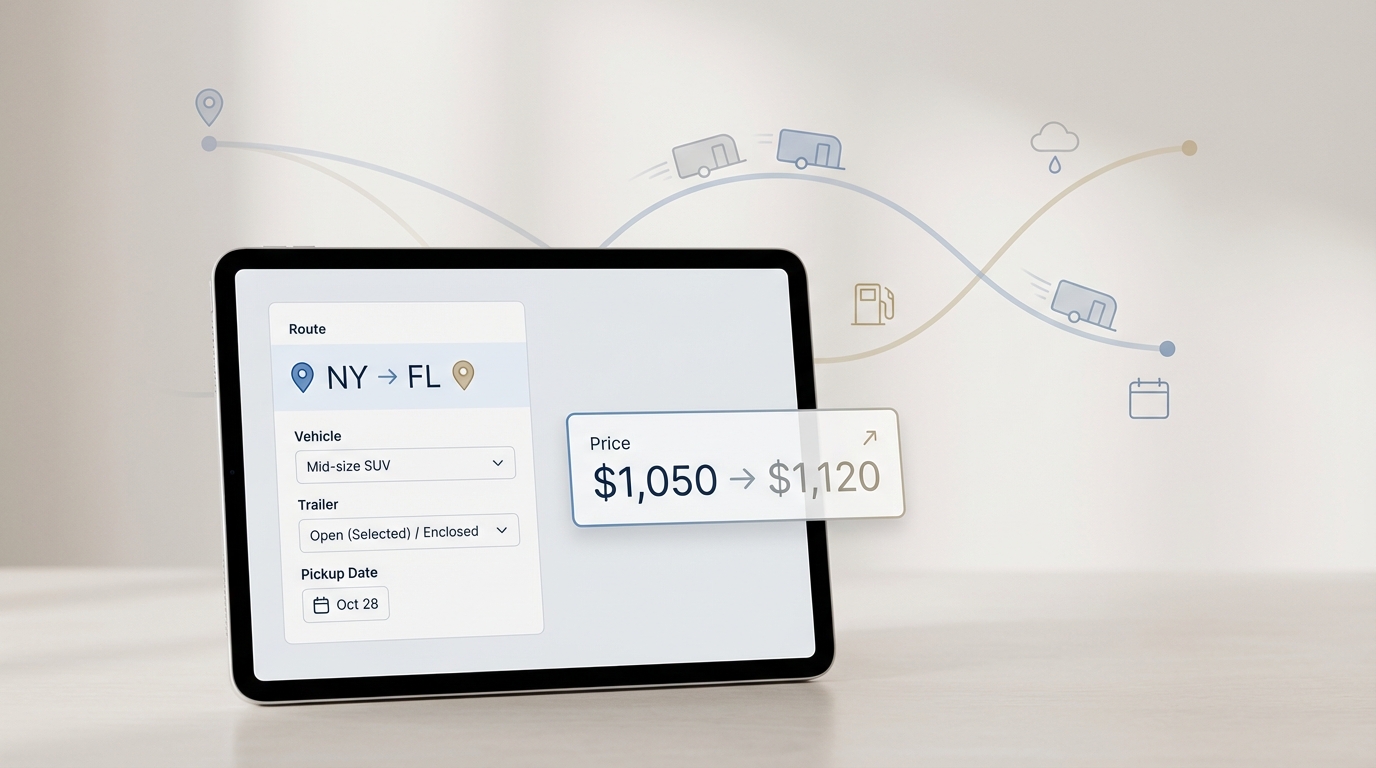
Think of the quote as a live price snapshot for one route at one moment. An instant quote car shipping reflects current trailer space competition, recent lane pricing, active truck routes, fuel movement, season, and road conditions. Because trucks fill and routes shift, the number matches today’s market, not a locked future rate.
So what does it show in plain terms? It shows what carriers likely accept right now to move your vehicle on that lane. Then it helps you plan: compare open vs. enclosed, choose a pickup window, and decide whether timing matters on a busy corridor.
Meanwhile, when demand rises or truck supply tightens, the snapshot changes. That’s normal. The market moves first, and the quote updates with it.
How Is An Instant Car Shipping Quote Generated In Seconds?
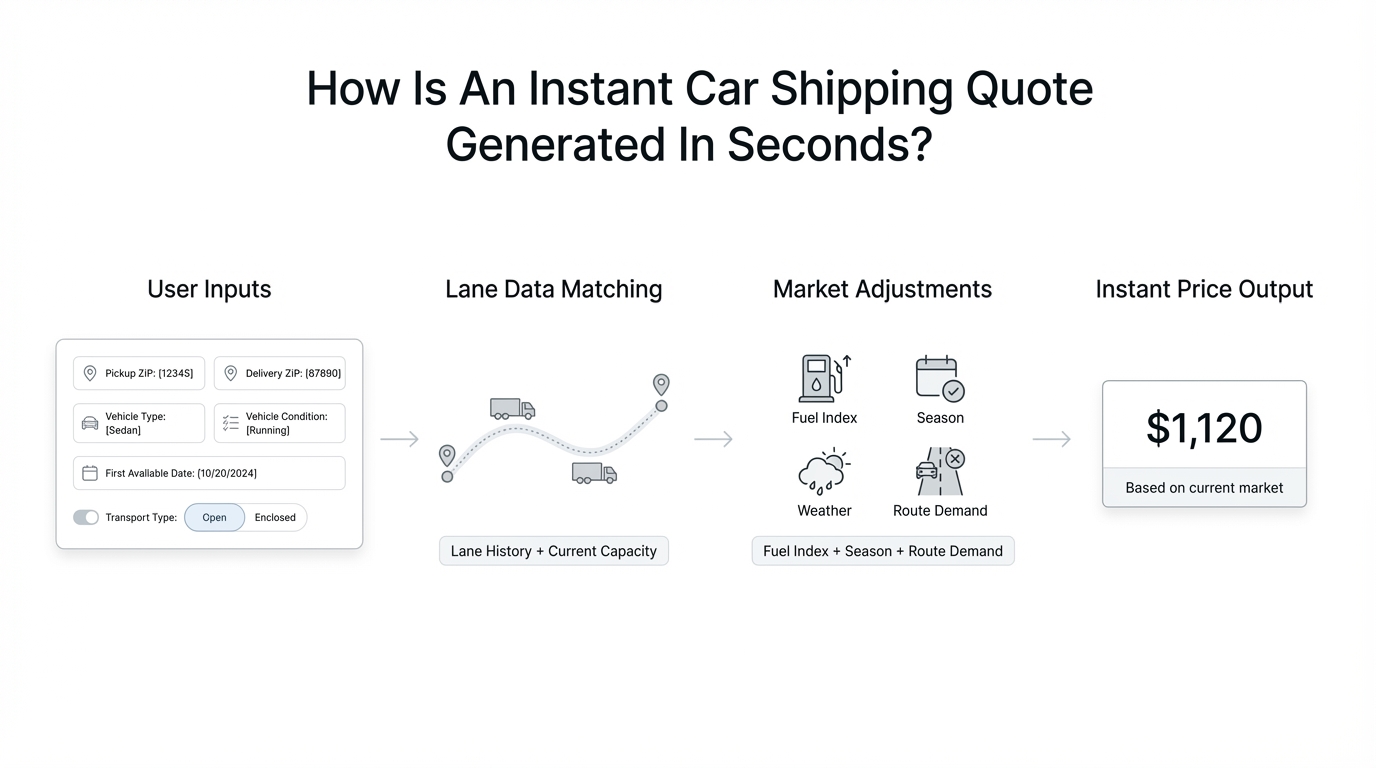
Speed comes from inputs and data. You enter pickup and delivery ZIP codes, vehicle type, vehicle condition, first available date, and transport type. Next, pricing tools match those details to lane history and current capacity.
After that, they adjust for fuel indexes, seasonality, route congestion, and where trucks actually run today. Then the system returns a number fast because it pulls from patterns and availability, not a manual call chain.
Competitors push calculators for the same reason: customers want quick answers plus pricing logic. Instant quote car transport prices change later only when the market changes, or when details change.
Pro Tip: Add trailer access notes and pick locations that fit a full-size rig. Clear access speeds carrier acceptance and protects your timeline.
Which Pricing Factors Make Quotes Move Up Or Down?
Pricing for a quote begins by reading the transport market as it stands today. The system scans recent shipment lanes, active truck routes, fuel trends, seasonality, road conditions, and pickup access.
After it sets the baseline, the car shipping pricing factors below move the number up or down. They don’t change in a predictable pattern. One week can look calm. Another can spike because trucks fill fast, fuel shifts, or fewer drivers run a corridor. That’s normal.
The quote updates when the market updates. Here’s what influences it most:
- Seasonal lane demand shifts prices. Fall pushes more vehicles south. Spring pulls them north again.
- Fuel prices update often, and carriers change rates when diesel costs change.
- Truck supply isn’t equal on every corridor. Some lanes run full, others have space.
- Trailer space reacts to vehicle size. Larger vehicles take more room, so fewer spots remain.
- Weather and road slowdowns happen. Storms, construction, and detours change routing time.
- Pickup access matters immediately. If a large trailer can’t enter a street, carriers reprice or reroute.
To learn more about lowering costs on busy lanes, check our cheap car shipping rates article.
Why Do Quotes Change Even When The Distance Stays The Same?
Distance always sets the baseline. But demand applies the pressure. So, a 1,200-mile shipment doesn’t guarantee the same price every week.
For example, when vehicles flood from the Northeast to Florida in winter, fewer trucks remain with open space. That forces rates to rise.
Another lane example: during early spring, trucks are already scheduled, and space opens up again, which lowers the pressure.
At Rivalane, we explain price movement early so customers plan smarter. The quote you see today reflects what carriers accept today. If you delay booking into a tighter week, the rate updates because capacity changes, not because a carrier acts unfairly.
Instant quote car transport appears only once total across both sections.
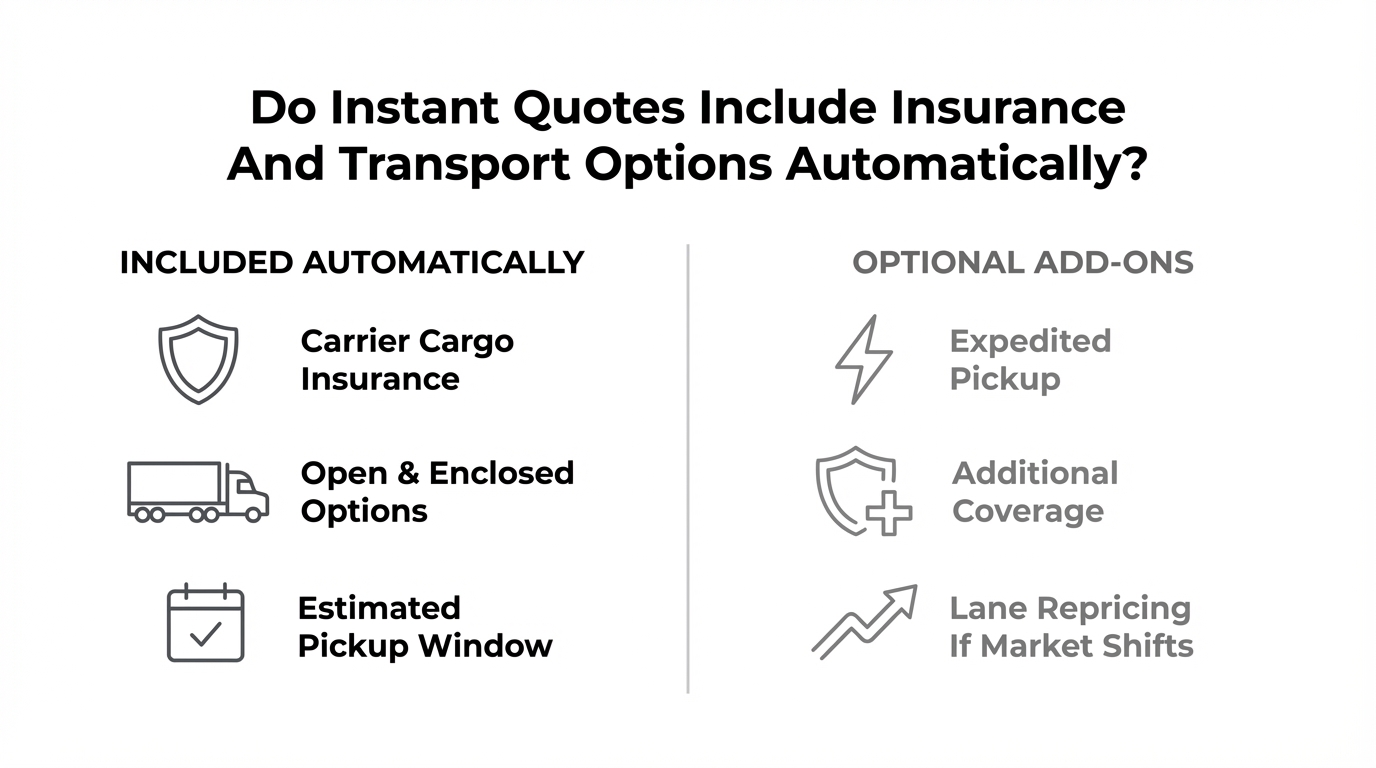
Do Instant Quotes Include Insurance And Transport Options Automatically?
Most instant pricing tools bundle a few core elements into the quote. First, they include the carrier’s cargo insurance, which protects the vehicle during transport. Next, the quote shows pricing for open and enclosed trailers. It also includes estimated pickup windows, not exact delivery timestamps, because transport lanes shift while trucks move, load, or reroute.
However, the system doesn’t bundle everything. Optional upgrades like expedited pickup or added coverage can adjust the final number later, once a carrier confirms space on the lane. The quote shows what’s standard today, and then updates only if shipment details change or the market shifts. Car shipping pricing factors like season or fuel don’t make a quote less reliable, they make it more realistic.

Why Are Calculators And Quote Education Pages The Industry Norm Now?
Years ago, companies relied on calls and manual estimates. Then customers started demanding pricing logic instead of marketing language. That changed everything.
Calculators spread across the industry because people want fast answers, and they want the price explained clearly. Education pages grew for the same reason: they remove confusion early and help customers plan transport timing without guessing.
Competitors promote calculators because quote education works better than sales persuasion. It doesn’t sound defensive. It’s a simple market truth. When a lane heats up, trucks fill up. So timing becomes part of the decision.
Quote calculators don’t stabilize prices, they explain them. That’s why quote timing matters when planning turns into booking. And through clear explanations, customers gain control over the process instead of chasing it.
Final Thoughts
Instant quotes exist to help you plan a car shipment, not to lock a price forever. The number you receive is a live market snapshot, shaped first by distance, then by seasonal demand, fuel costs, available trucks, trailer space, weather delays, and pickup access.
So, when a lane tightens, the quote updates because capacity changes. At the same time, a fast quote saves hours of guessing and long waits for unclear estimates.
Because of that, treat it as your planning baseline, and then book when the timing makes sense. Acting on a quote early protects your pickup schedule more than waiting protects the price.
Frequently Asked Questions