Difference in Open Transport vs. Enclosed
If the difference between open and enclosed transport interests you, here’s what you should know: both methods ship cars safely, but they differ in how they protect your vehicle and what you pay for.
Let’s take a closer look:
What Is Open Transport and How Does It Work?

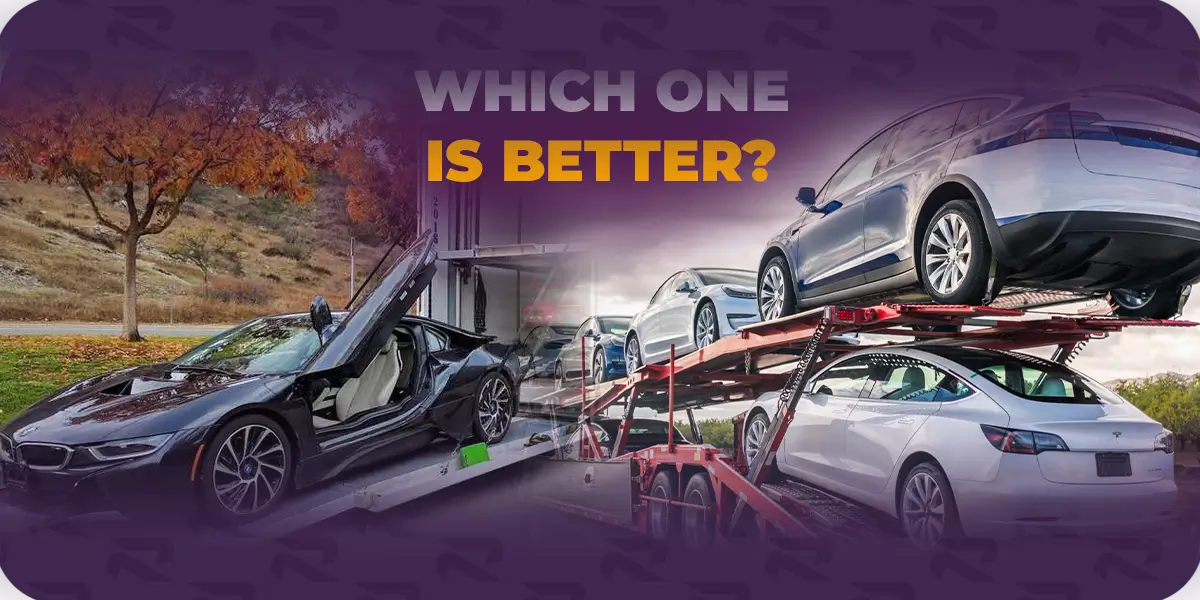
Open transport is the most common and widely available way to move vehicles across the country. Cars are loaded onto open carriers (the same type often seen delivering new vehicles to dealerships) and securely fastened in place.
Because the trailer is uncovered, the cars remain visible and slightly exposed to the elements during the trip. However, this setup allows carriers to haul up to ten vehicles at once, which lowers the overall shipping cost and makes scheduling more flexible.
For most standard cars, open transport is efficient, affordable, and reliable, offering a balanced mix of safety and value for everyday shipping needs.
What Is Enclosed Transport and How Does It Work?

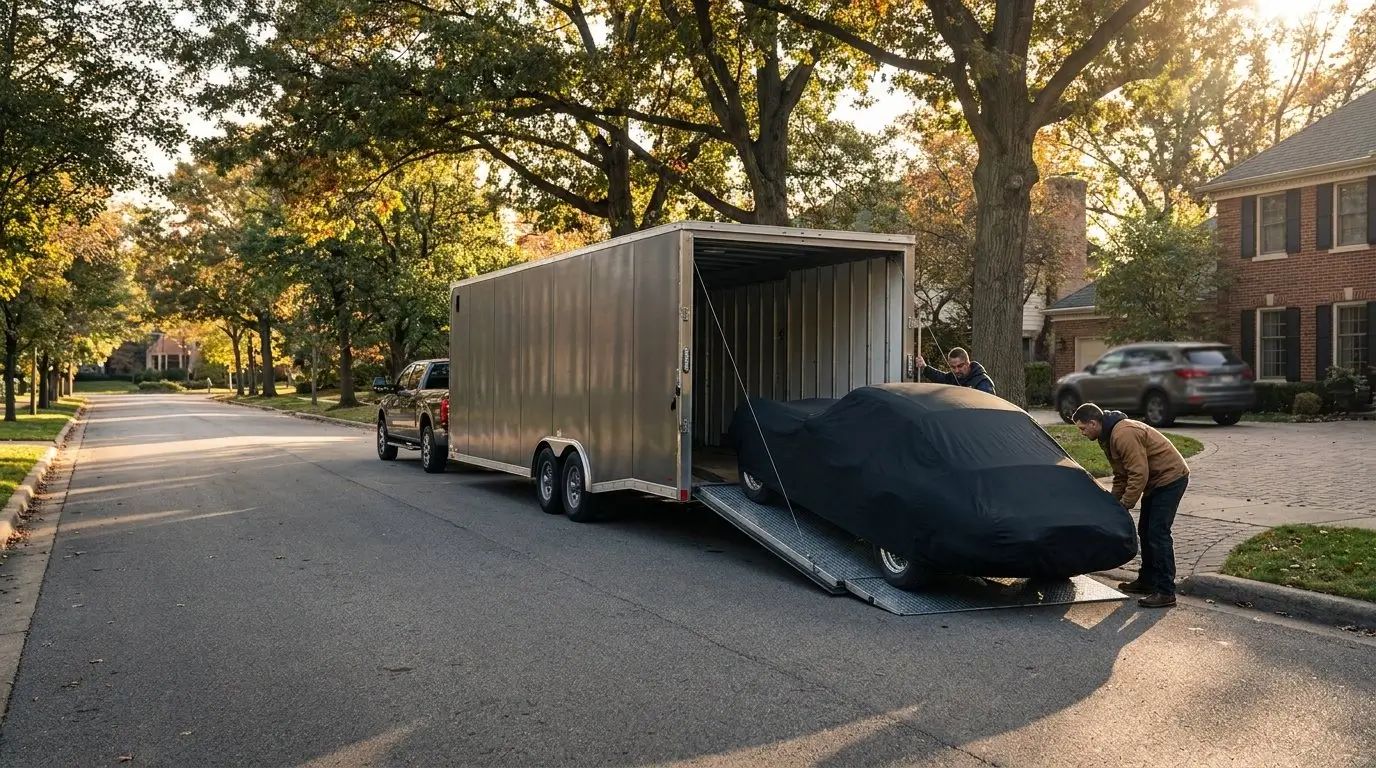
Enclosed transport takes the same process and adds an extra layer of care. Instead of an open trailer, the vehicle travels inside a fully covered carrier, protected from rain, dust, and road debris.
This type of service is often used for luxury or collector cars that need extra attention during transit.
Because enclosed trailers carry fewer vehicles, typically two to six, the drivers can provide more personalized handling. They often use lift gates and soft straps to secure cars without contact that could cause damage.
Note: When comparing open vs enclosed auto transport, enclosed shipping is the premium option designed for owners who want the vehicle kept under cover for the whole trip. It’s commonly used for exotic and luxury vehicles where added shielding from weather and road exposure is important.
How Do Open and Enclosed Transport Compare Side by Side?
The table below shows the main differences so you can see how each option performs in real shipping situations.
| Feature | Open Transport | Enclosed Transport |
|---|---|---|
| Protection | Vehicles are exposed to sun, rain, and minor road debris, though carriers secure them safely. | Cars are fully covered inside the trailer, protected from weather, dust, and outside elements. |
| Cost | More affordable because carriers haul multiple cars at once. | Higher price due to limited capacity and added protection. |
| Best For | Everyday vehicles, relocations, and cost-focused shipping. | Luxury or collectible cars that need extra care. |
| Availability | Easier to schedule thanks to the large number of open carriers on the road. | Fewer enclosed carriers available, which can extend waiting times. |
| Transit Time | Typically quicker to book and dispatch since routes fill faster. | Slightly slower due to limited space and specialized handling. |
| Insurance Coverage | Includes standard carrier cargo insurance. | Often comes with extended coverage and experienced drivers handling high-value vehicles. |
Which Option Is Safer for Your Car?
Both open and enclosed carriers are made to keep vehicles secure, but they handle risk differently. Open carriers leave cars exposed to weather and light road debris, which can happen during long-distance routes.
Even so, professional haulers secure every vehicle tightly to prevent shifting or contact.
Enclosed carriers eliminate that exposure by keeping cars fully covered inside the trailer, which offers protection from rain, dust and debris.
This setup is often chosen for high-end or collector vehicles that need extra care.
When comparing open vs enclosed car shipping, the carrier matters as much as the trailer. Rivalane checks each carrier’s operating authority, safety record and insurance standards before assigning your vehicle to them.
Cost Breakdown for Open and Enclosed Transport
Pricing for auto transport varies based on several factors, but the gap between open and enclosed shipping is easy to understand once you know what influences each method.
What Affects Open Transport Pricing?
Open transport rates are shaped by route distance, location demand, and seasonal timing. Shorter routes or routes between major cities often cost less because carriers fill their trailers quickly.
Prices may rise in peak moving months or during winter relocations to southern states when demand increases. The number of vehicles loaded on one trailer also affects the price; more cars per trip means each customer pays less.
That makes open transport the most economical option for standard car shipping. If you want to see how per-mile pricing actually works and what moves it, our guide to car shipping cost per mile covers it in detail.
Why Does Enclosed Shipping Cost More?
Enclosed carriers charge higher rates for one simple reason: premium protection requires more resources.
These trailers hold fewer vehicles, usually two to six, which limits space and raises the cost per car. Drivers handling enclosed loads are often specialized in transporting vintage or classic vehicles that need precise care.
The equipment, including lift gates and soft straps, improves vehicle handling and protection during loading, though it also adds to overall operating costs.
Enclosed transport costs more per mile than open because of the specialized equipment, the limited space, and the higher level of handling involved.
When to Choose Open Transport
Open transport is the go-to option for most car owners because it keeps costs low and scheduling simple, and it is the standard way vehicles move around the United States.
Open transport works best when:
- You’re relocating and need to ship a daily-use vehicle.
- You’re buying or selling a car online and want fast pickup.
- You’re working with a limited budget and prefer an affordable rate.
- You need flexible scheduling with carriers available nationwide.
Cars are secured to the trailer and inspected before loading, and every carrier we assign holds active operating authority and cargo insurance. For most customers, open transport delivers dependable service without unnecessary extras.
When Enclosed Transport Is Worth the Investment
Enclosed shipping is chosen by owners who want added protection or who are transporting vehicles that require specialized care. It’s basically made for cars that shouldn’t face weather, dirt or road debris during transit.
Enclosed transport is ideal for:
- Exotic or vintage vehicles.
- Cars with custom paintwork or low ground clearance.
- Shipments moving through harsh weather or long-distance routes.
- Vehicles with sentimental or collector value.
Because enclosed trailers carry fewer cars, drivers can give each one more attention. They often use soft straps and hydraulic liftgates for safe, contact-free loading.
Pro Tip: Enclosed carriers often come equipped with liftgates, which is perfect for low-clearance cars that can’t handle steep ramps. If your vehicle is rare, high-value, or simply deserves extra care, enclosed transport is usually worth the added cost.
How to Decide Between Open and Enclosed Transport
The choice between open and enclosed transport depends on what matters most to you, either the price, the protection or the timing. Both are safe, but they’re created for different needs.
Open transport is mostly for efficiency and affordability. It’s ideal for standard cars, relocations, or quick shipments where exposure to weather isn’t a concern.
Enclosed transport caters to higher value vehicles, the luxury and collector cars that are worth shielding from road debris and weather.
When comparing open transport vs enclosed, think of it this way: if you’re shipping a 2018 Toyota Camry for a move, open transport makes perfect sense. If you’re sending a 1965 Mustang to a car show, enclosed is worth every dollar.
Each option delivers safety; the difference lies in how much protection you expect for your vehicle.
How Insurance Works in Each Transport Method
The cargo insurance on your shipment belongs to the trucking company that moves the vehicle, not to the broker who arranges it. Rivalane is a licensed property transportation broker, so the policy that applies to your car is the carrier’s policy.
The coverage is tied to the carrier, not the shipping method. That is why the carrier’s certificate of insurance matters more than whether you booked open or enclosed. Ask for it, check the cargo limit and the deductible, and confirm what it excludes before the car is picked up.
Carriers running enclosed loads often carry higher cargo limits, because the vehicles they haul tend to be worth more. If your car is valuable enough for that limit to matter, read the number rather than assuming enclosed means fully covered.
If damage does happen, the claim is filed with the carrier that transported the vehicle. Note the condition on the delivery inspection report before you sign it, and report any damage to Rivalane within 48 hours of delivery, which is the window set out in our terms.
The Shipping Process with Rivalane
Here are the steps of the shipping process with us:
Step 1: Request a free quote. You’ll receive a detailed estimate based on route, vehicle type, and preferred transport method.
Step 2: Choose open or enclosed transport. We’ll help you decide which fits your car and budget best.
Step 3: Schedule pickup. We coordinate with carriers running your route to find the most convenient date for your location.
Step 4: Vehicle inspection and delivery. The driver performs a full inspection before loading and again upon delivery to confirm your vehicle’s condition.
Why Choose Rivalane for Your Car Shipping
We stand out for our personal approach and steady communication from the first quote to the final delivery.
From the moment you reach out, our team begins coordinating every detail to keep your shipment on track.
As your booking moves forward, we stay connected with the carrier, confirm pickup times, and verify each step of the route. During transport, we keep in contact with the carrier and our support team shares progress so you always know where your car is.
Every carrier we assign is checked for active operating authority, a clean safety record and current cargo insurance, which adds another layer of confidence. With clear pricing, responsive service and coverage across every state, we make the entire process transparent.
Frequently Asked Questions
What is the difference between open and enclosed car shipping?
What is open transport?
Is open car transport safe?
Should I ship my car open or enclosed?
How much cheaper is open transport than enclosed?
Is my car insured during open or enclosed transport?