To sell a car in New Jersey, a private seller signs the seller's section on the reverse side of the title, gives the title to the buyer, completes a bill of sale and removes the plates. The New Jersey Motor Vehicle Commission (MVC) lists those steps on its transferring vehicle ownership page. A seller whose buyer lives in another state follows the same steps and has two extra things to settle before the car ships: how the title and payment change hands, and what the buyer plans to do about registration.
This guide takes a private seller through each step, then walks through a Newark seller whose buyer in Tampa has booked the transport. For the wider picture on payment and releasing a car to a carrier, see our guide to shipping a car you sold to an out of state buyer.
What Do You Need Before You Sell a Car in New Jersey?
Start with the title and check three things on it: which owners are listed, whether a lender is still recorded, and whether the title is in your hands at all. The MVC says the lender holds the title while a loan is open, so a seller with a loan has to deal with the lender first. The owners named on the title are the people who sign it.
Then agree the terms in writing with the buyer: the price, the payment method and who books the transport. Wait for your bank to confirm that the funds are final before you sign the title over or let the car leave.
How Do You Sign Over the Title When You Sell a Car in New Jersey?
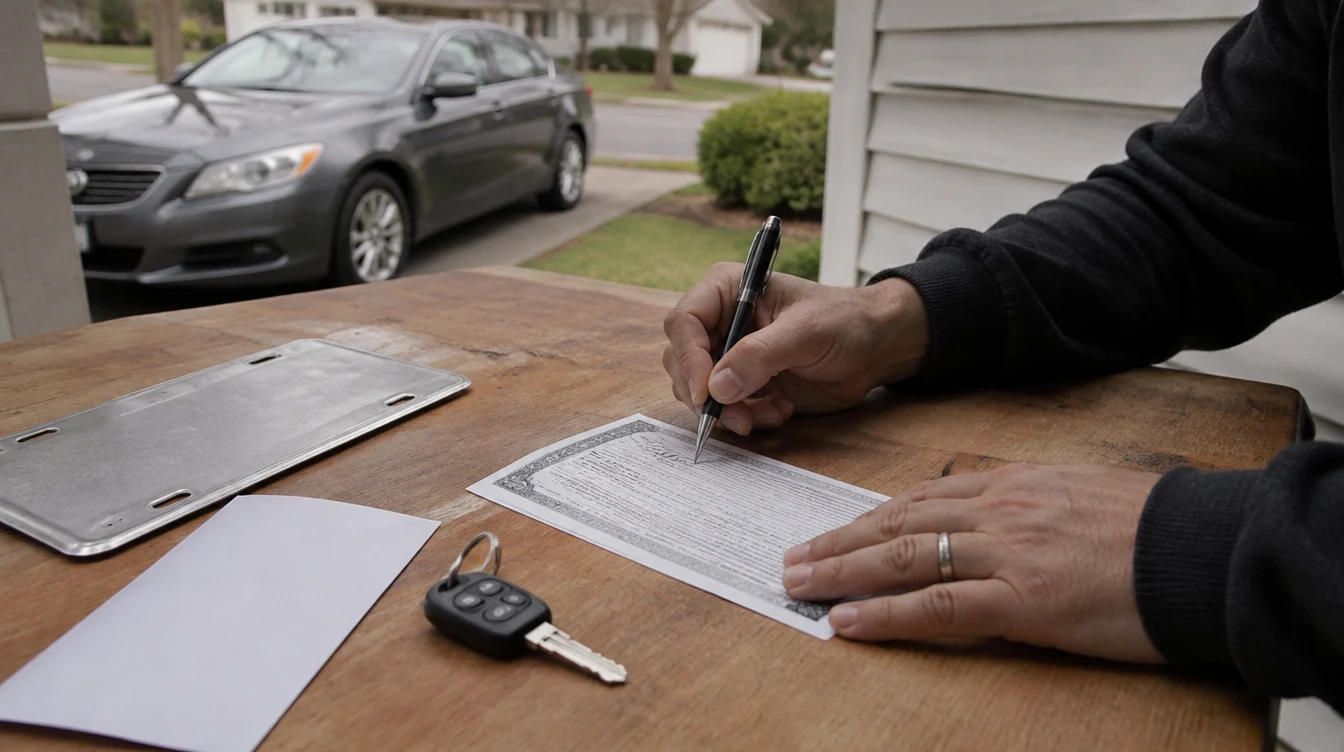
The MVC's instructions are short: the seller signs the seller's section on the reverse side of the title and gives the title to the buyer. Fill in every line that section asks for while you sign, and write the buyer's name and address exactly as the buyer gives them. A buyer who lives out of state needs the out-of-state address on the title if the buyer plans to use a New Jersey temporary registration, which is covered below.
The MVC pages we reviewed describe the same signing steps for every sale and do not describe a different process for a buyer who lives in another state. If anything about the title or the handover is unclear, ask a motor vehicle agency before you sign, and ask the buyer to check with Florida.
What Do You Record About the Mileage?
The seller discloses the odometer reading in writing when the title changes hands, and the MVC says to give an accurate reading at the time of sale. The federal rule, 49 CFR Part 580, requires the disclosure on the title, signed and dated. Its exemptions depend on the model year: a car from model year 2010 or earlier is exempt, and one from model year 2011 or later stays covered until it is 20 years old. Record the true reading even when the car is exempt, since the buyer will want a record of it.
Do You Need a Bill of Sale in New Jersey?
Write one. The MVC's ownership page describes a bill of sale that lists the buyer's name and address, the date of sale, the odometer reading and the sale price. Add the year, make and vehicle identification number and the names and signatures of both parties, and keep a copy. It records the terms of the sale, and it gives a Florida buyer a document that matches the title.
What If There Is a Lien on Your New Jersey Title?
You cannot pass a clear title to a buyer while a lender is still recorded on it. According to the MVC's liens page, the lender holds the title, and the lender has to release the lien before the buyer can receive a clear one. An original New Jersey title with a lien satisfaction signed and dated by an authorized representative needs no further proof of payment.
Without that title, the MVC accepts one of three kinds of proof of payment: a signed and dated lien satisfaction letter on the lender's letterhead that lists all owners, the lender's contact details and the vehicle's VIN, year and make, a dealer wire transfer statement, or a retail installment agreement stamped by the bank. A satisfaction letter from an individual lienholder who is not a financial institution must be notarized. Reissuing a title without the lienholder listed costs $60, according to the same page.
The MVC page does not describe how a payoff works when a private sale and the payoff happen together. Ask the lender for a payoff figure and for how and when it will release the lien and the title, and build that time into the date you give the buyer. A Florida buyer also needs the lien dealt with: Florida's procedure asks for a lien satisfaction when the out-of-state title shows a lien.
What Happens to Your Plates After You Sell?
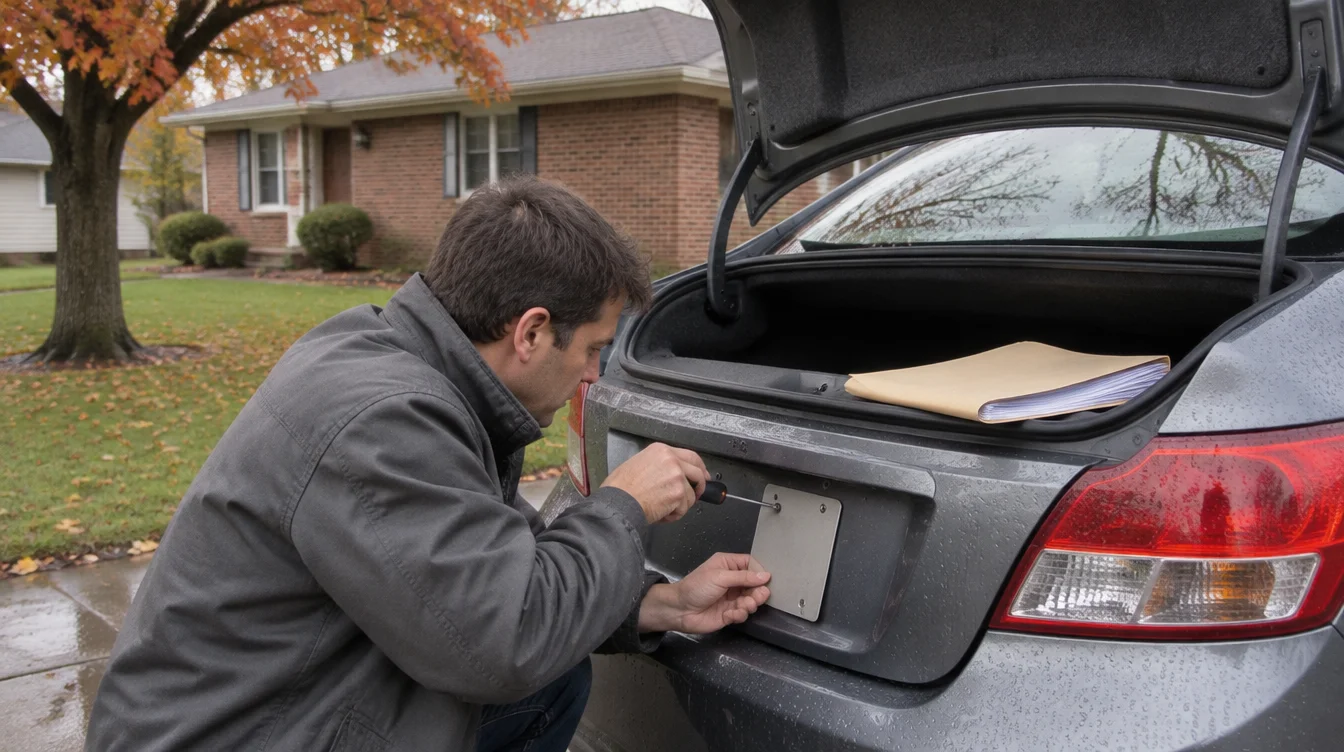
The plates stay with you. The MVC says to remove them and surrender them to a motor vehicle agency, and you can keep them only to transfer to another vehicle you own, not to another owner. According to the MVC's plates page, you can hand them to staff at any agency, place them in the plate drop box outside one, or mail them with a self-addressed, stamped envelope. Inspection stations do not take them, and the MVC does not accept out-of-state plates, which have to go back to the issuing state.
The MVC mails a receipt as proof of surrender, and the plates page says to keep it in case charges are linked to those plates later. If you need the receipt right away, ask staff at the greeter desk.
Coordinate the insurance change with your insurer, so that coverage stays in force while the New Jersey registration remains active. The MVC's Uninsured Motorist Unit FAQ says New Jersey requires the registered owner to maintain liability coverage, and that a suspension notice follows when an insurer reports a lapse. If a notice arrives after you sold the car, the Unit gives its own instructions for a person who no longer owns the vehicle: send the plate receipt, proof that the vehicle has been registered in another state, or form RSC-6, and use the contact details in the FAQ. That is separate from the routine plate surrender above.
Can a Florida Buyer Drive the Car Home on a Temporary Registration?
Only a buyer who plans to drive the car home needs to read this section. The MVC's temporary non-resident registration page describes a 30 day temporary New Jersey registration, form BA-49, for a person who lives outside New Jersey, buys a vehicle in New Jersey and plans to take it to the home state. It cannot be renewed and is valid in the continental United States. The buyer applies at a motor vehicle agency with the original New Jersey title assigned to the buyer showing the out-of-state address, proof of that address, proof of insurance, identification and a $5.00 fee.
The page addresses the buyer and does not mention a car that ships on a carrier, so a buyer who is having the car shipped should ask the MVC whether the temporary registration applies. The seller's part is to assign the title correctly, with the buyer's name and out-of-state address.
What Does a Florida Buyer Need to Bring?
Florida's Division of Motorist Services procedure for a first Florida title, TL-10 (the copy we reviewed is marked 05/25), lists what the buyer submits for a used car from another state, and the buyer should confirm the current requirements with the county tax collector before the car arrives:
- The New Jersey title, properly assigned to the buyer
- A signed form HSMV 82040, the title application
- Identification, which Florida accepts from any state, or a passport
- A VIN verification, on HSMV 82042 or section 8 of the application
- Florida sales tax or proof of an exemption
- A plate number or a non-use statement, plus insurance and registration fees if the buyer is buying a plate
- A lien satisfaction, if the New Jersey title shows a lien
- A bill of sale, if the title is open
The buyer has 30 days after delivery of the car to apply for the title under Florida Statutes section 319.23(6)(a), and a late fee applies after that. Our guide on how a Florida buyer titles a New Jersey car explains the insurance, the VIN verification and the service center visit.
What Changes When the Buyer Lives in Florida?
Your New Jersey steps stay the same. You still sign the title, record the mileage and take your plates off, and the buyer titles and registers the car in Florida at home.
The handover is what changes, because the buyer is usually not there. The keys go to a carrier's driver, the title travels separately or with the car by agreement, and nobody can check a document at the curb. Settle who books the transport, who pays the carrier and when the title is sent before a pickup date is set. The bill of lading the driver signs at pickup is the other document to understand before pickup day.
Rivalane coordinates door to door transport with licensed, insured carriers. We typically assign a carrier within one to three working days after you book, and pickup and delivery dates are estimates, not guarantees. The car shipping calculator prices the trip for whoever is booking, and our New Jersey car shipping page covers pickups across the state.
Example: A Newark Seller Shipping a Car to a Buyer in Tampa
Here is how the steps fit together for a private seller in Newark whose buyer lives in Tampa and has booked the transport.
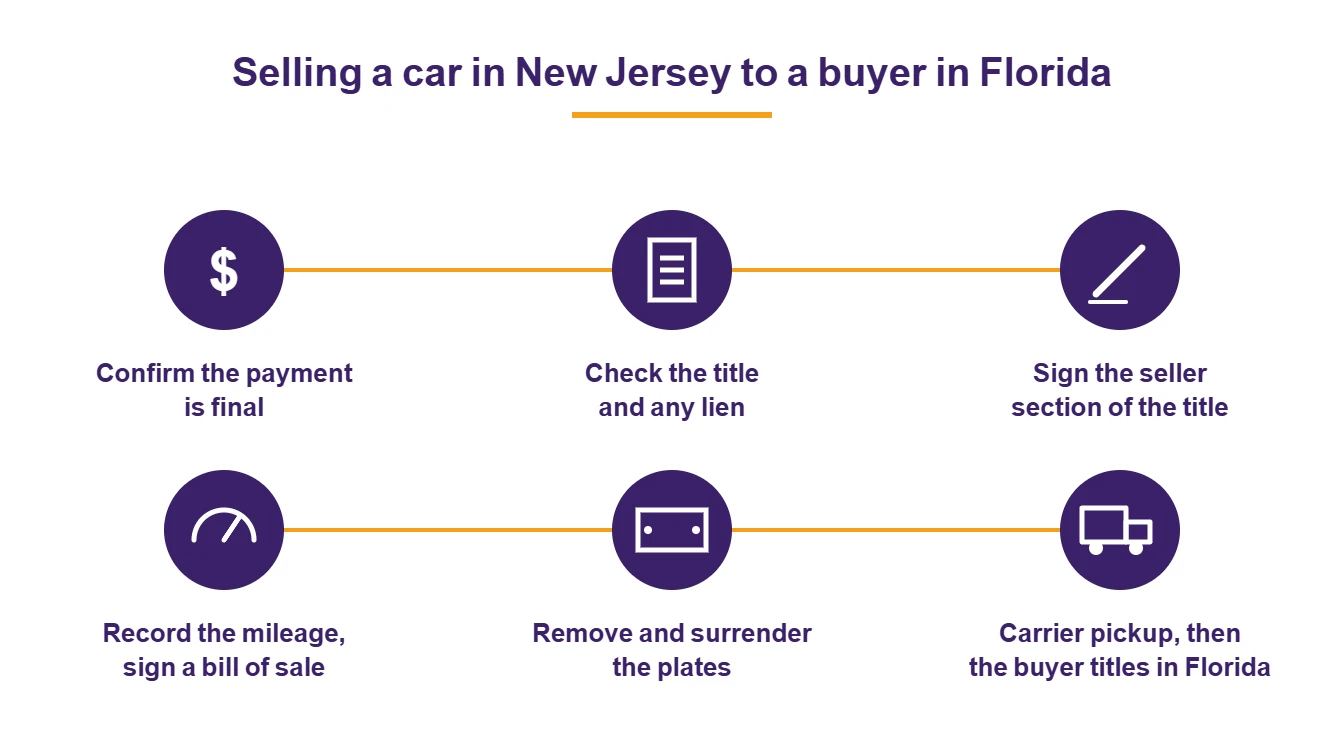
- Payment. The buyer pays the agreed price, and you wait for your bank to confirm that the funds are final.
- The title. You check that the title is in hand and whether a lender is still listed. With a lien, the payoff and release come first.
- Signing. You sign the seller's section on the reverse side of the title and write the buyer's name and address in it. If the buyer would rather drive the car home than ship it, the buyer's out-of-state address on the title is what the temporary registration application needs.
- Mileage and bill of sale. You record the odometer reading, and you and the buyer sign a bill of sale.
- Sending the title. You agree how the assigned title reaches the buyer, because Florida asks for the New Jersey title itself when a used car is titled there.
- Plates and insurance. You remove the plates before the carrier loads the car, surrender them to the MVC and keep the receipt. You coordinate the insurance change with your insurer so coverage stays in force while the registration remains active.
- Pickup. You walk the car with the driver, check the condition report and send the buyer a copy of what you sign.
- The buyer's side. The buyer finishes the Florida steps in Tampa, starting with Florida insurance and the VIN verification.
The lane itself, from Newark, Paterson and Camden pickups to deliveries across Florida, is covered on our page for moving a New Jersey car to Florida.
Frequently Asked Questions
How do I sign over a car title in New Jersey?
What happens to my New Jersey license plates when I sell my car?
What if I still owe money on the car I am selling in New Jersey?
Can a Florida buyer get a temporary registration for a car bought in New Jersey?
Can I sell my New Jersey car to a buyer in Florida?