


An open carrier move for a running Atlanta sedan bound for Los Angeles typically lands at $1,100 to $1,600, and transit usually runs 6 to 8 days. Our 64 town pairs measure about 2,095 to 2,724 road miles, mostly on I-40. Book two to three weeks early if you can, and California expects registration within 20 days.
Which Roads Carry a Georgia Car to California?
Our routing of 64 Georgia and California town pairs puts georgia to california car shipping at about 2,095 to 2,724 road miles, and the delivery city settles the road more than the pickup town does. For Los Angeles, Bakersfield, Fresno, Sacramento and the Bay Area, nearly every load reaches Birmingham first, follows I-22 northwest to Memphis, then holds I-40 through Little Rock, Oklahoma City, Amarillo, Albuquerque and Flagstaff until that interstate ends at Barstow. Augusta cars reach Birmingham on I-20, Savannah cars start out on I-16, and Columbus and Albany pickups cut across Alabama on US 280. San Diego is the exception: from seven of the eight towns we tested, loads drop south through Jackson, Shreveport and Abilene on I-20, then take I-10 past El Paso and Tucson and I-8 by Yuma. Valdosta, the southernmost pickup we checked, follows I-10 west for Los Angeles, Riverside and San Diego, and Columbus and Albany loads bound for Riverside also finish on I-10 through Phoenix.

How Much Is Car Shipping From Georgia to California?
Your quote depends on your vehicle, the exact pickup and delivery addresses, the season and the trailer type, so run the calculator for a figure on your dates.
Where the car is headed in California changes the mileage more than where it starts in Georgia. Measured from Atlanta, Riverside and San Diego are closest, each about 2,143 road miles away, Los Angeles and Bakersfield follow at roughly 2,177 to 2,192, Fresno sits near 2,300, and San Jose, San Francisco and Sacramento land around 2,430 to 2,480. Other delivery areas are on the California car shipping page.
Set against an Atlanta pickup bound for Los Angeles, Columbus comes within a few miles of it, Athens, Albany and Macon add 70 to 85 miles, Augusta and Valdosta add about 145 to 155, and Savannah adds close to 250. The Georgia car shipping page lists other pickup areas.
Past the distance, the quote rests on the vehicle, the trailer type and the season, because the time of year decides how many westbound trucks still have a free position.

Recent quotes put an open carrier spot for a working sedan from Atlanta to Los Angeles in the $1,100 to $1,600 band. To price your own Georgia and California towns, try the car shipping calculator.
Minivans, pickups and full-size SUVs claim more deck room and generally raise the quote by $100 to $200, while the enclosed option lifts it by 40 to 60 percent.
Inside that band, three things decide where a quote falls:
- The delivery city. Riverside and San Diego are the shortest runs from Atlanta, and the Bay Area and Sacramento sit roughly 290 to 335 miles farther out.
- The pickup town. Savannah, Augusta and Valdosta start well east or south of the main westbound line, while a Columbus pickup measures almost the same as one in Atlanta.
- Timing and weather. A flexible pickup week gives dispatch more trucks to choose from, and a snowstorm along I-40 at the Flagstaff or Albuquerque end can cost a day.

What Factors Actually
Influence Pricing on This Route?
Five things move the price on any lane: the vehicle's size, whether it runs, how easy each end is to reach, the season and the trailer type. Booking early protects your timeline, keeps pricing steady and reduces the risk of last-minute carrier changes.


Type
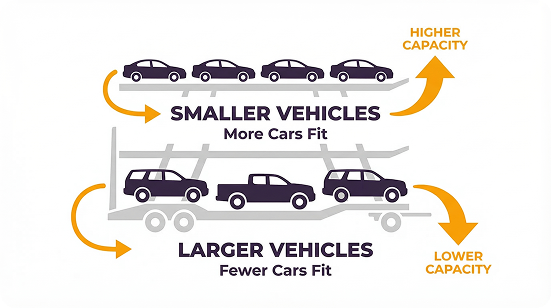
Size decides how much deck space your vehicle takes and how many other cars fit alongside it. A standard sedan is the cheapest thing to move because it slots almost anywhere on the trailer. SUVs, pickups and vans take more room and usually cost more on the same lane.


Should You Ship or Drive Your Car From Georgia to California?
When Shipping Makes Sense
Shipping suits a move with a firm start date in California, a couple taking two cars west with one driver between them, or anyone who would rather not spend most of a week crossing the Plains and the desert.
It also keeps about 2,200 miles off the odometer and saves the fuel, meals and motel nights a drive of that length runs up.
When Driving Makes Sense
Two drivers, no fixed arrival day and a taste for the road can make driving the cheaper choice, and it is only fair to say so. Our routing puts Atlanta to Los Angeles at about 38 hours of driving, which most people stretch across five or six days once sleep is counted.
Even the shortest pair we measured, Columbus to San Diego, covers about 2,095 miles. Our cross-country shipping cost breakdown compares the two options side by side.
How Many Days Does Car Shipping From Georgia to California Take?
From loading day on, a Georgia car typically reaches California in 6 to 8 days. Columbus to San Diego, about 2,095 miles and the shortest of our pairs, tends to finish early in that range, and Savannah to Sacramento, the longest at about 2,724, can take all of it.
The carrier is matched before any of this, usually inside one to three working days, and offering a spread of pickup dates opens up more westbound options.
We put the Atlanta to Los Angeles drive at close to 38 hours, with the midpoint just east of Amarillo. Carriers average roughly 400 to 500 miles per driving day, and a winter storm on I-40 around Flagstaff or Albuquerque can add a day.
When Should You Book a Georgia to California Car Shipment?
Two or three weeks between the booking and the pickup fits this route well. That window lets Rivalane wait for a licensed carrier already bound for California with room left on its trailer, instead of grabbing the first available truck.
For a pickup between December and February, keep a little slack in the dates, since snow on the high desert stretch of I-40 can stall a truck for a day.
Car sitting just across a state line? North Carolina to California car shipping covers pickups just over the line in North Carolina, and Florida to California car shipping follows the same I-10 route our Valdosta pairs use.
Open or Enclosed Transport From Georgia to California?
Open transport is how most cars make this trip, on the familiar two-level carrier, and they pick up the same dust, grit and weather a driven car would over roughly 2,200 miles of highway.
Enclosed transport keeps the car inside a roofed, hard-sided trailer for the full trip, out of the sun, rain and road spray. Because those trailers carry fewer cars, the price per car is higher and a last-minute date is tougher to book.
Collector cars, exotics and anything wearing new paint generally travel enclosed, and everyday cars do fine in the open.
Enclosed Car Transport
Enclosed demand rises for high-value, specialty and seasonal vehicles, and enclosed trailers protect against road debris and weather, which matters most on longer hauls. Enclosed rigs are a small fraction of the trailers working any given lane, and that scarcity is what drives both the higher price and the longer booking lead time.
Open Car Transport
Most vehicles move on open trailers, and for most routes that is the more cost-effective way to ship a car.
Open transport works well for standard vehicles and keeps costs predictable. It also offers the widest carrier availability.
The Car, the Folder and the Plate: Registering a Georgia Car in California
A new California resident has 20 days to register a car brought in from another state, counted from the day residency begins or the car enters California. The DMV visit goes faster if you treat it as three separate checks, and the order of the steps is laid out in our California registration walkthrough for out-of-state cars.
- The car. A Verification of Vehicle, REG 31, has to be completed by a California licensed vehicle verifier, a law enforcement officer or an authorized DMV employee. Gas-powered cars of model year 1976 or newer also need a California smog certification, as do 1998 and newer diesels rated at 14,000 pounds gross vehicle weight or less.
- The folder. All registered owners sign the REG 343 Application for Title or Registration, which goes in with the last Georgia title and registration. When a lender keeps the Georgia title, California registers the car as Nontransferable and issues no California title.
- The plate. California normally takes out-of-state plates at registration. You may keep yours only if they have expired, the issuing state requires them back, or the car stays registered in California and another state at once. On the Georgia side, keep the liability policy in force while the Georgia registration is active, and cancel that registration before you cancel the policy.
Source: California DMV, New California Resident Portal, plus the DMV guide HTVR 9; Georgia Department of Revenue for the Georgia steps.
What Happens at Pickup in Georgia and Delivery in California?
Agree on where the car will be loaded and unloaded early, ideally before dispatch assigns a carrier. A full rig is long and heavy, and its driver needs a wide, level street or lot to stop, drop its ramps and pull away again with traffic still moving.
Georgia pickups in newer subdivisions around Athens, Columbus and Albany rarely need a change of plan. Downtown Savannah, with its squares and narrow lanes, and older intown Atlanta neighborhoods where branches hang low over the street are where a nearby shopping center lot usually works better.
California deliveries meet their own limits: steep hillside roads around Los Angeles and in the Bay Area, gated communities near Riverside and San Diego, and packed curbs in San Francisco. Any of those can move the handoff to a larger lot a short drive away.
The paperwork matters at both ends. Go over the car with the driver at pickup and have every scratch, chip or dent you can see written onto the bill of lading, and only then sign it and keep your copy. In California, compare the car with that same record before signing for delivery, and note anything new on the form while the driver is still there.

Key Things to Know Before Shipping a Car From Georgia to California
From its Melville, New York office, Rivalane coordinates each Georgia to California order, normally lining up a licensed carrier heading west within one to three working days, with real-time tracking open until the car is delivered. Start the paperwork before the truck shows up: a new California resident has 20 days to get a car from another state registered, and Georgia expects continuous liability coverage on any car that still holds an active Georgia registration.
Frequently Asked Questions