


A running sedan on an open carrier from Charlotte to Los Angeles generally costs $1,150 to $1,650. The 64 town pairs we routed span about 2,266 to 2,892 road miles, mostly on I-40, and the trip typically takes 6 to 9 days after pickup. Book two to three weeks ahead and register in California within 20 days.
Which Roads Does a Car Travel From North Carolina to California?
North Carolina to California car shipping is a true cross-country run, and I-40 is the main road on 54 of the 64 town pairs we routed. Raleigh, Durham, Greensboro, Winston-Salem and Asheville cars start on or near it, and Charlotte loads reach it by way of US 74 and I-26 near Asheville. From Knoxville and Nashville the road crosses to Memphis, runs through Little Rock and Fort Smith, then passes Oklahoma City, Amarillo, Albuquerque and Flagstaff on the way to Barstow in the Mojave. Fayetteville and Wilmington cars take a southern start on I-20 past Atlanta and Birmingham and meet I-40 at Memphis. San Diego deliveries follow the southern desert route on I-10 and I-8 through El Paso and Tucson instead, and Sacramento-bound cars from every origin except Wilmington take a northern line that finishes on I-80.

How Much Does North Carolina to California Car Shipping Cost?
Your quote depends on your vehicle, the exact pickup and delivery addresses, the season and the trailer type, so run the calculator for a figure on your dates.
Mileage drives the base price, and on this lane the California address shifts it most. From Charlotte, Riverside and San Diego sit about 2,380 to 2,390 road miles away and Los Angeles about 2,415, while Fresno adds roughly 125 miles, San Jose and Sacramento about 255 to 270, and San Francisco close to 300. Our California car shipping page has details for delivery points not named here.
The North Carolina pickup matters less. Asheville sits about 114 miles closer to Los Angeles than Charlotte, Winston-Salem and Greensboro add roughly 35 to 60 miles, the Triangle about 115 to 140, and Fayetteville and Wilmington, which head south to I-20 first, about 135 to 180. Our North Carolina car shipping page covers towns not listed here.
Vehicle size and season count as well. A full-size pickup or three-row SUV takes more deck space, and winter weather on the high plains and in northern Arizona can slow a load. Our breakdown of cross-country car shipping costs shows what drives the price on the longest hauls, and the car shipping calculator returns a starting estimate once you enter both ZIP codes.

Shipped open from Charlotte to Los Angeles, a sedan in working order typically comes to $1,150 to $1,650. The exact pickup and delivery points place a quote within that band, and the longest pairs we routed are about 626 miles longer than the shortest.
Larger vehicles, from three-row SUVs to vans and full-size pickups, need extra deck room, which typically adds $150 to $250 to the sedan price. An enclosed trailer generally runs 40 to 60 percent more than open.
The biggest price factors on this route:
- California delivery city. Riverside, San Diego and Los Angeles are the nearest deliveries, and the Bay Area and Sacramento the farthest, up to about 300 extra road miles from Charlotte.
- North Carolina pickup town. Asheville is the closest pickup to California, and Wilmington, on the coast, is usually the farthest.
- Winter weather. Snow and ice on I-40 across the Texas Panhandle, New Mexico and northern Arizona may push back a pickup and slow the trip.
A quote far below the others deserves a second look before you commit.

What Factors Actually
Influence Pricing on This Route?
Five things move the price on any lane: the vehicle's size, whether it runs, how easy each end is to reach, the season and the trailer type. Booking early protects your timeline, keeps pricing steady and reduces the risk of last-minute carrier changes.


Type
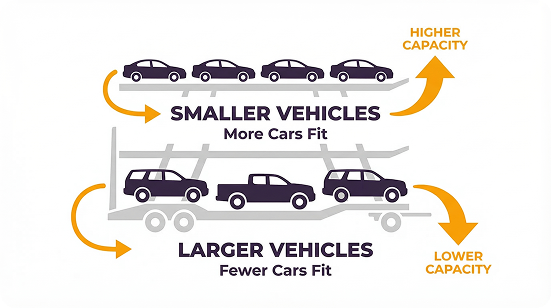
Size decides how much deck space your vehicle takes and how many other cars fit alongside it. A standard sedan is the cheapest thing to move because it slots almost anywhere on the trailer. SUVs, pickups and vans take more room and usually cost more on the same lane.


Should You Ship or Drive a Car From North Carolina to California?
Reasons to Ship
Shipping fits people starting a new job in California who would sooner fly out than give up most of a week to I-40, military families moving on orders who need one car shipped while they drive the other, and anyone sending a car out west to a student or relative.
It also keeps roughly 2,400 miles of wear, fuel and tire tread off your own car.
Reasons to Drive
If two drivers can trade shifts and you want the car the day you arrive, driving may be the cheaper option, and we will point that out when it applies. Our routing puts Charlotte to Los Angeles at about 43 hours of driving, which means five long days at the wheel with motel nights, fuel and meals on top.
A solo driver facing a firm start date is usually better off shipping, since the shortest pair we routed, Asheville to Riverside, still covers about 2,266 miles.
How Long Does It Take to Ship a Car From North Carolina to California?
Once the car is on the truck, the trip to California typically takes 6 to 9 days. Asheville to Riverside, the shortest pair at about 2,266 miles, can finish near the quick end, while Wilmington to Sacramento or San Francisco usually uses most of the window.
Before any of that, a carrier has to be assigned, which generally takes one to three working days once the order is confirmed. Offering dispatch a few workable pickup dates widens the field of westbound carriers.
A loaded hauler covers about 400 to 500 miles a day between its other stops, so the driving alone from Charlotte to Los Angeles works out to roughly five to six days. The halfway mark of that trip falls in western Oklahoma. A winter storm on the plains or in the Arizona high country may add a day or two.
When Should You Book North Carolina to California Car Shipping?
On this lane, two to three weeks of notice gives dispatch room to work. Rivalane looks for a licensed carrier already heading west with an open slot, not a truck sent out for one car, and that notice leaves room to pick a good match rather than the first offer.
Winter calls for extra slack. Snow and ice can slow I-40 across the Texas Panhandle, New Mexico and northern Arizona from December through February, so a flexible delivery window helps.
Moving from New York rather than North Carolina? Our New York to California car shipping page covers that lane.
Open or Enclosed Transport From North Carolina to California?
On this lane the usual choice is open transport, the two-level carriers you pass on any interstate. Over roughly 2,400 miles the car meets the same dust, rain and road grime it would pick up if you drove it, plus several days of desert sun.
Enclosed transport seals the car in a covered, hard-walled trailer for the whole trip, out of the weather and away from flying gravel. A covered trailer carries fewer vehicles, so the rate is higher and a free spot can take longer to find.
Collector cars, exotics and anything with a new paint job are the usual enclosed loads, and most everyday cars ride open.
Enclosed Car Transport
Enclosed demand rises for high-value, specialty and seasonal vehicles, and enclosed trailers protect against road debris and weather, which matters most on longer hauls. Enclosed rigs are a small fraction of the trailers working any given lane, and that scarcity is what drives both the higher price and the longer booking lead time.
Open Car Transport
Most vehicles move on open trailers, and for most routes that is the more cost-effective way to ship a car.
Open transport works well for standard vehicles and keeps costs predictable. It also offers the widest carrier availability.
What California Requires When the Car Arrives
Two clocks run on this move: North Carolina wants its plate back, and California gives a short window to register.
Closing out North Carolina. Once your permanent home is outside the state, NCDMV asks for the North Carolina plate and driver license to be surrendered. Drop the plate at any license plate agency or mail it in, and keep the North Carolina liability policy active until NCDMV has it, since ending the policy sooner breaks the continuous coverage the state requires and brings a fine. NCDMV waives that penalty if the car was registered in the new state within 30 days of the cancellation, a copy of that registration is sent in and the plate is returned. Our guide to returning North Carolina license plates covers the steps.
Registering in California. A car last registered in another state has to be registered within 20 days of becoming a California resident or bringing the car into the state. Planning to live there six months or more in a year makes you a resident, and the DMV also counts signs such as a California job, voter registration or a rented primary home.
- Forms and documents. Form REG 343 (Application for Title or Registration) signed by every registered owner, the North Carolina title and the latest North Carolina registration card. If the title cannot be turned in, California marks the registration Nontransferable and issues no California title.
- VIN check. Form REG 31 (Verification of Vehicle), done by DMV staff, a law enforcement officer or a California-licensed vehicle verifier.
- Smog certification. Gasoline cars from model year 1976 on need one from a California smog station, as do diesels from 1998 on under 14,001 pounds gross weight. Motorcycles are exempt.
- Insurance. California liability minimums are $30,000 for one person injured or killed, $60,000 if several people are, and $15,000 for property damage. Insurers report policies to the DMV electronically.
- Nearly new cars. California residents generally may not bring in or register a vehicle that is under 2 years old and has under 7,500 miles, unless it meets California emission standards or an exemption applies.
A new resident who plans to drive also applies for a California driver license. Read our California registration walkthrough for out-of-state cars for more detail, and the California DMV page for new residents lists the current rules.
What to Expect at Pickup in North Carolina and Delivery in California
Pick both handover spots before the carrier is dispatched, because a full car hauler needs a long stretch of level road where it can stop, put its ramps down and drive off again.
In North Carolina, suburban streets around Charlotte, Raleigh and Greensboro usually leave enough room. Mountain roads around Asheville, narrow older streets in downtown Durham and Wilmington, and gated communities often mean meeting the truck at a shopping center or commuter lot near a main road.
In California, plan the delivery around the neighborhood. Wide suburban streets in the Inland Empire and the Central Valley usually take the full truck, while steep hillside blocks in Los Angeles or San Francisco and the tight streets near the beaches often call for a handover at a larger lot nearby.
When the driver arrives, inspect the car side by side and sign the condition report only once it lists every scratch, chip and dent, since the California check at delivery is measured against it. Keep dated photos of each side on your phone as a second record.

Key Things to Know Before Shipping a Car From North Carolina to California
Rivalane runs each North Carolina to California booking out of Melville, New York, pairing every car with a licensed carrier that already has a westbound load, and you can follow the trip on real-time tracking. Keep your North Carolina insurance in force until the plate is back with NCDMV, then register the car in California within 20 days.
Frequently Asked Questions