


The 64 Minnesota and Florida pairs we checked span about 1,250 to 2,020 road miles, and most cars spend 4 to 7 days in transit once loaded. Minneapolis to Miami for an open sedan typically costs $900 to $1,400. A fall pickup is best booked two to three weeks out, with Florida insurance arranged before the titling visit.
How Car Shipping From Minnesota to Florida Works
Minnesota to Florida car shipping starts on interstates that point east before they point south. Cars from the Twin Cities, St Cloud, Brainerd, Bemidji and Moorhead normally take I-94 across Wisconsin past Eau Claire, Tomah and Wisconsin Dells, while Duluth loads come down through Superior and join at Eau Claire. From there the run drops through Janesville and Beloit into Illinois, passes Rockford, Bloomington-Normal and Champaign, then follows I-57 by Effingham and Mount Vernon and picks up I-24, which crosses into Kentucky at Paducah. Rochester and Mankato cars head south through Iowa instead, past Waterloo, Cedar Rapids and Iowa City, then through Hannibal, Missouri, and St Louis before meeting the same line at Mount Vernon. On a Minneapolis to Miami trip the halfway point falls on I-24 just southeast of Nashville, and after Chattanooga I-75 carries the car through Atlanta, Tifton and Valdosta into Florida. Tallahassee runs split away before that, most of them at Nashville, and take I-65 through Birmingham, Montgomery and Dothan in Alabama. In Florida, cars for Jacksonville swing east onto I-10 at Lake City, while the others continue past Gainesville to Wildwood, where Miami, Fort Lauderdale, West Palm Beach and Orlando deliveries leave I-75 and Tampa and Fort Myers loads stay on it. Each trailer carries several vehicles, so dispatch groups Minnesota pickups that sit near each other, and your town and dates decide which southbound load the car joins.

How Much Does Car Shipping Minnesota to Florida Cost?
Your quote depends on your vehicle, the exact pickup and delivery addresses, the season and the trailer type, so run the calculator for a figure on your dates.
Across the 64 Minnesota and Florida pairs we measured, road distance runs from about 1,248 miles, Rochester to Tallahassee, to about 2,022, Moorhead to Miami. Both ends of the trip move the number, and the Minnesota end alone can shift it by about 350 miles.
On the Minnesota side, Rochester is the closest of the eight towns we checked, about 1,670 miles from Miami, and Minneapolis sits near 1,790. Duluth and St Cloud add roughly 60 to 65 miles over Minneapolis, while Moorhead and Bemidji in the north and west add more than 200.
In Florida, a Minneapolis car covers about 1,370 miles to Tallahassee and 1,475 to Jacksonville, around 1,565 to 1,585 to Orlando or Tampa, about 1,700 to Fort Myers and roughly 1,790 to Miami.
The vehicle and the calendar matter too. A crew cab pickup or a long van uses more of the trailer than a small car does, and September through November usually costs more than the same trip in May or June. Be wary of a figure far under the others until a carrier commits to the job, and our car shipping calculator gives a realistic first estimate once both addresses are in.
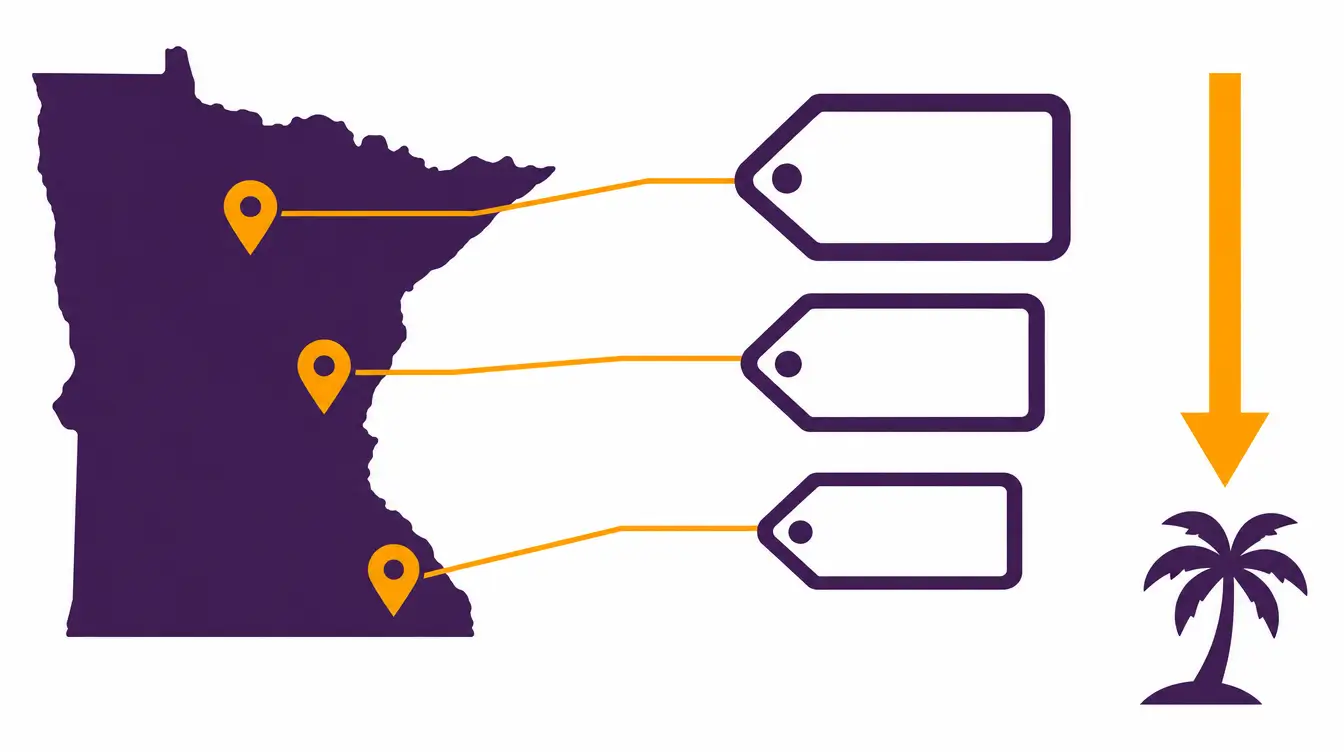
On an open trailer, a sedan in running order from Minneapolis to Miami typically runs $900 to $1,400. Deliveries to Tallahassee or Jacksonville usually come in under the middle of that span, while Moorhead or Bemidji cars going all the way to the southeast coast can reach the top or edge past it.
A big SUV, pickup or van generally adds $100 to $200, and the enclosed option costs 40 to 60 percent beyond that open rate.
Three factors drive most of the swing in a Minnesota to Florida price:
- The fall migration. Between September and November, Minnesota snowbirds and others from the Upper Midwest move their cars south, so Florida-bound space sells faster and rates climb. Late spring and the summer months tend to have more room on the trailers.
- How far north the car starts. A Twin Cities pickup sits right on the interstates a southbound truck already uses. Lake country around Brainerd and Bemidji or the Red River valley at Moorhead can add a detour for the driver or shift the meeting point toward a bigger road.
- The Florida city. Tallahassee and Jacksonville sit closest and Miami farthest. Guard gates at many southeast coast communities also push the handover out to the street.
Be cautious with a quote well below this range until a carrier has signed on.

What Factors Actually
Influence Pricing on This Route?
Five things move the price on any lane: the vehicle's size, whether it runs, how easy each end is to reach, the season and the trailer type. Booking early protects your timeline, keeps pricing steady and reduces the risk of last-minute carrier changes.


Type
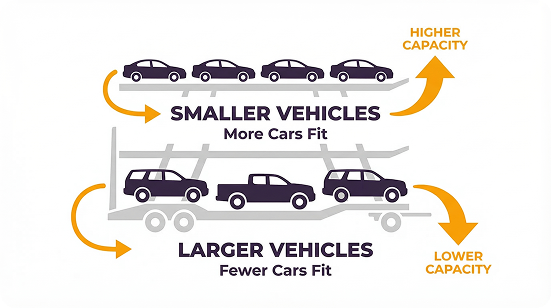
Size decides how much deck space your vehicle takes and how many other cars fit alongside it. A standard sedan is the cheapest thing to move because it slots almost anywhere on the trailer. SUVs, pickups and vans take more room and usually cost more on the same lane.


Is It Cheaper to Drive or Ship a Car From Minnesota to Florida?
Shipping Instead of Driving
Shipping fits a snowbird who would rather fly to Florida in the fall and pick the car up there, a retiree making the move permanent, or a household heading south with two cars and only one person to drive them.
Shipping also spares the return leg. A Minneapolis car driven to Miami leaves someone about 1,790 miles from home, usually solved with a one way flight after three or four days of driving.
Driving the Route Yourself
If everyone is moving south at once and the car is already full of belongings, driving may come out cheaper, and we say so plainly. The distance-cities estimate puts Minneapolis to Miami at about 27 hours of driving, normally spread over three or four days with fuel, meals and two or three nights in motels.
Shipping gains ground when no one has to travel with the car. From Moorhead or Bemidji the drive to Miami tops 2,000 road miles, and whoever takes it faces the same miles back or the cost of a plane ticket.
How Long Does Shipping a Car From Minnesota to Florida Take?
Once loaded, a Minnesota car typically spends 4 to 7 days on the truck. Rochester or Mankato cars bound for Tallahassee or Jacksonville can finish near the short end, Minneapolis to Miami usually takes 5 to 6 days, and runs from Moorhead or Bemidji to the southeast coast can use the whole window.
Getting on a truck is often the longer part. Booking to truck assignment normally runs one to three working days, a bit longer in the fall rush.
In a full day behind the wheel a car hauler usually logs 400 to 500 miles. Minneapolis to Miami is about 1,790 miles, so the wheels turn for roughly three and a half to four and a half days, plus the stops for every other car on the trailer; naming several pickup days instead of one is the easiest way to shorten the wait.
When is the Best Time to Book Auto Transport From Minnesota to Florida?
Southbound demand peaks in the fall. Minnesota snowbirds and others across the Upper Midwest send cars to Florida ahead of winter, so trailers headed south book early and prices tend to rise. Our snowbird season guide walks through a winter in Florida with the car.
For a pickup between September and November, two to three weeks of lead time is wise. Outside that window, one or two weeks normally does it, and a spread of pickup days helps dispatch fit the car onto the next southbound truck with space.
Leave slack in winter too. From December through March, snow and ice can push a Minnesota pickup back a day or two, more often on rural and lake country roads than in the Twin Cities.
Open vs Enclosed Auto Transport on a Minnesota to Florida Route
Open transport carries most Minnesota cars south, loaded on the two level haulers that work I-75 every day. In about 1,800 miles of travel the finish gathers roughly what a long road trip would leave on it, and a winter pickup can add a light coat of road salt.
An enclosed transport trailer shields the car the whole way from the Minnesota driveway to the Florida door. Only a few vehicles fit inside, so each space costs more and the fall dates fill first.
A covered trailer is worth the premium for collector cars, exotics, show cars and fresh paint. Daily drivers, family SUVs and most cars going south for the winter travel open.
Enclosed Car Transport
Enclosed demand rises for high-value, specialty and seasonal vehicles, and enclosed trailers protect against road debris and weather, which matters most on longer hauls. Enclosed rigs are a small fraction of the trailers working any given lane, and that scarcity is what drives both the higher price and the longer booking lead time.
Open Car Transport
Most vehicles move on open trailers, and for most routes that is the more cost-effective way to ship a car.
Open transport works well for standard vehicles and keeps costs predictable. It also offers the widest carrier availability.
What Florida Requires When Your Car Arrives
A winter in Florida does not by itself set any of this in motion. The rules attach to residency, and FLHSMV lists what triggers it: working or running a trade in Florida, enrolling a child in public school there, registering to vote in the state, filing for a homestead exemption, or living there more than six consecutive months. When one of those fits, take the steps in this order.
Before you visit a service center
- Insurance. Buy a policy from an agent licensed in Florida with Personal Injury Protection of $10,000 or more and the same minimum for Property Damage Liability, and keep it active for as long as the car is registered, driven or parked.
- VIN check. The VIN has to be inspected in person and recorded on HSMV 82042 or HSMV 82040. Police and military police officers, Florida licensed dealers, county tax collector staff and FLHSMV compliance examiners can all do it, and our guide to the Florida VIN check explains it further.
At the counter
- Title paperwork. Bring the original Minnesota title, proof of the Florida policy, ID for each owner and HSMV 82040 with every owner signature. When a lender still holds the title, it is the lender that sends the title to Florida; if it refuses, its written refusal on letterhead is what you take to a service center to apply for registration.
- Registration fee. A first Florida registration is done in person at titling, and an owner with no Florida plate to transfer pays the $225 initial registration fee. The steps at the counter are laid out in our out-of-state registration guide for Florida.
Within 30 days of Florida residency, trade the Minnesota driver license for a Florida one.
Back in Minnesota. State law says the right to use Minnesota plates and registration expires when a vehicle is taken out of the state permanently. Unused registration tax comes back only in limited cases, a car declared destroyed or one sold to a government body, and a move is not among them.
Sources: FLHSMV guidance for new residents and its pages on insurance and registering a vehicle, plus Minnesota Statutes 168.15 and 168.16. Rules change, so confirm them with both states before the car ships.
What to Expect at Pickup and Delivery
Pick both meeting points while dispatch is lining up the truck, since a loaded hauler needs room to stop and swing around.
In Minnesota, most suburban streets around Minneapolis, St Paul and Rochester leave space for the truck near the driveway. Downtown blocks, lake roads near Brainerd, long gravel drives and snowbanks left by the plows can shift the handover to a store lot or a wider road close by.
In Florida, gated communities and condo towers on the southeast coast and along the Gulf often bar large trucks, so drivers meet owners at a nearby parking lot or side street. Houses in the suburbs of Orlando, Tampa and Jacksonville are usually simpler to reach right at the curb.
The driver walks around the car at loading, notes existing scratches and dents on the bill of lading, and repeats the inspection when it is unloaded. Photograph each side with the date showing before the car leaves Minnesota, and look the car over against those photos in Florida before signing for delivery.
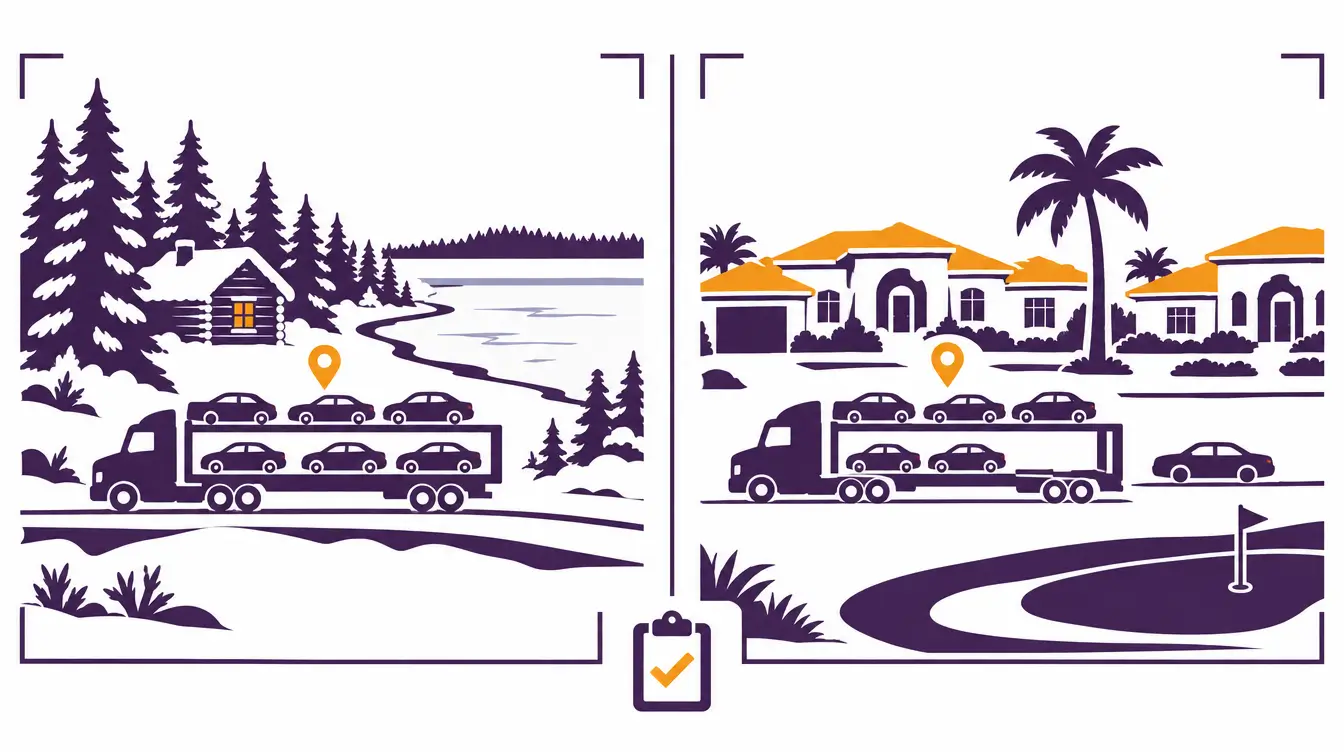
Key Things to Know Before Shipping a Car From Minnesota to Florida
Rivalane coordinates Minnesota to Florida auto transport from its Long Island office in Melville, matching each car to a southbound load with an open spot. If the move south is permanent, schedule the Florida titling visit early, because under Minnesota law the right to use Minnesota plates and registration lapses when a vehicle leaves the state for good.
Frequently Asked Questions