





Roughly 260 to 580 miles separate New York and West Virginia, and a Charleston car usually reaches its driveway 1 to 3 days after the truck collects it. A sedan moved on an open trailer generally runs $550 to $950. Book about a week ahead, then title and register within 30 days to keep the new-resident 6 percent tax exemption.
How Car Shipping From New York to West Virginia Works
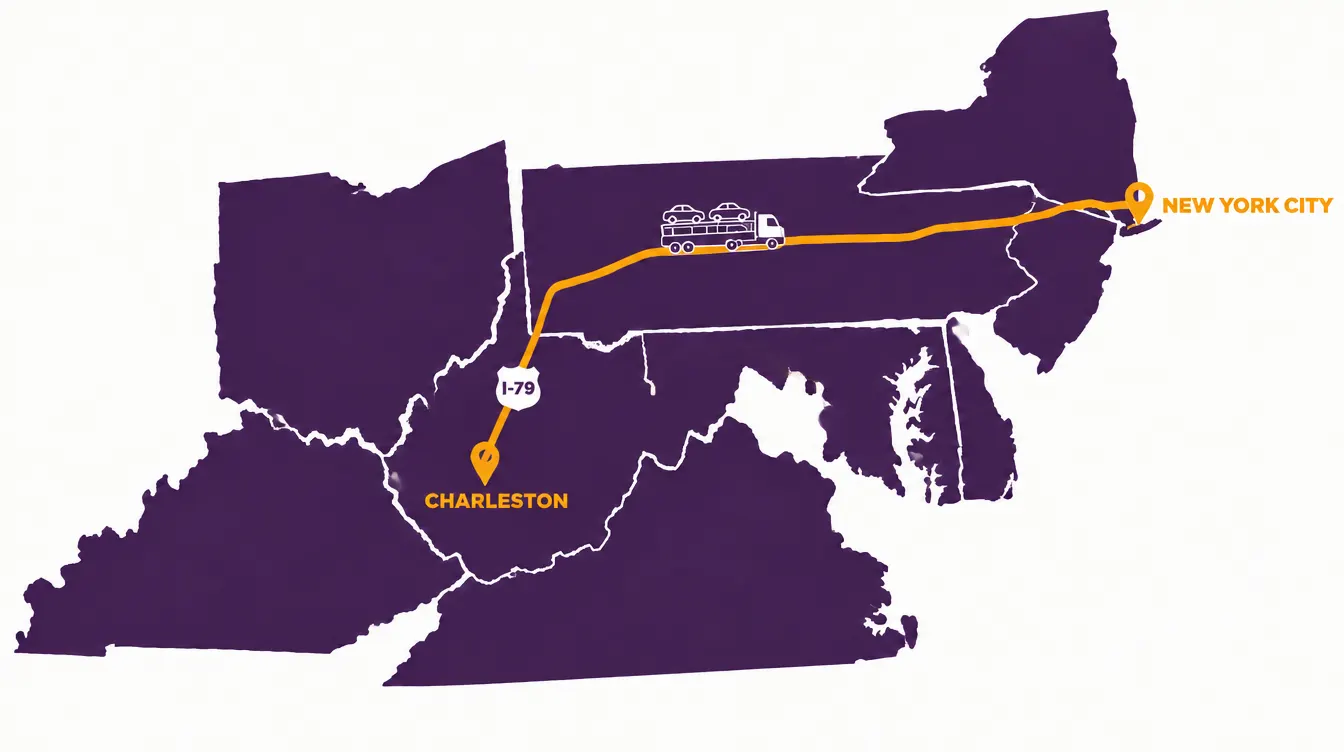
Google Maps puts the quickest road from New York City to Charleston at about 530 miles: I-78 west through New Jersey and eastern Pennsylvania, I-81 south into Maryland, then west across the state's narrow western arm, mostly on I-68, and finally I-79 south from Morgantown. Martinsburg never needs that last stretch, since it sits on I-81 itself, roughly 260 miles from the city. Parkersburg leaves I-79 for US-50, and Huntington is another 50 miles or so past Charleston on I-64. Wheeling is the exception, reached by the Pennsylvania Turnpike and I-70 instead of through Maryland. So the town on your order decides which truck fits, and a hauler working this line may drop cars in Maryland or elsewhere in West Virginia before yours. Expect the pickup date in New York to be the least certain part of the plan; once the car is aboard, the drive itself is short.
How Much Does Car Shipping New York to West Virginia Cost?
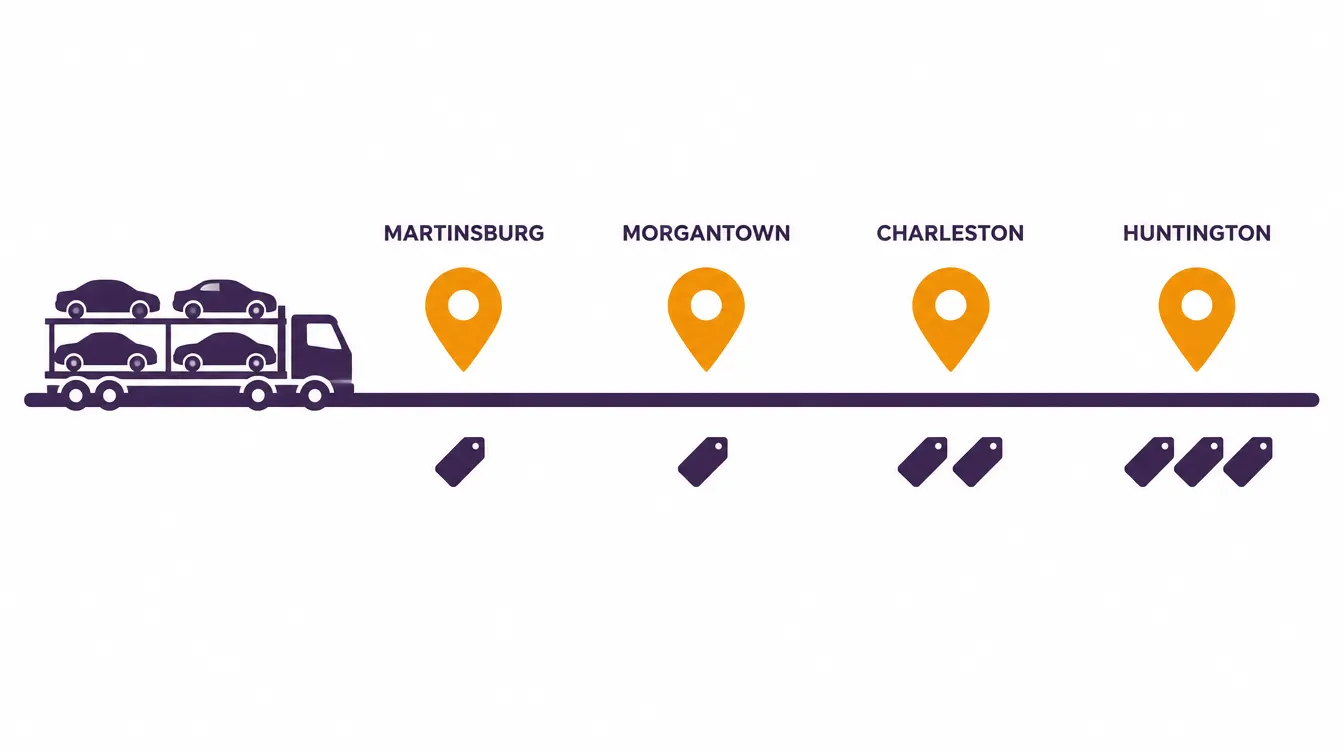
Mileage counts on this lane, but the spread inside West Virginia counts for more. Martinsburg and Morgantown are 260 to 380 miles from New York City, while Charleston and Huntington lie beyond 530, so two quotes for the same car can land well apart.
Being close to an interstate helps as well. An address near I-79 or I-81 is simple for a hauler to reach, while a ridge road or hollow in the southern counties may mean the car changes hands in town instead, and the extra time can show up in the price.
Size matters. A full-size pickup, a van or a three-row SUV takes up deck room a sedan would not, and the rate follows.
If one offer comes in far under the others, ask whether any carrier has taken the job at that figure. Until a truck agrees, the number is a guess.
Plan for $550 to $950 when a regular sedan goes by open trailer from New York City to Charleston. An Eastern Panhandle or Morgantown delivery, a pickup outside Manhattan and loose dates tend to land near $550. A Manhattan curbside pickup, a single fixed date or a Huntington address tend to land near $950, and a pickup far from the city can go past it.
Expect a covered trailer to add somewhere between 40 and 60 percent, which is worth paying for exotics, collectibles and low-slung cars that scrape on ordinary ramps.
Three things shape the quote more than the odometer:
- Where in West Virginia. Martinsburg sits on I-81 and Morgantown where I-68 meets I-79, so both are shorter runs. Charleston lies deeper down I-79, Parkersburg is reached from it on US-50, and Huntington adds I-64 miles past Charleston.
- The New York side. Suburban pickups east and north of the city, and most outer-borough addresses, load most simply. Manhattan usually means meeting the truck at a lot or a wide street nearby, and an upstate pickup waits on a hauler already working that part of the state.
- Vehicle type. Pickup trucks and SUVs carry roughly $100 to $200 extra. A car that will not start has to be winched on, which not every carrier can do, so it costs extra.
Treat an unusually low quote as unconfirmed until a carrier signs on to it.

What Factors Actually
Influence Pricing on This Route?
Booking early protects your timeline, keeps pricing steady, and reduces the risk of last-minute carrier changes.
Many customers on this route relocate permanently or move seasonally, which makes predictability more important than speed.
This article explains how auto transport Alabama to New York works, what it costs, and how long it takes, so you can make a clear, informed decision before you schedule your shipment.


Type
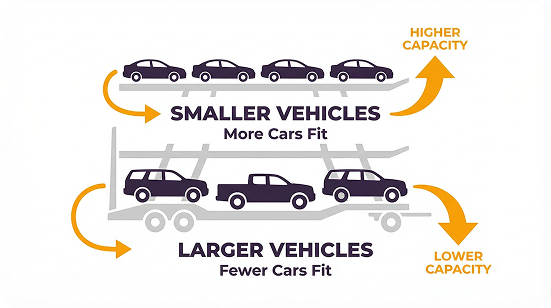
Size decides how much deck space your vehicle takes and how many other cars fit alongside it. A standard sedan is the cheapest thing to move because it slots almost anywhere on the trailer. SUVs, pickups and vans take more room and typically add a few hundred dollars on the same lane.


Is It Cheaper to Drive or Ship a Car From New York to West Virginia?
Shipping Instead of Driving
Shipping fits this lane when a WVU student in Morgantown or a Marshall student in Huntington wants a car on campus, when someone in West Virginia buys a car advertised in New York, or when a new job means flying in rather than driving. It also handles the second car in a household with only one driver free for the trip.
A single handoff stands in for 260 to 580 miles of interstate and, at the Charleston end, most of a day behind the wheel.
Driving the Route Yourself
Google Maps puts New York City to Charleston at about 530 miles and close to nine hours of driving before stops, while Martinsburg is under five hours away. Add tolls near New York City, fuel and meals, and the Charleston run is long enough that an overnight stop is worth considering.
If the car is coming with you to a new home in the state, driving it there yourself usually costs less, particularly to the Eastern Panhandle. Shipping wins once you need to get yourself back to the city, when a single person is responsible for two vehicles, or when the car belongs to a buyer instead of you.
How Long Does Shipping a Car From New York to West Virginia Take?
After pickup, West Virginia deliveries typically take 1 to 3 days. Martinsburg and Morgantown usually come first, while Charleston, Parkersburg and Huntington tend to take the full span.
The day the truck reaches you in New York moves around more than the drive does. Carrier assignment generally follows your booking by one to three business days, and naming a few workable pickup days helps dispatch choose a truck with space already free.
A loaded car hauler typically logs 400 to 500 miles on a driving day, so even Huntington's 580 miles fits into one or two days on the road, plus stops for any other cars aboard.
When is the Best Time to Book Auto Transport From New York to West Virginia?
Unlike the Florida lanes, this route has no snowbird rush, and haulers work it all year. Seven days' notice is normally enough for an ordinary pickup, and two weeks is safer around late August, when college move-ins and month-end moves can crowd the calendar.
Winter is the season to plan around. I-68 crosses the Allegheny Mountains in western Maryland and I-79 runs through hilly country, so snow between December and February can add a day to the run. Leave some slack in a winter delivery date.
Open vs Enclosed Auto Transport on a New York to West Virginia Route
For most cars on this lane, an open trailer is the practical choice. The car rides uncovered beside several others and meets about the same rain and road spray a drive there would bring.
An enclosed trailer shields the car from the New York pickup to the West Virginia address, which counts most in winter, when crews salt and grit I-68 and I-79 through the high country. Fewer cars fit in each enclosed trailer, so the price is higher and a slot can take longer to find.
An exotic, a classic, fresh paint or a lowered car that barely clears ordinary ramps are the cases for enclosed. Commuters, college cars and second family vehicles do fine on an open deck.
Enclosed Car Transport
Enclosed demand rises for high-value, specialty and seasonal vehicles, and enclosed trailers protect against road debris and weather, which matters most on longer hauls. Enclosed rigs are a small fraction of the trailers working any given lane, and that scarcity is what drives both the higher price and the longer booking lead time.
Open Car Transport
Most vehicles move on open trailers, and for most routes that is the more cost-effective way to ship a car.
Open transport works well for standard vehicles and keeps costs predictable. It also offers the widest carrier availability.
What West Virginia Requires When Your Car Arrives
New arrivals get a 30-day window to title and register a car in West Virginia, and meeting it is one of the conditions for skipping the state's 6 percent titling tax. Plan the paperwork for your first weeks in the state.
- A 30-day deadline. Vehicles belonging to new residents have to be titled and registered within 30 days of establishing residency. The title fee is $15, a lien adds $10, and regular registration is $51.50.
- No 6 percent tax if you file in time. The titling sales tax is waived for new residents bringing a car already titled in their name in another state and acquired before they lived in West Virginia, as long as they apply and pay the fees within those 30 days. The West Virginia title is issued in the same name as your New York title, and leased vehicles do not qualify.
- Paperwork. Bring your New York title, a filled-in DMV-1-TR title application and an odometer disclosure. When a bank or other lender still has the title, submit the application, the Odometer Disclosure Statement (DMV-TM-1), a copy of the title or a printout of the electronic lien, and a letter from the lender confirming it holds the title.
- West Virginia insurance. The policy must be issued by a company licensed to sell insurance in West Virginia, and proof must be kept in the car. The minimums are 25/50/25: $25,000 when one person is hurt in a crash, $50,000 when two or more are hurt, and property damage coverage of $25,000.
- Safety inspection within 10 days. New residents have 10 days from titling to get a West Virginia inspection at a station licensed by the State Police, and it is repeated every 24 months. West Virginia honors an unexpired New York inspection sticker until it runs out, so a recently inspected car may not need one right away. The sticker fee is capped at $19.
- Your West Virginia license. Apply within 30 days of taking up residence. You can swap a valid New York license without the written or road tests, but you pass a vision screening, complete a brief alcohol awareness course and surrender the New York license.
Source: WV Division of Motor Vehicles, Moving to WV. Insurance minimums come from the DMV consumer insurance page, inspection rules from the DMV vehicle inspection page and W. Va. Code 17C-16-4, and the license deadline from W. Va. Code 17B-2-1a. Requirements and fees are updated from time to time, so check with the DMV ahead of delivery day.
What to Expect at Pickup and Delivery
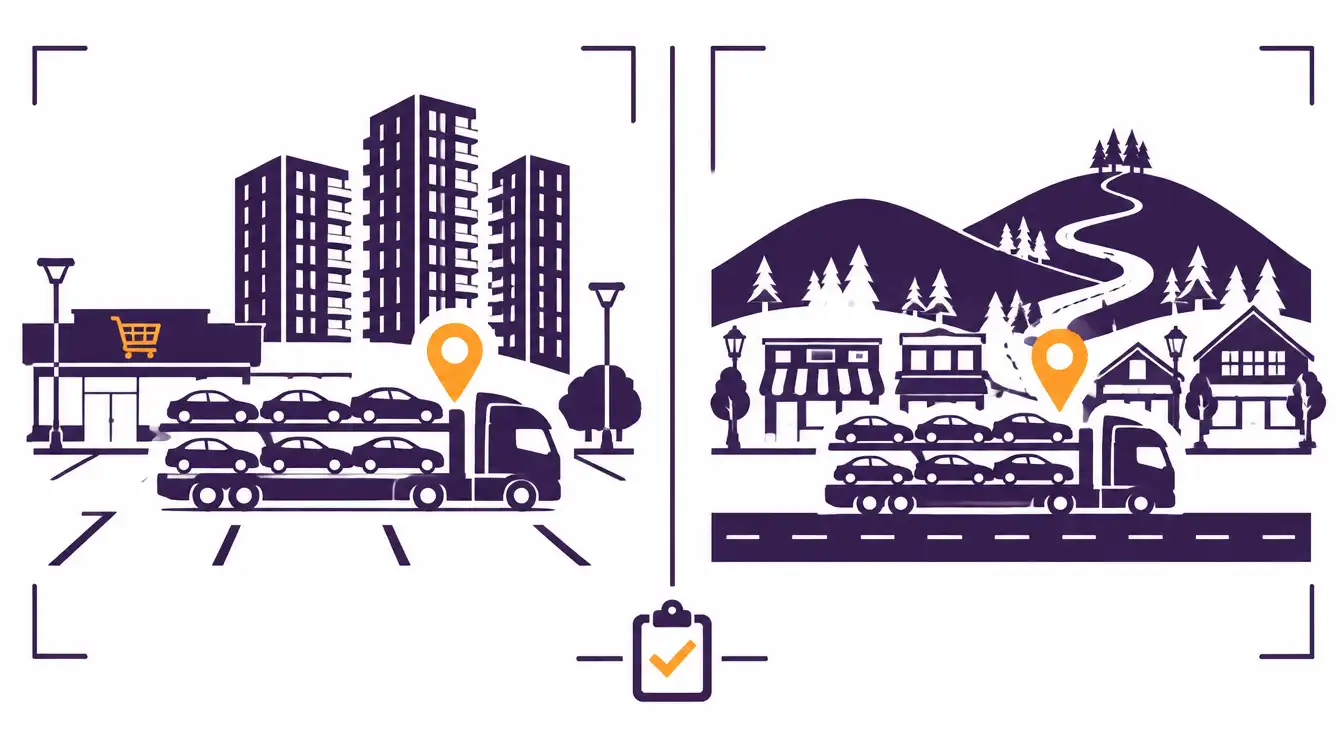
The New York end is usually where the logistics sit. A full-length car hauler cannot work most Manhattan streets or many blocks in Brooklyn, Queens and the Bronx, so the driver phones to pick a nearby place with space for the trailer, a supermarket lot or a broad, quiet street, for example. Out on Long Island and up in Westchester, the truck can often load near the curb.
In and around Martinsburg, Morgantown, Charleston and Huntington, most delivery addresses suit a large truck. Steep driveways, narrow hollow roads and some older in-town streets do not, and in those cases expect to meet at a nearby parking lot or along a main road.
Attend the walkaround when the car is loaded and again when it is handed over. Existing scratches and dents go on the bill of lading first, you check the list and sign, and on arrival the car is compared with that same record. Your own date-stamped photos back it up.
Key Things to Know Before Shipping a Car From New York to West Virginia
Rivalane coordinates this lane from its Long Island base and looks for a carrier already heading west on I-78 or south on I-79 to take your car. Name the West Virginia town when you book, because the Eastern Panhandle and the Huntington end are very different distances from New York.
Frequently Asked Questions



