Selling your car to someone in another state works much like a local sale, with two differences that change the risks: the buyer is not standing in front of you when they pay, and the car leaves on a carrier instead of with its new owner behind the wheel. Through all of it you control three things: when you release the car and the title, how you sign the title over, and what happens to your plates and registration afterward. This guide covers each step for a private sale, using a car sold in New York to a buyer in Kentucky as the worked example. Rivalane is a broker: we coordinate door to door transport with licensed, insured carriers, and the carrier, not Rivalane, physically moves the car.
What Changes When Your Buyer Lives in Another State?
The paperwork splits between two states. Your buyer titles and registers the car under their own state's rules and pays that state's tax there. In Kentucky, for example, the county clerk collects the state's 6 percent usage tax when a car is first registered, so a Kentucky buyer settles the tax at home, not with you. You still follow your own state's rules for signing the title, for the plates and registration, and for any notice of sale.
The hand-off changes too. In a local sale the buyer drives away with the keys and the title. When the car ships, the keys go to a carrier's driver, the title travels separately or with the car by agreement, and nobody can check a document at the curb. Plan each of those pieces in writing before the transport is booked. If your buyer wants to understand their side of a New York purchase, including the in-transit permit for driving a car out of the state, our guide to buying a car in New York as an out-of-state resident covers it.

How Do You Get Paid Safely Before the Car Leaves?
Release the car and the title only after the money has cleared, which is not the same as the money appearing in your account. The Federal Trade Commission's guidance on fake check scams explains why: banks have to make deposited funds available quickly, fake checks can look real even to bank employees, and it can take weeks to discover one. By then the car is gone and the bank wants its money back from you. Ask your own bank to confirm the payment is final before you sign the title or set a pickup date.
Remote sales attract one pattern in particular. The FTC lists overpayment among the common fake check scams: a buyer sends more than the price and asks you to refund the difference, or to send it on to someone else. In a car sale, that someone may be the buyer's shipping company.
- Do not accept more than the selling price. The FTC says to treat a check for more than the selling price as a scam.
- Never forward money from a payment by wire, gift card, money order or cryptocurrency to anyone the buyer names, a carrier included.
- Pay the carrier nothing yourself unless you agreed to cover shipping. The cost of transport is settled between whoever booked it and the transport company.
- Check the truck that arrives. The carrier's name and USDOT number on the bill of lading should match the company named on the booking, and you can look up the number on FMCSA's SAFER Company Snapshot.
Our guide to avoiding auto transport scams covers the warning signs on the shipping side.
How Do You Sign Over the Title?
Fill in the assignment section exactly as your title asks, with the buyer's name and address, the date and the price wherever the form has space for them. Do not hand over a title signed with the buyer's section left blank, because whoever holds it can write in any name. In New York, the DMV's page on buying, selling or transferring a vehicle says the seller completes and signs the transfer of ownership section of the title certificate and signs a bill of sale.
Record the mileage. The federal odometer rule, 49 CFR Part 580, requires a seller whose name is on the title to disclose the odometer reading on the title itself, signed, with the date and both parties' names and addresses. Its exemptions depend on model year. A car from model year 2010 or earlier is now exempt, while one from model year 2011 or later stays covered until it is 20 years old, so in 2026 a car built for 2011 or later needs the reading recorded.
Clear any loan first. If a lender is listed on the title, pay off the loan and get the lien release, or the clean title the lender sends back, before you sign. A buyer in another state needs a title their motor vehicle office can transfer, and a lien still on record stands in the way.
Check whether a notary is needed. Notarization varies by state, both for the title and for the buyer's forms. In Ohio, the Summit County Clerk of Courts tells sellers not to fill in any part of the title except in front of a notary public or a deputy clerk. On the buyer's side, Kentucky's Department of Revenue taxes a used car on the price shown on an affidavit of total consideration that both the seller and the buyer sign before a notary, and without it the county clerk uses retail value from the NADA guide. So ask the buyer which forms their state needs from you before you sign anything, and read the instructions printed on your own title.
Do You Need a Bill of Sale?
Yes, in practice, even where your state does not insist on one. It records who sold the car to whom, when and for how much, and the buyer's state may ask for it at titling. New York's DMV has the seller and the buyer both sign one, even for a gift, and publishes a form, the Vehicle Bill of Sale (MV-912). Its page lists what an acceptable bill of sale includes:
- The year and make of the vehicle
- The vehicle identification number
- The date of the sale
- The purchase price
- The names and signatures of the buyer and the seller
Because both of you sign it, send it to the buyer for their signature before pickup and keep a copy. A bill of sale does not replace any form the buyer's state requires. Kentucky's affidavit of total consideration, for example, is a separate document with its own notary requirement.
What Happens to Your Plates, Registration and Insurance?
This is where state rules differ most. Your plates belong to your state's registration system, and the buyer will get plates from their own state, so your state's rules decide what happens to yours. Check your state's motor vehicle agency before the carrier arrives. Three examples show how far apart the rules are:
- New York. The DMV says you must surrender the plates and registration before you cancel the car's liability insurance, or it will suspend the registration and can suspend your driver license. Take the plates off before the car is loaded, then surrender them with form PD-7 by mail or at a DMV office, or transfer them to another car you register.
- Texas. TxDMV's page on buying or selling a vehicle gives the seller the option to remove the plates and registration sticker, then keep the plates, transfer them to another vehicle of the same classification, or deface them so they cannot be used.
- California. The seller has to notify the DMV within five calendar days of the sale with a Notice of Transfer and Release of Liability, under Vehicle Code section 5900.
Treat insurance the same way: do not cancel the policy until the car is gone and your state's plate or registration step is done. In New York that order is required, and our guide to mailing New York plates back to the DMV walks through the PD-7 form, the postmark rule and the FS-6T receipt. Its mailing steps apply after a sale as well as after a move.
How Does Carrier Pickup Work When You Are the Seller?
Someone has to book the transport, and no rule says who. Settle it in writing as part of the sale: who books, who pays the carrier and when, and that you are the pickup contact. If the buyer books, ask for the booking details so you know the pickup window and the carrier's name. The car shipping calculator prices the trip for whoever is booking.
On pickup day:
- Walk the car with the driver. The driver records its condition on the carrier's bill of lading, and you sign it as the person releasing the car. Check every mark before you sign, take dated photos of each panel and the odometer, and keep your copy. Our guide to the auto transport bill of lading explains what the form records and what a signature means.
- Send the buyer a copy. The buyer signs the same form at delivery, and the pickup report is the baseline for any damage claim.
- Hand the driver every key that goes with the car, and remove personal items, garage openers and your toll transponder, so the buyer's driving does not post to your account.
- Put the release in writing. A short message to the buyer confirming the cleared payment, the carrier's name and the pickup date gives you both a record of when the car left your hands.
Decide where the title travels. Agree it in writing. Sending it separately by tracked mail once the payment has cleared keeps it out of a car you no longer control, and you should photograph the signed front and back before it goes. Time it to reach the buyer when the car does, because some states give a buyer a short window to apply for a title.
What Should You Do After the Sale?
- Tell your DMV where your state requires it. California's notice is due within five calendar days, and in Texas a Vehicle Transfer Notification filed within 30 days of the sale means you cannot be held responsible for parking tickets and tolls the buyer runs up. In New York, surrendering the plates ends the registration, and the FS-6T receipt is your proof.
- Cancel the insurance last, once the car is gone and the plate or registration step is done.
- Keep the records: photos of the signed title, the bill of sale, your copy of the bill of lading, proof the payment cleared and any plate surrender receipt or notice confirmation.
Sales tax is the buyer's to settle. In New York a private seller does not collect sales tax, and the buyer's state collects its own tax when the car is titled there, as Kentucky does with its usage tax.
Example: Selling a Car in New York to a Buyer in Kentucky
Here is how the steps fit together for a New York seller whose buyer lives in Louisville and has booked the transport.
- Payment. The buyer pays the agreed price, and you wait until your bank confirms the funds have cleared.
- Title and mileage. You complete and sign the transfer section of the New York title, including the odometer reading, and you and the buyer both sign an MV-912 bill of sale.
- The Kentucky affidavit. The buyer sends you Kentucky's affidavit of total consideration, Form 71A100 or the total consideration section of form TC 96-182, and you sign it before a notary. The Kentucky Department of Revenue asks for it notarized by both of you, and without it the clerk taxes a used car on its NADA retail value instead of the price you agreed.
- Plates and insurance. You take the New York plates off before the carrier loads the car, keep the New York policy in force, and surrender the plates with a PD-7. Only then do you cancel the policy.
- Pickup. You walk the car with the driver, sign the bill of lading as the person releasing it and send the buyer a copy.
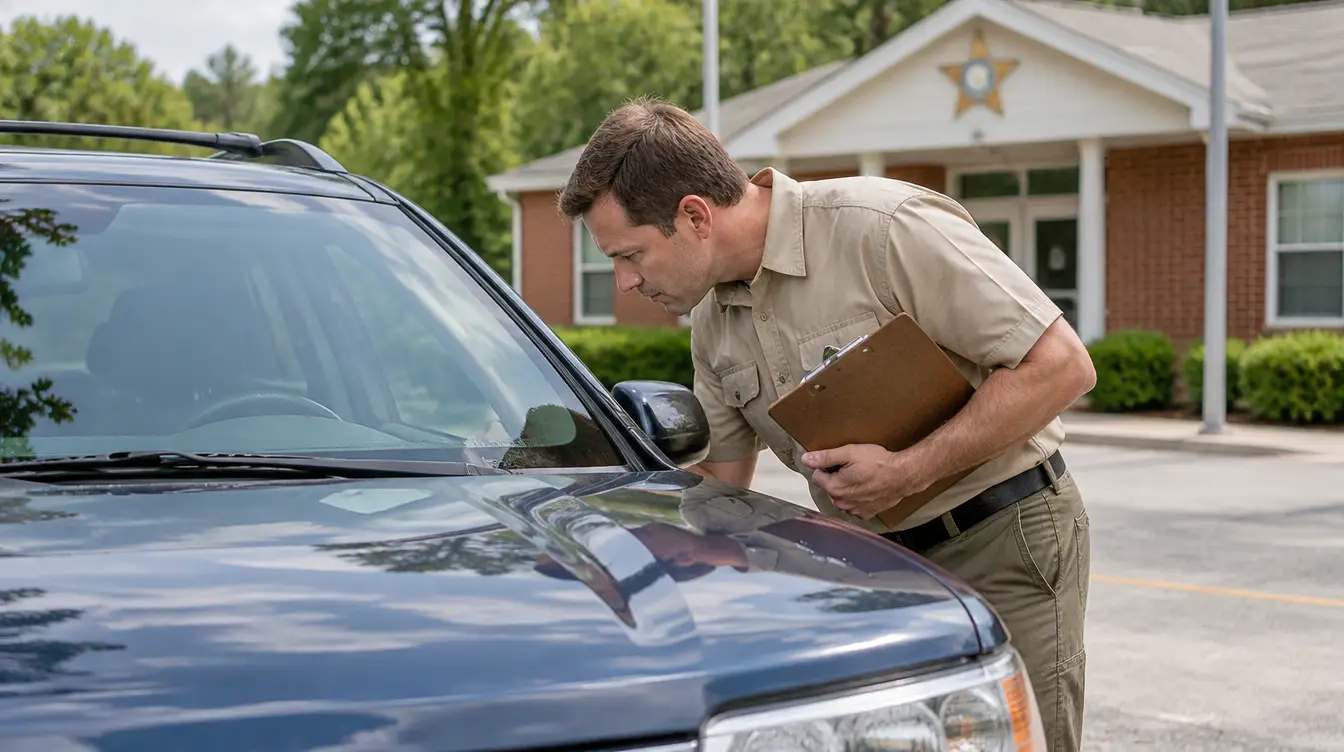
- Paperwork to the buyer. You send the signed title, the bill of sale and the notarized affidavit by tracked mail. Timing matters here: Kentucky gives a buyer 15 days to apply for registration with the county clerk, and a car from another state needs a sheriff's inspection, which checks its identification number against the title paperwork, before the clerk will title it.
Our guide to the Kentucky title and registration steps covers the buyer's side at the other end, and our New York to Kentucky car shipping page covers the lane itself.
Frequently Asked Questions
Can I sell a car to someone who lives in another state?
Who pays for shipping when you sell a car to an out-of-state buyer?
Does the title need to be notarized when selling to an out-of-state buyer?
Should the title ship with the car?
Do I give my license plates to an out-of-state buyer?