West Virginia sits where the Ohio Valley meets the Appalachians, so a vehicle moving here rarely travels a straight line. Rivalane arranges West Virginia car shipping with licensed, insured carriers along I-64, I-77 and I-79, and on the long inbound lanes from the Northeast and the West Coast. Tell us your pickup and delivery points and we will match the vehicle to a carrier already running that route.





5-Star Average Rating
Fully Insured
Top Rated Service
Nationwide Coverage
Licensed Carriers
Rivalane works as a broker, matching your vehicle with licensed, insured carriers rather than running a truck fleet of its own. That matters in West Virginia, where a route can mean two-lane mountain roads, a Turnpike run south from Charleston, or a long haul out of the Eastern Panhandle. A wider carrier network means more options on lanes a single fleet would struggle to cover, and one point of contact from the first quote to the day the vehicle arrives.

Cost and timing depend on your route, trailer type, vehicle size, and the time of year. The ranges below reflect typical market pricing and transit windows by distance, not a commitment on either. Your actual quote is based on real carrier availability on your specific route at the time of booking.
Distance and carrier density set the price more than anything else. Carriers run the I-64 and I-77 corridors through Huntington, Charleston and Beckley, and I-79 north toward Morgantown, so pickups near those routes price better than addresses in the southern coalfields or the deep hollows, where a truck has to leave its circuit and sometimes cannot reach the door at all. The Eastern Panhandle behaves differently from the rest of the state. Martinsburg and Charles Town sit inside the dense Washington and Baltimore carrier market, so pickups there tend to be quicker and price closer to a mid-Atlantic move than a mountain one.
Season cuts both ways. Snow and ice through the mountains and on the Turnpike from December into February thin out the carriers willing to take rural pickups, and autumn southbound demand competes with snowbird traffic heading to Florida.
Trailer type comes next, since enclosed transport uses more specialized space and there is less of it available. Vehicle size, whether the car runs, and how much lead time you give us all factor in. Booking one to two weeks out usually opens up more carrier options than a last-minute request.
Get your West Virginia quoteThe sequence is the same across the state, though addresses in the mountains need a little more planning at pickup.





Tell us where the vehicle starts, where it is going, and what you are shipping. We check the route and the distance and come back with a price for that specific move.

Pick the window that fits your schedule. We look for a carrier already running your lane, which is usually quicker along I-64, I-77 and I-79 than in the mountain counties, where a truck may need to work you into its circuit.

Take out personal items, keep the fuel low, and have the keys ready. If your address sits on a narrow or steep road, tell us early so we can agree a meeting point the trailer can reach safely.
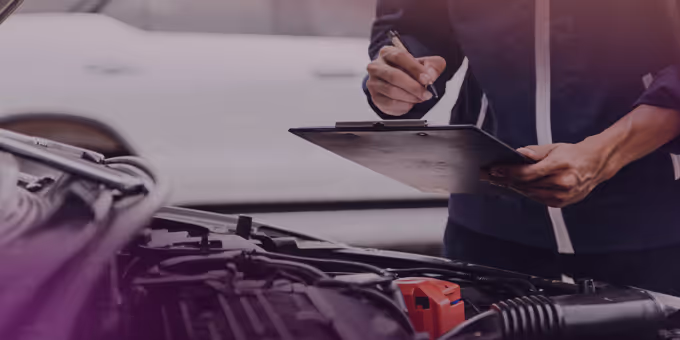
The driver walks around the vehicle at pickup, records its condition, and secures it on the trailer. You get updates while it is in transit so you know what stage the move has reached.
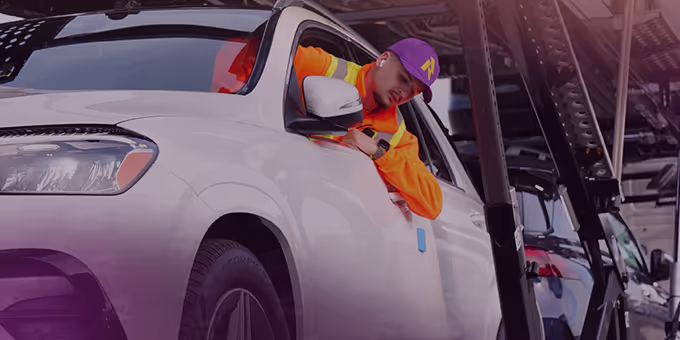
At delivery the driver goes through the inspection notes with you, and you check the vehicle against them before signing off.

Every West Virginia shipment runs on the same nationwide carrier network, matched to the route you need. Here is what that covers, from a short hop across the Ohio line to a cross-country run.
We arrange pickups and deliveries across the state, from the Huntington and Charleston corridor to Morgantown, Wheeling and the Eastern Panhandle. Short regional moves into Ohio, Virginia, Pennsylvania, Maryland and Kentucky run on the same network.
Open carriers suit everyday vehicles like sedans, SUVs and light trucks, and they handle the large majority of moves in and out of West Virginia. Most trucks working the I-64, I-77 and I-79 corridors are open haulers, so you usually get more pickup dates to choose from and a lower rate than enclosed. Your vehicle travels on a licensed, insured carrier, and you get updates as the move progresses. See how open auto transport works.
Enclosed carriers add protection for classic, luxury and specialty cars, and for any vehicle you would rather not expose to a mountain winter. Inside a covered trailer the vehicle stays away from the salt and grit crews spread on the Turnpike and the higher stretches of I-64 from December into March. Enclosed space is scarcer than open, so allow more lead time. Read more about enclosed auto transport.
Carriers reach most West Virginia addresses directly. Where a road is too narrow or steep for a full-size trailer, we agree a nearby meeting point instead, which comes up often in the hollows and the southern coalfields. Learn how door to door transport works.
Long-distance moves connect West Virginia with the Northeast, Florida and the West Coast. Southbound demand builds through autumn and cross-country lanes fill up in summer, so more notice gives you more choice of dates.
Demand here comes from a handful of clear directions, and most of it moves along the same few corridors. These are the four groups that ship vehicles into and out of West Virginia most often.

West Virginia winters send a steady flow of vehicles south each autumn, mostly to Florida and the Carolinas. Southbound demand builds through October and November, and carrier space on those lanes tightens as the season approaches. The return north runs from April into May. Booking ahead of either peak gives you more choice of pickup window.
Snowbird car transport →.svg)
Plenty of vehicles reach West Virginia from another state, and the largest inbound lanes start in the Northeast and on the West Coast. If you have bought a car in New York, New Jersey or California, we arrange pickup from the seller or the dealership and delivery to your address here, so nobody has to fly out and drive it back. Send us the pickup contact and the vehicle details and we will handle the coordination.
Vehicle transport services →
The 167th Airlift Wing at Martinsburg, the 130th Airlift Wing at Charleston and Camp Dawson at Kingwood all generate PCS and training related vehicle moves, along with West Virginia National Guard units across the state. Orders often arrive with short notice and fixed report dates, so the pickup window matters more than usual. Share your dates early so the route can be planned around them.
Military car shipping →
WVU in Morgantown and Marshall in Huntington both draw heavily from out of state, and much of WVU's intake comes from New Jersey, Pennsylvania and Maryland. Their academic calendars create two clear surges, arrivals in late August and departures in May. Many students ship a car home for the summer rather than pay to store it, and booking about two weeks ahead of either window usually means better carrier availability.
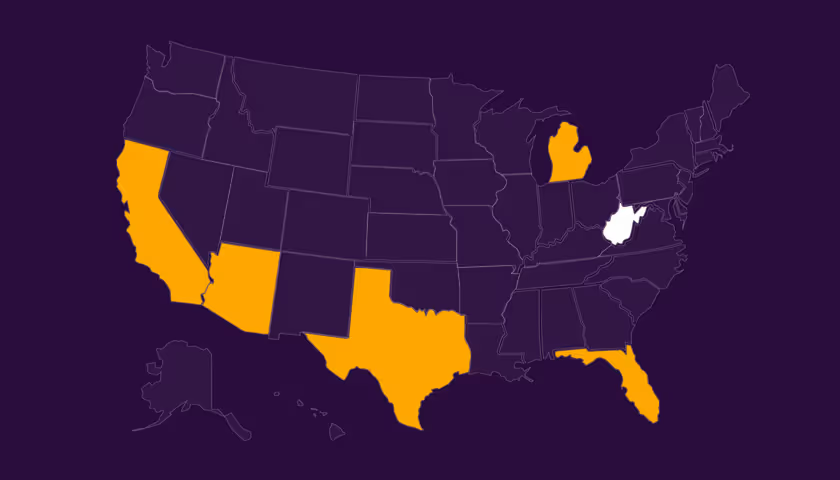
Estimate your shipment →Looking to ship your car to another state or across the country? Rivalane ships to all 50 states. Select a state to learn more about local auto transport services.
Most West Virginia pickups and deliveries cluster along three corridors. I-64 runs west to east through Huntington, Charleston and Beckley. I-77 carries the Turnpike south from Parkersburg through Charleston toward Princeton. I-79 heads north from Charleston through Clarksburg to Morgantown, with Wheeling up on the Ohio River panhandle and Martinsburg out east on I-81. Open a city below for the ZIP codes in that area.