





Plan on about 1,100 to 1,600 road miles and, usually, 3 to 6 days once loaded. An open sedan from Burlington to Miami usually costs $900 to $1,400. Book two to three weeks out in the fall, and line up a Florida policy before registering, since Florida gives new residents a short window.
How Car Shipping From Vermont to Florida Works
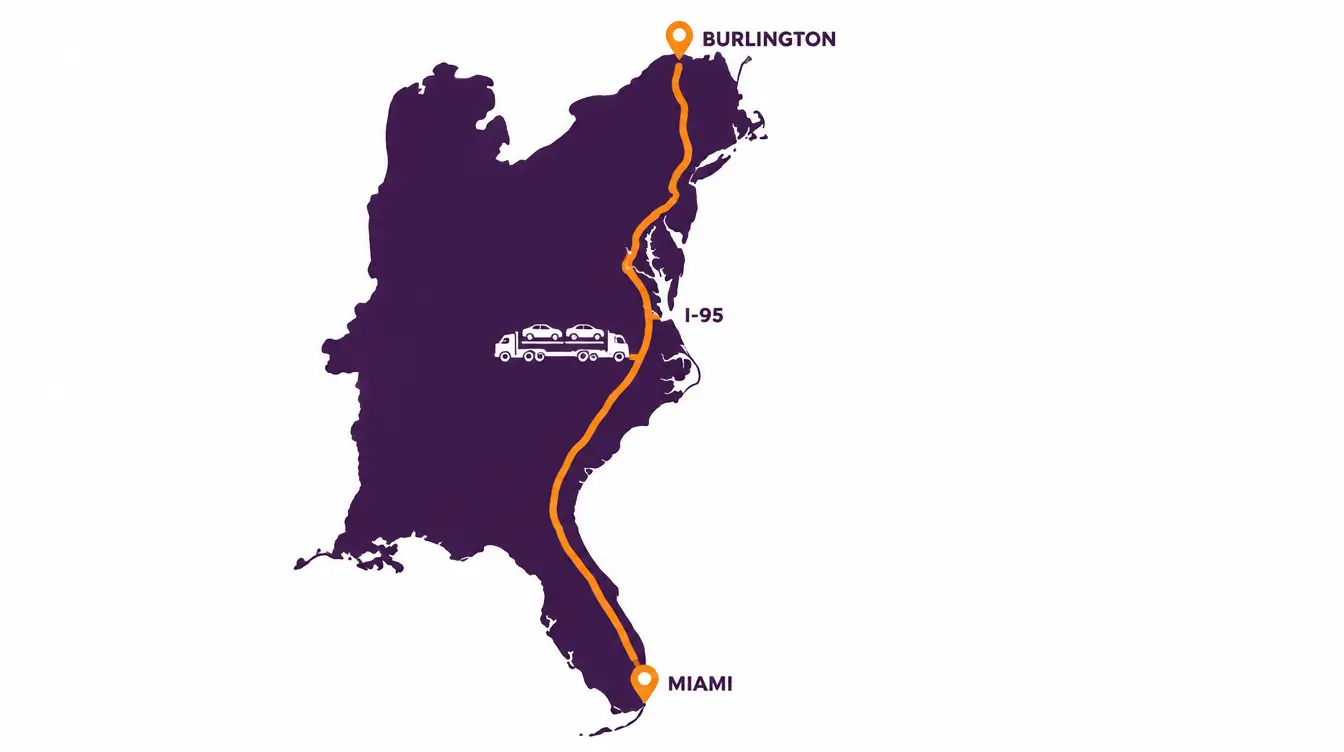
Vermont pickups are spread across small towns and back roads, so dispatch tends to pair a car with a southbound truck that is already collecting other vehicles in the region. From Burlington, St. Albans, Rutland or Bennington the truck usually heads down the Hudson Valley past Albany, while cars from Montpelier, Barre, St. Johnsbury and Brattleboro roll south on I-91 through Springfield, Hartford and New Haven. Every pair we measured then rides I-95 around Baltimore and Washington and on through Virginia, the Carolinas and Georgia. On a Burlington to Miami run the halfway mark falls in central North Carolina, close to Smithfield. Miami, Fort Lauderdale and West Palm Beach cars stay on I-95 down the Atlantic side, and Orlando loads pass Daytona on the way inland. Tampa and Fort Myers deliveries leave I-95 near Jacksonville and cut southwest across the state to finish on I-75, and Tallahassee cars head west on I-10 past Lake City.
How Much Does Car Shipping Vermont to Florida Cost?
The pairs we measured run from about 1,111 road miles, Bennington to Jacksonville, up to about 1,604, St. Albans to Miami. Mileage gives the starting number, and the season and the exact addresses move it from there.
On the Florida end, Jacksonville is the closest delivery, roughly 345 miles short of Miami when the car starts in Burlington. Orlando is about 205 miles shorter and Tampa about 150, while Fort Myers, Fort Lauderdale and West Palm Beach all fall within about 60 miles of the Miami figure.
On the Vermont end, southern pickups save miles. Counting to Miami, Bennington sits about 120 miles closer than Burlington, Brattleboro about 95 and Rutland about 55, while Montpelier, Barre, St. Johnsbury and St. Albans add roughly 15 to 30.
A quote far under the rest usually means the car waits for a truck willing to take it at that price. A few days of slack on the pickup date does more to lower the figure than haggling.
On an open trailer, Burlington to Miami usually costs $900 to $1,400 for a sedan that runs. Jacksonville and Orlando deliveries tend to price below the middle, and northern Vermont cars bound for the Miami area sit near the top.
Budget roughly $150 to $250 more for a bigger SUV, van or pickup. A closed trailer on this lane generally runs 40 to 60 percent above that open quote.
These change a quote on this lane the most:
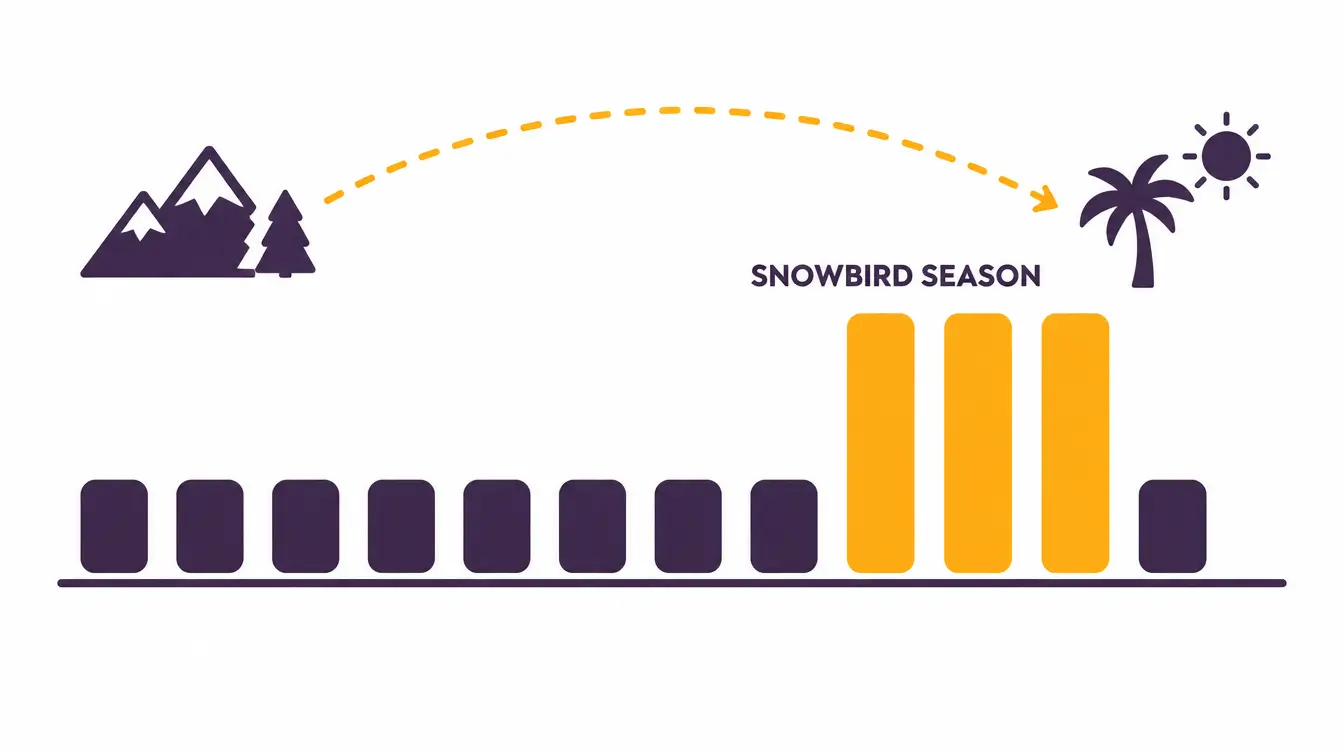
- Fall demand. Snowbird season fills southbound trucks, so quotes and waits both climb as the weather turns. Outside that stretch, space heading south is easier to find.
- Where in Vermont. A car near Burlington or an interstate exit is quicker to collect than one at the end of a dirt road in the hills, which can mean a short trip to a meeting point.
- Where in Florida. Jacksonville and Orlando sit closest, and Miami, Fort Lauderdale and Fort Myers take the longest run.
Run your dates through the shipping calculator to check any offer that looks far below the others.

What Factors Actually
Influence Pricing on This Route?
Booking early protects your timeline, keeps pricing steady, and reduces the risk of last-minute carrier changes.
Many customers on this route relocate permanently or move seasonally, which makes predictability more important than speed.
This article explains how auto transport Alabama to New York works, what it costs, and how long it takes, so you can make a clear, informed decision before you schedule your shipment.


Type
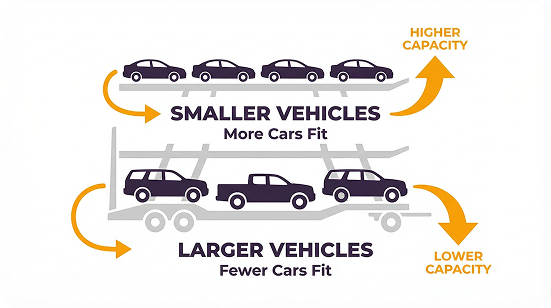
Size decides how much deck space your vehicle takes and how many other cars fit alongside it. A standard sedan is the cheapest thing to move because it slots almost anywhere on the trailer. SUVs, pickups and vans take more room and typically add a few hundred dollars on the same lane.


Is It Cheaper to Drive or Ship a Car From Vermont to Florida?
Shipping Instead of Driving
Shipping suits owners who want to fly down and find the car waiting, which is how many snowbirds handle the winter. It also suits a retiree moving south for good, a student starting school in Florida, or a car sold to a buyer there.
It keeps a long highway trip off the odometer, and nobody has to give up most of a week behind the wheel when the weather in Vermont is already turning.
Driving the Route Yourself
Route planners put Burlington to Miami at about 25 hours of driving or more, which most people split into two or three days with hotel nights in between. Add fuel, the tolls along I-95, meals and the wear on the car. When you are going down anyway and taking the car with you, driving can cost less, and we would rather tell you that.
The math flips once nobody rides along with the car. Whoever drives it down still needs a flight or a long ride back to Vermont.
How Long Does Shipping a Car From Vermont to Florida Take?
After loading, most cars reach Florida in typically 3 to 6 days. Bennington to Jacksonville, about 1,111 miles, can arrive at the quick end, and St. Albans to Miami, about 1,604 miles, usually takes the full window.
Getting a truck assigned comes first. After you book, that step usually takes one to three working days, and it can stretch longer at the height of the fall rush.
Figure on 400 to 500 miles for each day the hauler spends rolling south. Burlington to Miami is roughly 1,577 miles, so the driving alone fills three or four days, and every other car on the trailer adds a stop. Giving dispatch a wider pickup range shortens the wait more than anything else.
When is the Best Time to Book Auto Transport From Vermont to Florida?
This is a snowbird lane, and southbound demand builds through the fall as owners head for Florida ahead of winter. Trucks fill faster in that stretch and prices tend to rise.
For a fall move, booking two to three weeks ahead usually gives dispatch enough room. The rest of the year, about one to two weeks of lead time is usually plenty, and a range of possible pickup days means the car can ride with whichever truck opens up first.
Leave extra room in winter. Snow and ice in the Green Mountains can hold up a pickup on hilly or unplowed roads, so loose dates help through the winter months.
Open vs Enclosed Auto Transport on a Vermont to Florida Route
Open transport carries most cars on this lane, on the multi car trailers that run I-95 every day. After a trip of this length the car arrives with about the road dust it would collect being driven.
With enclosed transport, a covered trailer shields the car for the whole run. Each one has room for only a handful of vehicles, which pushes up the cost per car, and an opening can take longer to find during the fall rush.
A closed trailer earns its cost on classics, exotics, show cars and fresh paint, and it shields the finish from road salt early in the winter. Daily drivers, family SUVs and most seasonal moves ship open.
Enclosed Car Transport
Enclosed demand rises for high-value, specialty and seasonal vehicles, and enclosed trailers protect against road debris and weather, which matters most on longer hauls. Enclosed rigs are a small fraction of the trailers working any given lane, and that scarcity is what drives both the higher price and the longer booking lead time.
Open Car Transport
Most vehicles move on open trailers, and for most routes that is the more cost-effective way to ship a car.
Open transport works well for standard vehicles and keeps costs predictable. It also offers the widest carrier availability.
What Florida Requires When Your Car Arrives
Florida ties its vehicle rules to residency, so a winter stay and a permanent move are handled differently.
When the rules start. Florida treats you as a resident once you begin working there, enroll children in a Florida public school, sign up to vote in Florida, claim a homestead exemption or live in the state for more than six months in a row. From that point the steps below apply.
- The deadline. Under the state new resident page, a resident has 10 days to get the car titled and registered. Another FLHSMV page lists 30 days, so confirm the window with your county tax collector.
- Insurance comes before plates. Proof of coverage has to come first: a policy from a Florida-licensed company carrying no less than $10,000 in Personal Injury Protection plus $10,000 in Property Damage Liability.
- A VIN inspection. An officer of law enforcement or military police, a licensed Florida dealer, a county tax collector employee or a Division of Motorist Services compliance examiner checks the VIN and records it on form HSMV 82040 or HSMV 82042.
- The title. Bring the original out-of-state title and form HSMV 82040. If a lender holds the title, ask it to transfer the title to Florida, and register the car either way.
- Your license. Switch to a Florida driver license inside 30 days of residency.
- Closing out Vermont. Vermont cancels a registration with form VD-170 and the returned plates or registration certificate, and any refund depends on when you cancel.
What to Expect at Pickup and Delivery
Settle on both handover spots before dispatch. A loaded car hauler needs a wide road and room to turn.
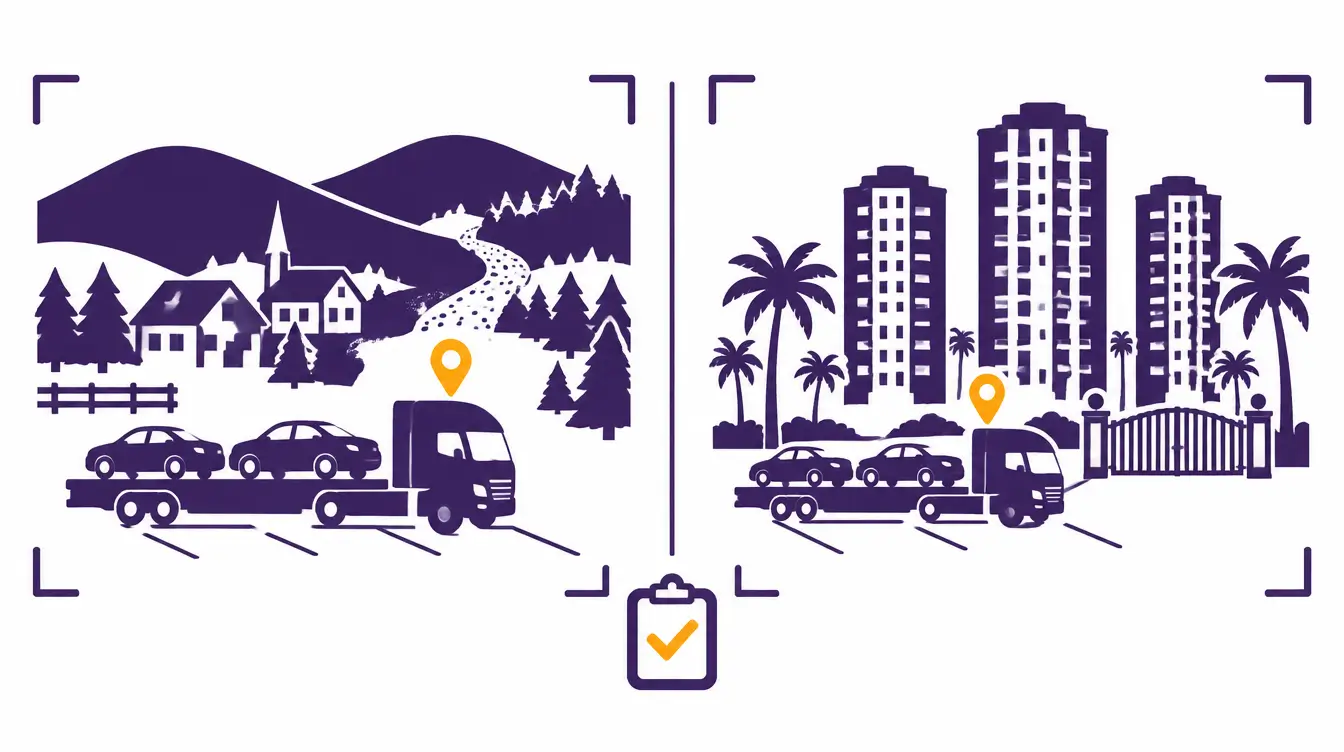
In Vermont, many homes sit on gravel roads, steep driveways or narrow village streets that a full truck cannot use. The driver will often suggest a plaza lot, a park and ride or a spot near an interstate exit instead, and in Burlington a wide side street usually works better than downtown.
In Florida, condo towers and gated communities around Miami, Fort Lauderdale and the Palm Beaches often keep big trucks out, so expect a nearby lot as the meeting point. Single family streets in Orlando, Tampa and Jacksonville are generally easier.
Expect an inspection at both ends, with any scratches or dents already on the car written onto the bill of lading. Your own date-stamped photos from all four sides, taken before the truck leaves Vermont, give you something to compare against in Florida.
Key Things to Know Before Shipping a Car From Vermont to Florida
Rivalane plans each Vermont to Florida move from its office on Long Island, matching the car with a southbound truck that has room. A winter visitor does not need Florida plates while Vermont stays home, but taking a job there, enrolling children in a Florida public school or staying more than six months in a row brings the Florida rules into play.
Frequently Asked Questions



