




Shipping a running sedan from Virginia to Washington State on an open trailer costs $1,350 to $1,900, based on Richmond to Seattle. Across our 64 mapped town pairs the drive is about 2,362 to 3,051 road miles, mostly on I-94 and I-90, and transit usually takes 7 to 9 days. Booking two to three weeks out works well.
What Route Does a Car Take From Virginia to Washington State?
Virginia to Washington car shipping covers about 2,362 to 3,051 road miles, depending on which of our 64 mapped town pairs a car travels, and 50 of those pairs reach Washington State on I-90 through Billings, Bozeman, Butte, Missoula and Coeur d Alene. Arlington and Alexandria pickups in Northern Virginia, and Richmond, Norfolk and Virginia Beach cars bound for Puget Sound or Spokane, head north past Hagerstown in Maryland, cross Pennsylvania and run through Ohio and northern Indiana. Most of those loads then pass Chicago and Madison and follow I-94 by Fargo and Bismarck until it meets I-90 in Montana. Charlottesville and Roanoke cars cross West Virginia on their way west. Those bound for Puget Sound or Spokane, along with Bristol loads to the same cities, run through Indianapolis and Des Moines and pick up I-90 at Sioux Falls, crossing South Dakota by Rapid City. Every Vancouver delivery, and the Kennewick runs from everywhere except Northern Virginia, take I-84 past Cheyenne, Boise and Pendleton instead. Cars bound for Seattle, Tacoma, Everett, Bellingham and Olympia cross the Cascades on I-90 past Ellensburg.

What Does Virginia to Washington Car Shipping Cost?
Your quote depends on your vehicle, the exact pickup and delivery addresses, the season and the trailer type, so run the calculator for a figure on your dates.
The Washington delivery city shifts a quote more than many shippers expect. Measured from Richmond, Spokane is the nearest of the main cities at about 2,590 road miles and Kennewick follows near 2,720, while Seattle, Tacoma and Olympia fall between roughly 2,870 and 2,910 and Bellingham, the farthest, comes in at about 2,950. Delivery towns not named here are covered on our Washington State car shipping page.
Where the car starts matters too. Measured to Seattle, an Arlington or Alexandria pickup in Northern Virginia runs close to 100 miles shorter than one in Richmond, Charlottesville about 85, Roanoke about 160 and Bristol about 230, while Norfolk and Virginia Beach add roughly 85 to 100. Our Virginia car shipping page lists more pickup areas.
Vehicle size and the calendar explain most of what is left. A larger SUV or pickup claims more deck space, and winter weather from the northern Plains to the Cascades can slow the western half of the run. For long hauls in general, see our breakdown of cross-country car shipping costs, and our car shipping calculator turns two ZIP codes into a first figure.

For an operable sedan on an open carrier, the Richmond to Seattle trip runs $1,350 to $1,900 in current quotes. Where a given car lands in that range depends on the towns at each end, and our longest mapped pair runs about 690 road miles farther than the shortest.
Pickup trucks, minivans and three-row SUVs fill more of the deck and usually add about $150 to $250. Going enclosed raises the bill 40 to 60 percent over an open spot.
On this lane, a quote mostly turns on three things:
- Washington delivery city. Spokane is the closest of the big cities to Virginia, while Bellingham, near the Canadian border, lies farthest.
- Virginia pickup town. Northern Virginia, Roanoke and Bristol pickups shorten the trip compared with Richmond, while Norfolk and Virginia Beach lengthen it a little.
- Time of year. Washington truck chain rules on I-90 from November 1 to April 1 and winter storms across Montana and the Dakotas can delay a pickup or stretch the western half of the run.
A bid far below the others is worth a call to learn what it leaves out.

What Factors Actually
Influence Pricing on This Route?
Five things move the price on any lane: the vehicle's size, whether it runs, how easy each end is to reach, the season and the trailer type. Booking early protects your timeline, keeps pricing steady and reduces the risk of last-minute carrier changes.


Type
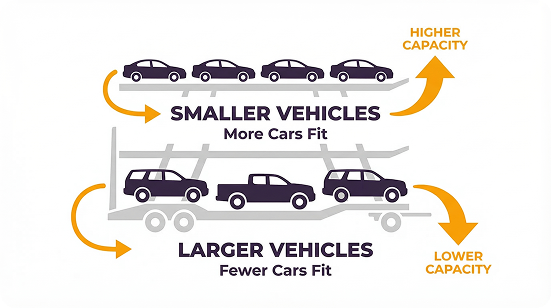
Size decides how much deck space your vehicle takes and how many other cars fit alongside it. A standard sedan is the cheapest thing to move because it slots almost anywhere on the trailer. SUVs, pickups and vans take more room and usually cost more on the same lane.


Should You Ship or Drive a Car From Virginia to Washington?
Reasons to Ship
Shipping fits a Virginia household relocating to the Seattle or Spokane area for a new job, a student heading to a Washington State campus who would rather fly, and a family moving with more cars than drivers. Everyone can travel by air while the car crosses the country on a truck.
It also keeps close to 2,900 miles of interstate wear off the car, along with the fuel, tires and hotel nights the drive would eat up.
Reasons to Drive
Two people sharing the wheel with no firm arrival date can sometimes spend less by driving, and when that is the case for your move, we will tell you. Our routing puts Richmond to Seattle at about 51 hours of driving time, which stretches to five or six long days with fuel stops, meals and overnights.
A solo driver racing a start date has a tougher case, since even Bristol to Spokane, the shortest pair we mapped, runs about 2,360 miles.
How Long Does Car Shipping From Virginia to Washington Take?
Most cars reach Washington State 7 to 9 days after loading. Bristol to Spokane, our shortest mapped pair at roughly 2,360 miles, usually lands near the start of that window, and Virginia Beach to Bellingham, the longest at about 3,050, typically needs most of it.
Before the car moves, Rivalane assigns a carrier, usually within one to three working days of your order. A flexible pickup window widens the choice of trucks already heading west.
At the 400 to 500 miles a long-haul carrier usually covers in a day, Richmond to Seattle comes to roughly six or seven driving days, and the midpoint falls near Fargo. Winter snow in the Cascades, Montana or North Dakota can tack on a day or two.
When Should You Book a Virginia to Washington Car Shipment?
Booking two to three weeks ahead suits this lane. That lead time lets Rivalane line up a licensed carrier already scheduled west with room on its deck, instead of taking the first truck that answers.
Leave more slack from November through March. From November 1 through April 1, Washington State makes every vehicle heavier than 10,000 pounds carry tire chains on the I-90 stretch from North Bend east to Ellensburg and on I-82 from Ellensburg to Selah, whatever the weather, and each Seattle, Tacoma, Everett, Bellingham and Olympia delivery we mapped crosses that I-90 stretch. Storms on the northern Plains can also slow the middle of the trip.
Moving a car west from New York? The New York to Washington car shipping route shares these interstates west of Chicago.
Should You Ship Open or Enclosed From Virginia to Washington?
On this lane the default is open transport: the car rides a two-level hauler like the ones seen on every interstate. Across close to 2,900 miles it meets Mid-Atlantic rain, winter road salt from Pennsylvania to Montana and Pacific Northwest drizzle, about what a road trip would bring.
Enclosed transport keeps the car inside a walled trailer for the whole run, away from rain, salt and road grit. Those trailers carry fewer cars, so the price rises and a short-notice booking can take longer to fill.
Enclosed is the usual choice for classic and collector cars, exotics and recent paint jobs, while daily drivers mostly go open.
Enclosed Car Transport
Enclosed demand rises for high-value, specialty and seasonal vehicles, and enclosed trailers protect against road debris and weather, which matters most on longer hauls. Enclosed rigs are a small fraction of the trailers working any given lane, and that scarcity is what drives both the higher price and the longer booking lead time.
Open Car Transport
Most vehicles move on open trailers, and for most routes that is the more cost-effective way to ship a car.
Open transport works well for standard vehicles and keeps costs predictable. It also offers the widest carrier availability.
Titling and Registering a Virginia Car in Washington State
A new Washington State resident has 30 days from the move to obtain a Washington driver license and register the car, and the license comes first. The Department of Licensing handles driver licensing and vehicle licensing at separate locations, so plan on two stops.
For the car, take the current Virginia title to any vehicle licensing office. When a lender still holds the title, the office can give you a fax number the lender can use to send over a copy. Plates are handed over at the counter, or arrive up to 3 weeks after DOL receives a mailed application.
Most new arrivals also ask about use tax. Under Department of Revenue guidance, a new resident may be exempt for a car acquired and used in another state for more than 90 days before moving, provided it is licensed in Washington within 30 days, with the Virginia registration the usual proof. Buying a car out of state within 90 days of the move removes that exemption.
Virginia has its own loose ends. Its DMV wants the old plates back once Washington registers the car, and says not to drop the Virginia policy before the plates are turned in, whether online, in person at a DMV customer service center or through the mail. A registration with at least six full months remaining can earn a partial refund when the plates go back by mail with form FMS 210, and surrendering online rules that out. Your city or county also needs to hear about the move, through the Commissioner of the Revenue, or in some places the Director of Finance, before it stops billing personal property tax on the car. Our Virginia plate return guide lays out each step.
Sources: the Washington DOL vehicle registration and plates page for new residents, Department of Revenue guidance on vehicles brought into Washington, and Virginia DMV guidance on leaving Virginia and on surrendering plates. Rules and fees change, so confirm the details with a Washington vehicle licensing office before delivery day.
What to Expect at Pickup in Virginia and Delivery in Washington State
Settle both meeting points before a carrier is assigned. A loaded car hauler needs a long, level stretch where it can stop, lower its ramps and pull away again, and plenty of neighborhood streets cannot give it that.
In Virginia, wide suburban roads around Richmond, Chesapeake and Virginia Beach often work. Older streets in Alexandria and Arlington, gated communities and rural lanes in the Shenandoah Valley usually move the handoff to a large lot near the interstate.
Washington State deliveries vary in the same way. Steep streets in Seattle and Tacoma, island addresses reached by ferry and narrow foothill roads often shift the meeting point to a shopping center lot, while open streets in Spokane and the Tri-Cities usually take a truck.
Before you sign anything at pickup, look the car over alongside the driver and check that each scratch and dent already there appears on the condition report. That report is the reference at delivery, so dated photos of all four sides make a useful backup.
Key Things to Know Before Shipping a Car From Virginia to Washington
Rivalane books each car with a licensed carrier already running west, coordinates the move from its office in Melville, New York, and provides real-time tracking until delivery. In Washington State, get your driver license first and register the car within 30 days of moving, and keep the Virginia insurance in force until the Virginia plates are surrendered.
Frequently Asked Questions