What Affects Car Shipping Cost?
Car shipping cost comes down to a handful of things: the distance and the route, how easily a truck can reach each end, and the size and condition of the vehicle. Transport type, the season, fuel costs and the number of carriers running your lane in the week you book do the rest. No single one of them sets the price. They stack.
Rivalane is a broker. We do not own trucks and we do not employ drivers, and that shapes what a quote actually is. The number you see is an estimate of what a carrier will accept to run your vehicle on your route, on your dates. When those conditions move, the number moves with them. Knowing which conditions matter is what lets you judge whether a quote is realistic before you commit to it.
Distance, Route and Access at Both Ends
Distance sets the floor. A vehicle crossing the country costs more to move than one going three states over, and that part surprises nobody.
Route matters more than raw mileage. Carriers run established lanes between major metropolitan areas, and a vehicle that fits an existing lane is far easier to place than one that pulls a driver off it. A car going from Los Angeles to Dallas sits on a busy corridor. A car going from a small town in eastern Oregon to another small town in northern Maine does not. That difference shows up in what carriers will accept, and it is why distance and route behave differently from each other.
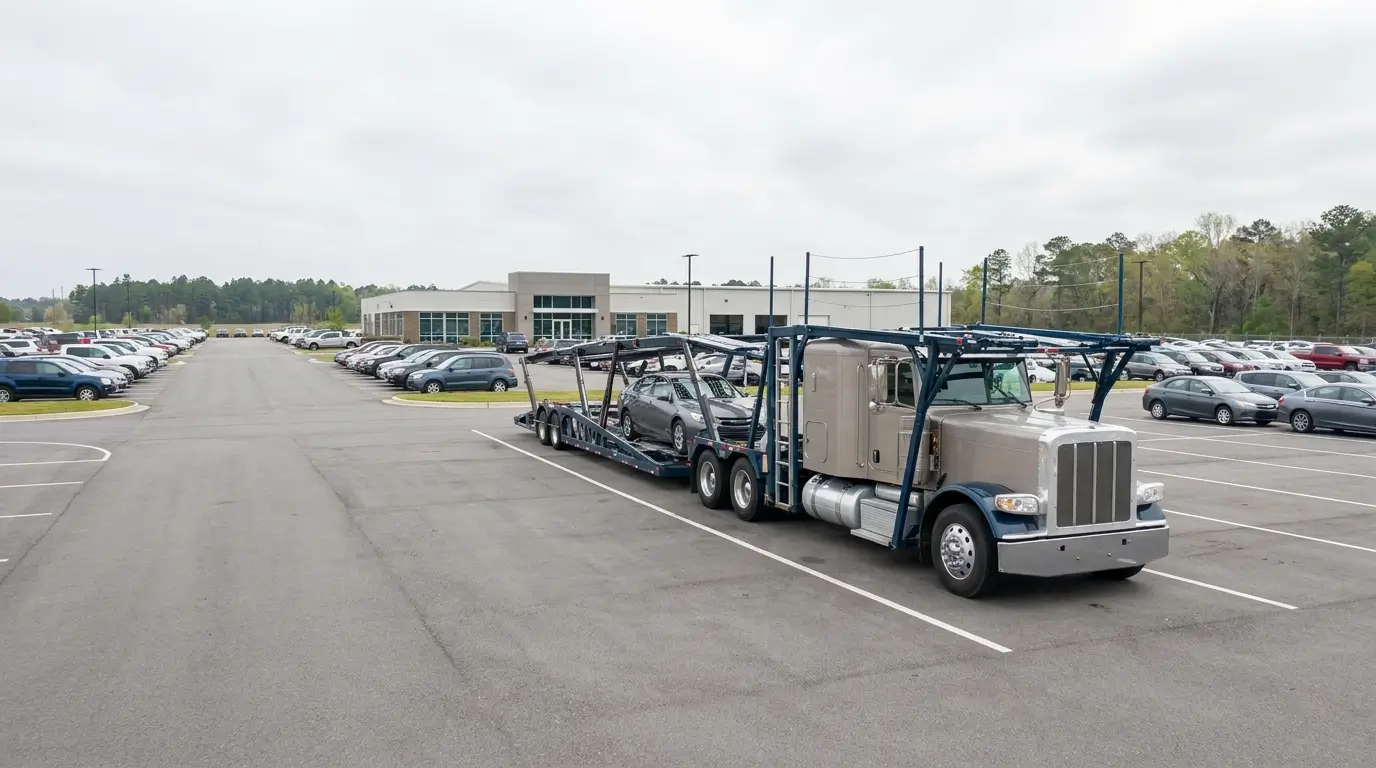
Access at each end counts too. A full size transport trailer is built for highways, not side streets. It cannot turn into a narrow residential street, duck under low branches, or enter an underground garage. When a driver cannot reach your address, you agree a meeting point nearby, usually a large retail car park. Mentioning a tight street before you book is genuinely useful, because where a vehicle is collected and delivered changes which carriers can take the job at all.
The Vehicle Itself
Carriers plan loads by space and weight, not by how nicely a car drives. A standard sedan takes a standard slot. An extended cab pickup, a large SUV or a lifted truck takes more room and leaves fewer slots for everything else, so fewer carriers can fit it.
Condition changes the picture again. A vehicle that does not start, does not roll or does not steer needs a winch and a driver willing to handle it, and not every trailer carries one. Modifications work the same way. Lowered suspension, wide body kits, roof boxes and oversized tyres all affect how a vehicle loads and how much room it occupies on the deck. Classic and collector vehicles often travel enclosed for reasons that have nothing to do with their size.
None of this is a judgement about your car. It is arithmetic about trailer space.
Open or Enclosed Transport
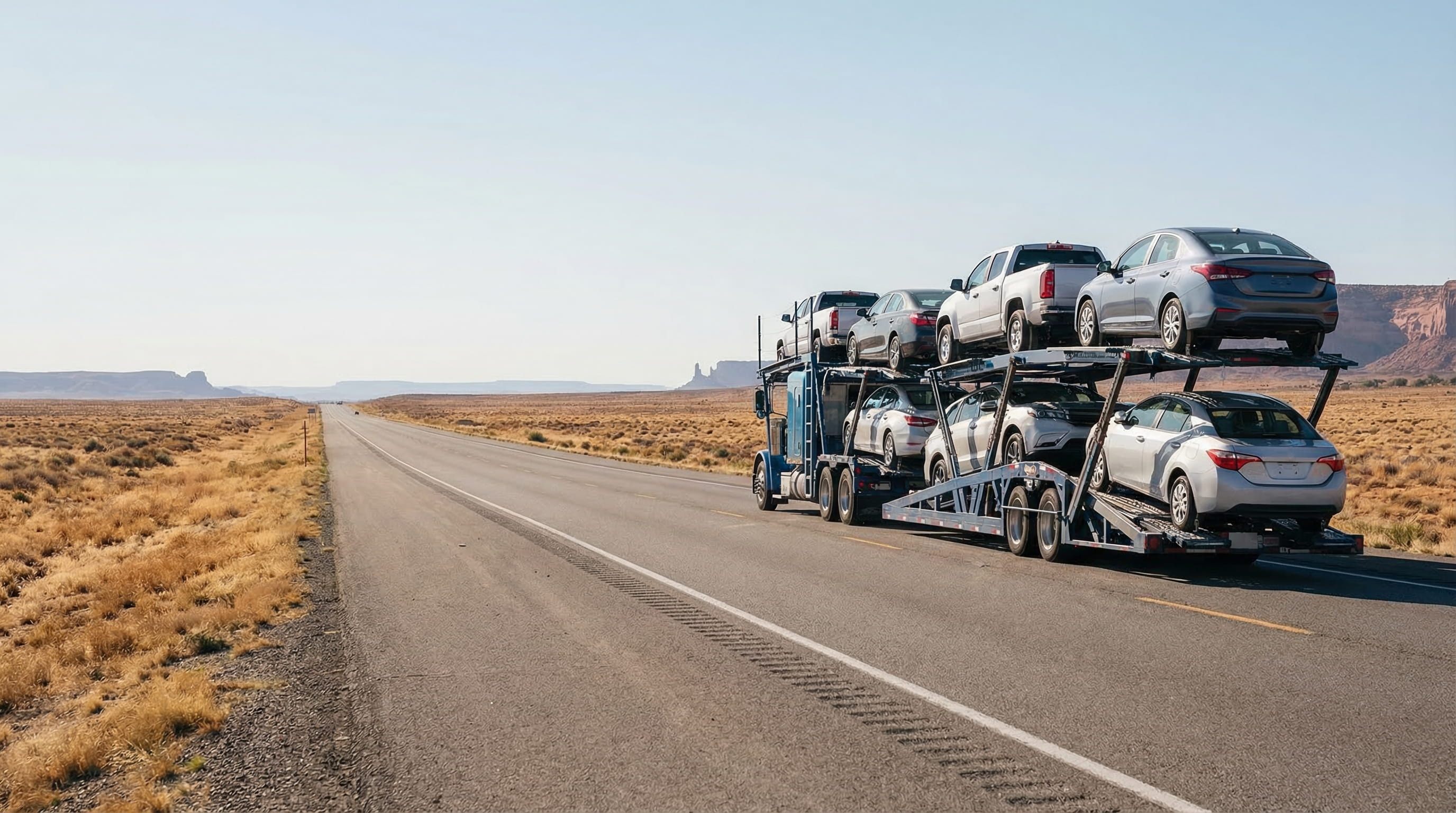
Most vehicles travel on open trailers, the same kind that deliver new cars to dealerships. Open is the default because there are far more open carriers on the road, which means more availability and more competition for your shipment.
Enclosed transport puts the vehicle inside a covered trailer, away from weather and road debris. There are fewer enclosed carriers, they take fewer vehicles per load, and owners choose them for classics, exotics, show cars and anything where the paintwork is part of the value. The trade is simple enough: more protection, less availability, a higher rate. We set out how the two options compare in more detail elsewhere.
For an ordinary daily driver, open transport is the sensible choice and enclosed is an expense without a matching benefit.

Season, Timing and Carrier Supply
Auto transport runs on a seasonal cycle. Vehicles head south through autumn as snowbirds move toward Florida, Arizona and Texas, and north again in spring. Summer is the heaviest season overall, because families relocate between school years. On any given lane in any given week, the balance between vehicles waiting and trucks running is what decides the rate a carrier will accept.
Fuel sits underneath all of it. Diesel is one of the largest operating costs a carrier carries, and when it climbs, the rate needed to run a load climbs with it. When it settles, that pressure eases.
Flexibility is worth more than most people expect. A pickup window of several days gives a dispatcher room to slot your vehicle into a load already heading your way. One fixed date removes that room. If your dates can move at all, say so, because it widens the pool of carriers who can take the job.
What Insurance Covers, and What It Does Not
Coverage sits with the carrier assigned to your shipment rather than with Rivalane, and terms differ by carrier. There is no tiered product to pick from and no upgrade to buy from us. Any article that describes car shipping insurance as a menu of coverage levels you select is describing something that does not exist.
What you should do instead is specific. Ask for the certificate of insurance before the vehicle loads. Photograph the vehicle at pickup, from every angle, in good light. Check the condition report the driver completes at both ends, because that document is what any claim will rest on.
If a company assures you about coverage without naming whose policy applies and what it excludes, that is the moment to ask harder questions.
What Will Not Change Your Quote
Some things buyers expect to matter turn out not to. Mileage does not affect the price. Neither does the age of the vehicle, its resale value, or how clean it is when the driver arrives. Carriers price by space, weight, route and handling.
Negotiation does not work the way it does elsewhere, either. A broker can reduce what it charges for arranging the move, but nobody can reduce what a carrier will accept to run the lane. A quote set below the market does not get your vehicle collected sooner. It waits, unaccepted, until someone raises it. That is the most common reason a shipment that opened with the lowest number ends up collected late and costing more than an honest quote would have.
When you are weighing several quotes and one sits far below the rest, treat it as the least likely to hold rather than the best value. There is more on reading and comparing quotes properly in our guide to that subject.
For a number on your own route, the cost calculator gives you one in about a minute. It asks for the collection and delivery locations, the vehicle, and your first available date, which are the four things that decide most of the answer.
Frequently Asked Questions
What affects car shipping cost the most?
Does distance alone decide the price?
Why do two quotes for the same route come back so different?
Does my vehicle need to run in order to be shipped?
Is my car insured while it is being transported?