


An operable sedan on an open trailer from Los Angeles to Charlotte costs $1,150 to $1,650. Across 64 measured town pairs, road distance runs 2,266 to 2,892 miles, most of them on I-40, and delivery typically comes 6 to 9 days after pickup. Plan on two to three weeks of notice, and get a North Carolina license before registering.
How Car Shipping From California to North Carolina Works
California to North Carolina car shipping spans the full width of the country, and when we mapped 64 town pairs between the two states, I-40 came out as the main road on 54 of them. Cars from Los Angeles, Riverside and Bakersfield pick it up at Barstow, where it begins, and Fresno and Bay Area loads come down the Central Valley to meet it there. From Barstow it crosses the Mojave to Needles, climbs past Kingman to Flagstaff, then runs by Albuquerque, Amarillo and Oklahoma City to Fort Smith, Little Rock and Memphis, and most loads stay on it through Nashville to Knoxville before the final run into North Carolina. Sacramento is the main exception, since most of its cars head east over the Sierra on I-80 through Reno and Salt Lake City. San Diego cars pick up I-10 through Tucson and El Paso, and deliveries to Fayetteville and Wilmington tend to swing south on I-20 through Atlanta. Rivalane pairs each car with a licensed carrier whose truck is already heading east with a free spot on the deck.

How Much Does California to North Carolina Car Shipping Cost?
Your quote depends on your vehicle, the exact pickup and delivery addresses, the season and the trailer type, so run the calculator for a figure on your dates.
Distance sets the starting point, and the California pickup city moves it more than anything else. Measured to Charlotte, Riverside and San Diego are the nearest big pickups at about 2,380 to 2,385 road miles, Los Angeles comes in near 2,414, Bakersfield is close behind and Fresno adds about 125 miles. A Bay Area or Sacramento pickup adds 256 to 298 miles over Los Angeles. Our California car shipping guide lists pickup options across the state.
Where the car ends up in North Carolina matters less. From Los Angeles, Asheville is about 114 miles short of Charlotte, Winston-Salem and Greensboro run some 37 to 63 miles past it, Durham, Fayetteville and Raleigh add 115 to 137, and Wilmington, out on the coast, is the longest delivery at roughly 177 miles beyond Charlotte. See our North Carolina car shipping page for delivery towns beyond these.
Two other things weigh in: vehicle size and the time of year. A three-row SUV or full-size pickup claims a bigger share of the deck than a sedan, and winter storms on I-40 in northern Arizona and New Mexico, or on I-80 in the Sierra, can delay a pickup or slow the trip.
Flexible dates help as well, because a carrier can fit the car into a load that is already forming. For a wider look at long hauls, our guide to cross-country car shipping costs explains each factor.

Moving an operable sedan from Los Angeles to Charlotte on an open trailer typically runs $1,150 to $1,650 on current quotes. The cities at each end decide where a quote lands, and the 64 measured pairs span about 626 road miles from shortest to longest.
A three-row SUV, van or full-size pickup typically adds $150 to $250 because it needs more deck room, and an enclosed trailer typically lifts the bill by 40 to 60 percent over open. For a starting estimate on your own two ZIP codes, try the car shipping calculator.
Three things move the price most on this lane:
- Pickup city in California. Southern California pickups make the shortest runs, while the Bay Area and Sacramento add up to about 300 miles.
- Delivery town in North Carolina. Asheville and Charlotte are the shortest deliveries, and the Triangle, Fayetteville and Wilmington the longest.
- Season. Winter weather in the high desert and in the Sierra can delay a pickup or slow a load.
Treat a quote far below all the others with caution and ask what it leaves out.

What Factors Actually
Influence Pricing on This Route?
Five things move the price on any lane: the vehicle's size, whether it runs, how easy each end is to reach, the season and the trailer type. Booking early protects your timeline, keeps pricing steady and reduces the risk of last-minute carrier changes.


Type
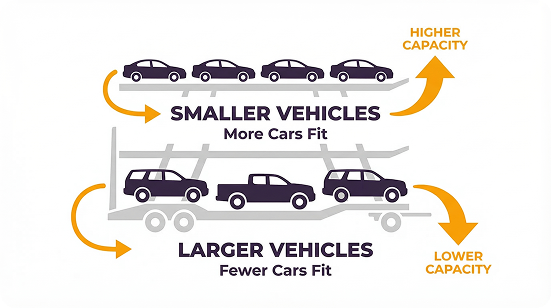
Size decides how much deck space your vehicle takes and how many other cars fit alongside it. A standard sedan is the cheapest thing to move because it slots almost anywhere on the trailer. SUVs, pickups and vans take more room and usually cost more on the same lane.


Is It Cheaper to Drive or Ship a Car From California to North Carolina?
Shipping Instead of Driving
Shipping suits people relocating to Charlotte, Raleigh or Durham for work who prefer a flight to most of a week of interstate driving, military families moving on orders with two cars and one driver, and parents sending a car east to a college student. It also spares the car about 2,400 miles of tire wear, oil life and stone chips.
Moving with more cars than drivers? Selling one before the move can make more sense than shipping it, and our California car selling guide explains how it works there.
Driving the Route Yourself
If two drivers can split the hours and want the car with them as soon as they arrive, driving yourself may cost less, and we tell people that when it fits. Our routing puts Los Angeles to Charlotte at about 43 hours behind the wheel, so a solo driver is looking at five or six long days plus motels, fuel and meals.
For one driver with a fixed start date, shipping usually comes out ahead. Even the shortest pair, Riverside to Asheville, is about 2,266 miles, and that much driving leaves its mark on any car.
How Long Does Shipping a Car From California to North Carolina Take?
Once the car is loaded, the trip east typically takes 6 to 9 days. Southern California to Asheville or Charlotte usually lands near the short end, and Bay Area or Sacramento cars bound for Raleigh or Wilmington tend to use most of the window.
The wait before pickup often matters more than the drive itself. A carrier is generally assigned within one to three working days of a confirmed order, and being flexible on the pickup day, rather than naming one date, usually brings a truck sooner.
A truck typically makes 400 to 500 miles in a day inside its driving-hour limits, and it also stops to load and unload other cars, so roughly 2,400 miles becomes about a week on the road.
When is the Best Time to Book Auto Transport From California to North Carolina?
On this run, giving dispatch two to three weeks usually leaves enough room to find the right truck. Rivalane sets up each shipment with a licensed carrier that is already loading cars for the trip east, and more lead time means more trucks to choose from.
Summer is usually the busiest moving season, so book toward the early end from June through August. In winter, storms on I-40 across northern Arizona and New Mexico, and on I-80 east of Sacramento, can slow pickups, so leave some slack in the delivery date.
Shipping the other way? Our North Carolina to California car shipping page covers the westbound run. For a move from the Northeast, see New York to North Carolina car shipping.
Open vs Enclosed Auto Transport on a California to North Carolina Route
Most cars on this lane go by open transport, on the same two-level trailers you see on every interstate. Across about 2,400 miles the car takes the weather and road dust much as it would on your own drive, plus a few days of high desert sun before it reaches the South.
Enclosed transport keeps the car behind solid walls and a roof from pickup to delivery, shielded from rain, grit and flying stones. Those trailers hold fewer cars, which raises the rate and can stretch the wait for a spot.
Classic and collector cars, exotics and freshly painted cars are the usual reasons to go enclosed, while daily drivers almost always ride open.
Enclosed Car Transport
Enclosed demand rises for high-value, specialty and seasonal vehicles, and enclosed trailers protect against road debris and weather, which matters most on longer hauls. Enclosed rigs are a small fraction of the trailers working any given lane, and that scarcity is what drives both the higher price and the longer booking lead time.
Open Car Transport
Most vehicles move on open trailers, and for most routes that is the more cost-effective way to ship a car.
Open transport works well for standard vehicles and keeps costs predictable. It also offers the widest carrier availability.
What North Carolina Requires When Your Car Arrives
North Carolina wants things done in a set order after a move, so line up the paperwork before the truck arrives.
- Driver license or ID comes first. NCDMV titles and registers a car only for someone who already holds a North Carolina driver license or ID card, so book that office visit early.
- 60 days to finish. New residents have 60 days from setting up a permanent home in the state to get the license and to title and register their vehicles. Registration can be due sooner: the day you accept work in the state, or when the reciprocity period with your former state runs out, which is usually 30 days, whichever happens first.
- Papers for the plate agency. Bring the vehicle title, form MVR-1 (Title Application), form MVR-180 (Odometer Disclosure) for a car less than 10 years old, your driver license and proof of North Carolina insurance.
- Insurance from a North Carolina insurer. Coverage has to come from a company licensed in North Carolina, and out-of-state policies are not accepted. Policies issued or renewed after July 1, 2025 must carry liability limits of at least $50,000 per injured person, $100,000 if two or more people are injured and $50,000 in property damage, and every policy also needs uninsured and underinsured motorist protection.
- Inspection at renewal. A car can be registered the first time without an inspection, but it needs one before the registration can be renewed.
Source: NCDMV, Moving to North Carolina.
What to Expect at Pickup in California and Delivery in North Carolina
Choose both handover points before dispatch. A full car hauler needs plenty of level road to stop, drop its ramps and roll away again. In California, the steep hills of San Francisco and parts of Los Angeles, tight older neighborhoods and many gated communities are hard for a big rig, so expect to meet the driver in a big store parking lot or on a wide street close by.
On the North Carolina side, newer suburbs around Charlotte and the Triangle usually have the room, but steep roads in the mountains around Asheville and narrow historic streets in Wilmington often mean meeting the truck close by instead.
At pickup, inspect the car together with the driver, mark each scratch or dent on the bill of lading and take dated photos from all sides. At delivery, check the car against that report before you sign, and write any new damage on the bill of lading while the driver is still there.

Key Things to Know Before Shipping a Car From California to North Carolina
Rivalane coordinates every California to North Carolina shipment out of its Melville, New York office, lining up a licensed carrier already bound east for each car and keeping you posted through real-time tracking. Get a North Carolina driver license or ID card before anything else, since NCDMV titles and registers the car only after that, and aim to finish within 60 days of making North Carolina your permanent home.
Frequently Asked Questions